
Monthly Archives: June 2025

Nearly 80% of New Organic Farmers Are Looking for Climate Resilience

By Elizabeth Tobey

There’s a reason why farmers are always talking about the weather–it affects everything they do. It doesn’t matter if they’re on hundreds of acres or a fraction-of-an-acre plot, farmers are deeply tuned in to the weather patterns in their region and how they affect their land and their crops.

Over the years, OFRF has spoken to dozens, if not hundreds, of farmers, and a noticeable increase in extreme weather events often come up in conversation. Whether it’s droughts and wildfires in the West, too much water swamping farmers in the South, increasing winds across the Midwest, or frost dates coming earlier or later than expected, nowhere is immune to the impacts of climate change.

However, organic production systems also offer a suite of tools to literally help farmers “weather the storms” of climate change. In the 2022 National Organic Research Agenda (NORA) report, nearly 80% of transitioning growers cited “greater resilience to climate change through organic practices” as a motivating factor to certify organic.

At OFRF, we recognize that organic is a climate solution. Regenerative organic farming is a proactive approach to climate resilience, reducing reliance on synthetic inputs while enhancing soil health, carbon sequestration, and biodiversity. Organic practices focus on using natural soil amendments like compost, manures, and animal byproducts, and preventative approaches to pests and disease such as selecting regionally-adapted and pest-resistant cultivars. These holistic farming systems improve water retention, reduce greenhouse gas emissions, and help farmers adapt to unpredictable weather conditions.

To better understand the challenges farmers are facing, and the solutions that organic agriculture offers, we’ve put together a collection of a few articles that highlight how organic farmers are both impacted by and well-poised to address climate change:
Farmers on the Frontlines: Climate Change and the Farm Bill

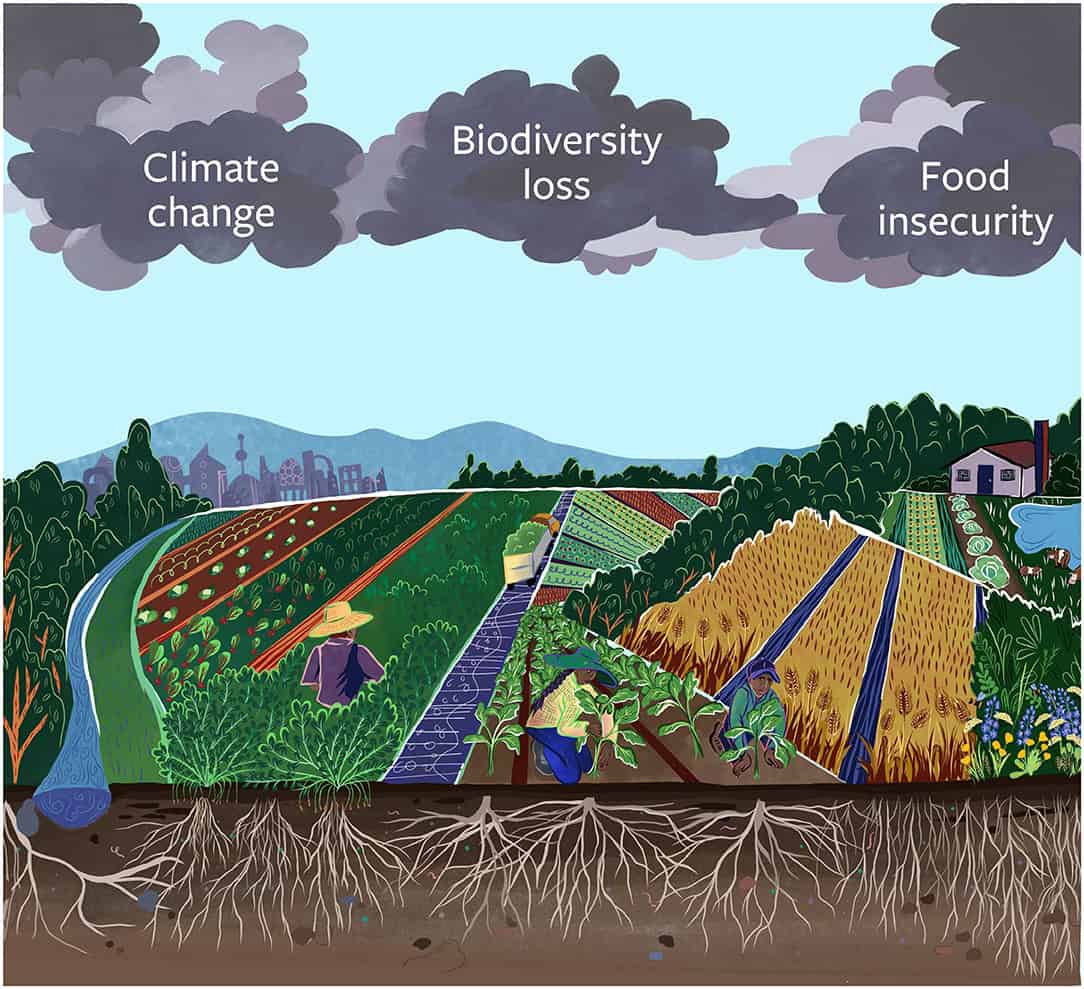
This article explores the “triple threat” facing farmers in the form of climate change, species loss, and food system industrialization. Featuring the personal experiences of several farmers, it also examines the potential opportunities for innovation and resilience that organic agriculture provides. It illustrates how policy decisions can promote (or hinder) the potential for a just transition to a climate-friendly and resilient agricultural production system. Read more.
Climate Impacts on a Small-Scale Farm

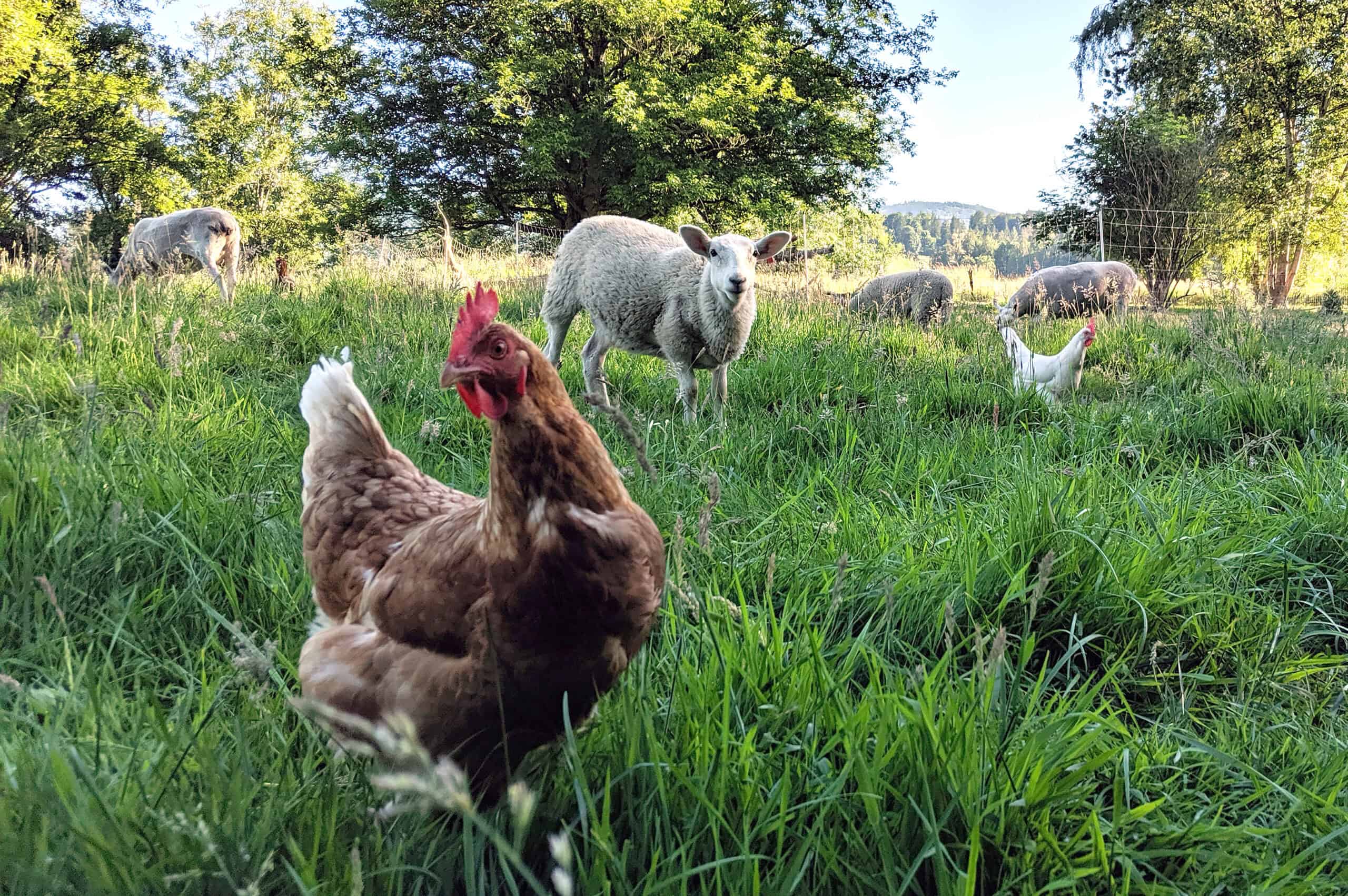
A personal account from former OFRF staff member and farmer Caroline Baptist, this article highlights the devastation and heartbreak that farmers experience in the wake of climate change-induced disasters. It also highlights the resilience and perseverance it takes to keep going and how Caroline finds hope in the soil. Read more.
Organic Farmers Lead the Way Toward Climate-Smart Agriculture

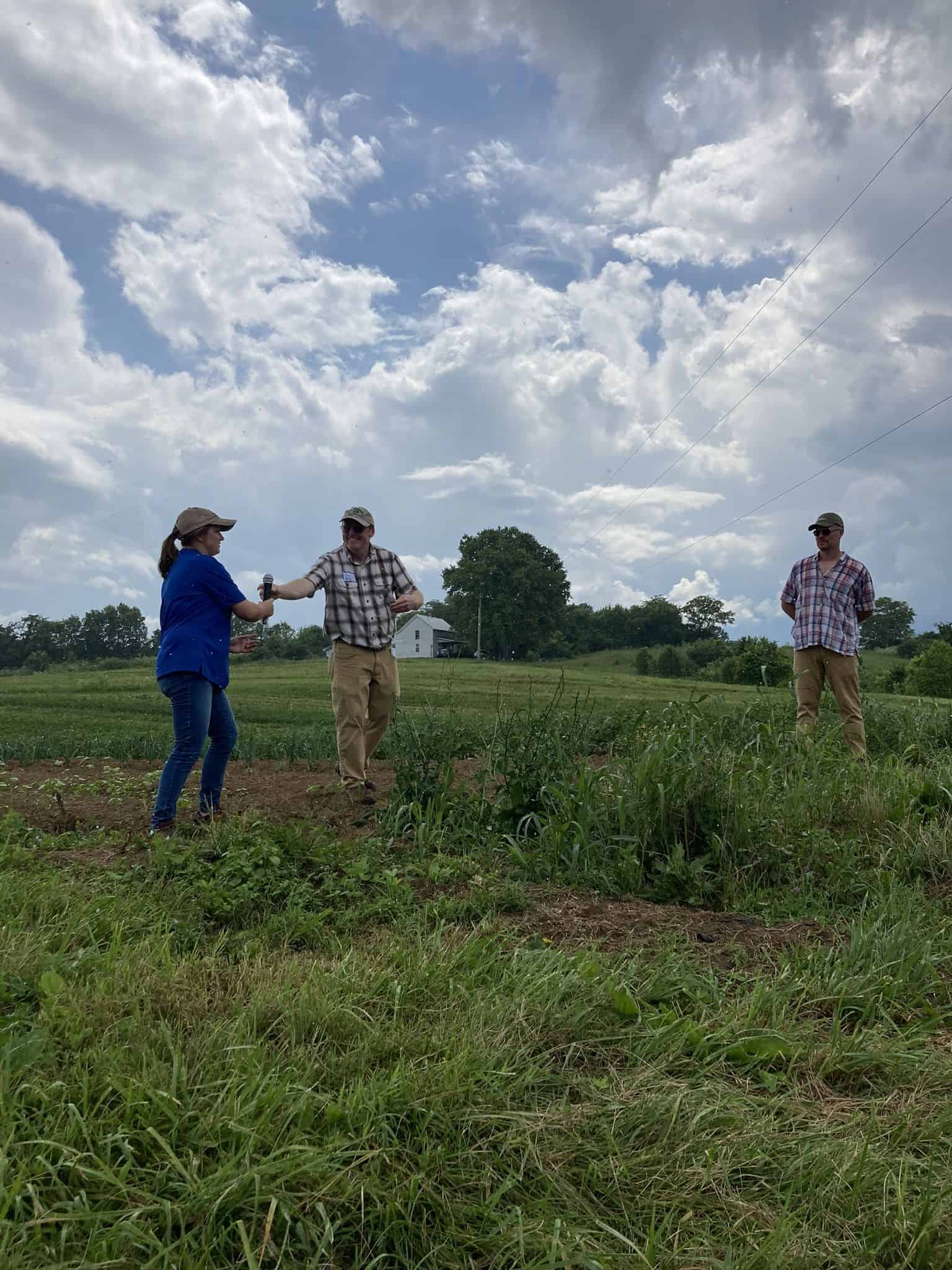
In Kentucky, farmer Bryce Bauman has shifted away from plastic mulch, choosing instead to focus on other, more climate-friendly strategies for weed mitigation. Working with the Organic Association of Kentucky (OAK), he is also conducting a thorough investigation into his farming systems and looking for ways he can implement more climate-smart practices. Read more.

>> Bonus Read: We’ve reshared the following three articles from our partners at the National Sustainable Agriculture Coalition (NSAC) because they so squarely hit the nail on the head for the importance of organic agriculture in navigating the climate chaos we are in:

As NSAC says in that last piece, it is vital that we “recognize the capacity of organic farming and ranching systems to build agricultural resilience to extreme weather events and make a significant contribution to carbon sequestration and mitigation of greenhouse gas emissions arising from agricultural production.” At OFRF, we are committed to advocating for the research funding and policy priorities that farmers need in order to care for the planet and feed their communities.

Are you a farmer navigating the impacts of climate change? We’d love to hear your story—your insights help inform the resources and advocacy we provide. Fill out this form and our team will be in touch shortly.

And, be sure to join our newsletter to stay in touch and receive updates about organic research, education, and advocacy.
By |2025-06-24T22:20:03-04:00June 24th, 2025|News|

Sharing the Latest Organic Research with NRCS: a new annual research report and webinar are available from OFRF

Written by Rebecca Champagne, PhD, OFRF Conservation Scientist

Each year, as part of our Cooperative Agreement with the USDA Natural Resources Conservation Service (NRCS), the Organic Farming Research Foundation (OFRF) publishes a research summary and holds webinars on various organic topics to help build institutional knowledge of NRCS staff and equip them to better support the unique needs of organic and transitioning-to-organic farmers across the country. We recently published a new annual summary on the latest organic research and led an accompanying webinar for NRCS staff.

Annual Research Summaries from OFRF

These annual research summaries provide a look at the latest organic agriculture research across a variety of topics, meant to provide NRCS staff, organic farmers, and other interested parties with in-depth educational information on the conservation benefits of organic management. These summaries provide both brief research highlights and comprehensive summaries for each topic. Our 2025 summary covered research pertaining to organic pest management, fertilizers and soil amendments, soil organic carbon, diversified cropping systems, production of organic vegetable transplants, and nitrous oxide mitigation. You can check out both our 2025 and 2024 research summaries on our website!

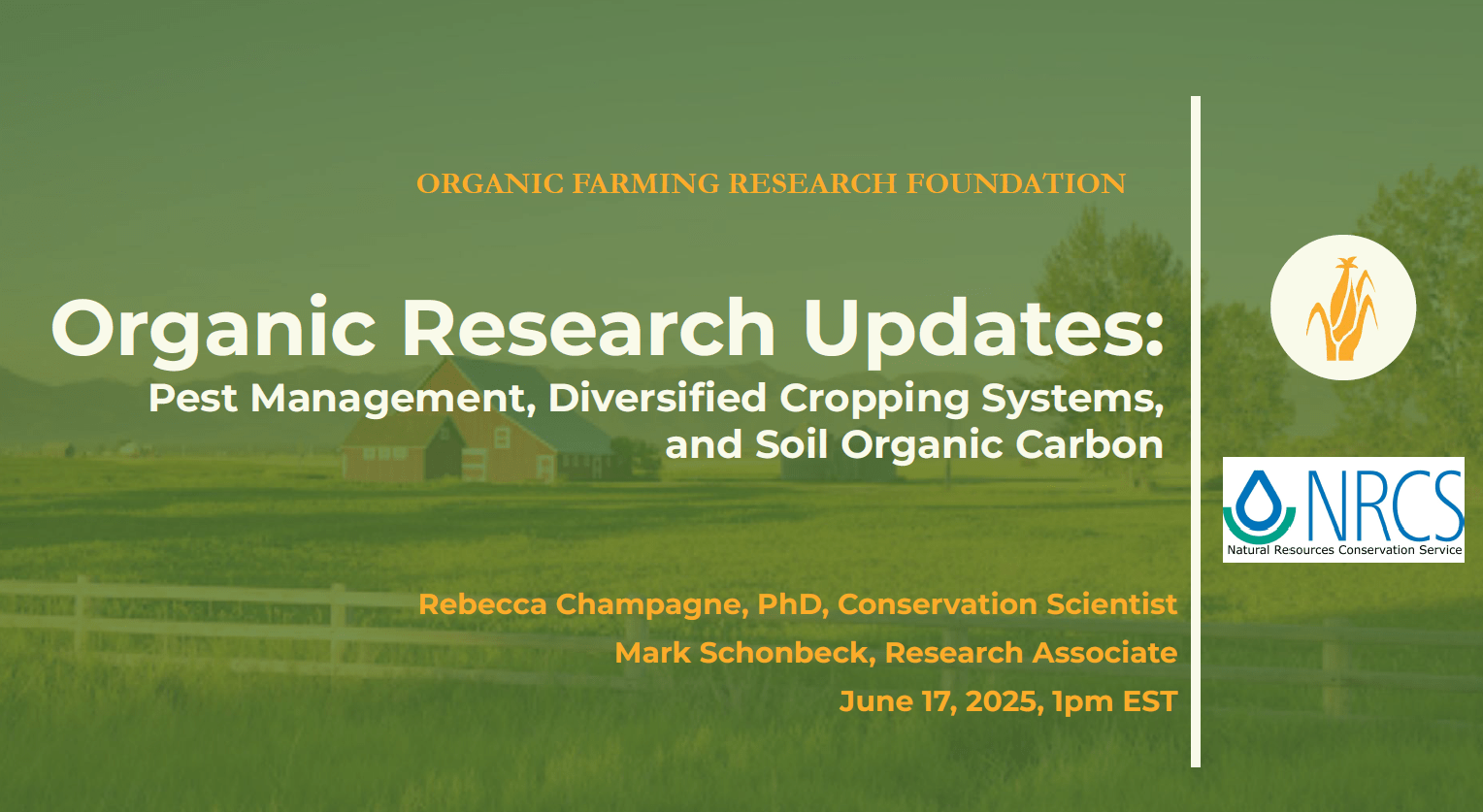
Organic Research Updates: Pest Management, Diversified Cropping Systems, and Soil Organic Carbon

Rebecca Champagne, OFRF’s Conservation Scientist, and Mark Schonbeck, OFRF Research Associate, led a webinar for NRCS to accompany the research summary. Held on June 17, the webinar dove into select topics from the research summary including organic pest management, diversified cropping systems, vegetable transplants, and soil organic carbon. The webinar provided detailed scientific information in these areas and gave insight into peer-reviewed research treatments and results.The webinar concluded with a Q+A session so participants could ask follow up questions and get clarification on the topics discussed. Questions that were fielded from participants related to the effects of anaerobic soil disinfestation on microbial communities, economic comparisons of mulch systems, and the benefits of hedgerows.

Interested in viewing this webinar? A recording is now available online through Conservation Webinars!

Upcoming Organic Farming Webinars with NRCS

OFRF will be hosting three webinars each year over the next four years, covering various topics related to organic farming. Webinar participants also have the chance to test what they learn and earn Certified Crop Advisor Continuing Education Units (CEU) credits by answering quiz questions at the end of each webinar. By identifying and summarizing the latest peer-reviewed research and highlighting real-world farm examples, we aim to help NRCS staff and Technical Service Providers better understand organic production requirements, challenges, and what successful conservation practice implementation on organic operations can look like.

. . .

To learn more about our Cooperative Agreement with NRCS, contact Rebecca Champagne at rebecca@ofrf.org

To stay up-to-date with the latest organic farming news, research updates, and opportunities for advocacy, sign-up to receive the OFRF newsletter at https://ofrf.org/get-involved/receive-news/!

By |2025-07-22T13:32:12-04:00June 20th, 2025|News|

Ensuring a Sustainable Future With My Legacy to OFRF

Written by Katrina Heinze, OFRF Board Member from 2014-2023

A planned gift is a gift to the future. I support organic farming and OFRF because I care about the future health of our planet and its people. A planned gift to OFRF is a tangible way for me to pay it forward.

My mom fed me organic milk before “organic” was even a label. I grew up cooking and connecting with people through food. Later in my career, these interests led me to work in organic foods and organic policy. What a gift! Through my work, I learned about the care, hard work, and amazing knowledge that organic farmers bring to growing our food, as well as the challenges that make farming organically and bringing a farm’s goods to market difficult. 

In 2014, I joined OFRF’s board. Our farmer board members and farmer listening sessions taught me that organic farmers are experimenters and that we still have much to learn about the best production practices to nurture our environment, deal with and address the impacts of climate change, and provide healthy food for all—all while ensuring sustainable economics for farmers and farming communities.

OFRF’s mission is to foster the improvement and widespread adoption of organic farming systems. I love OFRF’s farmer-centered, science-based approach. Our work is long-term and requires long-term funding. For example, OFRF publishes the National Organic Research Agenda (NORA) every 5-6 years. The NORA Report is used to ask for Congressional funding for organic research, influence USDA’s grant funding, and help those of us in the organic food industry rally to support our farmers’ most important production (and non-production) needs. All of this contributes to new knowledge and support for organic farmers.

My husband and I have included OFRF in our will in addition to our regular OFRF donations. We did this to model our values for our family, demonstrate how we align our resources to those values, and be clear about the legacy we want to leave behind.

Estate planning can be easy to put off or avoid. However, we found that having conversations with our family about our wishes enriched our relationships. By discussing what mattered most to us and how we could best use our resources now and in the future, we’ve become better stewards of our resources today. We are glad we did this now instead of waiting or missing the opportunity altogether.

Planned giving can take place during your lifetime or at death, and it is a crucial part of your overall financial and estate plan. Typically larger than donations from ordinary income, planned gifts can provide income, financial security, and tax savings to you and your family, depending on how they are structured. In our case, our planned gift includes a multi-year commitment to OFRF now and a designation of a percentage of any remaining estate at our deaths.  

Planned giving is crucial for non-profits like OFRF, who depend largely on annual giving to “keep the lights on.” Although OFRF receives grants for key program initiatives, these grants don’t often pay for staff development, accounting, and the time-consuming work of helping policymakers understand the needs of farmers. Planned gifts build year-to-year stability for now and create a “savings account” for later.

I have seen the impact of planned gifts on OFRF. When I was on the Board of Directors, we received a planned gift. This single donation enabled us to hire a paid intern to support our research program. It also demonstrated to a future grant maker the value of our work, which has now resulted in a multi-year grant. Better still, the donor was unknown to us, and learning about why OFRF was important to them brought us joy and a renewed commitment to our mission.

A planned gift does not have to be complicated. Including OFRF as a beneficiary in your will or naming OFRF as a full or partial beneficiary of a life insurance policy or retirement account is a simple way to make a planned gift. Consulting with your financial and legal advisors can help you determine what is best for your situation and values. Once you have put a gift plan in place, let the beneficiary non-profit know. They will benefit from understanding what motivated you, and you will get to enjoy the impact of your thoughtful gift.

Together, let’s ensure the widespread adoption of organic farming practices. Our earth and farming communities depend on it. Please join me in planting a seed for the future by making a planned gift to OFRF today.

Sincerely,

Katrina

By |2025-06-13T17:41:29-04:00June 13th, 2025|News|

Keeping it Real: How OFRF Groundtruths Our Policy Priorities, and Why That Matters

By Gordon Merrick, OFRF Senior Policy & Programs Manager

In today’s political environment, defined by complexity, shifting political winds, and consistently competing interests, clarity and consistency matter more than ever. That’s why it is all the more important that OFRF stays grounded by always adhering to one simple principle: our work must be rooted in the real needs of the organic farming and research community. Whether we’re advocating for research funding in the halls of Congress, submitting comments to the USDA, or analyzing the impacts of federal programs and decisions, we’re guided by what we hear directly from farmers, researchers, and partners across the United States.

OFRF Policy Priorities

OFRF’s policy work centers around three core goals:

  1. Invest in Organic Research that supports all farmers in building ecologically resilient, economically viable farming operations
  2. Expand access to technical assistance and financial tools that empower producers to implement research-backed, systems-based practices
  3. Grow organic as an economic engine, especially in rural communities, by ensuring federal policy recognizes and supports organic production systems as a public good

These priorities aren’t abstract, they’re rooted in field experience, producer feedback, and a clear-eyed assessment of what it takes to make organic agriculture succeed on the ground and in communities across the United States.

Our commitment to our community’s needs

OFRF does not set our policy agenda from an ivory tower or an echo chamber. We’ve committed to revisiting and updating our priorities annually in direct response to feedback from the communities we serve. We take seriously our responsibility to represent the diverse perspectives within the organic sector. That means staying connected to the farmers navigating certification, the researchers searching for funding that will facilitate their work, and the businesses and communities that depend on organic production.

That’s why we brought these priorities to our recent Organic Stewardship Council meeting. Producers like Anna Jones-Crabtree of Vilicus Farms reminded us that while organic systems offer tremendous benefits, too many federal programs still fail to recognize or accommodate how organic works. This on-the-ground story mirrors national research findings: current USDA programs are not designed with organic and agroecological systems in mind. This results in lost support, unfair pricing assumptions, and policies that treat organic like an outlier, rather than a proven system that feeds people and restores land (for reference, about 15% of our produce is organic by volume, but organically managed land represents less than 1% of all farmland).

The real experiences and stories shared in this discussion weren’t one-offs. They are part of the intentional work we do at OFRF in every conversation, farm visit, and research partnership. We aim to update our priorities annually in collaboration with farmers, researchers, and movement leaders. Through OFRF’s work with grass-tops organizations and directly with farms across the country, we work to build spaces for people to tell us their stories about what is changing on the ground. Whether it’s ensuring USDA’s technical and financial assistance programs are applicable to organic farms or fighting for parity in research investments, OFRF’s priorities are shaped by what people tell us they need, not what sounds good in D.C.

What you can do

There’s a reason this work feels more urgent right now. As several farmers noted in our recent conversations, organic is at an inflection point. Market premiums are narrowing. Other labels and claims are muddying consumer understanding. And more than 15,000 USDA staff are leaving the agency, threatening institutional memory and slowing urgently needed reforms.

OFRF doesn’t have all the answers; but we do have a clear mission: to cultivate organic research, education, and federal policies that bring more farmers and acreage into organic production.

If you are a farmer with organic acreage, a researcher studying organic agriculture topics, or just someone who has a story to share on the importance of organic agriculture, we are here to listen. If you want to make sense of the current policy landscape, we are here to help: our new, free, self-paced Communicating with Legislators email course is designed to support you in telling your story loudly and clearly. Farmers are doing the work. Our job is to make sure policy catches up. 

We’re here to make sure your voice is not only heard, but acted on.

Eat well and breathe deeply,

Gordon

P.S. You can catch up on recent editions of Gordon’s Policy Corner here.

By |2025-08-28T13:09:27-04:00June 3rd, 2025|Gordon's Policy Corner, News|

Matt Jones (he/him)

Research and Education Program Fellow

email: matt[at]ofrf.org

Matt Jones (he/him) joins OFRF as the Research and Education Program Fellow after 15 years working with farmers on sustainable agriculture research. In this role he will be working on a national needs assessment to inform a National Organic Research Agenda report.

Throughout his career, Matt has worked with farmers across diverse agroecosystems, from organic lowbush blueberry growers in Maine to transitioning vegetable farmers in California. Most recently he’s been working as an independent consultant assisting growers, businesses and nonprofits in finding biologically-based farm management solutions. Previously he worked as Research Assistant Professor at Washington State University’s Tree Fruit Research and Extension Center. Earlier roles included a Fulbright Research Fellowship in New Zealand and a research technician for the USDA.

Matt has a Ph.D. in Entomology from Washington State University and an M.S. in Ecology and Environmental Science from the University of Maine. He and his wife live on a small farm in the Chumstick Valley of central Washington. When he’s not at work, you can find him digging in the dirt, pruning fruit trees, or climbing and skiing in the backyard mountains.

By |2025-09-11T17:21:03-04:00June 1st, 2025|Staff|
Go to Top