
By Brian Geier, OFRF Communications Manager. This article was originally published in the winter 2026 issue of The Natural Farmer.
Organic grain farmers depend on complex relationships amongst several moving parts of niche organic systems: from our soils, climate, microbes, insects, and diseases to specialty seed sourcing, post-harvest processing, and unique market needs.
In our quest for good info, we might wonder what research has been done on organic grains, and if any results might be helpful. But getting these answers can be overwhelming. Research findings can be difficult to decode, organic solutions might be few or far between, and specificity for our crop or region might be missing.
Through work with the Organic Farming Research Foundation (OFRF), I’ve seen a few programs and resources that I think could help organic grain and pulse growers in the Northeast, and across the country. Here is a roundup:
Introducing the Organic Research Hub
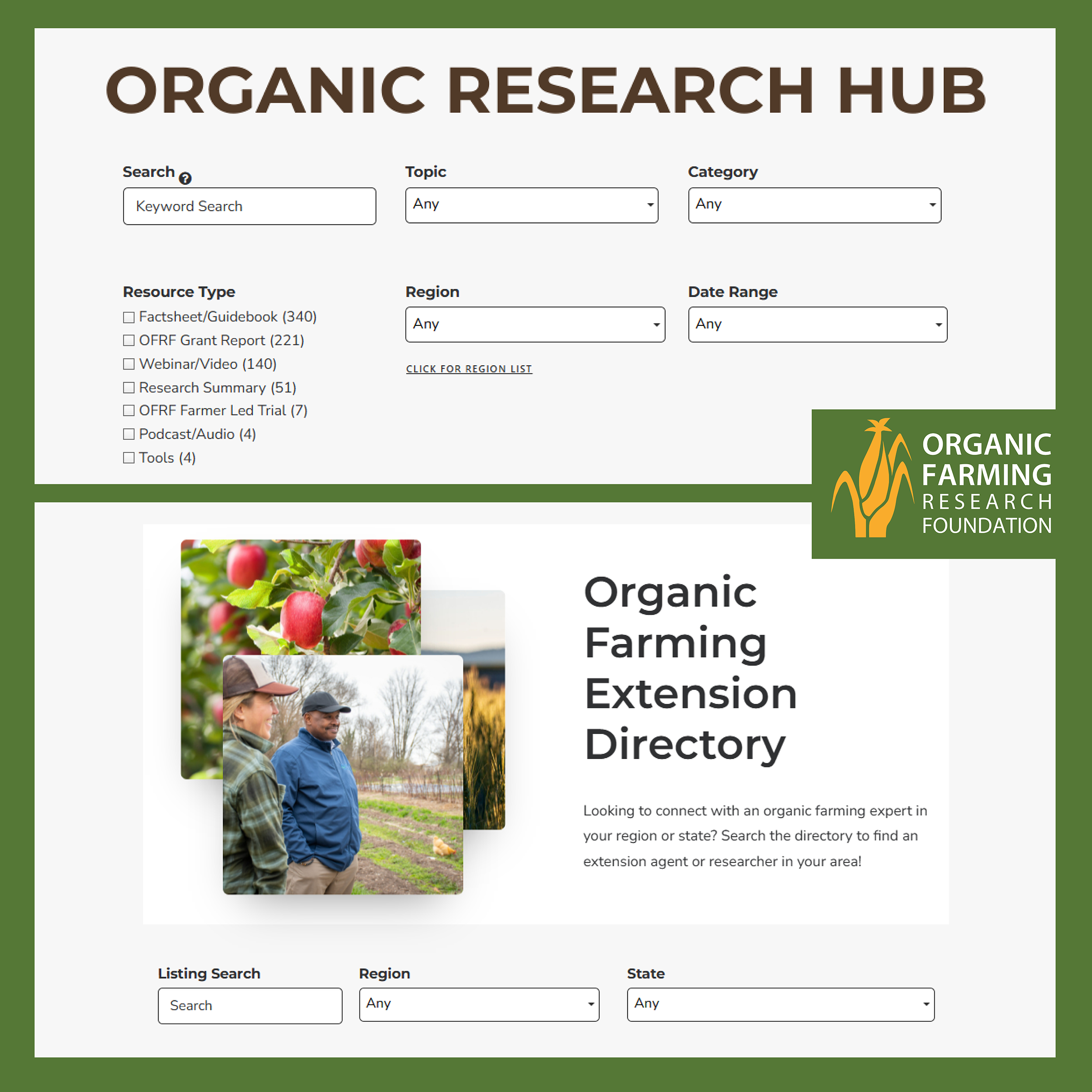
The new Organic Research Hub (“The Hub”) is a curated, searchable collection of science-backed resources for organic production. It can be searched by keyword, topic, region, or production category. For example, here are a couple noteworthy highlights from a search for grain and field crops in the northeast:
The main challenges of grain production in the northeast are outlined in an eOrganic webinar featuring work led by Dr. David Benscher (Cornell University). They are:
- finding crop rotations,
- sourcing seed,
- identifying seeding rates,
- weed management,
- grain drying,
- insect and rodent control during storage, and
- qualities for niche markets.
The webinar delves into each challenge and presents unique considerations for crops and regions. Buyers for niche markets prefer different grain qualities. Buyers of grain for bread prefer a higher protein content. Malters are more concerned about germination. Distillers may prefer a lower protein content. Knowing your niche market is key. As the “Ten Keys to successful malting barley production in New York” publication from Cornell states, “Have a marketing plan before you plant.”
There are unique challenges with fertilization of overwintering organic grains. Research by Dr. Ellen Mallory at the University of Maine (UMO), addresses ‘Topdressing Organic Hard Winter Wheat to Enhance Grain Protein.’ Meeting the fertility needs of overwintering grains with pre-planting applications risks winter leaching. Spring applications of manure can be tricky given the 90 days-to-harvest rule for organic. Research shows that later applications of nitrogen lead to higher protein levels in grains. This resource helps growers understand the when, what, and how much to topdress for best results.
Organic grain growers in the northeast are experiencing increases in weed pressure under organic management over time. This sobering reality is addressed in a video on Weed Control in Organic Spring Cereals, also from UMO, which highlights the unique and significant weed management challenges for organic grain producers. Aside from strategies before or during planting like crop rotations or high density plantings to help organic grains out-compete weeds, growers have few options other than mechanical cultivation after the crop germinates. Grain growers can look to tine-weeding to control very young weeds, but one wet spell at the wrong time in spring and growers may miss their window. This resource focuses on in-row weeding setups, one example being the Schmotzer EPP cultivator that is controlled by hydraulic-assisted manual steering. These types of setups can be more effective at disrupting weeds that have passed the early “thread” stage than tine-weeders, and cheaper than high density planting.
Farmer-Led Resources
Organic farmers’ #1 source of information is other farmers (source: National Organic Research Agenda). Farmer-friendly resources from OFRF that grain growers may find useful include a suite of resources and a webinar on crop-livestock integration (CLI), farmer-led trials, and organic researcher spotlights. Here are a few takeaways:
In the CLI webinar, farmer Raymond Hain discusses grazing pigs at the Grain Place Foundation in the last year of pasture in their 9-year crop rotation, before opening up fields for grain and soy. The pigs, moved in 10 acre paddocks, help prepare the ground for planting. And they are left for longer periods in some places to help eradicate bindweed.
In other CLI resources, farmer Mike Bronkema reports that protein content of grains following crop-livestock integration at Shady Side Farm is double that of conventional grains. Reduced need for mechanical cultivation and increased nutrient densities are two of several benefits of CLI that all organic farmers on the CLI project spoke to OFRF about.
In other CLI resources, farmer Mike Bronkema reports that protein content of grains following crop-livestock integration at Shady Side Farm is double that of conventional grains. Reduced need for mechanical cultivation and increased nutrient densities are two of several benefits of CLI that all organic farmers on the CLI project spoke to OFRF about.In farmer-led trials, important work is being done with sourcing seed, variety trials, and evaluating grain qualities for niche markets. With assistance from OFRF, organic farmer Kristin Swoszowski-Tran at Ledoux Grange is testing a new crop (teff) using commercially available seed and seed-bank accessions, while Bob Quinn of the Quinn Institute tests wheat on their farm alongside a baker who evaluates for preferred qualities.
It is also worth mentioning Dr. Dil Thavarajah (Clemson University), an organic researcher who OFRF recently highlighted. While not in the northeast, her work presents advancements in grain and pulse breeding for organic systems. Her work brings seed from all over the world to test on farms in her region. The international aspect is critical for organic systems, she says, because conventional lines of pulse crops in breeding programs in the US are highly inbred and not very diverse. Her project creates breeding pipelines to speed the development of new pulse crops that are:
- Suitable for organic crop rotations with existing cash crops,
- Have high protein content and quality,
- Are resilient to climate extremes in her area.
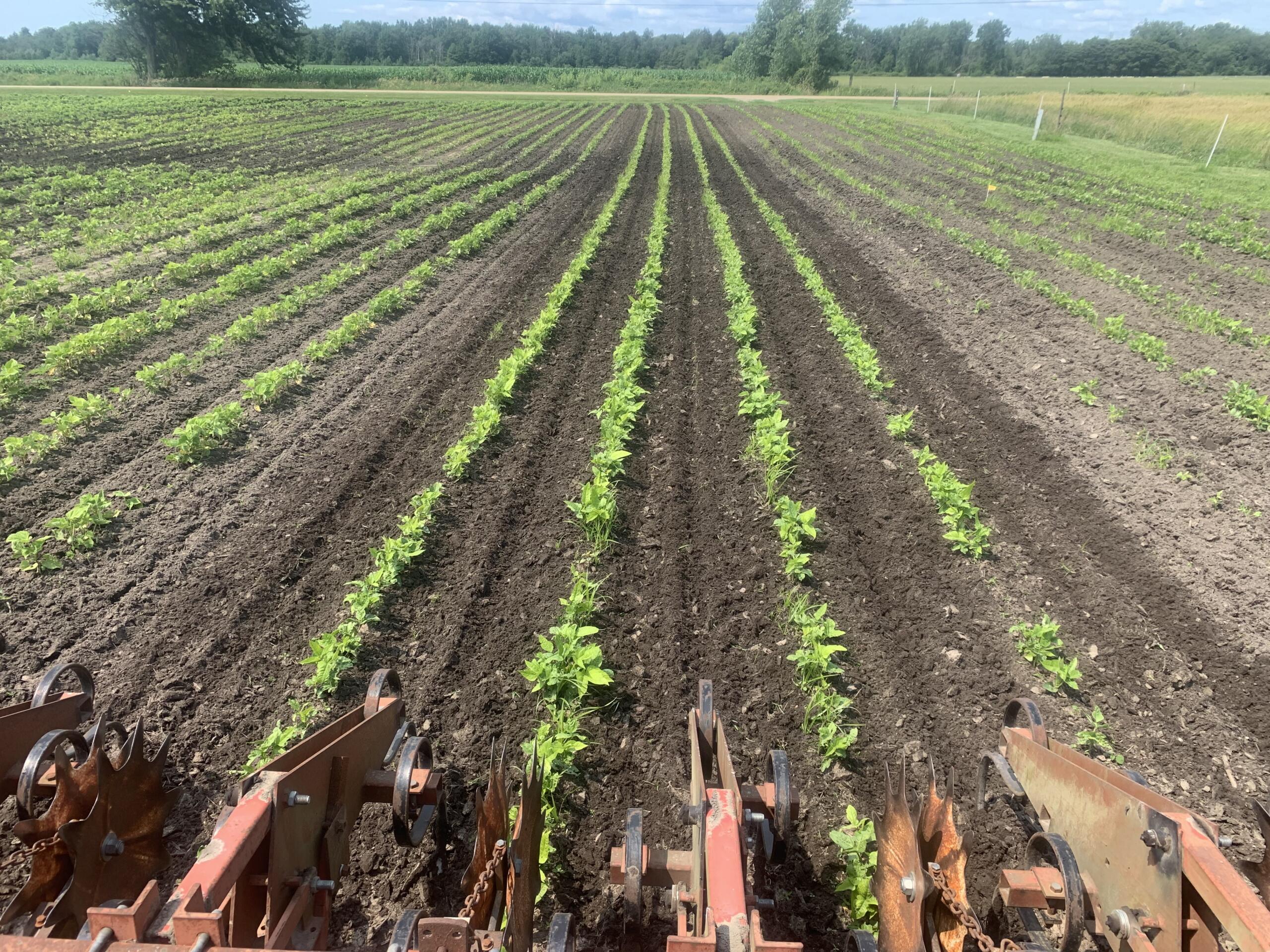
Organic farmers report decreased needs for mechanical cultivation following crop-livestock integration. Photo: Mike Bronkema.
Moving Forward and Making Connections
This article is far from comprehensive but I hope these resources and The Hub can be useful for growers to find the specific information most useful to you. At The Hub, there is also an Organic Farming Extension Directory to help connect growers and organic experts for future research needs. The Hub and the Directory are living resources open to additions. Feedback or suggestions for additions can be submitted via a form on OFRF’s website or by contacting OFRF staff. If farmers, ranchers, researchers, extension agents, or anyone has suggestions for additions to these resources, OFRF welcomes your input.