By Brian Geier, Communications Manager
Organic research is at the core of OFRF’s work toward the widespread adoption of organic farming practices. Organic producers need access to cutting-edge research, extension, and technical service to ensure that organic farming continues to be the leading form of agriculture. That is why OFRF has developed policy priorities that drive our advocacy work. And that is why bolstering and protecting Federal support for organic research programs and the producers they benefit is a part of our day-to-day advocacy.
But last year, as the organic community navigated the policy developments and government shutdowns brought by 2025, it became clear that it was time to bolster networks and relationships, too, so that individuals across the organic sector can connect and work through challenges together.
OFRF has been leading efforts with partner organizations and University personnel to facilitate new networking opportunities for organic researchers, extension agents, and technical service providers at organic-focused conferences, to help us all get and stay connected, updated, and inspired.
What are the Researcher and Extension Regional Meetups (RERM’s)?
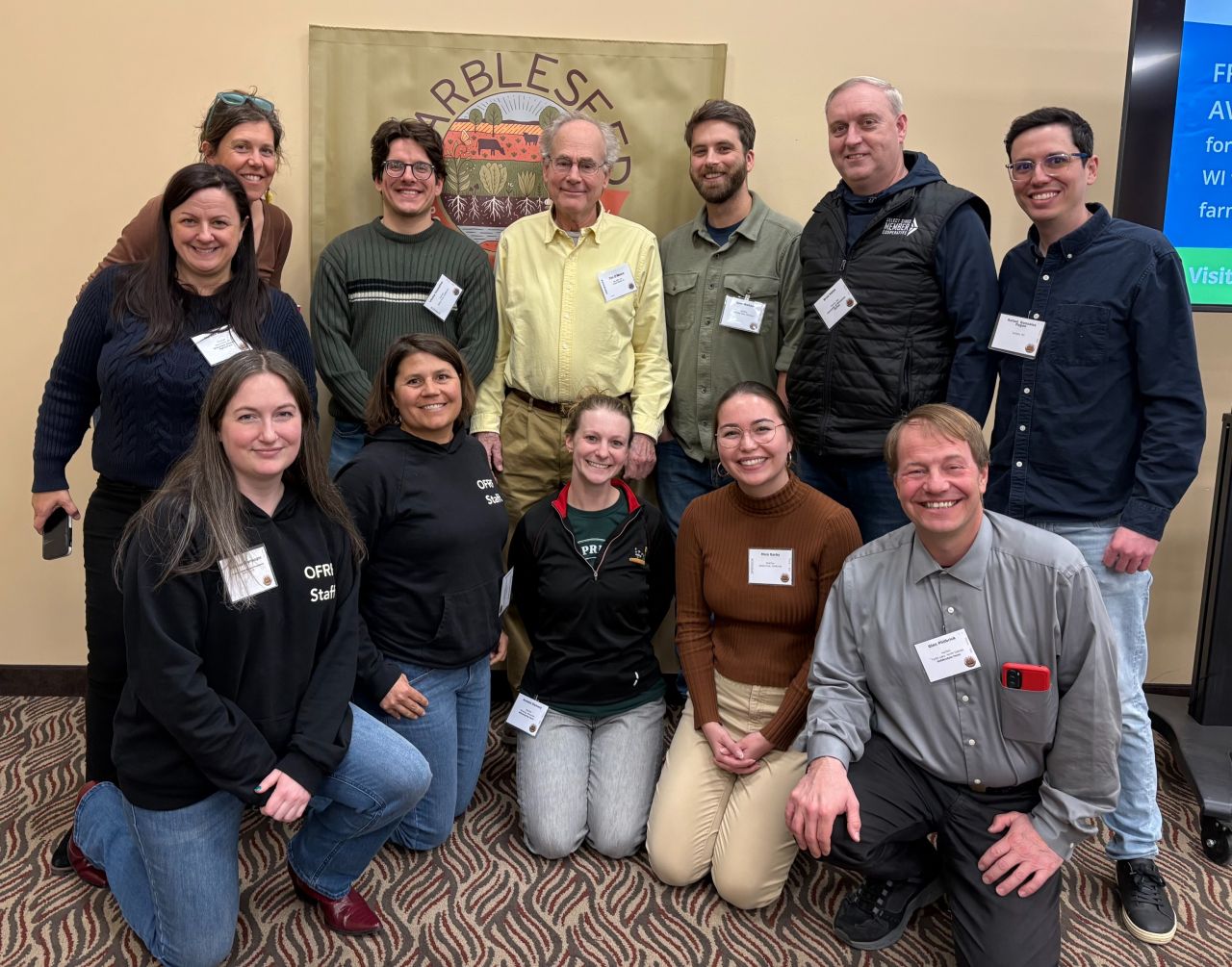
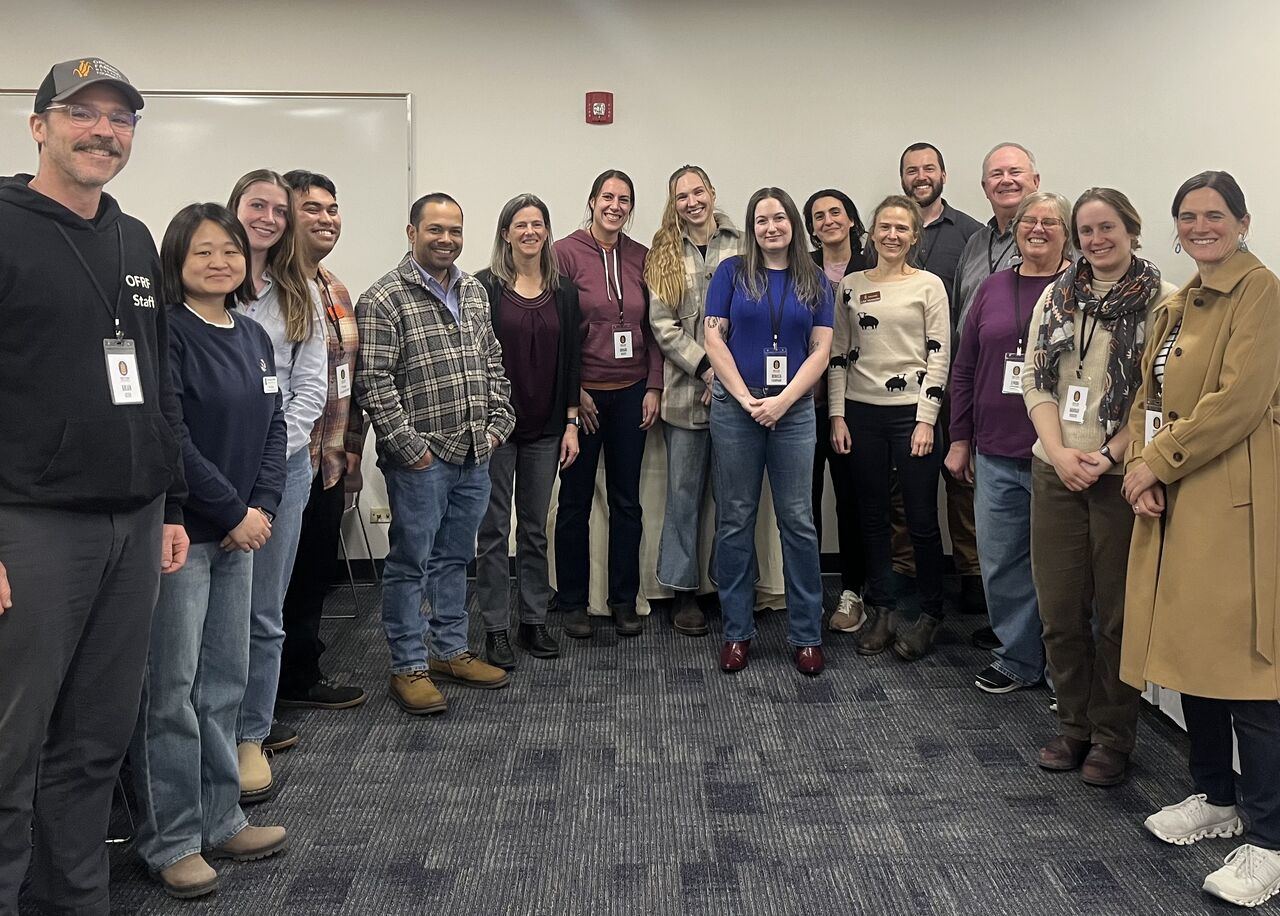
OFRF staff, organic researchers, and extension agents at a Researcher and Extension Regional Meetup at Marbleseed’s Organic Farming Conference in La Crosse, Wisconsin, February, 2026.
These new meetups are dedicated spaces for networking and collaboration between organic researchers, extension specialists, and technical service providers in a multi-state region. Held at agricultural conferences, RERM’s give people a chance to connect, share research updates and priorities for the region, and learn about USDA funding updates and opportunities. They are a new addition to organic conferences, set aside for unique connections amongst researchers and extension. Farmers have also been welcomed at these meetups, giving them an opportunity to learn more about what’s going on in the research world, meet local service providers, and potentially connect with researchers who are looking for on-farm project participants.
Why are these meetups needed?
There are many reasons why these meetups are important. Here are a few we have heard, from the perspective of organic researchers or specialists who attended RERM’s in 2026:
- Organic researchers sometimes feel left out, even at organic conferences. A space dedicated to them allows for unique conversations that are not happening elsewhere. “It feels good to learn about new research ideas, and to meet new people,” said one researcher.
- Organic specialists may not be aware of other organic specialists in the same state that are working at different Universities or Colleges. “After this, I’m excited about organic in (my state). I wasn’t aware of all that was going on before, and all that could be going on,” said one participant.
- University personnel describe being in “state silos”. Crossing state lines or talking with professionals operating in other states can be eye-opening.
- Similar to state silos, specialists within particular industries can learn key insights from one another, if given the space to share. For example, one specialist who struggles with a lack of organic processors learned how a different industry in a nearby state sets aside Mondays for certified organic processing, and has been able to convince more processors to do organic runs for farmers and research trials.
- Seeing how other sites are successful with adopting organic research can be empowering to those at institutions where organic research is in an earlier phase of development.
- Navigating Federal funding timelines and requirements can be difficult. Getting updates from OFRF staff and spending time with colleagues who have been awarded Federal research and extension grants can help researchers develop new proposals or improve those they are already working on.
What does a RERM look like?
These meetups are structured networking. They include introductions, small group or paired discussions, snacks and refreshments, and are often followed by a social hour for more informal networking. The goals include surfacing differences in local production contexts, identifying transferable ideas, and planting the seeds for collaboration—especially across regions with very different organic market maturity.
Some samples of the discussion questions we are using include:
What does organic look like where you work? What organic systems are most established in your region right now? What’s the hardest thing about doing organic research or extension where you work?
What program, method, or approach has actually worked well for organic producers in your region? What part of that model might still translate to a very different region—and what wouldn’t? What could we actually do together?
So far, OFRF has conducted RERMS at the High Plains Organic Conference in Wyoming, and the Marbleseed Conference in Wisconsin.
How can RERM’s enhance organic conferences?
The first Research and Extension Regional Meetup at the High Plains Organic Conference in Cheyenne, Wyoming, February, 2026.
Researchers moving forward, together:
Organic research is a lot like organic farming: it has added complexities compared to its conventional counterpart. Organic farmers work with and rely on biological systems in ways that agrochemical-focused operations work around, and many farmers must navigate specialized markets built on personal and regional relationships. There is a lot of work going on ‘in the background’.
Similarly, organic researchers navigate an array of specialized structures from Federal funding programs (some set aside for organic and others open to organic but not built for it), to Universities at various stages of developing organic programs. They are also working with a smaller subset of farmers, processors, and collaborators at other Universities.
Researchers traveling to attend RERM’s at organic conferences are taking advantage of opportunities to share their research with farmers from nearby states. And having organic specialists from nearby states present to farmers is helping enhance the experience of conference-goers. Dr. Xi Liang from the University of Idaho attended a RERM at the High Plains Organic Conference, and presented her research on the following day. Participants at the Conference noted the benefits with the increase of presentations from researchers from other states. “It’s really great to hear from so many researchers, from out of state, too. That is different than last year, it’s getting better,” said one conference-goer.
For Dr. Liang, spending time with growers had many benefits:
“I really enjoyed the conference, especially growers’ engagement. It was a great opportunity for me to introduce my organic transition project with growers and learn about their feedback, interests, and concerns. The discussion session with growers was very helpful to me to learn about growers’ concerns and needs. I also got to know a few colleagues and may develop collaborations in the future.”
-Dr. Xi Liang, University of Idaho
In farming and in research, the complexities of organic necessitate a strong, active network of participating parts to function at full capacity. Regional meetups for researchers, extension, and technical service providers are helping to fill that need by bringing specialists together in ways that allow the networks to advance organic research and farming.
Future RERM’s are in the works! With support from the USDA TOPP program, OFRF is tentatively planning a RERM at the Southern Family Farmers and Food Systems Conference in August, in San Marcos, Texas. And more may be on the horizon. Stay in touch via our monthly newsletter to get the latest updates.