
Southeast

Farmer-Led Trials Program Spotlight: A Different Chick Farm

Written by Mary Hathaway, OFRF’s Research & Education Program Manager
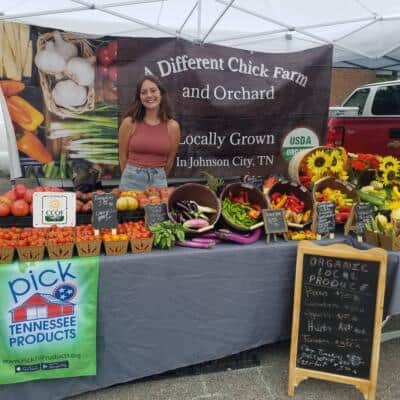
A Different Chick Farm booth at market.

A Different Chick Farm is a Certified Organic family farm on just under 6 acres in Johnson City, Tennessee. Tiffany Stanley and her family began growing food for themselves as homesteaders, but saw demand from the local community. From this start in 2018, they expanded their operation into an abundant production featuring rare and heirloom fruits and vegetables, with a large focus on unique pepper varieties. Half of the farm is now a mixed orchard, planted with apples, peaches, nectarines, cherries, plums, pears, blackberries, raspberries and more. Rounding out the offerings at this diverse farm is a flock of heritage breed chickens that are pasture-raised. 

With the help of her son and husband, Tiffany grows over 300 types of peppers, mostly to create value-added products such as hot sauces, pickles, and jellies. The farm sells their pepper products and fresh produce at two local farmers markets, and a Community Supported Agriculture (CSA) program. Their homesteading spirit continues to grow, as they look to limit outside inputs into the farm and build a sustainable system with on-farm fertility management. 

Producing On-Farm Compost to Reduce Inputs

A homesteader at heart, Tiffany wanted to explore how the farm could be more self-sustaining, especially in building their soil health with on-farm inputs. She was curious if the farm could make compost that could match the yields of commercial fertilizers. Building an on-farm compost regimen could help offset much of the fertilizer cost, and decrease the environmental footprint of the farm. There were a few factors that the farm considered: would the composting demand a lot more labor, would yields remain viable? As a family enterprise, there were risks in transitioning from a known and reliable yield from commercial fertilizers to a new and untested compost system.

Farm trial plan

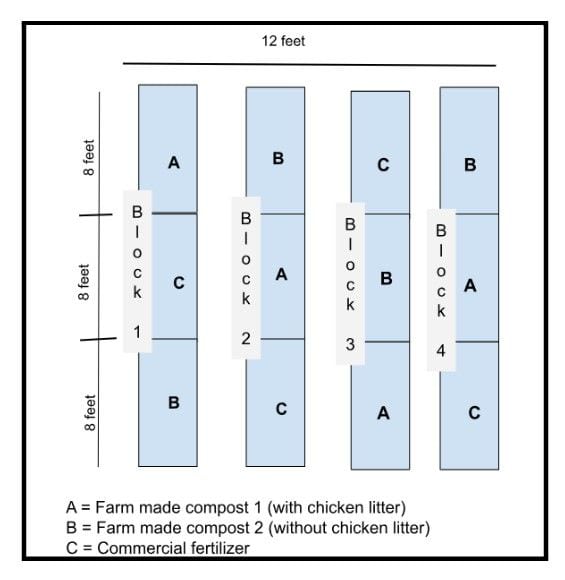
With technical support from OFRF, Tiffany decided to get answers and compare two different on-farm compost recipes with her usual practice of applying Harmony, a granular fertilizer (5-4-3). Tiffany wanted to put her chickens to good use, so one compost recipe she wanted to try included chicken manure as the main nitrogen source for one of her compost formulas. Her second compost recipe in the trial used clover and fresh grass clippings as the main nitrogen source. Both recipes included wood chips as the primary carbon source. 

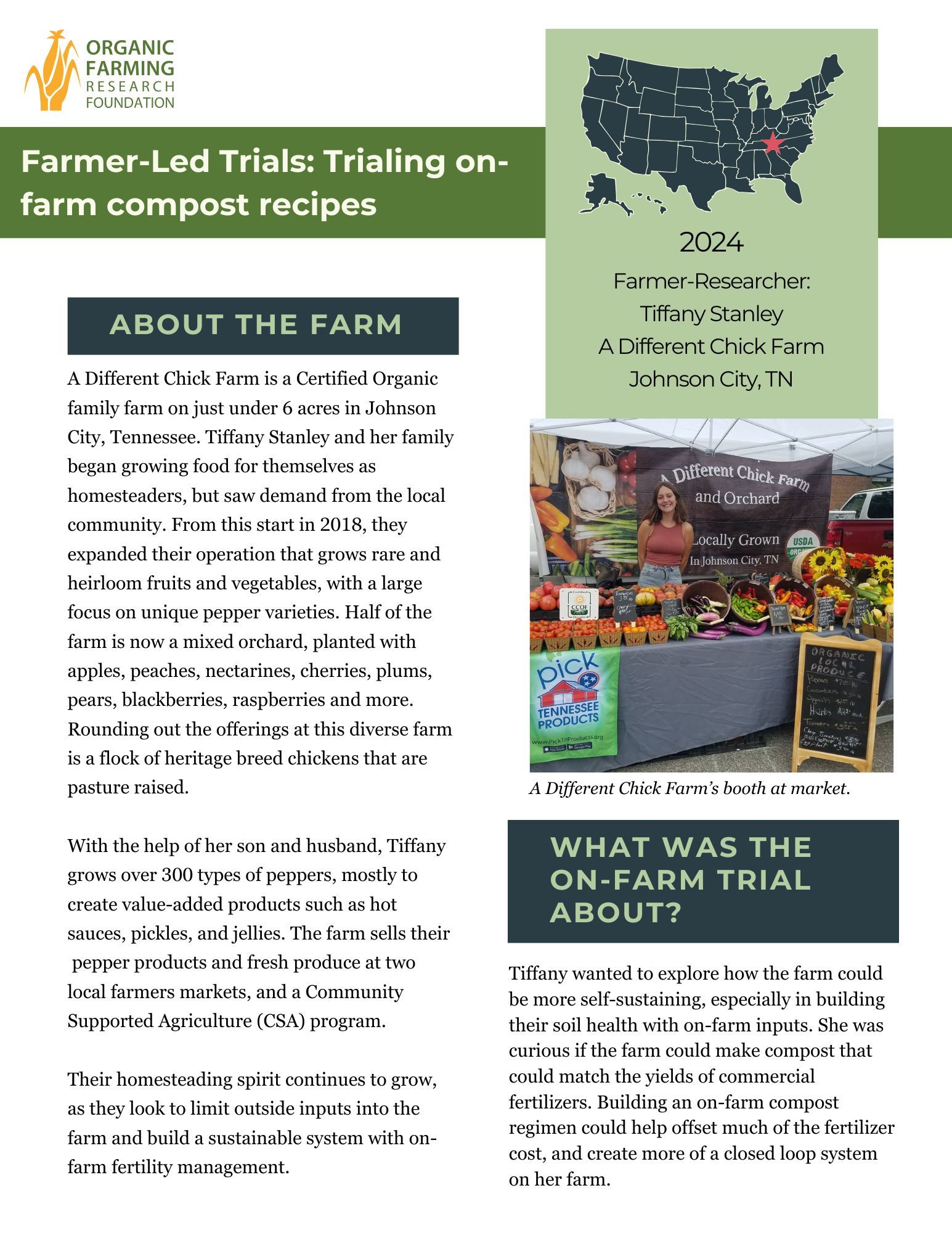
One of her best fall cash crops is cucumbers, so the trial was designed for Socrates cucumber, transplanted out from her greenhouse to be planted in a 12×24 hoophouse in mid-September. At the time of transplanting, Tiffany would apply the different treatments: Compost recipe 1, Compost recipe 2, or the commercial fertilizer, respectively.

In farm trials, it is key to keep things consistent, so Tiffany made sure to count each plant that was transplanted so that each block had the same number of cucumber plants. Once the cucumbers begin to set fruit, she will weigh the yield as well as count the number of cucumbers from each plot. She is hopeful that the results of this trial will help her work towards building her on farm fertility plans, and keep harvests bountiful. Stay tuned for updates on the farm trial outcomes and findings this fall!

“I had a friend that was retired from NRCS tell me about the program and encouraged me to apply.  I read many of the farm trials and what the program did to help organic farming and decided it was a wonderful opportunity.  I am always looking for a better, more sustainable way to farm and was so excited to get picked for this program.”  

– Tiffany Stanley, A Different Chick Farm
Research Results

Tiffany Stanley’s farmer-led trial examined whether the farm could make compost that could match the yields of commercial fertilizers, to support the farm to be more self-sustaining, and build soil health with on-farm inputs.

Key Findings:

  • Lab analysis showed that the green manure recipe had significantly lower nutrient availability than the chicken manure recipe (Figure 2). While this did not translate into statistically significant differences in fruit quantity or yield, differences in plant health and pest susceptibility were observed.

  • Plants grown with chicken manure exhibited robust growth and showed lesser aphid pressure. Plants grown with green manure and fertilizer demonstrated greater susceptibility to aphids, which may have been due to their lower nutrient availability and overall reduced plant health.

While the trial showed no statistically significant difference in cucumber quantity, yield, or average fruit weight between the treatments, Tiffany did notice that the cucumbers grown with chicken manure seemed healthier and more resistant to pest pressure. In the future, she plans to further experiment with her compost recipe, keeping chicken manure in the mix to help achieve her on-farm fertility goals.

For full details on the study’s methodology and results, read the final report.
This story is part of a series profiling farmers who are taking part in OFRF’s Farmer-Led Trials (FLT) program. Farmers receive technical support from OFRF to address their challenges through structured on-farm trials. To learn more about OFRF Farmer-Led Trials Program, visit our website page at https://ofrf.org/research/farmer-led-research-trials/

To learn more about composting and farm fertility programs check out these resources:

To learn more about A Different Chick Farm, you can find them on Instagram and Facebook or visit their website: https://adifferentchickfarm.com/ or watch a YouTube video they made about their Farmer-Led Trial.

2025-12-09T17:25:14-05:00

Farmer-Led Trials Program Spotlight: Salad Days Farm

Written by Mary Hathaway, OFRF’s Research & Education Program Manager

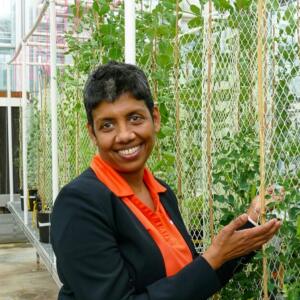
A female farmer in a purple coat smiles as the camera in front of rows of lettuce growing in a high tunnel.

Maggie Dungan, farmer at Salad Days Farm

Salad Days farm is a diverse vegetable operation situated on 30 acres in Versailles, Kentucky. Certified organic since 2015, farmer Maggie Dungan’s interest in growing food started with an education in nutrition and the long dream for her family to be self-sustaining. The farm grows year-round in the field and in hoop houses to supply their on-farm store, restaurants, schools, and four weekly farmers’ markets.

Maggie works hard to keep mechanization on her farm minimal, focusing on cover cropping, minimal tillage, and other soil health conservation practices. She keeps only 2-4 acres of the farm in production, allowing her to focus on the quality of her systems to grow high-value and sustainable food for her community.

Impact of Solarization on Soil Microbiology

The inside of a high tunnel, showing alternating rows of uncovered soil and soil covered with clear plastic for solarization research.

Solarization plots in the high tunnel.

Maggie was first exposed to the practice of solarization using clear plastic in 2022 when the farm participated in a research project with the University of Kentucky. The project studied the effect of solarization in high tunnels on root-knot nematode populations. She was impressed by the results of the trial and saw first-hand how this technique impacted a persistent soil pathogen. 

Organic farmers like Maggie, who focus on minimizing tillage, must still manage pathogens, weeds, and other common challenges, and solarization offers potential benefits. However, Maggie was concerned about the impact of the treatment on her soil health, and had some questions – if solarization kills pathogens, won’t it kill the good microbiology, too? How does heat smothering with a plastic tarp impact soil microbial activity? What is the impact on fungal-to-bacterial ratios?

Before beginning to incorporate soil solarization into her field plans, Maggie wanted some answers, and applied for OFRF’s Farmer-Led Trial program to help her build out a solid research plan and find reliable results that would have a positive impact on her operation.

Farm Trial Plan

With technical support from OFRF, the Salad Days trial on soil solarization took shape. By refining her research question to: “What is the temporal and population effect of solarization on the beneficial microbes in the high tunnel?” the research team was able to build an approachable and testable project on the farm.  

Maggie and OFRF built out a block design with two treatments: No soil solarization in the hoop house, used as her control, or regular practice compared to soil solarization in the hoop house. Using her 30’x100’ hoop house as the location for the trial and mapping areas for the treatments, Maggie used a microbiometer to take three different soil samples: first a baseline reading, then one 2 weeks and 4 weeks, respectively, after the tarp had been removed from the treatment plots.

What is solarization?

Solarization is the process of placing a clear plastic tarp over a field or garden bed to heat up the soil underneath. The intention of solarization is to kill weeds or grass, but is also known to reduce pathogen populations in the soil.

On-Farm Trial Updates

Maggie took her final soil reading in early August, four weeks after she removed the tarps from their beds. While she originally hypothesized that the soil microbes would bounce back, she guessed that their populations would need some time to recover after the tarp treatment. 

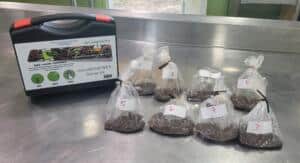
8 bags of soil sit on a metal counter next to a soil testing kit.

Soil testing for the on-farm trial.

The OFRF team has begun to work with the data collected to get an understanding of any significant differences. In Maggie’s experiment, we see that microbial biomass over time differed depending on whether or not the area had been tarped. Under solarization, microbial biomass increased over time, while biomass decreased over time in areas that had not been tarped. Also, the fungal-to-bacterial ratio was higher under solarization than in bare soil. The ratio was not affected by time after tarp removal.

The data is compelling, and OFRF will be looking into similar research to better understand the why of these results and give Maggie the assurance she is looking for to deploy a practice that continues to foster the health of her soil and improve her farming system.

“Being able to tailor a research project specific to my farm but useful to all growers has been a great opportunity and having the technical assistance from OFRF has been integral.”

– Maggie Dungan, Salad Days Farm

A graph showing the microbial biomass in solarized and non solarized plots over time, with solarized plots higher than the control.

Research Results

Maggie Dungan’s farmer-led trial examined the impact of soil solarization on microbial communities in high tunnels. Using a MicroBIOMETER, she measured soil microbial biomass and fungal-to-bacterial ratios before and after solarization to assess how the treatment affected soil life.

Key Findings:

  • Microbial Biomass Increased Over Time: Contrary to expectations, soil microbial biomass was higher in solarized plots compared to non-solarized plots, suggesting that the practice does not harm beneficial microbes.
  • Fungal-to-Bacterial Ratio Shifted: Solarized plots had a higher fungal-to-bacterial ratio, indicating a potential shift in soil microbiology post-treatment.
  • Potential for Weed & Pathogen Management: While originally concerned about negative effects, Maggie’s findings suggest that soil solarization can be an effective weed and pathogen control method without long-term damage to soil biology.

Encouraged by these results, Maggie plans to continue using soil solarization as part of her organic weed and pathogen management strategy. Future research could explore how different durations of solarization impact microbial communities and soil health over multiple growing seasons.

For full details on the study’s methodology and results, read the final report.

This story is part of a series profiling farmers who are taking part in OFRF’s Farmer-Led Trials (FLT) program. Farmers receive technical support from OFRF to address their challenges through structured on-farm trials. To learn more about OFRF’s Farmer-Led Trials Program, visit our website page at https://ofrf.org/research/farmer-led-research-trials/

To learn more about soil solarization, check out these helpful resources on the web: https://extension.umn.edu/planting-and-growing-guides/solarization-occultation 

To learn more about Salad Days Farm, visit https://www.saladdaysfarm.com

2025-12-09T17:37:34-05:00

Building Soil Health in the South: OFRF’s New Guidebook Explores Latest Research

March 30, 2021 – Healthy, living soils provide the foundation for successful and profitable organic farming and ranching. In the South, organic producers face intense pressure from weeds, insect pests, parasitic nematodes, and plant-pathogens; summer heat extremes, drought, and flood; and soil types with inherent fertility limitations. In addition, long growing seasons can make it harder to rebuild soil organic matter, especially during intensive crop production.

In OFRF’s 2015 nationwide survey of organic producers, 79% of respondents from the South cited soil health as a high research priority, somewhat higher than the national average of 74% (Jerkins and Ory, 2016). Many respondents expressed a need for practical information on how to build soil health in hot climates that burn up soil organic matter (SOM) and promote aggressive weed growth. The goal of this new guidebook is to help the region’s current and aspiring organic producers develop effective, site-specific soil health management strategies that support successful, resilient enterprises.

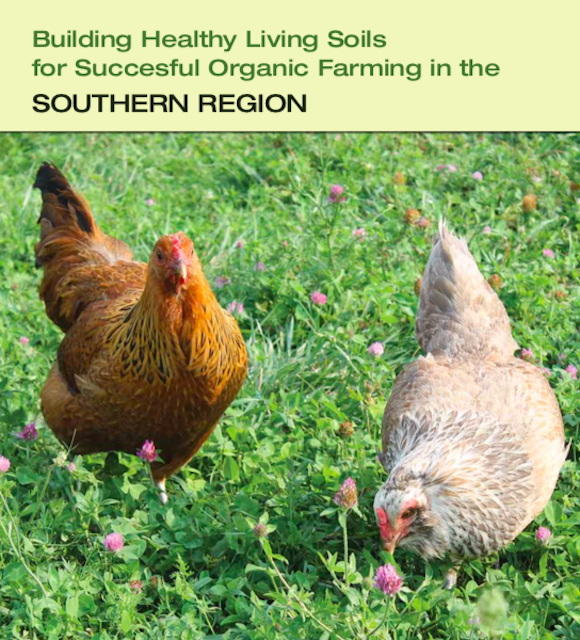
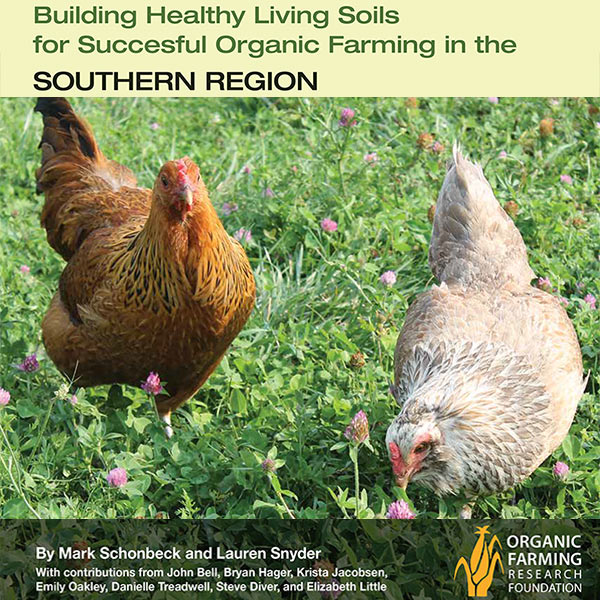
Building Healthy Living Soils for Successful Organic Farming in the Southern Region explores how to apply organic soil health principles to the region’s soils through a series of practical steps and strategies, illustrated by innovative farmer stories and brief descriptions of underlying scientific concepts. The guidebook also includes a list of resources for additional reading, a description of the inherent properties of soil types commonly found in the South, and a summary of the latest soil health research being conducted in this region.

This latest guidebook builds on OFRF’s popular series of guidebooks and webinars focused on organic farming and soil health. The entire series is available to download for free.


2025-12-10T15:08:47-05:00

Building Healthy Living Soils for Successful Organic Farming in the Southern Region

Healthy, living soils provide the foundation for successful and profitable organic farming and ranching. Nowhere is soil health more vital than in the South, where organic producers face intense pressure from weeds, insect pests, parasitic nematodes, and plant-pathogens; extremes of summer heat, drought, and flood; and soil types with inherent fertility limitations. In addition, long growing seasons can make it harder to rebuild soil organic matter, especially during intensive crop production.

Building Healthy Living Soils for Successful Organic Farming in the Southern Region cover
2025-12-08T10:54:51-05:00
Go to Top