
Organic Researcher Spotlight: Dr. Dil Thavarajah
A breeding pipeline is developing improved pulse crops for organic farmers in the southeast
Written by Brian Geier
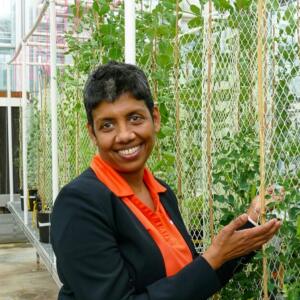
New cultivars of pulse crops (lentils, chickpeas, and field peas) may soon be available to organic farmers! These improved varieties, under development through a project led at Clemson University (CU), will:
- be suitable for crop rotations with cash crops currently being grown on organic farms in North and South Carolina,
- have high protein content and quality, and
- be climate resilient (to heat, drought, and cold stress).
The Principal Investigator on the project, Dr. Dil Thavarajah, is an internationally-recognized leader in pulse biofortification (breeding for nutritional traits) who leads CU’s Pulse Biofortification and Nutritional Breeding Program. Her project, Sustainable, high-quality organic pulse proteins: organic breeding pipeline for alternative pulse-based proteins, is funded by USDA/NIFA’s Organic Agriculture Research and Extension Initiative (OREI), a program OFRF’s advocacy work aims to bolster and protect.
Dr. Thavarajah brings an extensive background in pulse breeding and an international focus to the effort to develop organic cultivars for farmers in the southeast.
“I think the international component is very important because pulse crops especially are inbred and they are not very genetically diverse. Major universities with pulse breeding programs in the US are all conventional. We need to exchange material because the material they develop for conventional is not going to work with organic. Organic is a whole different ball game.” -Dr. Dil Thavarajah
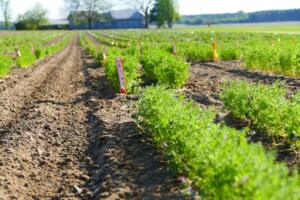 The project builds on a previous OREI grant that helped to identify varieties that worked well in organic crop rotations with sorghum. These varieties are now being evaluated to identify those with higher protein and sugar content, and better protein quality (measured both by digestibility and consumer preference). Dr. Thavarajah calls her approach “participatory breeding” that includes both consumers and farmers in the process. Interestingly, higher sugar content not only makes pulse crops sweeter and preferred by consumers, but also makes the plant more climate resilient. Having more sugar alcohols in the plants means the plants are more likely to remain healthy through drought stress, extreme heat, or cold snaps.
Ultimately, though, the farmer-collaborators are the centerpiece of the breeding program. “I don’t think I could be successful without my growers,” she admits. The willingness of farms like W.P. Rawl and Sons to trial new varieties and crop rotations led to successful grant proposals and may very well lead to new cultivars being released to farmers very soon. To acknowledge this, Dr. Thavarajah looks forward to releasing new varieties that bear the names and legacies of the farmers involved in the project.
Learn more about Dr. Thavarajah’s work (including advice for fellow researchers applying for OREI funding) by watching the following short video interview with OFRF, and follow her work to stay updated on the release of biofortified pulse crops for organic farmers in the southeast!
This research is funded by the USDA/NIFA’s Organic Research and Extension Initiative. To learn more about OFRF’s advocacy work to protect and increase this type of funding, and how you can help become an advocate for organic farming with us, see our Advocacy page.
 Dr. Amaya Atucha is an Associate Professor at the University of Wisconsin-Madison (UW), specializing in




 Can organic soil health practices buffer the farm against drought and deluge? After a brief overview of soil moisture and the effects of inherent and dynamic soil properties on plant available water, this webinar discusses the impacts of climate change on soil health and farm water supply, ways to manage water quantity and quality in organic farming systems, the use of cover crops and soil water in challenging climates, and some irrigation challenges in organic production.