


Farmacea Strawberry Trial Explores Sustainable Mulching
Written by Mary Hathaway, OFRF’s Research & Education Program Manager
In the heart of Munith, Michigan, Farmacea is undertaking an exciting experiment to help enhance their farm systems and design. Run by Mike Lucas and Rollin Baker, the farm’s 31 acres had previously been dedicated to conventional corn production for many decades. Over the past two years, Mike and Rollin have been diligently working to convert about 2 acres into arable, quality land by incorporating leaf mold and other organic materials. As they work to transition their land to certified organic, they are excited and energized to grow healthy, sustainable fruits and vegetables for their community. Mike and Rollin are committed to bringing the land back to life and hope to honor the tradition of Food as First Medicine.
The Strawberry Trial: Plastic vs. Clover
 Farmacea’s project is a strawberry trial comparing traditional plastic mulch to a living mulch of white Dutch clover. Their research question is simple but will help Farmacea determine which strawberry planting system will work best for them in the coming years: “Does a living clover mulch produce higher strawberry yields than a plastic mulch?”.
To answer this, they’ve set up six beds. Three beds use the conventional plastic mulch, while the other three are planted with New Zealand White Clover (Trifolium repens) to serve as a living mulch. Both sets of beds include a mix of strawberry cultivars: Earliglow, Chandler, Allstar, and San Andreas, ensuring consistency in strawberry varieties across the trial.
Careful initial planning was essential, focusing on a consistent number and mix of strawberry plants in each bed. Mike and Rollin standardized the beds and timed clover planting, which faced weather-related delays and farm facility damage. Additionally, deer intrusions necessitated the construction of higher fences to protect the crops.
What They’re Measuring
Farmacea will be tracking several key metrics to determine the success of each mulching method:
- Yield: Weight of harvested berries, percent marketable yield, and pint counts.
- Brix: A measure of sugar content in the berries.
- Weed Pressure: Observations and frequency of weeding interventions.
- Photo Documentation: Keeping a visual record of the trial’s progress.
- Soil Testing: Collecting samples to analyze soil health.
Data is being collected consistently over the season, with harvests twice weekly. They plan to document everything from the number of pints of berries to the weight of both marketable and unmarketable yields. Brix levels are being measured to gauge the sweetness of the berries and will ideally be taken at three intervals during the strawberry season.
Why This Matters
Farmacea’s trial is about more than just growing strawberries. It’s about finding sustainable options for weed suppression and improving soil health through practices like cover cropping. They are also interested in decreasing their reliance on nonrenewable resources and preventing microplastic contamination in their soil. Implementing a living mulch strategy is intended to lessen the need for manual weeding, enhance soil structure, and foster an environment that naturally inhibits weeds.
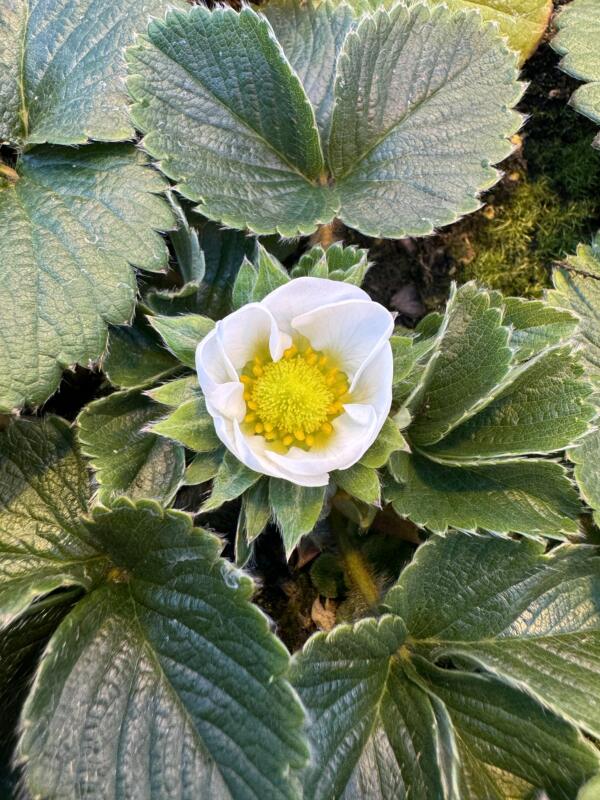
“For too long, the bulk of attention, funding, and resources in the agricultural research world have gone toward so-called ‘conventional’ farming methods. As a result, advances in organic farming practices have stalled and many today consider it an inefficient, outdated, and impractical way to produce food. We couldn’t disagree more. We see participating in a research trial on organic farming to be an important step in turning this tide, and hope that it will lead to better understanding and acceptance of these essential practices.”
– Rollin & Mike, Farmacea
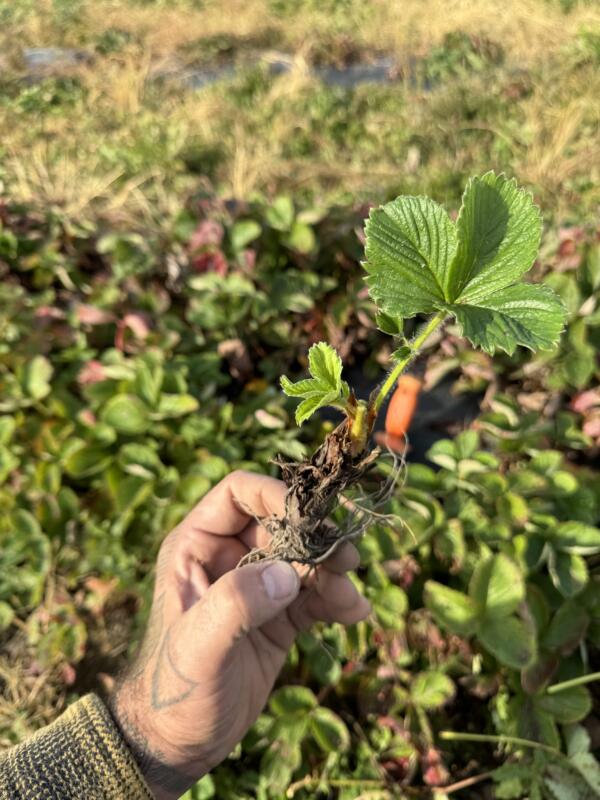
Research Results
Landscape fabric was the clear winner for Farmacea, both in the data and in the day-to-day experience of managing the trial. The clover living mulch competed directly with the strawberry crowns, drove up weeding and pest management labor, and led to a significant, statistically-confirmed yield reduction. Based on this outcome, Mike and Rollin do not plan to plant strawberries into clover mulch again.
Key Findings
- Compared to white clover, the landscape fabric produced dramatically higher average yields (239 vs. 34 berries/plot, respectively), and was also easier to manage due to more upright plants, lower pest pressure, and minimal rot.
- Clover living mulch increased the need for weeding and harvest labor, invited slug pressure, and led to more rotten berries.
- The clover established well, but competed with the strawberries in the low growing canopy. A different cash crop with a more upright growth habit may be a better match for a white clover mulch system.
For full details on the study’s methodology and results, read the final report linked here.
This story is part of a series profiling farmers who are taking part in OFRF’s Farmer-Led Trials (FLT) program. Farmers receive technical support from OFRF to address their challenges through structured on-farm trials. To learn more about OFRF Farmer-Led Trials Program, visit our website page at https://ofrf.org/research/farmer-led-research-trials/
To learn more about Farmacea, follow them on Instagram.