
On-Farm Research

Building Successful Farmer-Researcher Collaboration

Farmers and ranchers are natural researchers, regularly using trial-and-error to address on-farm questions and challenges. Research shows that farmers greatly benefit when they lead on-farm research trials.

Programs like the OFRF’s Farmer-Led Trials and the Sustainable Agriculture Research and Education’s Farmer-Rancher Grant put farmers in the driver’s seat, allowing them to conceive and carry out research on their farms.

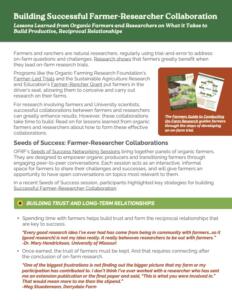
For research involving farmers and University scientists, successful collaborations between farmers and researchers can greatly enhance results. However, these collaborations take time to build. Read our report on for lessons learned from organic farmers and researchers about how to form these effective collaborations.

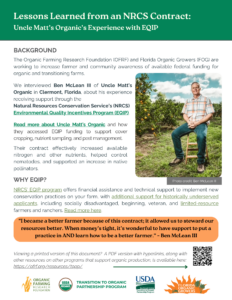
Front cover of seeds of success resource
By |2026-04-07T13:44:43-04:00December 19th, 2025|On-Farm Research, Resource|

An Organic Approach to Increasing Resilience

Few farmers need official reports to tell them that “increasing weather volatility” and climate change threaten their livelihoods and the resilience of their farming and ranching operations. With historic droughts, wildfires, flooding, and hurricanes in recent years, more farms are facing variable yields, crop losses, increased weed, pest, and disease pressures, and intensifying soil degradation, erosion, and compaction.

By utilizing organic and sustainable practices to build soil health, farmers and ranchers can improve their resilience and reduce risk as our climate changes. While practices can vary depending on your operation, establishing optimum soil organic matter (SOM) and biological
activity will help your operation through the difficult times to come.

Farmer-Led Trials Program Spotlight: The Woven Trifecta

Testing the Impact of Anaerobic Ferments on Crop Health

Written by Mary Hathaway, OFRF’s Research & Education Program Manager, and Samantha Otto, FLT Program participant

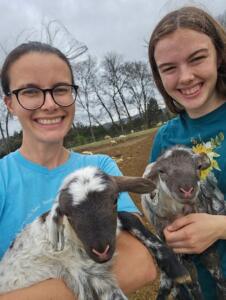
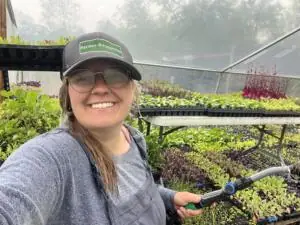
Samantha Otto is the founder and farmer of The Woven Trifecta, a 10-acre farm in western Michigan. Currently in transition to organic, the farm focuses on diversified vegetables for a CSA, local farmers market, as well as farm-to-school sales throughout the school year. Samantha raises Jacob sheep for fiber as well as assorted poultry for meat and eggs. The livestock is rotationally grazed on just over 3 acres of pasture, with 2 acres of no-till beds in production.
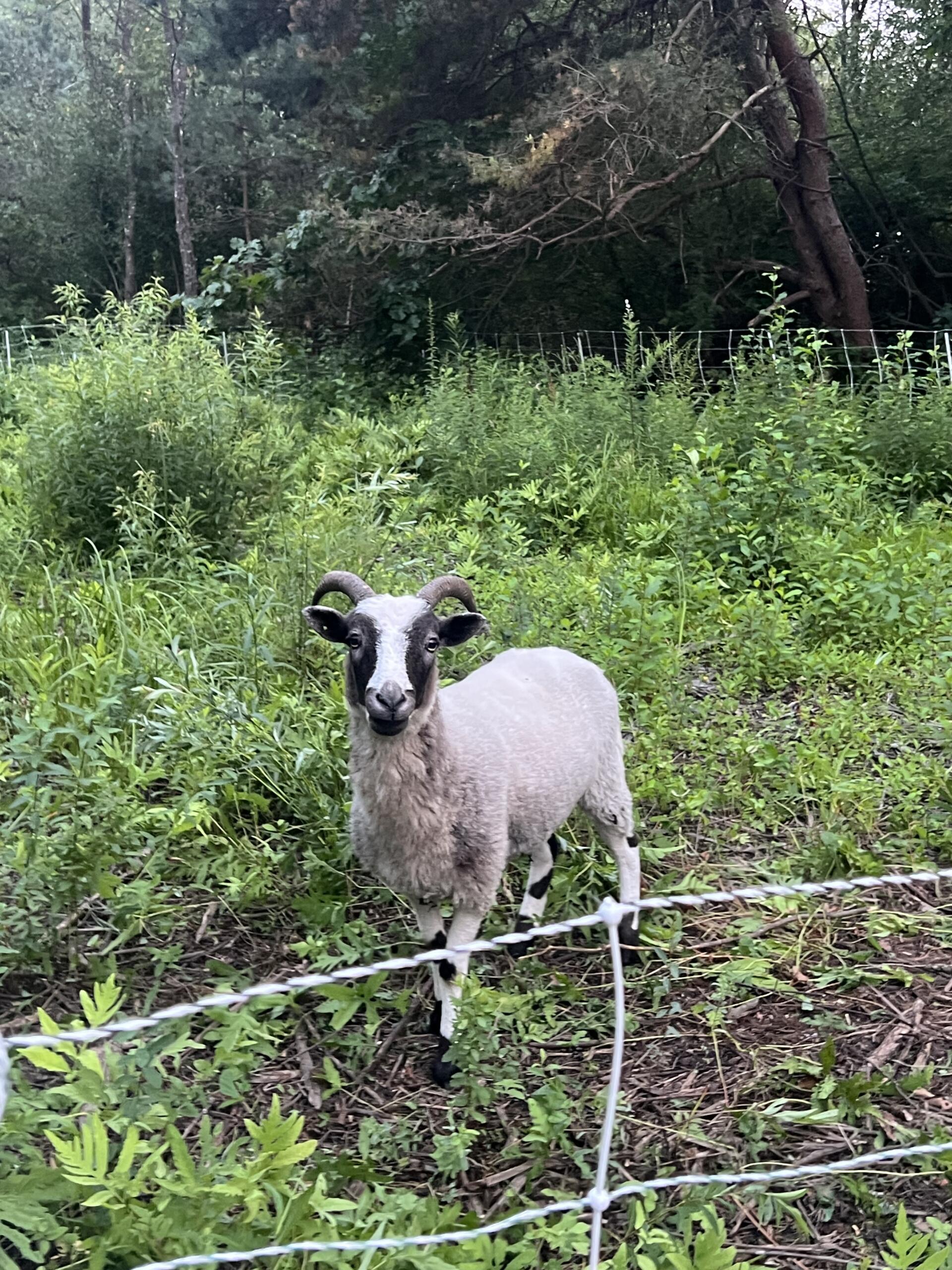
Samantha has a decade of hands-on farming experience and is a graduate of Michigan State University’s Agricultural Technology program. Since she started the farm, her primary focus has been on cultivating no-till organic vegetables and cut flowers. But as a curious farmer, she is continuously exploring innovative approaches to sustainable agriculture. Last year, as a participant in the Midwest GRIT program, she began integrating grains into her system, and  she has also recently incorporated livestock into her rotations to create a closed-loop system to help improve soil fertility.

From Waste Product to Resources: Building Fertility and Reducing Reliance in Off-Farm Inputs

One of the main goals of The Woven Trifecta is to reduce reliance on off-farm inputs, and to transform the farm waste products into a resource. Samantha has experimented with different anaerobic fermentation, and was interested in scaling up and fine-tuning its use as a soil amendment. She is particularly interested in incorporating waste from her livestock and compost into anaerobic ferments to improve soil fertility and plant health.

With the help of OFRF’s Farmer-Led Trial (FLT) Program, Samantha hopes to understand how anaerobic ferments impact the health of her crops. When considering which vegetable to test, the team landed on artichokes – a promising crop that her CSA members love and that has yielded well in past seasons. As a long-season vegetable with a short harvest window, the Tavor Artichoke was an ideal crop to trial.

Farm Trial Plan

To answer Samantha’s question, ‘Does an anaerobic compost tea impact yield or plant nutrition in artichokes?,’ she will weigh all harvested artichokes from each plot. Marketable artichokes will be weighed and counted separately. In addition to weights, leaf tissue samples will be collected prior to flowering stalk emergence. 10 representative samples will be taken from each plot, with one leaf collected per plant.

There are two treatments in the trial: a control with no ferment spray, and the anaerobic ferment foliar drench. Samantha will plant in 8 plots to provide sufficient replication. The trial is in a 30′ x 90′ space, in 3′ wide no-till beds, with each row containing 10 plants spaced 36’ apart. Buffer plots will be added on each side, planted with sunflowers.

plot map for on-farm trial at Woven Trifecta Farm

The recipe for the anaerobic fermentation is 60/40 with vegetation scraps and rabbit manure. Samantha brews a fresh batch every two weeks, beginning in early June and applies the fermented drench application biweekly.  A 5-gallon bucket will be suitable for each batch.

Recipe for Anaerobic Fermentation Fertilizer

Using 5-gallon buckets, mix: 

  • 60% vegetation scraps from on-farm and/or compost club program 
  • 40% manure from our rabbits.  
  • 4 cups of soil. 

These will be well mixed, with scraps being chopped into small pieces, and will fill about 3/4 of the 5-gallon bucket.  This mix will then be submerged in water (from well), covered with a lid and stored in the pump shed. The bucket will be fitted with a fermentation lid with spout to release any built-up gases over the course of the fermentation process. 

Ferment will be checked at 7, 14, and 21 days; ready to use at  21 days. Solids are then strained, and the liquid is bottled for use.  

Application: 1 part recipe to 20 parts water every 14 days, and apply it as a soil drench via backpack sprayer.

Samantha is excited to see how the ferment impacts the health and yield of her plants. The process of testing her application of the anaerobic ferment is something she hopes can impact her farm system, and possibly provide sustainable answers for other small farms like The Woven Trifecta.

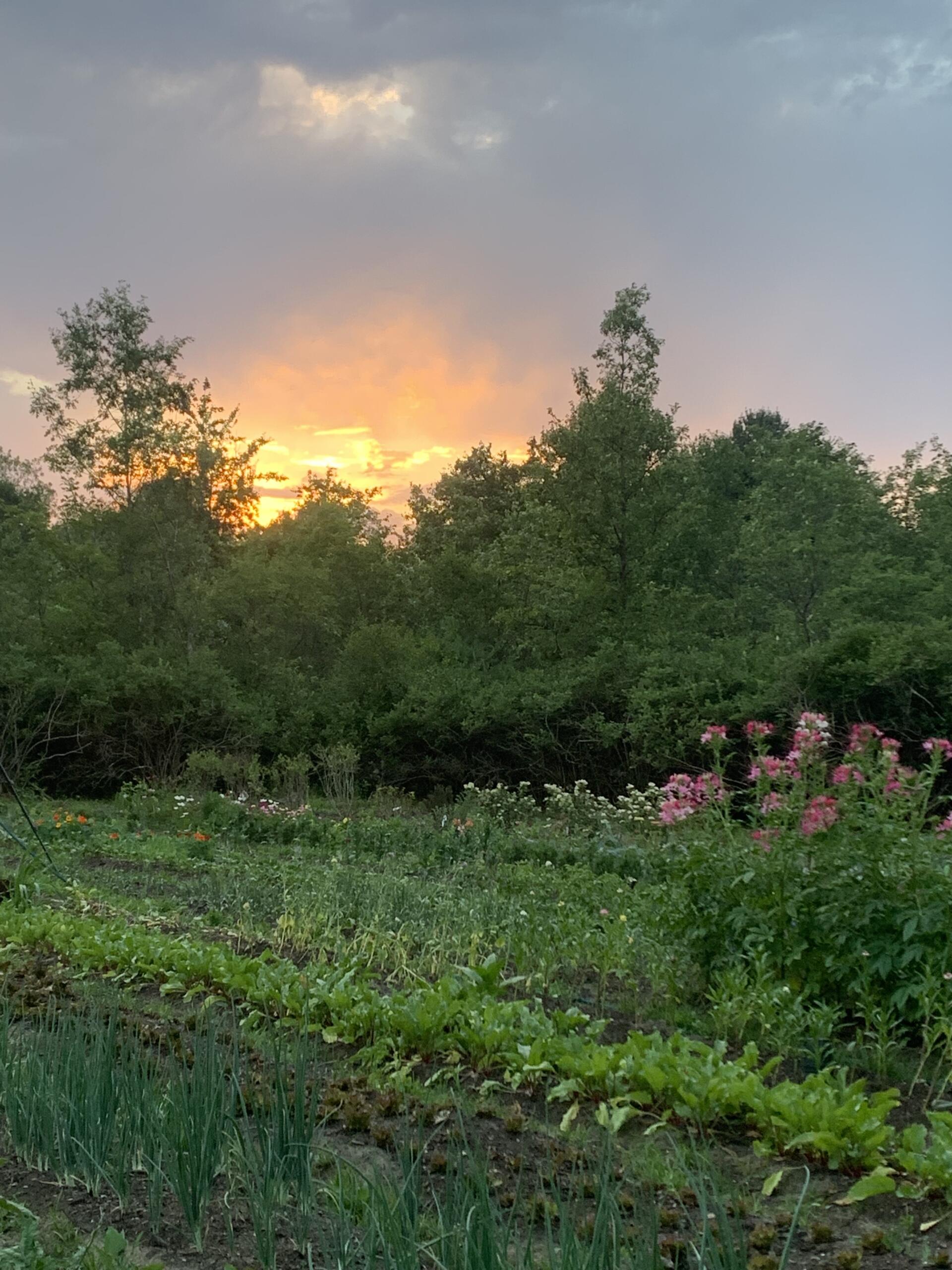
Sunset over a crop field at The Woven Trifecta

“Working with OFRF has been an amazing opportunity for our farm! Closing the loop in our production is a long-term goal of ours, and this project has provided the opportunity to take the time to explore a potential process for making that happen. It has been especially delightful to work with OFRF on creating the foundation of our project, making a once-intimidating idea very fun and feasible to trial! It has been a thrill to find on-farm solutions that support both our livestock and vegetable production. While we are a ways away from harvest, our on-farm ferment is visually showing benefits in our test plot. I look forward to collecting further data as the season progresses! This data will help us make decisions on how to incorporate ferments in our wider production in the future so that we can continue to grow beautiful, healthy, thriving vegetables for our community.

– Samantha Otto, The Woven Trifecta

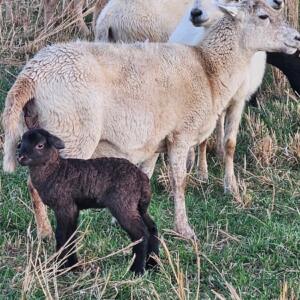
One of the livestock that Samantha integrates into her crop rotations

This is part of a series of blogs highlighting farmers who are participating in OFRF’s Farmer-Led Trials program. Farmers receive technical support to address their production challenges through structured on-farm trials. To learn more about OFRF’s Farmer-Led Trials Program, visit our website page at https://ofrf.org/research/farmer-led-research-trials/ 

To learn more about The Woven Trifecta, visit their website at https://thewoventrifecta.com/

By |2025-12-17T17:31:56-05:00September 2nd, 2025|Farmer Stories, Livestock, News, On-Farm Research, Soil Health|

Organic Farmers Withstand Climate Change with Living Soils and Regional Seed Breeding

A look at the Organic Microbiome Project

By Brian Geier

Organic farmers understand that soil health is paramount to our success. More specifically, we know that the living, microbial part of soil, sometimes called the soil microbiome, is something our farming practices can quickly and drastically alter, having serious implications for organic systems that rely on organic processes in the soil. But even though we understand that preserving soil life is good practice, we often do not know how soil life is changing, how farming practices are affecting those changes, and which practices are responsible for increases or decreases in crop or animal health because of those changes. 

To address this knowledge gap, researchers at Cornell University are utilizing a novel, farmer-led approach to studying what organic farmers are already doing on their farms and monitoring how the soil microbiome is changing over time. What they find could provide key insights into which organic farming practices might be helping producers promote and maintain soil health through droughts and other climate extremes. 

The Human Body and the Soil: An Analogy for Understanding the Soil Microbiome

To help us understand the importance and complexity of the soil microbiome (the living part of the soil that is composed of soil microorganisms), organic researcher Elias Bloom (a member of the Casteel lab at Cornell University) suggests beginning with an analogy. “The human body has more microbiome cells than it does human cells,” Bloom explained at a recent eOrganic webinar. Over 10,000 different species of microorganisms live in and on the human body, and they can have broad implications for human health. Essentially, a healthy human body is driven by a healthy microbiome.

Compare this analogy with the soil: one teaspoon of soil may have over one BILLION microorganisms living in it. And in just one small teaspoon of soil, there are often over 10,000 species of microbes, similar to the number of species found in the human body. Since microbes are involved in everything from water-holding capacity to promoting disease resistance, one begins to see that what a farmer does everyday can have serious effects on current and subsequent crops.

The Importance of the Soil Microbiome

The living portion of the soil is a primary driver of nutrient cycling, a pillar of healthy soil structure, and can enhance resilience to climate change and pests. The microbiome also helps break down pesticides, toxins, and excess nutrients. It is generally understood that high soil microbe diversity promotes pest suppression and that organic land tends to have higher soil diversity than conventional fields. Still, in some cases increases in diversity can mean increases in plant pathogens. For farmers and researchers, understanding which farming practices result in a ‘healthy microbiome’ and translate to positive effects on crop production, is complex.

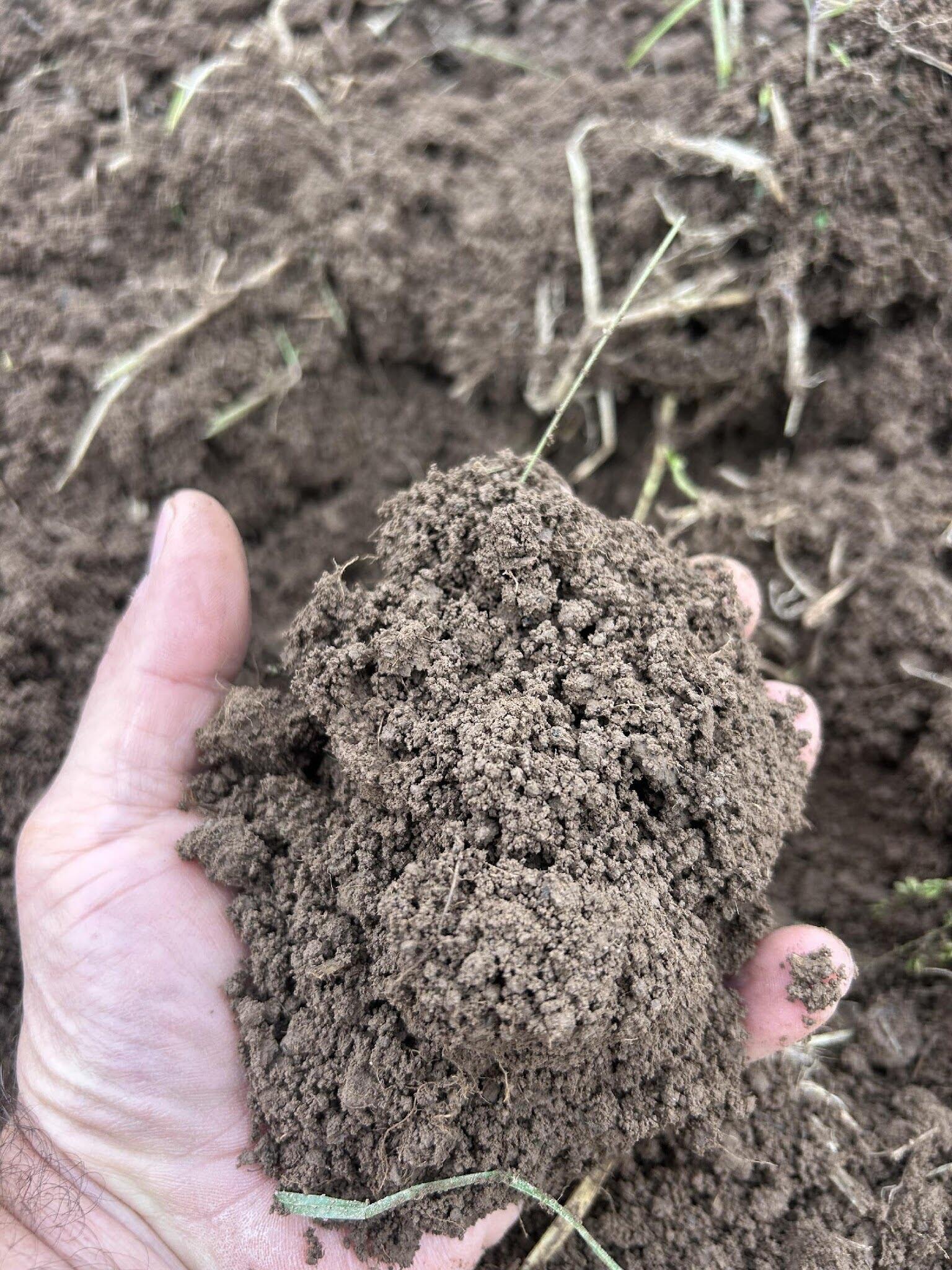
The hand of a farmer holds a handful of soil.

A handful of soil at Four Fold Farm, one of 80 participating organic farms sending soil samples and production practice to the Organic Microbiome Project. Photo credit: Steven Crist

Organic Farmer Driven Research on the Soil Microbiome at Cornell 

To approach this complexity, research projects led at the Casteel lab are utilizing a unique, participatory research approach where organic farmers are providing key insights on soil management practices that could be helping them withstand pests and extreme weather events. 

“The conservation of soil microbes that promote pest management is a new and potentially groundbreaking area for organic agriculture. These microbes naturally occur on organic farms, promote plant chemical defense, and control pests.” -The Organic Microbiome Project

The Organic Microbiome Project is perhaps the largest effort to date that is documenting the soil microbiome on organic farms. Over 80 organic farms are participating. Essentially, organic farmers are sending soil samples in, accompanied with answers about farming practices, and the lab documents changes within the soil microbiome, driving some interesting findings. Rather than deciding what practices to focus on and then involving farmers, the project starts by following practices organic farmers already employ. “We allowed farmers to submit up to two samples from two different fields where they have been using different practices, and we encouraged them to pick comparisons they were interested in,” explained Casteel. In this sense, the project is inherently farmer-led, and evaluates the effects of organic farming practices already being utilized on working farms. While results are still coming in, one thing is clear: when research follows the lead of farmers, it is closely watching how farmers are adapting and building resiliency in real time.

A field at an organic farm has strips tilled with brown soil showing in between green pathways covered with grass.

Strip tillage is one of may practices used to try to help protect soil health at Four Fold Farm, NY. Researchers with the Organic Microbiome Project encourage farmers to send soil samples from areas of their farm they are interested in comparing, leading to farmer-driven insights.

Changes to the soil microbiome and shifts in plant defenses that followed certain farming practices are shown in a table form.

Some interesting insights found so far are illustrated in this graphic. On the left, some organic practices that participants are using on their farms are listed. In the middle, a summary of the change to the microbiome, and on the right, if the crops there exhibited increased or decreased plant defenses.

Standing on the Shoulders: Recent Microbiome Research and Ongoing Seed Breeding

Another project carried out by Dr. Casteel, Dr. Eli Bloom and Ethan McAnally, Leveraging Soil Microbiomes to Promote Climate Change Resilience and Adoption of Organic Agriculture (funded by USDA/NIFA’s Organic Transitions Program) is looking closely at the soil microbiome and organic seed breeding. Also partnered with organic producers, this time specifically seed breeders, the project again follows the lead of farmers, who seem to be lighting the way toward a more regional approach to seed saving that might help withstand climate change. 

The project builds on previous research on both soil microbiomes and regional seed saving, and explores several themes: 

  • Pest pressure is reduced when crops are grown in soil where they are bred. The same effect was observed when the crops were grown with soil microbiomes from regional organic farms.
  • Crops bred under protection and irrigation performed poorly during droughts. When drought conditions were introduced to the study, kale performed better than tsa tsai. Tsa Tsai has been bred in irrigated, protected conditions (greenhouses), while kale is unirrigated and often outside. These results may reflect the maxim “stress as strength”.
  • Some farms’ soil microbiomes may offer protection against drought. All crops performed slightly better during droughts on certain farms in the study.

Voices from the Organic Seed Breeders

“We believe that soil and seed are everything,” Steven Crist, farmer at Four Fold Farm and Hudson Valley Seed Company, and partner on the project, explains. “The more we grow a crop, the better it becomes.” Crist gives a powerful insight into how stress as strength is working through the long-term relationships formed when seedspeople breed crops over time on their farms.

Seed crops that make it through the challenge are almost always more resilient, year to year. We believe this has everything to do with adaptation, directly linked to the microbiome, and to seed memory. That is a slightly pseudo-scientific term but that’s how I call it in the field. The more we grow a crop, the better it becomes, is the long and short of it.” -Steven Crist, Four Fold Farm

At Four Fold Farm, Crist utilizes best practices for protecting the living soil including “mulches, compost, cover cropping, rotation, repeat”. He is also experimenting with biochar, utilizing a New York Carbon grant, and incorporating local ecotypes of native plants, which he theorizes may provide unique and potent additions to his farm’s soil microbiome by attracting and promoting native insects. This approach follows the adage “As above, so below” and Crist suggests that the breeding and feeding of native insects might be mirrored by the breeding and feeding of soil microbes below. 

Lia Babitch, organic farmer at Turtle Tree Seed Initiative and another collaborator on the project, suggests that the social and ecological aspects of growing seed are intertwined. 

The varieties that we carry have become like our children, and like our friends. They’ve grown with us and we’ve watched their steady improvement and occasional shenanigans. And they’ve become rooted in the context of this valley both agriculturally and socially.”  -Lia Babitch, Turtle Tree Seed Initiative

Turtle Tree offers a novel approach to selling seeds that connects buyers to the seedspeople (and potentially the microbiomes there) with what Bloom calls “decision support” for farmers: for varieties of seed in Turtle Tree’s catalog, potential buyers can see the farms and regions where particular lots of seed are from. (Note this option is only available in their catalog, and that it may be added to the website later.)

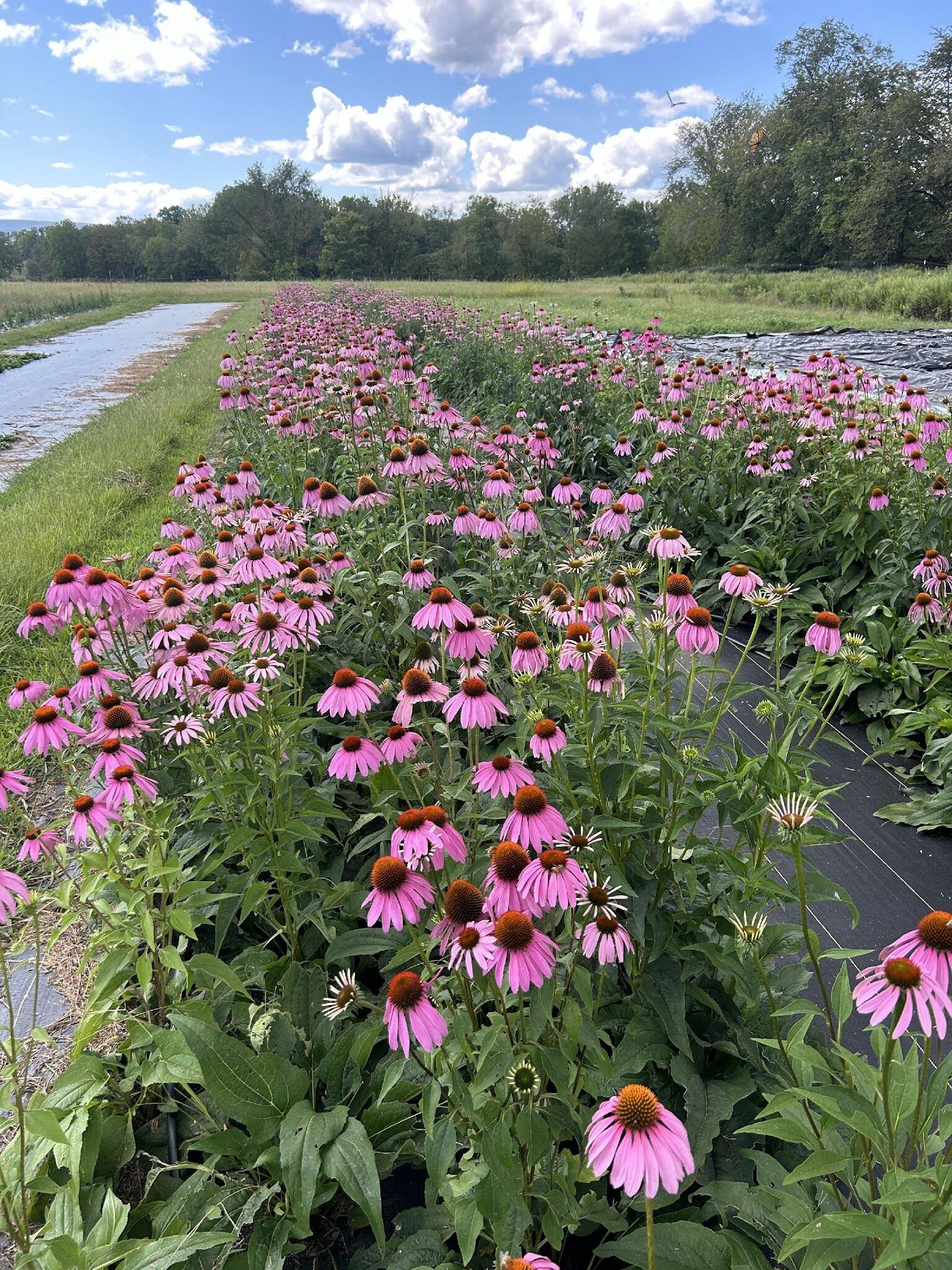
A field of echinacea grows at Four Fold Farm, an organic farm in New York State.

Conservation or production plantings of native plants like this echinacea at Four Fold Farm can attract specialized, native insects and birds. Some organic farmers are asking how plantings of native species may be affecting the soil microbiome through the introduction and presence of the insects and birds that the plants provide habitat for. 

Looking Ahead: The Triad of People, Plants, and Place

As time goes on, and provided funding for research like this continues, we will see more and more insights about how organic farmers’ practices are affecting the soil microbiome and resulting in increased resiliency to climate change. And along the way, it is clear that when researchers study what farmers are already doing, those insights will remain timely, farmer-driven, and translatable to other farmers eager to learn from each other.

Farmer-Led Trials Program Spotlight: Parker Farms

Managing Moisture in Organic Tomatoes on an Urban Farm

Written by Mary Hathaway, OFRF’s Research & Education Program Manager, and Markisha Parker, FLT Program participant

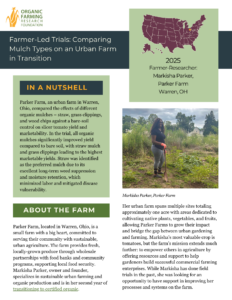
Parker Farms, located in Warren, Ohio, is a small farm with a big heart, committed to serving their community with sustainable, urban agriculture. The farm provides fresh, locally grown produce through wholesale partnerships with food banks and community programs, supporting local food security. Markisha Parker, owner and founder, specializes in sustainable urban farming and organic production and is in her second year of transitioning to certified organic (a process that typically takes three years). With a background in urban agriculture, education, and research, she offers hands-on experience and community education on soil management, crop rotation, and organic pest control.

Her urban farm spans multiple sites totaling approximately one acre with areas dedicated to cultivating native plants, vegetables, and fruits, allowing Parker Farms to grow their impact and bridge the gap between urban gardening and farming. Markisha’s primary crop is tomatoes, but the farm’s mission extends much further: to empower others in agriculture by offering resources and support to help gardeners build successful commercial farming enterprises. While Markisha has done field trials in the past, she was looking for an opportunity to have support in improving her processes and systems on the farm. After this trial, Parker Farms hopes to integrate educational elements by inviting local farmers, aspiring growers, and community members to observe and learn from their research.

Puddling Problems: Managing Moisture in Tomatoes

With limited space in an urban environment, Parker Farms wants to improve their yield and systems in the area that they have. This means making every square foot count. In previous seasons, Markisha had issues with excess moisture and puddling in the fields. One of her biggest challenges was in her most valuable crop: tomatoes. Episodes of excess rain left much of her crop with splitting or blight.

In order to address these issues, she wanted to trial different materials that were readily available as a mulch material to help her tomatoes get to market. In her area, Markisha knew that woodchips, grass clippings, and straw were readily available. So she asked: does a mulching material help mitigate soil moisture for greater tomato yield?

Farm Trial Plan

With technical support from OFRF, Markisha has set up a trial to compare how straw, grass clippings, or woodchips, impact the yield and marketability of slicer tomatoes, and compare it to a control group with no mulch. The design of the trial includes 4 treatments and 4 replications, in a 16-plot layout. Each plot will have 5 tomato plants.

Trial updates

The tomatoes were transplanted on May 22nd, and the mulch types were laid down just after transplanting. The mulch varieties of aged wood chips, straw from a neighboring farm, and fresh grass clippings from areas around her farm, were applied at an approximate 2” depth. The control plot had no mulch added, and was left as bare soil. An initial harvest is expected at the beginning of August. For data collection, Markisha will take both the total weight of tomatoes and the marketable weight of tomatoes. These measurements will help the farm understand if the different mulching materials impact yield, and especially the marketable yield of tomatoes that don’t have damage related to uneven moisture.

Stay tuned for trial updates and a final report at the end of the season!

Farmer-researcher Markisha Parker

“Participating in the Farmer Led Trials has given me the structure and support to test practices that could improve both the health of my crops and the sustainability of my urban plots.”

– Markisha Parker, Parker Farms

Parker Farms.

Research Results

Markisha decided to trial different readily available materials that could be used as a mulch, in order to mitigate extreme rainfall events and help her tomatoes get to market. In her area, Markisha had access to local sources of woodchips, grass clippings, and straw.

Key Findings

  • Straw mulch showed the greatest increase in yield and appeared to maintain more consistent soil moisture levels, which was crucial during a severe weather event involving heavy rain followed by a heatwave.
  • While grass mulch provided an initial cover and produced good yields, it decomposed quickly and had to be augmented over the growing season, resulting in higher labor requirements.
  • Bare soil was the most vulnerable to environmental stresses like rapid temperature shifts, drought, and heat, as well as to disease pressure, specifically an early onset of blight, which ultimately contributed to the lowest final yield.

All three mulch treatments improved yield compared to the bare-soil control. The straw mulch treatment showed the highest final yield. The control plots showed the lowest yield and were the most labor-intensive, demanding the greatest time investment for weekly weeding.

For full details on the study’s methodology and results, read the final report.

This is part of a series of blogs highlighting farmers who are participating in OFRF’s Farmer-Led Trials program. Farmers receive technical support to address their production challenges through structured on-farm trials. To learn more about OFRF Farmer-Led Trials Program, visit our website page at https://ofrf.org/research/farmer-led-research-trials/ 

By |2026-04-09T14:15:17-04:00July 28th, 2025|Farmer Stories, News, On-Farm Research, Water Management & Irrigation|

Farmer-Led Trials Program Spotlight: Ledoux Grange

Can teff handle high winds? This on-farm trial aims to find out.

Written by Mary Hathaway, OFRF’s Research & Education Program Manager

Ledoux Grange, situated at 7,400 feet in Mora, New Mexico, is an organic-certified, 34-acre operation focused on regenerative agriculture. Farmer Kristin Swoszowski-Tran has been cultivating Lilium species (a genus of herbaceous flowering plants growing from bulbs, including lilies) and hybrids  – since the 1990s, registering novel cultivars with the Royal Horticultural Society in Great Britain. As a member of the Southwest Grain Collaborative, Ledoux Grange also specializes in growing drought-tolerant, high-altitude pulses, legumes, grains, and cover crops, and is committed to bringing culturally rich, locally-grown produce to their community.

Testing Teff for Lodging Resistance

One of the grains that Ledoux Grange grows is Teff, an annual grass, a species of lovegrass native to Ethiopia, where it first originated in the Ethiopian Highlands. It was one of the earliest plants to be domesticated and is one of the most important staple crops in Ethiopia. Ledoux Grange is currently testing 14 teff accessions rated for their lodging resistance in its characteristically windy location. Teff’s versatility as human food, livestock fodder, and a drought-tolerant cover crop suited for high altitudes makes it a promising addition to their operation. The farm owner, Kristin, is enthusiastic about experimenting with various accessions, drawing inspiration from past successes with teff in the area. She has a broader interest in lovegrass species and is eager to observe their growth, hoping to identify types that will flourish and resist lodging in her environment.

Terminology Touch Point

ACCESSION: a distinct sample of germplasm representing a cultivar, breeding line, or a wild or cultivated population, maintained in a genebank for conservation and use. Its genetic stability is optimally preserved through careful monitoring and multiplication.

Source: GGCE

On-Farm Trial Plan

The plot layout includes 12 accessions from a western regional station, all of Ethiopian origin, alongside two commercially available varieties: ‘Bolorosso’ from Experimental Farm Network and teff from Great Basin Seeds. The experiment includes four replications, and is laid out in the field as four blocks border rows on each end. Each packet contains 200 seeds, with 50 seeds per plot, weighed out for accuracy. Rows will be one meter long, with seeds distributed evenly within each plot area. Planting is scheduled for late June, following thorough bed preparation.

Trial Evaluation Metrics

Data collection will be comprehensive, focusing on key metrics such as days to emergence, vigor, time to flowering, time to maturity, tillering, height, and lodging. Grain yield and seed color will also be recorded. Vigor will be assessed using either GRIN standards or a custom scale. Lodging will be rated on a 1-5 scale. To assess the tillering, she will record the number of tillers on 10 plants per plot and calculate the average. Grain yield will be determined by weighing the collected seeds. Seed color will be evaluated with a pantone scale.

Plot Map

Looking Ahead

The evaluation of these teff accessions will help Kristin identify promising teff accessions, and will facilitate seed increases for subsequent on-farm research at Ledoux Grange. Looking to the future, Kristin aims to address key challenges for this specific environment, like lodging prevention and optimal timing for growth relative to the monsoon season. Ultimately, Ledoux Grange hopes to expand crop diversity in the region, provide the community with nutrient-rich food options, and create new market opportunities.

Farmer-researcher Kristin Swoszowski-Tran

“I believe that it is crucial to conduct trials in diverse agricultural ecotypes so that we can perpetuate and ensure suitable, local production to idiosyncratic conditions. It is an honor and privilege to work with OFRF staff members, Mary and Heather, to organize this trial. They’ve made an easy and seamless process to plan the implementation. My hope is that we can identify drought-tolerant candidates that can withstand our windy conditions here at this elevation. I’m eager to see what this trial produces!”

– Kristin Swoszowski-Tran, Ledoux Grange

Teff trial layout.

Stay tuned:

This is part of a series of blogs highlighting farmers who are participating in OFRF’s Farmer-Led Trials program. Farmers receive technical support to address their production challenges through structured on-farm trials. To learn more about OFRF Farmer-Led Trials Program, visit our website page at https://ofrf.org/research/farmer-led-research-trials/ 

To learn more about Ledoux Grange visit https://www.facebook.com/ledouxgrange 

Farmer-Led Trials Program Spotlight: Farmacea

Farmacea Strawberry Trial Explores Sustainable Mulching

Written by Mary Hathaway, OFRF’s Research & Education Program Manager

In the heart of Munith, Michigan, Farmacea is undertaking an exciting experiment to help enhance their farm systems and design. Run by Mike Lucas and Rollin Baker, the farm’s 31 acres had previously been dedicated to conventional corn production for many decades. Over the past two years, Mike and Rollin have been diligently working to convert about 2 acres into arable, quality land by incorporating leaf mold and other organic materials. As they work to transition their land to certified organic, they are excited and energized to grow healthy, sustainable fruits and vegetables for their community. Mike and Rollin are committed to bringing the land back to life and hope to honor the tradition of Food as First Medicine.

The Strawberry Trial: Plastic vs. Clover

On-farm research trial at Farmacea comparing clover living mulch with conventional plastic mulch in organic strawberry crops.Farmacea’s project is a strawberry trial comparing traditional plastic mulch to a living mulch of white Dutch clover. Their research question is simple but will help Farmacea determine which strawberry planting system will work best for them in the coming years: “Does a living clover mulch produce higher strawberry yields than a plastic mulch?”.

To answer this, they’ve set up six beds. Three beds use the conventional plastic mulch, while the other three are planted with New Zealand White Clover (Trifolium repens) to serve as a living mulch. Both sets of beds include a mix of strawberry cultivars: Earliglow, Chandler, Allstar, and San Andreas, ensuring consistency in strawberry varieties across the trial.

Careful initial planning was essential, focusing on a consistent number and mix of strawberry plants in each bed. Mike and Rollin standardized the beds and timed clover planting, which faced weather-related delays and farm facility damage. Additionally, deer intrusions necessitated the construction of higher fences to protect the crops.

What They’re Measuring

Farmacea will be tracking several key metrics to determine the success of each mulching method:

  • Yield: Weight of harvested berries, percent marketable yield, and pint counts.
  • Brix: A measure of sugar content in the berries.
  • Weed Pressure: Observations and frequency of weeding interventions.
  • Photo Documentation: Keeping a visual record of the trial’s progress.
  • Soil Testing: Collecting samples to analyze soil health.

Data is being collected consistently over the season, with harvests twice weekly. They plan to document everything from the number of pints of berries to the weight of both marketable and unmarketable yields. Brix levels are being measured to gauge the sweetness of the berries and will ideally be taken at three intervals during the strawberry season.

Why This Matters

Farmacea’s trial is about more than just growing strawberries. It’s about finding sustainable options for weed suppression and improving soil health through practices like cover cropping. They are also interested in decreasing their reliance on nonrenewable resources and preventing microplastic contamination in their soil. Implementing a living mulch strategy is intended to lessen the need for manual weeding, enhance soil structure, and foster an environment that naturally inhibits weeds.

“For too long, the bulk of attention, funding, and resources in the agricultural research world have gone toward so-called ‘conventional’ farming methods. As a result, advances in organic farming practices have stalled and many today consider it an inefficient, outdated, and impractical way to produce food. We couldn’t disagree more. We see participating in a research trial on organic farming to be an important step in turning this tide, and hope that it will lead to better understanding and acceptance of these essential practices.”

– Rollin & Mike, Farmacea

Looking Ahead

As the trial progresses, Farmacea will continue to monitor and collect data. Soil tests will be conducted, and observations on weed pressure will be recorded. At the end of the trial, they will analyze the results to determine which mulching method provides the best yields, berry quality, and weed control.

This trial at Farmacea is a perfect example of how farmer-led research can lead to valuable insights and sustainable agricultural practices. By sharing their findings, Farmacea contributes to a broader community of farmers and researchers working towards a healthier, more resilient food system.

Stay tuned:

  • Follow Farmacea on Instagram @farma.cea to see photos and updates as Farmacea’s strawberry trial unfolds!
  • Check back here for future blog posts on the trial’s progress.

This story is part of a series profiling farmers who are taking part in OFRF’s Farmer-Led Trials (FLT) program. Farmers receive technical support from OFRF to address their challenges through structured on-farm trials. To learn more about OFRF Farmer-Led Trials Program, visit our website page at https://ofrf.org/research/farmer-led-research-trials/

By |2025-12-17T17:37:24-05:00May 29th, 2025|Farmer Stories, News, On-Farm Research, Weeds|

Lessons from OFRF’s Farmer-Researcher Collaboration Panel

Written by Brian Geier

Snacks, refreshments, and a circle of chairs were ready as a group of organic dairy farmers gathered together in southeast Minnesota for a listening session hosted by organic dairy researcher Dr. Brad Heins. Based in the west-central part of the state, Heins wanted to know more about what organic dairy farmers were facing in the southeast. For most of the event, he listened and allowed the producers to speak amongst themselves about the challenges they were facing. Meg Stuedemann of Derrydale Farm recalls Dr. Heins treated it like an informal focus group. “He’d ask a question and sit back and listen to who had been exploring what, who was interested in what, and how many people were dealing with the same issue.” 

Meg recently joined an OFRF panel of farmers and researchers to discuss successful farmer-researcher collaborations for organic agriculture. The panel took place in January of 2025, and is one of OFRF’s Seeds of Success Networking Sessions, a project funded by a cooperative agreement with USDA-NIFA. Other panelists included Dr. Mary Hendrickson, Professor in Rural Sociology at the University of Missouri, Dr. Kerry Clark, Research Professor and Soybean breeder at the University of Missouri and farmer Liz Graznak of Happy Hollow Farm in Jamestown, Missouri. A link to the full recording of the panel is available at the end of this post. 

Meg Stuedemann, Derrydale Farm, Belle Plaine, MN

Dr. Mary Hendrickson, Professor in Rural Sociology, University of Missouri

Liz Graznak, Happy Hollow Farm, Jamestown, Missouri

Dr. Kerry Clark, Research Professor, University of Missouri

Building Trust with Farmers

Spending time with farmers helps build trust reciprocal relationships that are key to successful farmer-researcher collaboration. “We (farmers) are most interested to participate in projects when it is a question that we are interested in,” said Meg, recalling the positive experience she had collaborating with Dr. Heins following the listening session. 

Dr. Mary Hendrickson agreed that being in community with farmers is key to successful research. From her perspective, a lot of the early research work in the 1990’s around grazing dairy and grazing herds in Missouri can be traced back to two researchers who attended “grazing clusters”, monthly peer-to-peer meetups of farmers who met at each other’s farms. Attending the farmers’ conversations allowed the researchers to find researchable questions and resulted in what Dr. Hendrickson called “extremely successful collaborating between grazing, forage researchers (and) beef producers.”

“Every good research idea I’ve ever had has come from being in community and working with farmers…so it [good research] is not my idea really. It really behooves researchers to be out with farmers.” -Dr. Mary Hendrickson

Even if researchers do not have a lot of opportunities to listen directly to farmers, Meg pointed out that they can get a sense of what research farmers are interested in by searching the SARE database, OFRF’s grant database, or state-level programs for on-farm research in their area. “I would be thrilled if someone called me and said, ‘I read about your paper and want to collaborate,’” Meg explained. 

Farmer Involvement in Organic Research

While networking can ensure farmers can help generate ideas for new research, involving farmers in research projects can be a whole other challenge. 

Even after a good research idea has been identified, researchers may have to wait months for funders’ Request for Applications (RFA’s) to be released before they know the specifics for proposals and timelines. These can have very regimented procedures that researchers have to stick to throughout the project period (several years). And it can take months to write a proposal and then several more months before researchers find out if they got the funding. 

To ensure farmer involvement in a given project, knowing several farmers within the industry can help. “Sometimes you end up doing on-farm research with a different farmer than the one that helped generate the idea,” Dr. Clark explained.

For collaboration to work, it is important for researchers to understand that farmers have different priorities. “The farm will always come first,” explained Mary, and Liz agreed. Clear agreements can lead to better outcomes. Meg suggested that more in-person involvement on the farm throughout the project period may help. “Researchers cannot expect farmers to be technicians,” she said. More in-person involvement from the research team, especially at data collection, can help uphold the integrity of the research. 

Even with the best of planning, “Sometimes it just doesn’t work out,” Dr. Clark cautions. She recounted one grazing experiment where the cows kept getting out despite the farmer’s best efforts, and that the research on that farm was ruined for that year. “Don’t feel bad,” Clark advises, “keep trying.”

Compensation for Farmers

While everyone on the panel agreed that farmers’ time is valuable and should be compensated for, amounts are not standardized and can vary greatly from project to project depending on the level of involvement and on what was originally written into a grant. Farmer involvement can even be a requirement in some RFA’s but specifics on those amounts are rarely, if ever, provided. 

Even if a research project is only utilizing land on a working farm, and not requiring a farmer to do any work or data collection, a stipend is expected. But panelists reported offering very different amounts ranging from a few hundred dollars to $2,000. While the researchers on the panel compared the different amounts they’d offered to farmers for their projects, one attendee of the session chimed in the chat to remind everyone that if farmers had been involved at the beginning of those projects, they could have helped set those payment amounts. 

For any use of a farmer’s time, it was recommended that they be treated as professional consultants or specialized contractors, and given a comparable rate.

Farmers Value Long-Term Relationships

One key to the success of farmer-researcher collaboration came up amongst the farmers on the panel, and it echoes what OFRF heard at a panel discussion in early 2024 with Project Directors and collaborating farmers working on USDA-funded organic research projects: long-term relationships build trust. 

That process can start well before a project, with researchers spending time with farmers, or with farmers reaching out to researchers. There are a lot more farmers than there are researchers, so it may be easier for farmers to reach out to researchers than the other way around. “Don’t be afraid to call the University in your state,” said Clark.

The  Follow-Up: An Overlooked Key to Ongoing Success

Once earned, the trust of farmers must be kept. And that, according to farmers on the panel, requires connecting after the conclusion of on-farm research. Farmers report that seeing the end result of research that they contributed to was one of, if not the most important thing to feeling like it was worthwhile. 

“One of the biggest frustrations is not finding out the bigger picture that my farm or my participation has contributed to. I don’t think I’ve ever worked with a researcher who has sent me the final paper or sent me an extension publication or the final paper and said, “This is what you were involved in.” That would mean more to me than the stipend.” -Meg Stuedemann, Derrydale Farm

I agree that acknowledging that farmers are professionals and that compensation is appreciated,” Meg said. “But it’s not why I say yes. It is not a revenue stream for my farm. But knowing what happened would be really wonderful.” According to the farmers on the panel, that could look like simply getting a call or better yet getting sent complementary copies of published papers or extension resources.

Watch the full Seeds of Success networking session:

About the Seeds of Success Series

OFRF has partnered with the Organic Farmers Association (OFA) and National Organic Coalition (NOC) to lead a series of virtual farmer-to-farmer networking sessions. These facilitated events will be engaging opportunities for farmers to share their challenges and successes, and will be accompanied with relevant resources you can use.

To learn more about these and other events from OFRF visit: https://ofrf.org/events/

Funding for this series is provided by a cooperative agreement between OFRF and USDA- NIFA to highlight research investments made through both OREI and ORG grant programs.

Learn more about the Organic Agriculture program at USDA-NIFA at:  https://www.nifa.usda.gov/grants/programs/organic-agriculture-program

By |2025-12-09T17:51:57-05:00March 27th, 2025|News, On-Farm Research|

Field Day Toolkit: Build Community Through Sharing Knowledge

By Gordon Merrick, Senior Policy & Programs Manager at OFRF

Field days have been a longstanding tool in the agriculture community, both to disseminate research being done at Agricultural Experiment Stations and Land Grant Universities, but also communities and non-governmental organizations. These events provide a unique space for farmers, researchers, and agricultural professionals to come together to share insights, learn from one another, and foster future collaborations. At OFRF, we know that hosting a field day can feel like a daunting task, especially if it is your first go around! That’s why we are thrilled to announce the release of a new resource to guide you through the process of planning and hosting a field day, and it’s available in both English and Spanish!

Why Host a Field Day?

Field days are about a lot more than just showcasing research findings or demonstrating a new technique or technology. They are opportunities to create meaningful connections within the larger agricultural community. We know, through our NORA-22 report, that farmers are each other’s greatest source of knowledge, and in-person events like these can amplify the exchange of ideas and information tremendously. Additionally, they offer researchers and other professionals a chance to ground their work in the realities of farming, ensuring that their research continues to be relevant, practical, and impactful.

Hosting a field day on your own farm can have some additional co-benefits too, like having a group of experts look at your operation and discuss opportunities to improve it through implementing the latest research findings with USDA programs that provide detailed technical and financial assistance.

Making Field Days Easier: OFRF’s New Toolkit!

To make harnessing these benefits as easy as possible, we’ve developed a comprehensive Field Day Toolkit that provides a roadmap and customizable materials to plan, host, and follow up on a successful event. This guide includes practical tips, checklists, and resources to streamline the process, and maximize the impact of your field day! Whether you’re new to hosting events, or looking to refine your approach, the toolkit covers every phase of organizing one. 

Highlights of the toolkit include:

  • Step-by-Step Guidance: A detailed roadmap to plan, execute, and evaluate a successful field day.
  • Audience Engagement Tips: Best practices for creating interactive, farmer-focused events that maximize learning and participation.
  • Logistics Planning: Checklists for equipment, scheduling, and accessibility to ensure a seamless experience.
  • Outreach Strategies: Ideas to promote your event and attract attendees from diverse backgrounds.

This resource is also available in Spanish, ensuring that more communities have access to tools that help build knowledge and collaboration.

We at OFRF know that agriculture thrives when we can effectively and efficiently share knowledge with one another. As the challenges facing organic and non-organic producers continue to grow, the exchange of ideas and practices through events like field days are even more valuable. This toolkit helps make these events accessible, inclusive, and impactful; ultimately leading to a stronger foundation for the agricultural community and economy.

Start Planning Your Field Day Now!

Hosting a field day doesn’t have to be overwhelming. With the right tools and a clear plan, you can create and implement an event that inspires action, builds relationships, fosters growth, and can even better your operation! Download our Field Day Toolkit today and take the first step toward bringing your community together.

Together we can continue to grow, learn, and collaborate to create a sustainable future for American agriculture, one field day at a time.

By |2026-01-15T11:26:07-05:00January 9th, 2025|News, On-Farm Research, TOPP West|
Go to Top