Resource

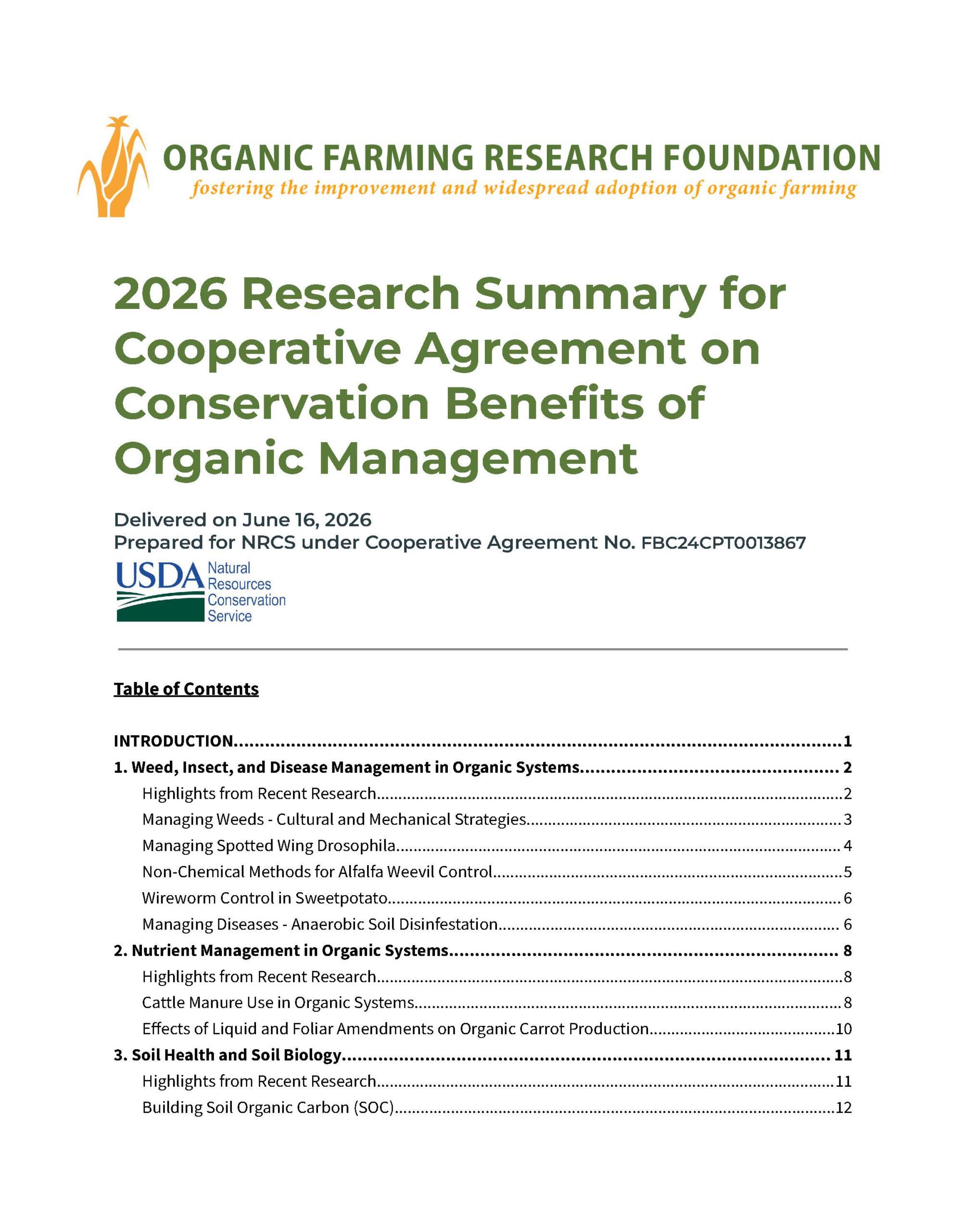
2026 Research Summary on Conservation Benefits of Organic Management

This report provides a summary of the latest organic agriculture research (as of 2025) across a variety of topics, meant to provide NRCS staff, organic producers, and other interested parties with in-depth educational information on the conservation benefits of organic management.

This research summary was produced with support from the United States Department of Agriculture’s Natural Resources Conservation Service (USDA-NRCS) under Cooperative Agreement No. FBC24CPT0013867. The contents are solely the responsibility of the authors and do not necessarily reflect the views of USDA-NRCS.

By |2026-06-25T15:05:30-04:00June 25th, 2026|Climate Change, Resource|

Manejo Orgánico de Plagas y Malezas para Proveedores de Servicios en el Sur

Guía de manejo orgánico de plagas y malezas para agentes de extensión y proveedores de servicios técnicos

Esta ficha informativa tiene como objetivo proporcionar a los agentes de extensión y a los proveedores de servicios técnicos del sur una visión general del manejo orgánico de plagas y malezas, y aumentar el conocimiento de los sistemas orgánicos para apoyar eficazmente a los agricultores orgánicos y a aquellos en transición hacia la agricultura orgánica.

¿Prefieres escuchar? Mira nuestro seminario web sobre Manejo Orgánico de Plagas y Malezas para Agentes de Extensión en el Sur.

El control de plagas y malezas es uno de los desafíos más importantes para los productores orgánicos, ya que afecta el rendimiento de los cultivos, la calidad del producto y la sostenibilidad económica de las explotaciones. En las condiciones cálidas y húmedas de la región sur, estas presiones son especialmente intensas, por lo que contar con estrategias de manejo eficaces y conformes con las normas NOP es fundamental para cualquier asesor agrícola.

Esta sesión de 75 minutos está diseñada específicamente para extensionistas, proveedores de servicios técnicos (PST) y otras personas que apoyan a los agricultores orgánicos y en transición en el Sur. Los ponentes analizan los insectos, enfermedades y malezas más comunes en la región SSARE, desde el gusano cogollero y el nematodo de las agallas hasta el amaranto y la juncia, y relacionan este contexto regional con los requisitos de manejo de plagas descritos en el Programa Nacional Orgánico. Basándose en investigaciones realizadas en el Sur, la sesión se centra en estrategias prácticas y con respaldo científico que los extensionistas y los PST pueden brindar directamente a los agricultores a quienes sirven, abarcando enfoques para el manejo de malezas, el control de insectos y enfermedades, y el marco de Manejo Integrado de Plagas (MIP) de “muchos pequeños martillos” que sustenta la producción orgánica.
El control de plagas y malezas es uno de los desafíos más importantes para los productores orgánicos, ya que afecta el rendimiento de los cultivos, la calidad del producto y la sostenibilidad económica de las explotaciones. En las condiciones cálidas y húmedas de la región sur, estas presiones son especialmente intensas, por lo que contar con estrategias de manejo eficaces y conformes con las normas NOP es fundamental para cualquier asesor agrícola.

Esta sesión de 75 minutos está diseñada específicamente para extensionistas, proveedores de servicios técnicos (PST) y otras personas que apoyan a los agricultores orgánicos y en transición en el Sur. Los ponentes analizan los insectos, enfermedades y malezas más comunes en la región SSARE, desde el gusano cogollero y el nematodo de las agallas hasta el amaranto y la juncia, y relacionan este contexto regional con los requisitos de manejo de plagas descritos en el Programa Nacional Orgánico. Basándose en investigaciones realizadas en el Sur, la sesión se centra en estrategias prácticas y con respaldo científico que los extensionistas y los PST pueden brindar directamente a los agricultores a quienes sirven, abarcando enfoques para el manejo de malezas, el control de insectos y enfermedades, y el marco de Manejo Integrado de Plagas (MIP) de “muchos pequeños martillos” que sustenta la producción orgánica.

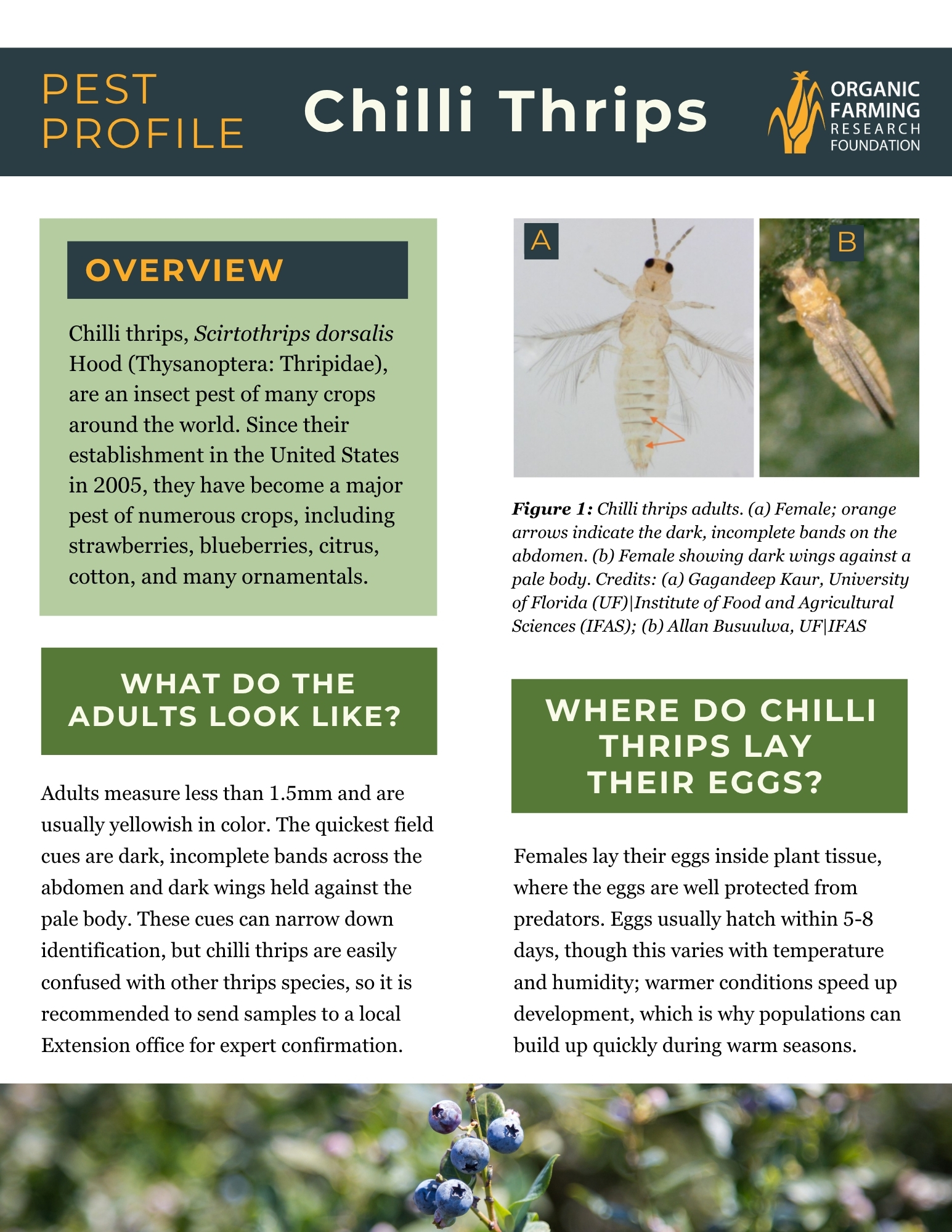
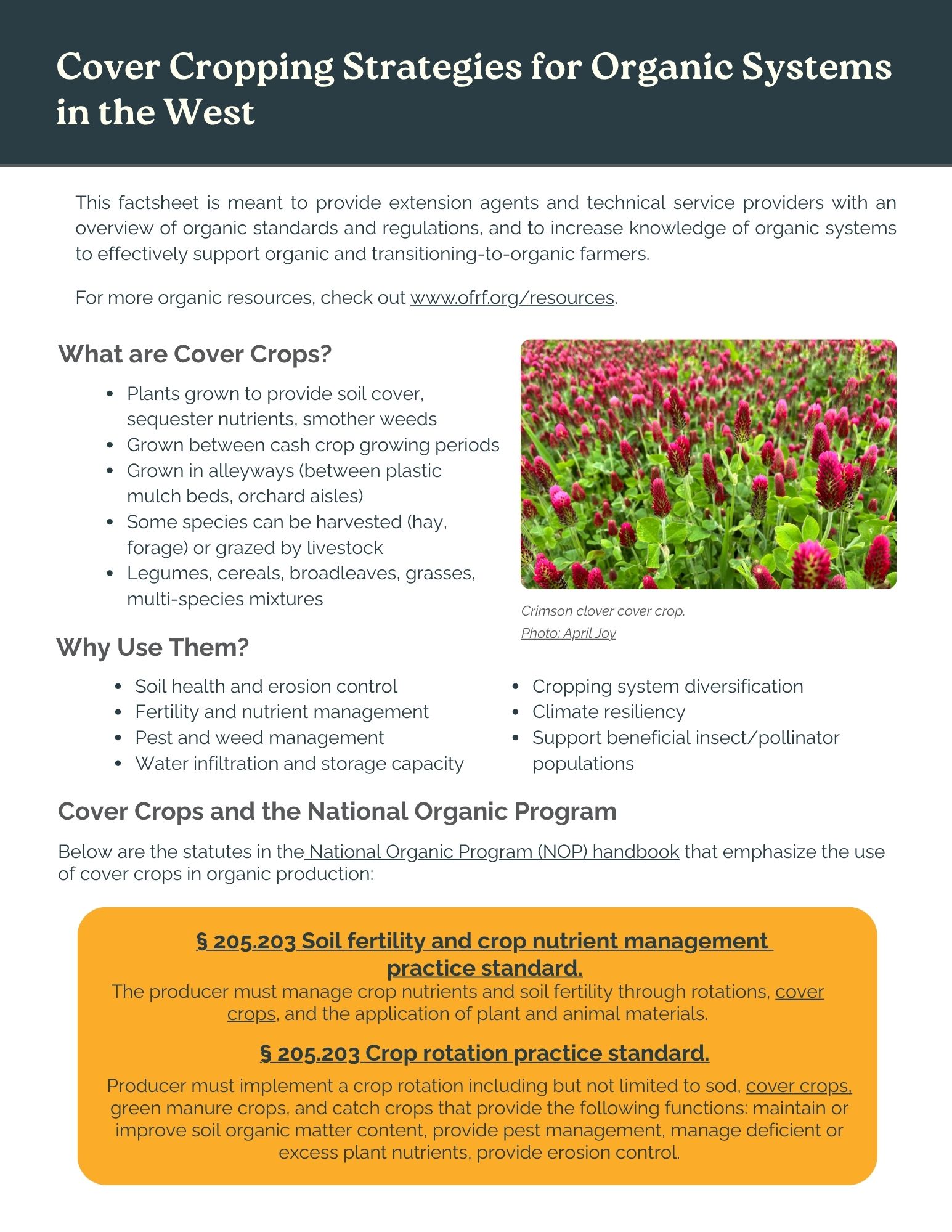
Image of the front page of a four-page factsheet on organic pest and weed management for extension agents in the west.

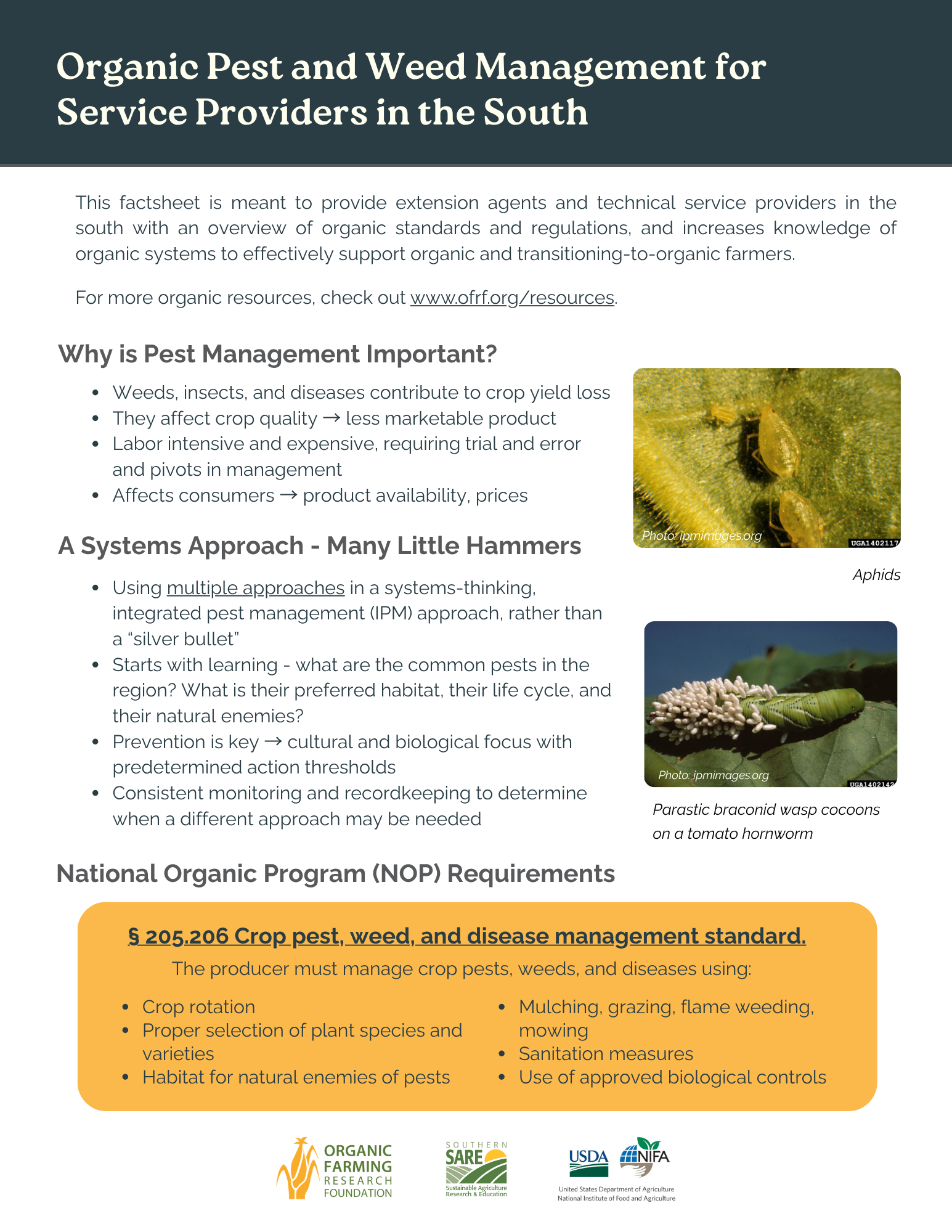
Organic Pest and Weed Management for Service Providers in the South

An Organic Pest and Weed Management Guide for Extension Agents and Technical Service Providers (TSPs).

This factsheet is meant to provide extension agents and technical service providers in the south with an overview of organic pest and weed management, and increase knowledge of organic systems to effectively support organic and transitioning-to-organic farmers.

Prefer to listen? Watch our Organic Pest and Weed Management for Extension Agents in the South webinar.

Pest and weed pressure is one of the most significant challenges facing organic producers — affecting crop yields, product quality, and the economic sustainability of farming operations. In the hot, humid conditions of the southern region, these pressures are especially intense, making effective, NOP-compliant management strategies essential knowledge for anyone advising farmers in the field.

This 75-min session is designed specifically for extension agents, technical service providers (TSPs), and others who support organic and transitioning farmers in the South. Presenters walk through the most common insects, diseases, and weeds found across the SSARE region — from armyworm and root-knot nematode to pigweed and nutsedge — and connect that regional context to the pest management requirements outlined in the National Organic Program. Drawing on research conducted in the South, the session focuses on practical, science-backed strategies that extension agents and TSPs can bring directly to the farmers they serve, covering approaches to weed management, insect and disease control, and the “many little hammers” IPM framework that underpins organic production.

Image of the front page of a four-page factsheet on organic pest and weed management for extension agents in the west.
By |2026-06-23T10:53:27-04:00June 11th, 2026|Certification & Compliance, Insects & Diseases, Resource|

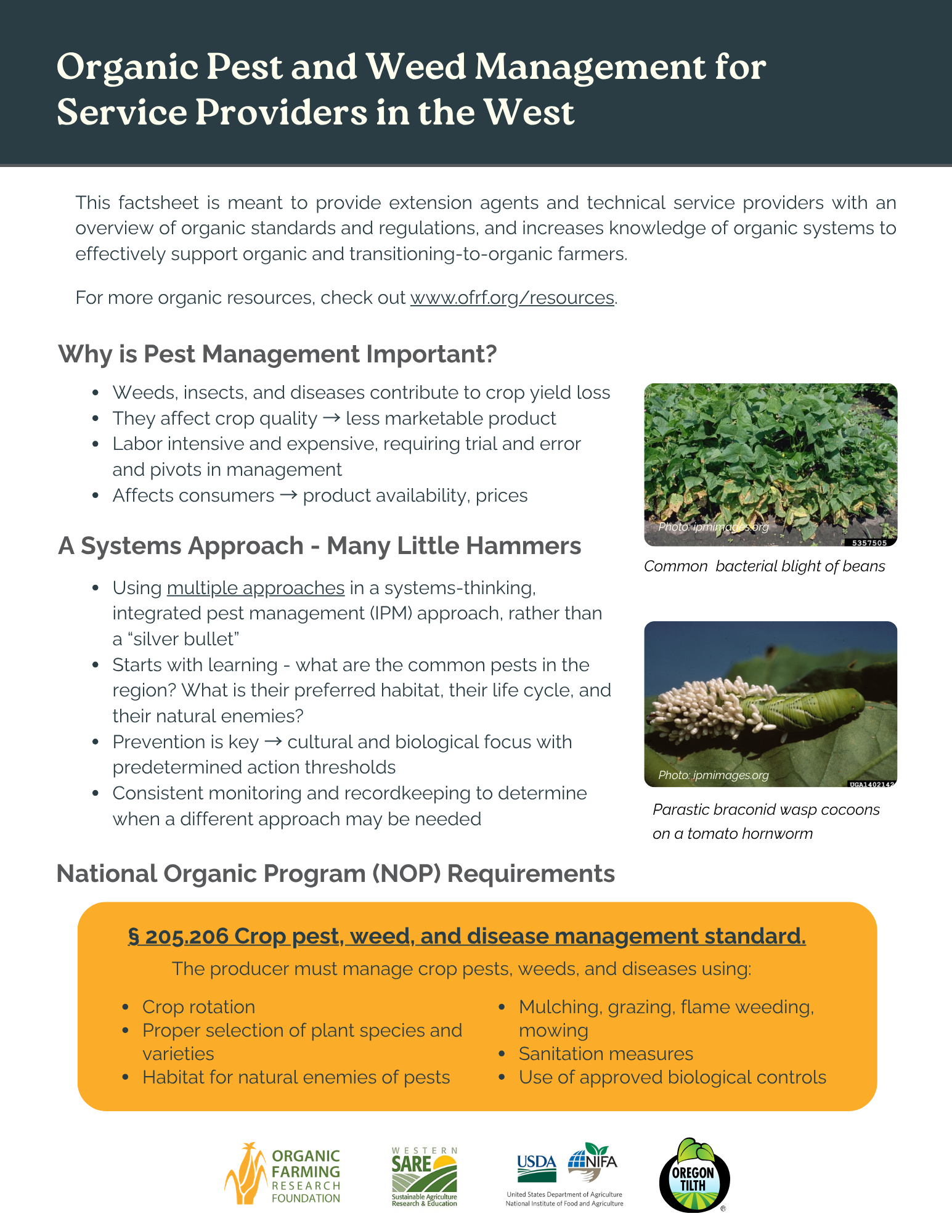
Organic Pest and Weed Management for Service Providers in the West

An Organic Pest and Weed Management Guide for Extension Agents and Technical Service Providers (TSPs).

This factsheet is meant to provide extension agents and technical service providers in the west with an overview of organic pest and weed management, and increase knowledge of organic systems to effectively support organic and transitioning-to-organic farmers.

Prefer to listen? Watch our Organic Pest and Weed Management for Extension Agents in the West webinar.

In this 75-minute session, presenters will walk through the most common insects, diseases, and weeds found across the WSARE region — from apple maggot and wheat stem sawfly to kochia and field bindweed — and connect that regional context to the pest management requirements outlined in the National Organic Program. Drawing on research conducted in the West, the session will focus on practical, science-backed strategies that extension agents and TSPs can bring directly to the farmers they serve, covering approaches to weed management, insect and disease control, and the “many little hammers” IPM framework that underpins organic production.

Image of the front page of a four-page factsheet on organic pest and weed management for extension agents in the west.
By |2026-06-04T15:56:27-04:00June 4th, 2026|Certification & Compliance, Resource|

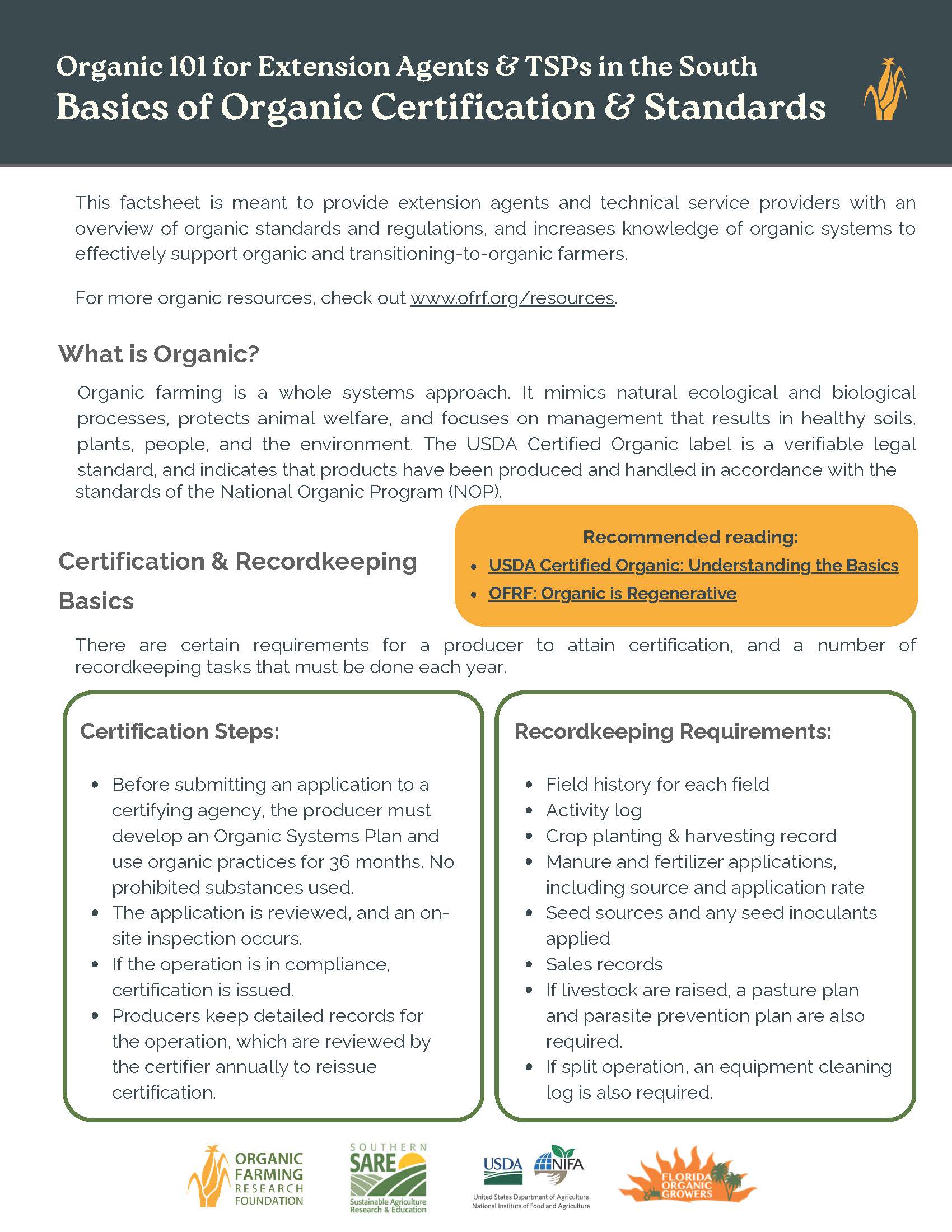
Basics of Organic Certification & Standards for Extension Agents in the South

A foundational guide for Extension Agents and Technical Service Providers (TSPs).

This factsheet provides a concise overview of the USDA National Organic Program (NOP) regulations, designed to help you effectively support farmers in the south as they navigate organic certification and the 36-month transition period.

What’s Covered:

  • The Certification Roadmap: A step-by-step breakdown from developing an Organic Systems Plan (OSP) to the final on-site inspection.
  • Recordkeeping Essentials: A checklist of mandatory logs, including field history, seed sources, and soil amendments.
  • Crop & Land Standards: Rules on buffer zones, crop rotations, and OMRI-approved materials.
  • Livestock & Pasture: Requirements for organic management timelines, grazing (DMI), and animal welfare.

Additionally, three organic experts based in the south, Eva Worden (Worden Farm, Punta Gorda, FL), Juan Carlos Rodriguez (Florida Organic Growers), and Danielle Treadwell (University of Florida) share advice for extension agents and technical service providers when working with organic producers.

Prefer to listen? Watch our Organic 101 for Extension Agents in the South webinar.

In the first half of this informative session, you will learn the basic principles of organic certification and become familiar with organic standards. During the second half, three organic specialists share their experiences with collaborative work involving organic farmers and extension agents.

Certified Crop Advisors can earn 1.0 Professional Development Continuing Education Unit (CEU) following completion of the webinar.

By |2026-04-09T16:18:03-04:00April 9th, 2026|Certification & Compliance, Resource|

Basics of Organic Certification & Standards for Extension Agents in the Northwest

A foundational guide for Extension Agents and Technical Service Providers (TSPs).

This factsheet provides a concise overview of the USDA National Organic Program (NOP) regulations, designed to help you effectively support farmers in the Northwestern US as they navigate organic certification and the 36-month transition period.

What’s Covered:

  • The Certification Roadmap: A step-by-step breakdown from developing an Organic Systems Plan (OSP) to the final on-site inspection.
  • Recordkeeping Essentials: A checklist of mandatory logs, including field history, seed sources, and soil amendments.
  • Crop & Land Standards: Rules on buffer zones, crop rotations, and OMRI-approved materials.
  • Livestock & Pasture: Requirements for organic management timelines, grazing (DMI), and animal welfare.

Additionally, three organic farmers based in the Northwest, Beth Hoiknaki of Goodfoot Farm in Philomath, Oregon, April Jones Thatcher of April Joy Farm in Ridgefield, Washington, and Diane Green of Greentree Naturals in Sand Point, Idaho, share advice for extension agents and technical service providers when working with organic producers.

Prefer to listen? Watch our Organic 101 for Extension Agents in the West webinar.

In the first half of this informative session, you will learn the basic principles of organic certification and become familiar with organic standards. During the second half, three farmer panelists share their experiences in becoming certified organic producers in the West.

Certified Crop Advisors can earn 1.0 Professional Development Continuing Education Unit (CEU) following completion of the webinar.

screenshot of the front page of a factsheet titled "Organic 101 for Extension Agents and TSPs - Basics of Organic Certification and Standards"
By |2026-04-08T17:06:01-04:00February 18th, 2026|Certification & Compliance, Resource|

2024 Research Summary on Conservation Benefits of Organic Management

This document provides a summary of the latest organic agriculture research across a variety of topics, meant to provide NRCS staff, organic producers, and other interested parties with in-depth educational information on the conservation benefits of organic management.

This research summary was produced with support from the United States Department of Agriculture’s Natural Resources Conservation Service (USDA-NRCS) under Cooperative Agreement No. FBC24CPT0013867. The contents are solely the responsibility of the authors and do not necessarily reflect the views of USDA-NRCS.

By |2026-03-02T12:16:34-05:00January 15th, 2026|Climate Change, Resource|

2025 Research Summary on Conservation Benefits of Organic Management

This report provides a summary of the latest organic agriculture research (as of 2025) across a variety of topics, meant to provide NRCS staff, organic producers, and other interested parties with in-depth educational information on the conservation benefits of organic management.

This research summary was produced with support from the United States Department of Agriculture’s Natural Resources Conservation Service (USDA-NRCS) under Cooperative Agreement No. FBC24CPT0013867. The contents are solely the responsibility of the authors and do not necessarily reflect the views of USDA-NRCS.

By |2026-03-02T12:16:49-05:00January 15th, 2026|Climate Change, Resource|

Adding the “O”: Farmer Perspectives and Experiences Transitioning to Organic in the Northwest

Farmers transitioning to organic production face unique challenges that require technical assistance on a wide range of production and non-production issues. During the transition period, farmers must consider financially viable strategies for the three-year transition period, how to restore soil health while learning to manage weeds without herbicides, acquiring new equipment and infrastructure needed for organic production, and navigating NOP-related paperwork during the last year of transition and first year of certification. This webinar features three farmers who have worked through these issues and share their experiences and thoughts for demystifying some of the challenges they faced in the process. In this session, we feature three farmers in the Northwest who have built resilience and a dynamic organic system:

  • Lynn Schaal, Life Springs Farm in Idaho
  • Tracey Dion, Yellowstone River Farms in Montana
  • Aaron Flansburg, Flansburg Farm in Washington

About the Seeds of Success Series

OFRF has partnered with the Organic Farmers Association (OFA) and National Organic Coalition (NOC) to lead a series of virtual farmer-to-farmer networking sessions. These facilitated events will be engaging opportunities for farmers to share their challenges and successes, and will be accompanied with relevant resources you can use.

To learn more about these and other events from OFRF, visit: https://ofrf.org/events/. Funding for this series is provided by a cooperative agreement between OFRF and USDA-NIFA to highlight research investments made through both the OREI and ORG grant programs.

By |2026-03-02T12:28:14-05:00January 15th, 2026|Certification & Compliance, Resource|
Go to Top