
Impacts of OFRF Berry Research

Impacts of OFRF Berry Research

By |2025-12-10T15:22:42-05:00December 10th, 2025|Advocacy, Insects & Diseases, On-Farm Research, Resource|

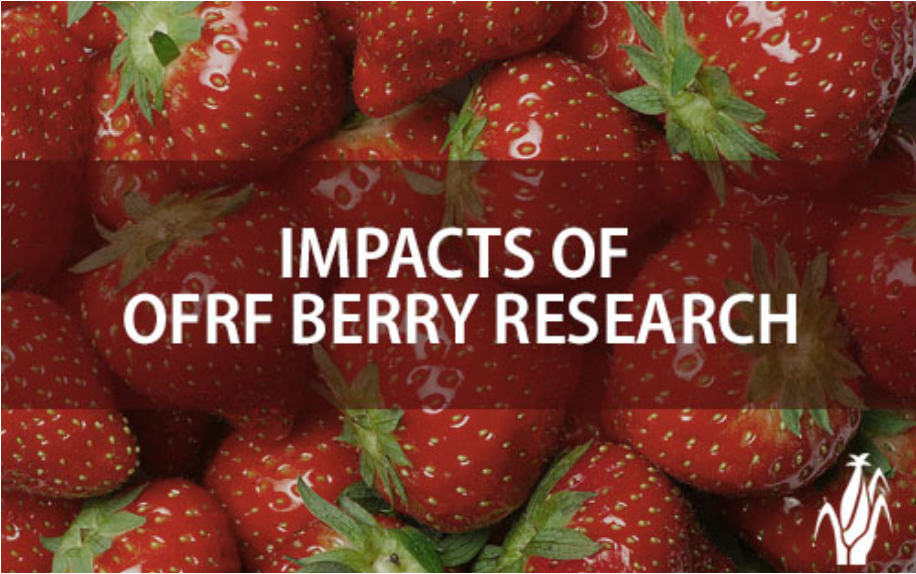
This report offers a detailed review and impact assessment of OFRF-funded research on organic
berry production, with a focus on strawberries. These research projects address the most pressing
issues in the industry and this evaluation clearly indicates that OFRF investments have resulted
in important advances in organic berry production knowledge and practices, especially in
California. Overall, OFRF grant funding has advanced scientific knowledge and improved the
practices, ecological sustainability, and economic prosperity of organic berry farming. This
report recommends continued research support for organic insect, disease, and weed
management research efforts in berry production.
2021 CALIFORNIA ORGANIC RESEARCH AGENDA

By |2025-12-10T15:16:29-05:00December 10th, 2025|Advocacy, Insects & Diseases, On-Farm Research, Resource|

California is the nation’s top producer of organic agricultural commodities and specialty crops. Thus, it
is imperative to understand the unique needs of the organic growers in the nation’s most agriculturally
productive state. The 2021 CORA report provides up-to-date information on the stewardship practices
used by organic producers across the state and identifies the most pressing production and non-production
challenges faced by organic California growers. The findings presented in this report: 1) highlight the soil
health management practices that organic producers in California are currently implementing, 2) outlines the most pressing challenges and needs of certified organic producers in California, and 3) outlines priorities and recommendations to address those needs through public policy, research, and Extension programs.

2021 California Organic Research Agenda report

Dr. Erin Silva

By |2025-12-09T08:13:45-05:00December 9th, 2025|Board|

Director of the Center for Integrated Agricultural Systems, University of Wisconsin-Madison

Dr. Erin Silva is an Associate Professor and State Extension Specialist in Organic and Sustainable Cropping Systems in the Department of Plant Pathology, as well as the Director for the Center for Integrated Agricultural Systems in the College of Agricultural and Life Sciences at UW-Madison. After completion of a PhD in Horticulture at Washington State University, Dr. Silva obtained a faculty position at New Mexico State University. During her tenure at NMSU, Dr. Silva taught courses on organic vegetable production, an experiential learning course integrating the working student organic Community Supported Agriculture (CSA) farm on campus. Dr. Silva initiated several organic research projects at NMSU, including work on cover crop-based reduced tillage for organic vegetable crops and breeding vegetables for organic production systems.

Donna Holmes

By |2025-12-09T08:07:55-05:00December 9th, 2025|Board|

Managing Director, Investor Relations, Iroquois Valley Farmland REIT

Donna Holmes is the Managing Director of Investor Relations at Iroquois Valley Farmland REIT. There, she shares the company’s vision and investment strategy with investors and prospects. She is responsible for expanding their investor base by building a community of like-minded investors. Donna is passionate about creating an opportunity for all people to reap the health benefits of nutritional food, grown in a sustainable and socially just society. Using her knowledge of finance and investing, Donna structures investment vehicles to address investors’ different needs and goals. She believes in Iroquois Valley’s triple bottom line principles, actively securing social, environmental, and financial returns for our investors.

Prior to joining Iroquois Valley, Donna served in business development and investor relations roles at three alternative asset management firms. Before working in finance, she practiced law, specializing in tax and ERISA matters.

Spotted Wing Drosophila: Identification & Management Basics

By |2025-12-08T13:08:58-05:00December 8th, 2025|Insects & Diseases, Resource|

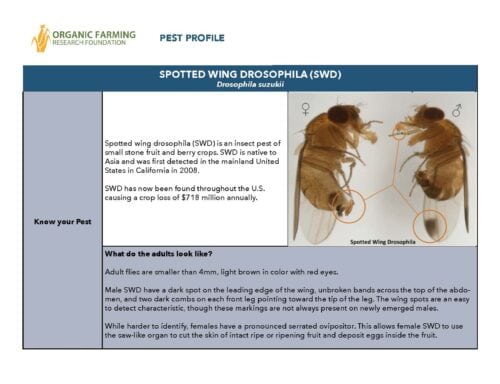
This factsheet outlines how to recognize Spotted Wing Drosophila (SWD) adults, eggs, and larvae, and explains the insect’s life cycle, timing, and factors driving its abundance. It provides key ecological pest management strategies—monitoring presence, using time and space to your advantage, maintaining clean fields, and supporting beneficial insects. Farmers will gain practical tools to limit SWD infestations and protect fruit crop quality and yield.

Solanaceae Flea Beetles: Organic Pest Profiles

By |2025-12-08T13:00:19-05:00December 8th, 2025|Insects & Diseases, Resource|

This factsheet covers identification of tuber flea beetles and pale striped flea beetles, detailing their behavior, life cycles, and preferred hosts in the nightshade family. It outlines key ecological pest management strategies, including stressing the pest, supporting beneficial insects, and strengthening crop diversity. Farmers gain practical, organic tactics to limit flea beetle damage and protect solanaceous crops.

Brassica Flea Beetles: Organic Pest Profiles

By |2025-12-08T12:50:50-05:00December 8th, 2025|Insects & Diseases, Resource|

This factsheet provides clear identification guidance for striped and crucifer flea beetles, including eggs, larvae, and adult stages. It outlines key ecological pest management strategies, emphasizing pest suppression, enhancing beneficial insect populations, and maintaining healthy crop diversity. Farmers will gain practical, organic tools to reduce flea beetle pressure and protect brassica crops.

Organic Management Guide for Canada Thistle

By |2025-12-08T12:36:12-05:00December 8th, 2025|Resource, Weeds|

Effective Canada thistle management centers on exhausting its storage roots and preventing new seed production. This factsheet highlights the critical role of timing, especially removing shoots in late spring, when root reserves are at their lowest. Farmers will find practical organic strategies to disrupt regrowth, reduce thistle vigor, and maintain long-term field health.

Managing Yellow and Purple Nutsedge in Organic Systems

By |2025-12-08T12:30:19-05:00December 8th, 2025|Resource, Weeds|

Controlling weeds is the top challenge for organic farmers, and nutsedges are among the most persistent weeds in organic production, with unique stress tolerances that make them difficult to control. This factsheet explains the biology and environmental preferences of yellow and purple nutsedge, along with organic management tactics tailored to their behavior. It also includes key preventative measures to help limit establishment and reduce long-term impacts on crop and soil health.

Field Bindweed Management: Organic Weed Control Strategies

By |2025-12-08T12:21:30-05:00December 8th, 2025|Resource, Weeds|

Controlling weeds is the top challenge for organic farmers, and field bindweed can be especially persistent. This factsheet provides species-specific strategies for managing and preventing field bindweed in organic cropping systems. It includes practical tactics, tips for integrating them into your operation, and links to additional resources for further guidance.

Go to Top