
Farmer-Led Trials Program Spotlight: Salad Days Farm
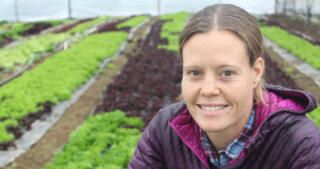
Maggie Dungan runs Salad Days Farm in Versailles, Kentucky, a diverse vegetable operation situated on 30 acres and certified organic since 2015. She is participating in OFRF's Farmer-Led Trials (FLT) Program to learn more about the temporal and population effect of solarization on the beneficial microbes in the high tunnel.
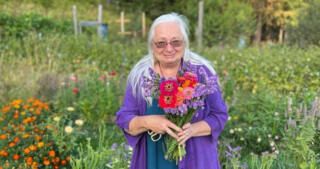
A Commitment to Community and the Land
Greentree Naturals Farm is a beacon of organic farming in Northern Idaho. For over three decades they have cultivated a rich diversity of vegetables, herbs, and more, while championing community education and environmental stewardship. This feature explores their commitment to organic farming, innovative research, and the challenges they face.
Understanding the Impact of Herbicides and Synthetic Fertilizers on Soil Health
Optimally functioning soil biota is essential to healthy agro-ecosystems — it feeds crops, enhances resilience, protects water quality, and contributes to long-term farm viability. This article addresses growing concerns about the impact of agrochemicals, including herbicides and synthetic fertilizers, on soil health, diving into recent research to uncover the facts, and the uncertainties.
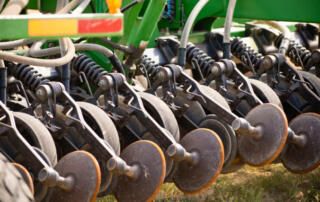
Not All Tillage Is Created Equal
Organic farmers face criticism for tillage, but research shows that balanced tillage can improve soil health while effectively managing weeds. Learn more in this post.
The Impact of Agricultural Research on USDA Conservation Programs
Climate change threatens our food supply. Underfunding of agricultural research hinders efforts to protect our environment and support farmers, but organic agriculture can play a critical role in building resilience.
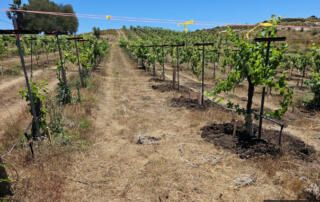
Farmer-Led Trials Program Spotlight: Jorge Reyes
Jorge Reyes owns a 3-acre vineyard located in Potrero, California where he is transitioning to organic certification, and plans to produce organic wine. He is participating in OFRF's Farmer-Led Trials Program to test mulch applications on his grape vines.
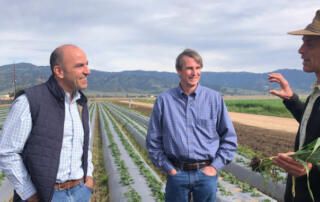
Championing Organic Research
The Salinas ARS station is a hub of organic research, but that has not always been the case. OFRF has worked with organic champions in Congress to develop this thriving example of the potential and necessity of on-the ground organic research, and now it needs protection!
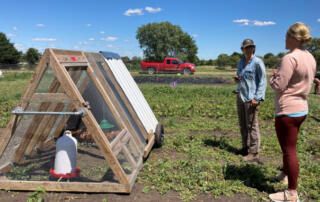
Organic Researcher Spotlight: Dr. Ajay Nair
In this fourth OFRF Organic Researcher Spotlight, we take a look at the work of Dr. Ajay Nair, Chair of the Department of Horticulture at Iowa State University. His latest OREI-funded research evaluates crop rotations and coop designs for integrating poultry with organic vegetable production.

Farmer-Led Trials Program Spotlight: Verdant Phoenix Farm
Rhianna Simes, M.S.Ed. owns and operates Verdant Phoenix Farm, a 10-acre certified organic, no-till, urban farm and education center located in Jackson County, Oregon. She is participating in OFRF's Farmer-Led Trials (FLT) Program to test the success of occultation as opposed to tillage as a field preparation solution for no-till farming.
From Global Insights to Local Impact, an intern perspective
As Marina Vergara, former intern at OFRF, moves onto the next chapter, she reflects on her experience gaining knowledge about organic farming in the US and building professional confidence through research and project management with OFRF. She is excited to apply her learnings at her new role as a Community Outreach Farmer.