
How the Growth of Organic Farming and Indigenous Food Sovereignty Support Each Other

How the Growth of Organic Farming and Indigenous Food Sovereignty Support Each Other

By |2025-03-18T18:17:58-04:00March 18th, 2025|News|

Long before the United States existed, this land has been and continues to be inhabited by hundreds of distinct Indigenous nations. Methods of resource utilization, harvesting, agricultural and management practices differ by region and by culture. However, through the examination of oral traditions and archaeological evidence, we know that a deep emotional and spiritual connection between humans and the land threads together most, and potentially all, of the belief systems of native peoples on this continent. Highly diverse Indigenous spirituality systems and creation stories set the foundation of a dynamic, living universe, upon which all beings are interconnected. Storytelling, a critical facet of Indigenous transmission, has passed down generations of Traditional Ecological Knowledge (TEK), providing a framework for responsible, sustainable human interaction and understanding of the natural world.

Strides have been made in the U.S and elsewhere to improve sustainability and reduce the harmful effects of our dominant food production system, partly by incorporating practices that are considered standard within the organic farming methodology, such as cover cropping. However, the prevalence of, and forced dependence upon industrial agriculture continues to undermine Indigenous food sovereignty and utilization of TEK in farming and ranching, as well as disproportionately affect the physical and mental health of Native communities.

“Indigenous food sovereignty” is not a universally defined concept, but generally refers to a community’s ability to control, oversee and cater their food production and distribution to the determined nutritional and cultural needs of the people. Food sovereignty additionally seeks to establish food security, working to eradicate hunger and poverty by emphasizing community engagement, and making healthy, nutritious food widely available. A large component of the food sovereignty movement in the United States centers around the reincorporation of traditional food sources, as well as cultivation and preparation processes. Overall, supporting food sovereignty means supporting decolonization: restoring many Indigenous peoples to their historical role as highly successful custodians and managers of the earth.

At its roots, organic and regenerative agriculture both seek to foster a greater understanding of the needs of the land, fostering a harmonious relationship between the farmer, the farm, and the consumer. The organic system was defined in response to the advent of chemical pesticides, herbicides, and fertilizers in the 1930s and 40s, a shunning of attempts to naturally manage agricultural land in ways that would build soil resilience. The holistic philosophy behind organic and regenerative agriculture methods are rooted in TEK, and in the goal of seeking to mend previous anthropogenic damage, a result of colonization, capitalism, and industrialization. Focusing on the rebuilding of soil health, conservation of water, reduction of runoff, and practices such as polyculture (growing multiple, mutually beneficial crops on the same plot) all tie in to create an approach that can work in tandem with the uplifting of native techniques of farming and environmental maintenance.

As we hurtle towards an uncertain future dictated by how we will be able to reverse and/or adapt to the devastating impacts of climate change, we must also grapple with the question of who will be affected most in the coming decades. Advocacy for the increased study and adoption of these alternative systems of farming is a way that OFRF supports the Indigenous food sovereignty movement, in addition to funding research that creates space for crucial dialogue and collaboration with BIPOC (Black, Indigenous, and People of Color) farmers.

Here are a few inspiring and thought-provoking resources we found to continue the conversation:

*Images courtesy of the linked sources.
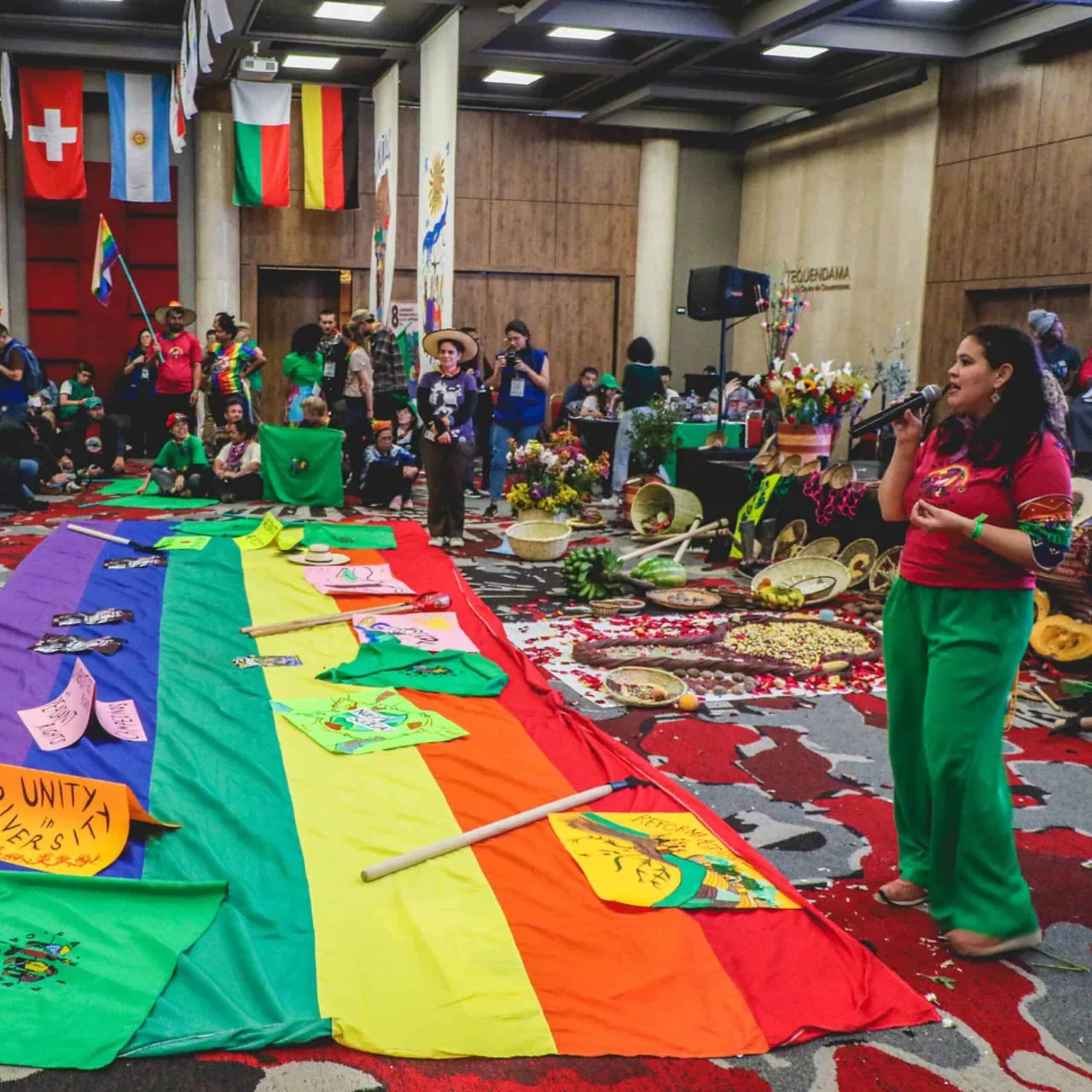
Globalising Hope: The courageous journey of La Via Campesina

The advocacy and influence of La Via Campesina: an international social justice movement centered around food sovereignty, uplifting rural, small-scale and subsistence farmers, and providing both technical and political agroecology training at over 70 LVC schools globally.

Read more here.

Seeding Food Sovereignty: Black and Indigenous Farming Leaders Share Their Strategies

A panel discussion amongst BIPOC community leaders, activists, and farmers on the future of the food sovereignty movement, and the critical importance of highlighting BIPOC voices in dismantling the destructive system of industrial agriculture.
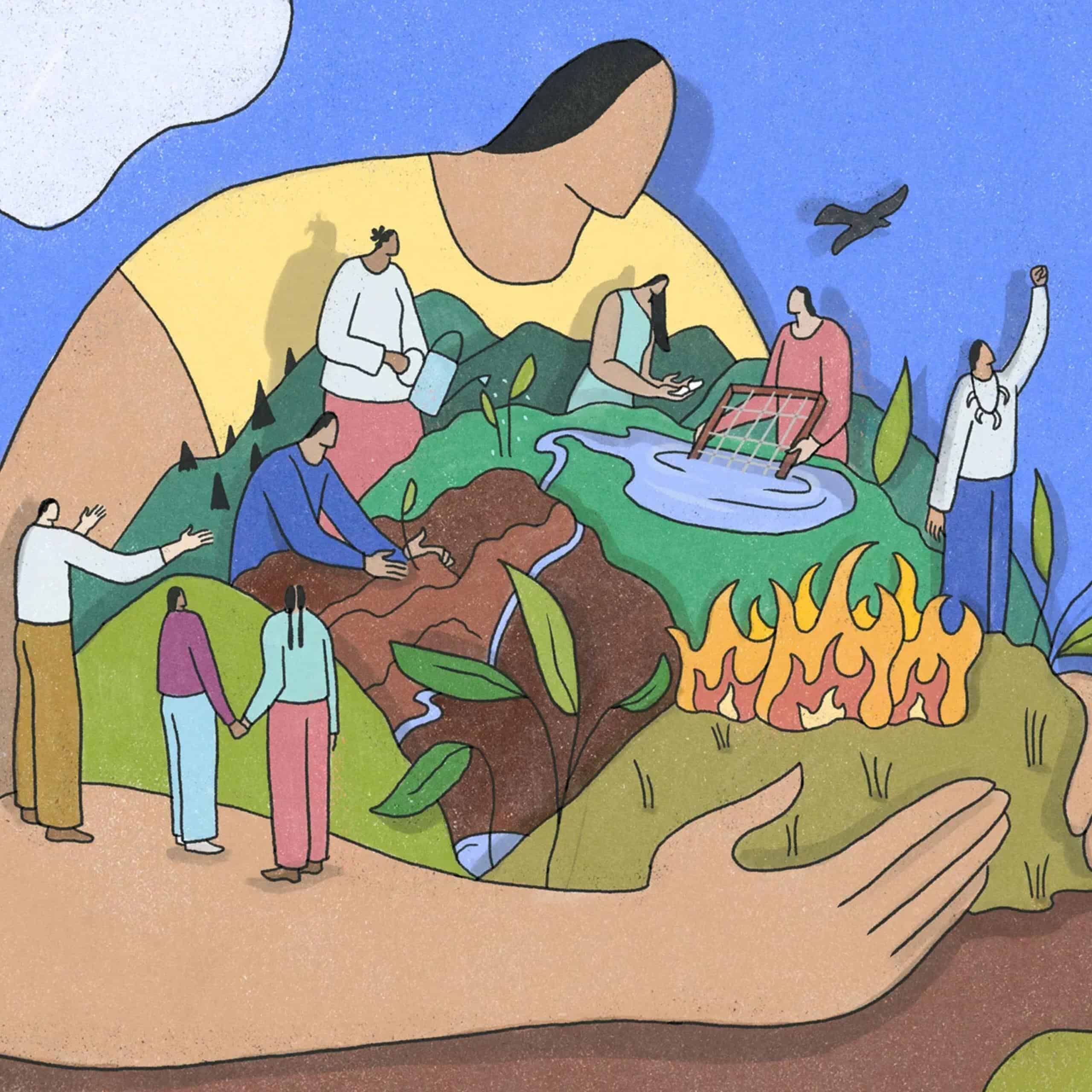
Read more here.

What is the Land Back Movement? Tribal lands were stolen. What happens when those ancestral territories are returned?

A brief history of the Land Back Movement and federal Land Buy-Back Program for Tribal Nations, and how Indigenous land reclamation is leading to successful restorative climate resilience projects.

Read more here.

Indigenous Food & Agriculture Initiative: Putting Tribal Sovereignty in Food Sovereignty

The Indigenous Food and Agriculture Initiative through the University of Arkansas is focused on supporting tribal nations in reaching food sovereignty goals, largely through policy and legal analysis and the promotion of tribally-backed, sustainable growth and distribution.

Read more here.

Murmurations: Climate Solutions Require Black Ecology 

This article traces the forced disconnection of Black and Indigenous peoples from the land to our present-day responsibility of dismantling the myth of white supremacy. Reversing the environmental destruction created by the industrialization of colonized lands demands the acknowledgement of the relationship between Black liberation and ecology.

Read more here.

Indigenous Food Sovereignty Movements Are Taking Back Ancestral Land

There is a growing momentum behind the Indigenous food sovereignty movement. Over the past few decades, Native American tribes in the U.S. have been fighting for the return of ancestral lands for access to traditional foodways through organizing and advocacy work, coalition building, and legal procedure—and increasingly seeing success.

Read more here.

If you want to keep up to date with our work expanding community research and representation of organic agriculture in policy, please consider joining our mailing list.
Action Alert! Tell Congress: Don’t Fail Our Farmers

By |2025-03-05T16:03:00-05:00March 6th, 2025|Gordon's Policy Corner, News|

Gordon’s Policy Corner, March 2025. By OFRF & NSAC Staff

In much of the country, spring is on its way. For farmers and ranchers, it’s time for planting decisions, for calving and lambing, for lining up their financial capital and markets for a busy season, and more.

But this year, it’s different: across the country, tens of thousands of farmers and farmer-serving organizations have been thrown into limbo by an unprecedented freeze of federal funding and subsequent mass firings of USDA employees. The United States Department of Agriculture (USDA) is currently withholding payments owed under signed, lawful contracts, causing turmoil across the food system. And in a move that will have far-reaching consequences–including disrupting critical research, data collection, and economic analysis that farmers, the businesses they sell to, and policymakers rely on–the administration has dismissed hundreds of thousands of federal employees.

We wrote about The Consequences of Mass Firings Across the USDA in a recent blog, and now we’re taking space in this month’s Policy Corner to share an important action alert from our allies at the National Sustainable Agriculture Coalition (NSAC):

Our Farmers and Neighbors Need Your Voice, Now More than Ever 

The disruption of USDA programs is already having serious consequences for farmers, food systems, and our communities:

  • Farmers who’ve already installed new irrigation equipment or planted cover crops with support from USDA are now unable to receive the reimbursements they were promised, jeopardizing their financial stability.
  • Programs that pair local farmers with local food banks are pausing their procurement plans, at the exact time growers most need to know their markets for the season.
  • Organizations who train and support beginning farmers are instead having to lay off staff.
  • Families are anxious about grocery store prices and the availability of food long term.

These immediate impacts could compound and lead to further suffering without swift intervention from Congress.

None of this should be happening: these are signed agreements with the federal government, and USDA must follow through on its commitments before impacts worsen in communities nationwide. Congress has the ability to ensure that USDA restores access to critical programs and funding, and they need to hear directly from folks who are affected – along with all of us who care about our local farmers and ranchers, our fellow neighbors, and the organizations that help us strengthen our communities.

Calling takes only 60 seconds: can you call and email your members of Congress, urging them to protect our farmers and communities from further harm?

Our OFRF Advocacy Page has a new #GetActive Guide to help you prepare to stay active and engaged in policy issues impacting food and farmers at this critical time.

OFRF Introduces Members of New Organic Stewardship Council

By |2025-03-06T17:06:43-05:00March 4th, 2025|News, Press Release|

FOR IMMEDIATE RELEASE

Farmer-Led From the Start and for the Future

SANTA CRUZ, Calif.,  March 4, 2025 — The Organic Farming Research Foundation (OFRF) has selected the seven inaugural members of a new Organic Stewardship Council (OSC). Composed of farmers from different regions, agricultural backgrounds, and diverse farming communities, as well as representatives from farmer associations, these stewards bring together diverse voices to shape OFRF’s work and elevate the priorities of organic and transitioning farmers nationwide. The formation of this advisory council strengthens OFRF’s long-standing commitment to taking its lead from farmers.

“By formalizing this advisory body, we are creating an enduring structure that empowers farmers to guide and shape our work at every level. We are thrilled to bring together this council of experienced voices who understand the challenges and opportunities in organic farming,” said OFRF Executive Director Brise Tencer.

Following a competitive nomination and review process, and approval from OFRF’s Board of Directors, OFRF is pleased to introduce the new OSC members:

Albert Straus, Straus Family CreameryAlbert Straus, Straus Family Creamery (California)
Albert is the founder and executive chair of Straus Family Creamery, the first 100% certified organic creamery in the United States. He founded the Creamery in 1994, while his farm, the Straus Dairy Farm, became the first certified organic dairy west of the Mississippi River. He brings decades of leadership experience in sustainable organic farming practices.

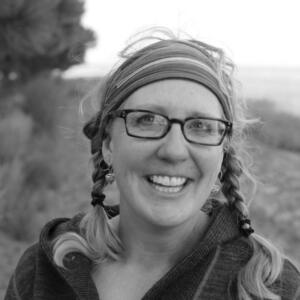
Anna Jones-Crabtree, Vilicus Farms (Montana)anna jones-crabtree, organic farmer at Vilicus Farms
Anna and her husband Doug own and manage Vilicus Farms, a first-generation, organic, 12,500-acre dryland crop farm in Northern Hill County, Montana, growing a diverse array of organic heirloom and specialty grain, pulse, oilseed, and broadleaf crops under five- and seven-year rotations. Anna holds a Ph.D. in Civil and Environmental Engineering with a minor in Sustainable Systems from Georgia Institute of Technology.

Brooke Gentile, Organic Association of Kentucky (Kentucky)Brooke Gentile, Organic Association of Kentucky
Brooke joined the Organic Association of Kentucky (OAK) in 2017 as the executive director and manages the KY Farm Share Coalition. Born and raised in Kentucky, she has worked with sustainable agriculture projects in New York City, Northern California, Indiana, and Kentucky. Brooke cares deeply about building a regional food system that supports our farmers, is regenerative for our lands, and is healthy and accessible for consumers.

John McKeon, Taylor Farms (California)John McKeon, Taylor Farms
John is the Director of Organic Integrity and Compliance at Taylor Farms Retail, overseeing organic compliance and regenerative organic practices. He has worked at Taylor Farms and Earthbound Farm for 15 years in organic field and facility food safety, international organic supply chain compliance, and organic agricultural operations. John also spent 10 years at CCOF, from an intern to certification director and then inspector. He studied horticulture, sustainable agriculture, and environmental studies at Cabrillo College and the University of California Santa Cruz.

Jordan Settlage, Settlage & Settlage Farms (Ohio)Jordan Settlage, Settlage & Settlage Farms, Ohio
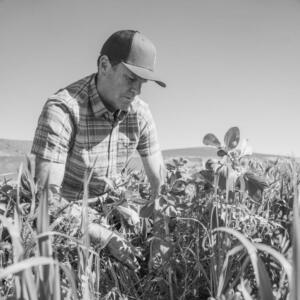
Jordan is a dairy farmer with Organic Valley Cooperative, based in St. Marys, Ohio. Farming alongside his father, he manages 500 acres of certified organic land and cares for a herd of 300 cows. Though he didn’t grow up on a dairy farm, Jordan has been involved in dairy since childhood and became certified organic in 2016. With a strong emphasis on grazing, he is passionate about regenerative agriculture and is dedicated to improving the overall agricultural system.

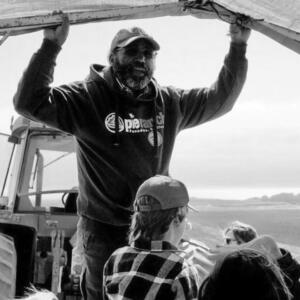
Leonard Diggs, Pie Ranch (California)Leonard Diggs, Director of Operations and Farming at Pie Ranch
The Director of Operations and Farming Education at Pie Ranch in Central California, Leonard has managed sustainable and organic farms in northern California for over 30 years, including a 365-acre college farm with annual and perennial crops, a winery, livestock, and a mixed species forest. He has also instructed a wide range of agricultural classes and served on numerous agricultural boards and committees in an effort to share his experiences with current and future generations of gardeners and farmers.

Meg Moynihan, Derrydale Farm (Minnesota)Meg Moynihan, organic farmer Derrydale Farm
Meg is a certified organic dairy farmer in Le Sueur County, Minnesota, where she and her husband milk about 60 cows and direct market beef from Derrydale Farm. Born and raised in Milwaukee, Wisconsin, and Nashville, Tennessee, Meg earned her B.A. from Brown University and an M.S. in Agronomy from the University of Minnesota. Her experience includes leading the Minnesota Department of Agriculture’s Organic Program, directing a statewide sustainable agriculture program in Michigan, working as an educator and evaluator, participating in the National Association of State Organic Programs, and serving on the board of directors for the Organic Field School in Farmington, Minnesota. Meg also formerly served as president of OFRF’s Board of Directors.

The Council will offer invaluable feedback and recommendations to OFRF’s Board and staff across a range of areas, including:

  • Shaping OFRF’s programs by offering insight into educational resources, research priorities, and policy advocacy to ensure they align with the needs of organic and transitioning farmers.
  • Voicing farmer perspectives by elevating on-the-ground realities and challenges farmers face to guide OFRF’s strategic direction.
  • Evaluating the impact and providing feedback on the relevance and effectiveness of OFRF programs.
  • Addressing emerging agricultural issues, including the National Organic Research Agenda (NORA), feedback on OFRF’s new Organic Research Hub, and Farm Bill priorities.

With this Council, OFRF continues to lead with the voices of organic farmers and create innovative pathways to advance the adoption of organic farming systems that prioritize climate resilience, soil health, and sustainability.

For more information about OFRF and its initiatives, visit www.ofrf.org.

##

About the Organic Farming Research Foundation

The Organic Farming Research Foundation (OFRF), headquartered in Santa Cruz, California, with a remote team based across the U.S., works to foster the improvement and widespread adoption of organic farming systems. OFRF cultivates organic research, education, and federal policies that bring more farmers and acreage into organic production. For more information about OFRF, please visit our website: www.ofrf.org. 

Contact:
Ashley Dulaney, Communications Director, OFRF
ashley@ofrf.org 

The Consequences of Mass Firings Across the USDA

By |2025-03-13T17:51:05-04:00February 26th, 2025|Gordon's Policy Corner, News|

A Blow to Agricultural Research and Rural Communities

Written by Gordon Merrick and OFRF staff

Editor’s note: Since the publication of this post, the USDA has announced plans to reinstate affected employees. However, the situation remains fluid, and the long-term impacts on agricultural research funding and capacity are still unfolding. OFRF remains committed to advocating for strong, stable investment in organic research to ensure farmers and researchers have the resources they need to innovate and thrive.

In a sweeping, indiscriminate move that has sent shockwaves through the agricultural community, the administration has dismissed thousands of federal employees with the stated goal of reducing government spending and increasing operational efficiency. While the full scope of these staff cuts is still emerging, recent communications requesting employees justify their continued employment have added to the uncertainty. What is already clear, however, is that the USDA has been acutely impacted, particularly within the agencies that form the backbone of our nation’s agricultural research and farmer technical and financial assistance programs.

The Role of USDA Research Agencies and the Impacts of These Firings

The agencies within the Research, Education, and Economics division of the USDA (USDA-REE) are the Agricultural Research Service (ARS), the National Institute of Food and Agriculture (NIFA), the Economic Research Service (ERS), and the National Agricultural Statistics Service (NASS). These agencies are cornerstones of our agricultural assistance systems, conducting and awarding grants for high-quality research that informs and improves our conservation, risk management, and market development programming in other USDA mission areas.

As these mass firings unfold, it remains difficult to assess the full extent of the cuts, with many agency personnel pages having been taken down. What’s already evident is that these mass firings will have far-reaching consequences—disrupting critical research, data collection, and economic analysis that farmers, the businesses they sell to, and policymakers rely on.

Capitol building, The United States Congress covered with snow in winter time and Capitol hill area covered with snow

The United States Congress covered with snow.

Among the agencies most directly affected by these cuts is ARS, which plays a crucial role in advancing agronomic research. ARS is the sole intramural research agency at the USDA, conducting long-term research that will undoubtedly face disruptions due to these firings. Reports indicate significant staffing reductions at ARS stations, with sources stating that 10-50% of the workforce at different stations has been dismissed, reportedly due to performance-related concerns. While the scope and rationale for these firings remain unclear, they have already disrupted critical research programs across the country.

It is still unclear how NIFA has been affected by these firings. NIFA doesn’t conduct its own research but rather operates competitive grant programs that fund research conducted by farmers themselves (SARE), land-grant institutions, and nonprofits across the country (OREI). As we’ve written about in the past weeks, the RFAs for these grant programs are still under review, and application portals, including for grants that were supposed to be open for applicants, are not currently available, impacting critical funding for universities and other institutions.

Focused more on understanding the past, present, and future status of agricultural markets and related information are the USDA’s NASS and ERS agencies. NASS works to collect and publish raw data about the agricultural system in the United States through their Census of Agriculture and supplemental surveys, like the Organic Survey. ERS provides crucial economic analyses on agriculture, food markets, and the environment. Their research has led to a better understanding of the economic impact of publicly-funded agricultural research: every $1 invested triggers $20 of economic activity, a massive return on investment (ROI). This fact highlights the point that cutting research dollars will negatively impact the agricultural economy.

Immediate Consequences

The abrupt firing of USDA scientists and their lab staff at ARS has thrown vital research projects into chaos. Initiatives aimed at critical topics like improving crop resilience, combating pests and diseases, and improving livestock production systems are now jeopardized, facing setbacks due to reduced research capacity. This is not isolated to any one region or station, derailing research projects that have been able to continue for decades, even through the COVID pandemic, due to the dedication of the civil servants that are now being cast aside.

These firings not only impact the research projects, though; they impact the local and often rural communities that host the research stations and the employees who work there. As mentioned above, the massive ROI of agricultural research will be drastically reduced. In one case, the research station in Salinas, California, has had four researchers and seven lab staff fired, reflecting hundreds of thousands of dollars that will no longer be circulating in that community, meaning that the industries that provide supplies and services to these staff will also be taking a significant hit.

Long-term Consequences

The long-term ramifications of these mass firings are profound. Aside from the economic impacts on the businesses directly involved with the research, this will impact the agricultural industry for decades to come. The United States risks falling even farther behind in meeting the growing demand for organic products as domestic production struggles to keep pace without the support of robust research programming. For example, if NIFA does not award funds through their competitive grant programs, this will lead to significant setbacks at land-grant universities across the nation, simultaneously affecting both the institutions that conduct the research while also hurting the farmers that rely on the research that these programs fund.

Most privately-funded research conducted is focused on generating patentable genetics and compatible products, not the public-welfare-oriented research that NIFA competitive grants fund and ARS conducts. Put simply, cutting federal research funding and personnel undermines the economic engine and weakens the resilience of the agricultural systems against climate change and supply chain disruptions.

Why This Matters

Agricultural research is the backbone of the technical and financial assistance programs operated by the USDA that ensure food security, food safety, environmental sustainability, and economic vitality for the United States. Disruptions in research will lead to higher food prices, reduced innovation in sustainable agriculture systems, and ultimately weakened rural economies. It is imperative to recognize that supporting agricultural research is an investment in the nation’s future success, ensuring that our domestic food supply is stable and resilient, especially in the face of a continually unpredictable international trade environment.

But, it is important to highlight that these firings were not just in USDA-REE’s agencies. The Natural Resource Conservation Service (NRCS), the primary conduit for free technical assistance for farmers, had over 1,200 field staff fired; the Farm Service Agency (FSA) has been significantly impacted, in some cases being forced to close entire county offices; and the Risk Management Agency (RMA), which supports farms securing of insurance products and other risk-reduction assistance, have seen significant firings which are just starting to be understood. Ultimately, these firings are impacting these programs’ ability to access high-quality agronomic research and economic information that improves their operation, as well as their specific on-the-ground operation.

OFRF’s Commitment to Farmers

The Organic Farming Research Foundation (OFRF) has a longstanding history of advocating for policies, research, and programs that support organic farmers, both certified and non-certified. Our efforts have directly led to increased USDA funding for organic research, the development of conservation programs tailored to organic producers, and the inclusion of organic priorities in federal farm policies and appropriations allocations. Looking ahead, we have outlined our key policy priorities to strengthen organic research and ensure farmers have the resources they need to succeed.

In this current environment of uncertainty, OFRF is actively working to both understand and address the challenges posed by these mass firings by engaging with policymakers, providing resources to affected communities, and amplifying the voices of farmers and researchers who have been affected.

We have already been working to get in contact with researchers and their support staff who have been unjustly fired during this time. If you have a story or experience you are willing to share, please reach out directly to our Senior Policy & Programs Manager at gordon@ofrf.org or through his Signal account at 207.408.3086.

How To Take Action

Staying informed and taking action right now is crucial to counteract these impacts.

  • Get Educated: We at OFRF have developed a newly updated advocacy page that will help you understand the issues and access resources. We will be continually updating this webpage as new materials and resources are developed.
  • Contact Your Representatives: Share your concerns about the impact of these layoffs on agricultural research, the technical and financial assistance that it impacts, and the rural communities that benefit from these investments. Personal stories about what these mean are oftentimes more important than impersonal data. Find their contact information here.
  • Engage in Community Advocacy: Participate in local meetings that help raise awareness of these impacts, write Letters to the Editor and opinion pieces in your local news outlets, and collaborate with organizations like OFRF to raise awareness.
  • Support Affected Workers: Offer assistance to those who have lost their jobs, whether through networking opportunities or whatever is possible given your current situation.

By taking these steps, you can contribute to a collective effort to uphold the rule of law and the integrity of agricultural research, the technical and financial assistance programs that it bolsters, and the communities that depend on it.

Meg Moynihan

By |2025-02-26T17:22:43-05:00February 26th, 2025|OSC|

Meg Moynihan, organic farmer Derrydale Farm

Farmer, Derrydale Farm

Meg Moynihan was born and raised in Milwaukee, WI and Nashville, TN, and earned her B.A. from Brown University. She was captivated by agriculture while working with the Peace Corps in Thailand where she served as a community development extension specialist. After returning to the U.S., she earned an M.S. in Agronomy at University of Minnesota. Meg has led the Minnesota Department of Agriculture’s Organic Program since 2002. She has been active in the National Association of State Organic Programs and serves on the board of directors for the Organic Field School in Farmington, MN.

She’s now a dab hand at milking cows, driving tractors, fixing fence, repairing water lines, oh – and organic paperwork for Derrydale Farm, which she and her husband run in Le Sueur County, Minnesota. Derrydale Farm is a certified organic dairy. They milk about 60 crossbred cows and direct market beef.

Meg also formerly served as OFRF board president.

Leonard Diggs

By |2025-02-26T17:12:57-05:00February 26th, 2025|OSC|

Leonard Diggs, Director of Operations and Farming at Pie Ranch

Director of Operations and Farming, Pie Ranch

Leonard Diggs is the Director of Operations and Farming Education at Pie Ranch in Central California. Leonard has managed sustainable and organic farms in northern California for over 30 years, including a 365 acre college farm with annual and perennial crops, a winery, livestock and a mixed species forest. He has also instructed a wide range of agricultural classes and served on numerous agricultural boards and committees in an effort to share his experiences with current and future generations of gardeners and farmers.

Jordan Settlage

By |2025-02-26T17:25:15-05:00February 26th, 2025|OSC|

Jordan Settlage, Settlage & Settlage Farms, Ohio

Dairy Farmer, Settlage & Settlage Farms

Jordan Settlage is an Organic Valley dairy farmer based in St. Marys, Ohio. Farming alongside his father, he manages around 500 acres of certified organic land and milks approximately 300 cows. Though he didn’t grow up on a dairy farm, Jordan has been involved in dairy since childhood and became certified organic in 2016. With a strong emphasis on grazing, he is passionate about regenerative agriculture and is dedicated to improving the overall agricultural system. Jordan lives with his wife and their three children, prioritizing family life alongside his work on the farm.

John McKeon

By |2025-02-26T16:10:39-05:00February 26th, 2025|OSC|

John McKeon, Taylor Farms

Director of Organic Integrity and Compliance, Taylor Farms Retail

John McKeon is the Director of Organic Integrity and Compliance at Taylor Farms Retail overseeing organic compliance and regenerative organic practices. John also supports field food safety research, agronomic and biodiversity programs and trails, and Quality Systems management.  He has worked at Taylor Farms & Earthbound Farm for years 15 years working in organic field and facility food safety, international organic supply chain compliance and organic agricultural operations. Prior to working there, John spent 10 years working at CCOF, from an intern to certification director, then inspector. John studied horticulture, sustainable agriculture and environmental studies at Cabrillo College and University of California Santa Cruz. He lives with his family on the central coast of California.

Brooke Gentile

By |2025-02-26T16:06:55-05:00February 26th, 2025|OSC|

Brooke Gentile, Organic Association of Kentucky

Executive Director, Organic Association of Kentucky

Brooke Gentile joined the Organic Association of Kentucky in the summer of 2017 as the Executive Director and manages the KY Farm Share Coalition. She is a Kentucky native and has worked with sustainable agriculture projects in New York City, Northern California, Bloomington, Indiana, and most recently the College of Agriculture, Food and the Environment at University of Kentucky. Brooke cares deeply about building a regional food system that supports our farmers, is regenerative for our lands and is healthy and accessible for consumers. She enjoys outdoor adventures with family and friends, gardening and photography.

Anna Jones-Crabtree

By |2025-02-26T17:25:47-05:00February 26th, 2025|OSC|

anna jones-crabtree, organic farmer at Vilicus Farms

Farmer, Vilicus Farms

Anna Jones-Crabtree and her husband Doug own and manage Vilicus Farms, a first generation, organic, 12,500 acre dryland crop farm in Northern Hill County, Montana growing a diverse array of organic heirloom and specialty grain, pulse, oilseed and broadleaf crops under five and seven-year rotations. In fifteen seasons, Vilicus Farms grew from 1,280 acres using USDA’s beginning farmer programs, employing extensive conservation practices, and fostering unique risk sharing relationships with food companies, land investment firms and individuals that care about having an intact planet. Over 26% of their land is in non- crop conservation and 300 acres seeded to native pollinator habitat. Annually they seed over 3,000 acres of cover crops, and use integrated grazing. Vilicus Farms became Bee Better certified and Real Organic Project Certified in 2019. They will be Regenerative Organic certification in 2024 and are transitioning towards Demeter Biodynamic certification. They have hosted 14 apprentices, many interns and more farm campers than can be counted. They launched a value added enterprise to sell identity preserved rye direct to distillers in 2021.

Anna also serves as the Executive Director for Vilicus Institute, a land-based learning laboratory with the mission of supporting social and economic conditions conducive to life for organic farmers on the Northern Great Plains.

Anna holds a Ph.D. in Civil and Environmental Engineering with a minor in Sustainable Systems from Georgia Institute of Technology. She currently serves on the Xerces Society Bee Better Advisory Board, and Chair of the Iroquois Valley Farmland REIT’s Board of Directors. Anna served on the USDA Secretary’s Advisory Council on Beginning Farmers & Ranchers and is a Donella Meadows Leadership Fellow. Given the realities of agriculture, she still holds an off-farm position as the Regional Director of Data, Information and Geospatial Resource for the Northern Region of the US Forest Service.

Go to Top