
FLT Highlight

Farmer-Led Trials Program Spotlight: Jorge Reyes

Written by Jose Perez, OFRF’s Research & Education Engagement Coordinator

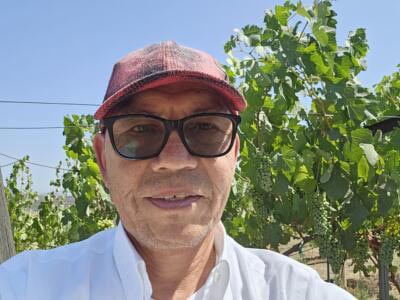
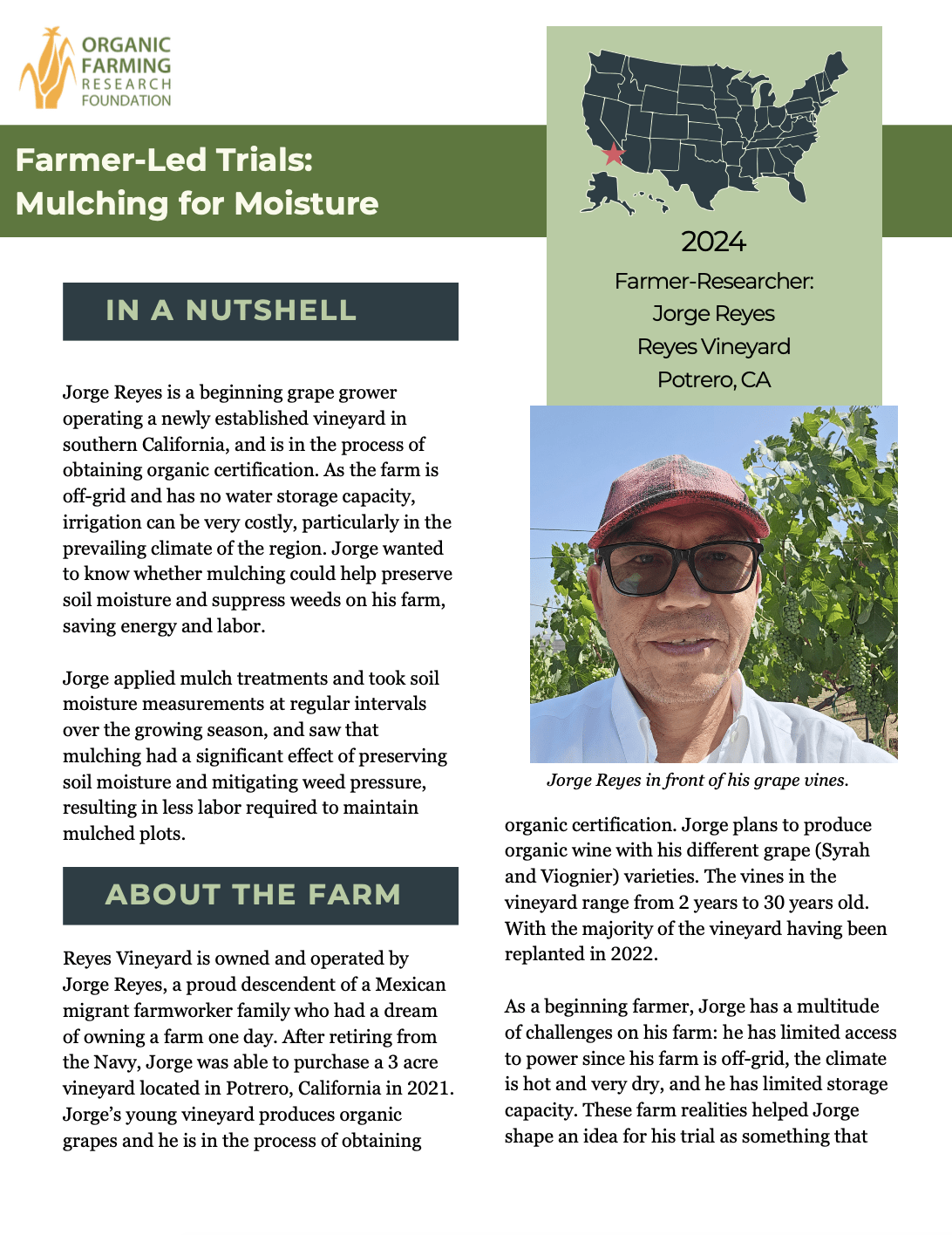
Image: Jorge Reyes in the vineyard.

Jorge proudly comes from a Mexican migrant farmworker family who had a dream of owning a farm one day. After retiring from the Navy, he was able to purchase a 3-acre vineyard located in Potrero, California. Jorge’s young vineyard produces organic grapes, and it is in the process of obtaining organic certification. Jorge plans to produce organic wine.

Finding the Right On-Farm Challenge to Focus On

Jorge was initially interested in conducting a farm trial to find solutions for suppressing gophers. These little creatures are a constant challenge at the vineyard because they burrow in the soil and chew on the roots, severely damaging or killing the vines. He was also interested in testing different practices to manage wasps during grape maturation and harvest. OFRF staff discussed with Jorge the difficulty of designing a farm trial based on these two challenges, given practical limitations, such as the size of the farm and the length of time needed.

The challenges on a young vineyard are not in short supply, so Jorge pivoted to focus on the use of mulch for soil moisture retention, weed management and grape quality. Improving soil moisture is critical to Jorge’s operation, as the irrigation depends on a solar-powered pump. The local climate conditions are generally very dry, with 9 to 11 inches of rain during the winter season. Wildfires are a frequent risk during the dry season, making soil moisture a critical factor and cost to Jorge’s operation.

On-Farm Trial Updates

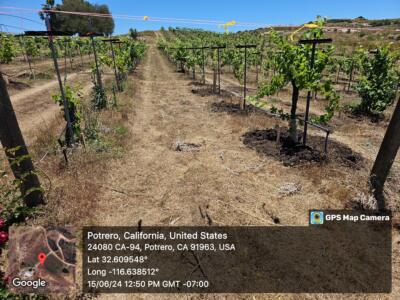
With OFRF technical support, Jorge is now conducting a paired comparison where 10 grapevines with mulch will be compared with 10 vines with no mulch. Jorge applied 3 inches high of mulch around the vine (about a 4-foot area for each vine) in late May. He marked the trial area with stakes to identify each plant. 

To compare the moisture levels of the two treatments, Jorge purchased a soil moisture sensor. To date, he has conducted two measurements, one in late June and one in mid-July. Based on those readings, Jorge already sees a clear winner: The soil around the mulched grapevines has consistently been showing good moisture levels, while the readings around the un-mulched plants show dry conditions. Jorge’s own observations confirm this: “The mulch is like a double win, the mulch holds the moisture for longer and it suppresses the weeds as well… There are also a lot of creatures and biological activity in the mulched areas, while just putting the soil probe into the un-mulched areas was a challenge, as the soil was hard,” Jorge said.

Image: Side-by-side trials of mulched and un-mulched grape vines.

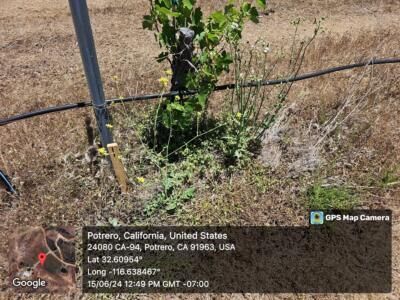
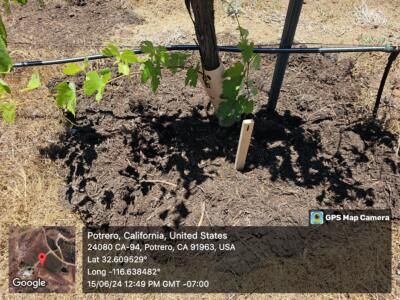
Jorge has not cut back on irrigation, but after seeing the immediate effects of mulch, he is considering doing so, which would represent some energy and cost savings. In terms of weed suppression, the pictures Jorge took of the plants in late June are striking (see attached pictures). The mulch successfully suppressed weed growth and can represent some labor savings in the long term. Finally, Jorge is curious to know if the mulch will affect the grapes’ sugar content levels. He is planning to conduct these measurements at harvest through a Brix meter.

Below images: un-mulched grape vines on left and mulched grape vines on right. 

“The mulch provides a beneficial ecosystem that is thriving with beneficial organisms like rollie-pollies and pinchers which help increase the soil health. I plan to double my effort to increase the mulch application. This will lead to water conservation, increase soil health, increase my crop yield and reduce my labor requirement. This is a win-win for the environment and myself.” – Jorge Reyes

Research Results

Jorge Reyes’ farmer-led trial examined the effects of mulching on soil moisture retention, weed suppression, and labor reduction in his organic vineyard. Over the course of the growing season, Jorge applied a 3-5” layer of organic mulch around selected grapevines and monitored soil moisture levels, weed presence, and grape sugar content (Brix levels).

Key Findings:

  • Increased Soil Moisture: In both Syrah and Viognier grape varieties, mulched plots consistently retained higher moisture levels compared to unmulched plots. This effect was statistically significant in Syrah at all sampling dates and in Viognier at two out of three sampling dates.
  • Reduced Weed Pressure & Labor Needs: Jorge observed fewer weeds in the mulched plots, leading to reduced labor for trimming and vineyard maintenance.
  • Potential Impact on Grape Quality: While not formally evaluated, preliminary Brix readings suggest mulched vines had slightly higher sugar content (22 vs. 20) than unmulched vines, indicating potential effects on fruit ripening.

Encouraged by these results, Jorge plans to integrate mulching as a long-term vineyard management strategy. He is particularly interested in further exploring its impact on grape yield, soil biodiversity, and irrigation efficiency in future seasons.

For full details on the study’s methodology and results, read the final report.
At OFRF we are excited to partner with Jorge in his quest to produce a high quality organic wine, while sharing with other small scale grapevine producers the effects of mulching.

“I am 100% sold on organic, protecting our environment and learning to cohabitate with nature. Organic should be the only option, we need to consume healthy food that is not going to poison us.” – Jorge Reyes 

This story is part of a series profiling farmers who are taking part in OFRF’s Farmer-Led Trials (FLT) program. Farmers receive technical support from OFRF to address their challenges through structured on-farm trials. To learn more about OFRF’s Farmer-Led Trials Program, visit our website page at https://ofrf.org/research/farmer-led-research-trials/

Farmer-Led Trials Program Spotlight: Verdant Phoenix Farm

Written by Jose Perez, OFRF’s Research & Education Engagement Coordinator

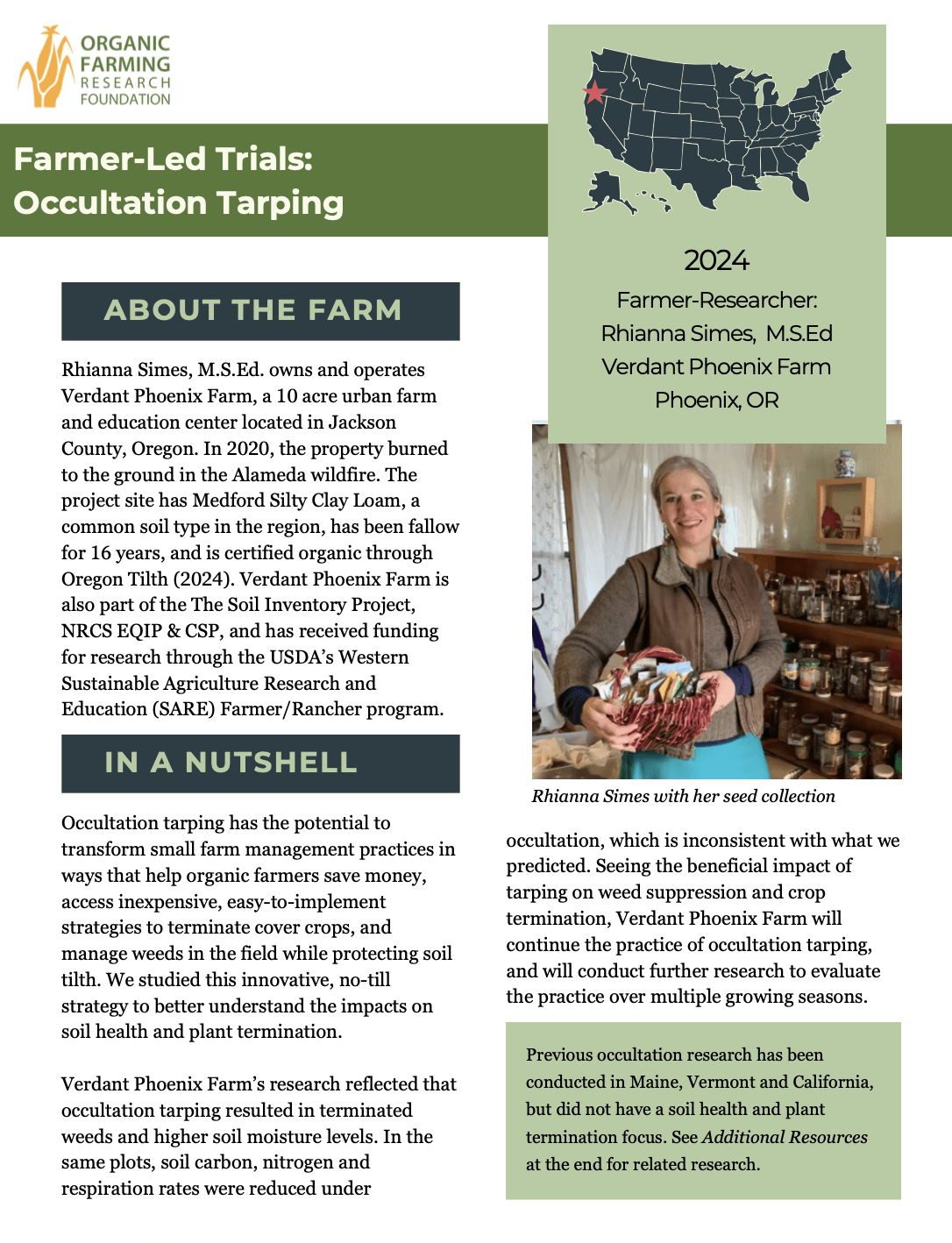
Rhianna Simes, M.S.Ed. owns and operates Verdant Phoenix Farm, a 10-acre urban farm and education center located in Jackson County, Oregon. The farm is managed as a no-till production system and is certified organic. Rhianna operates the farm as a research and education hub, hosting educational workshops, hands-on demonstrations and farm tours. She sells nursery stock, seeds, basketry willow, plant starts, and other products through the farm stand and on their website. Additionally, Rhianna has been breeding fava bean and popcorn (working towards a ‘Phoenix Blackberry’) for years. Rhianna’s farm vision is inspired by the work of Masanobu Fukuoka, Rowen White, and Dr. Elaine Ingham to create thriving agroecosystems.

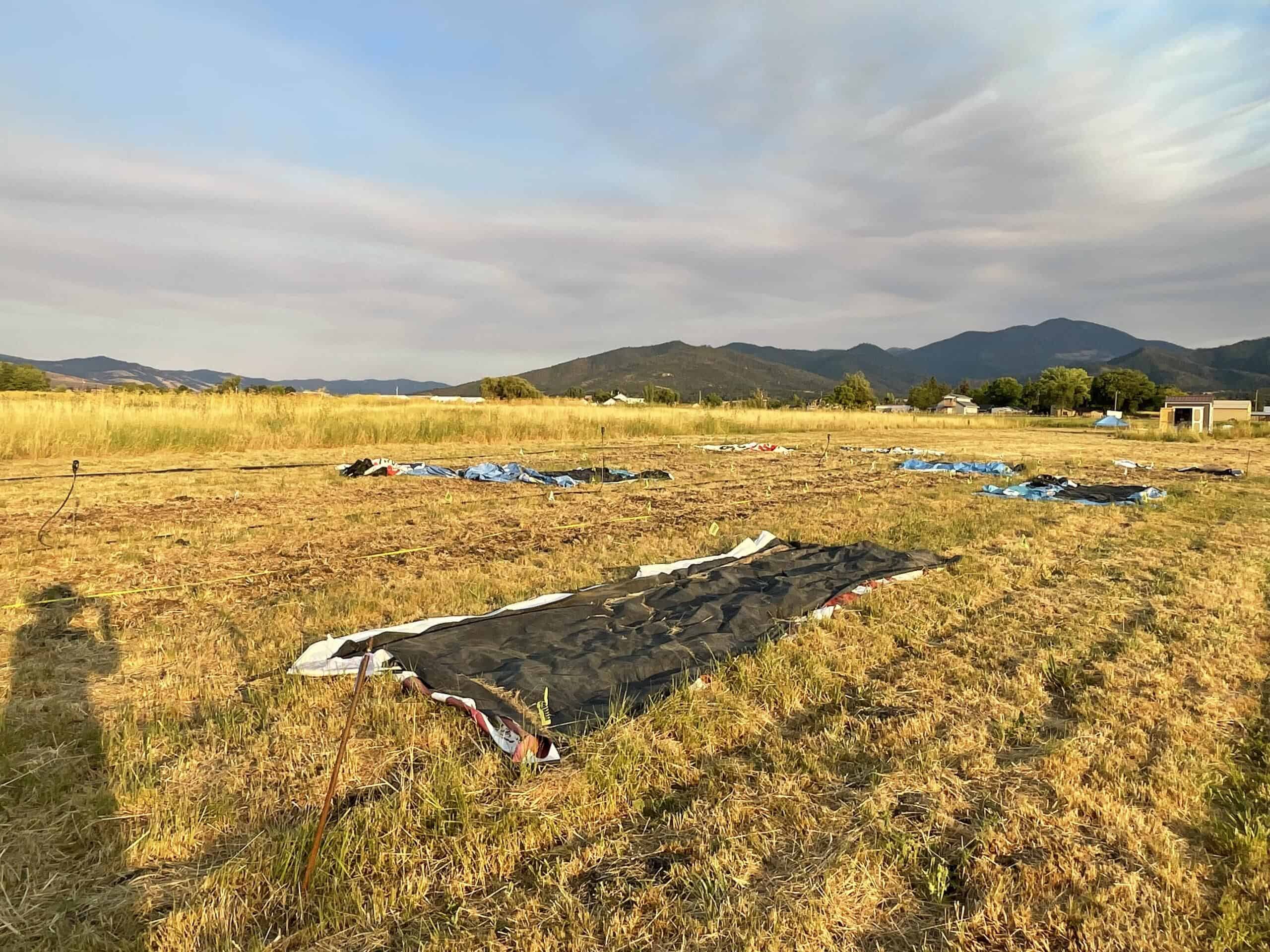
Image at right: A close-up of the soil after tarps were removed.

Occultation tarping

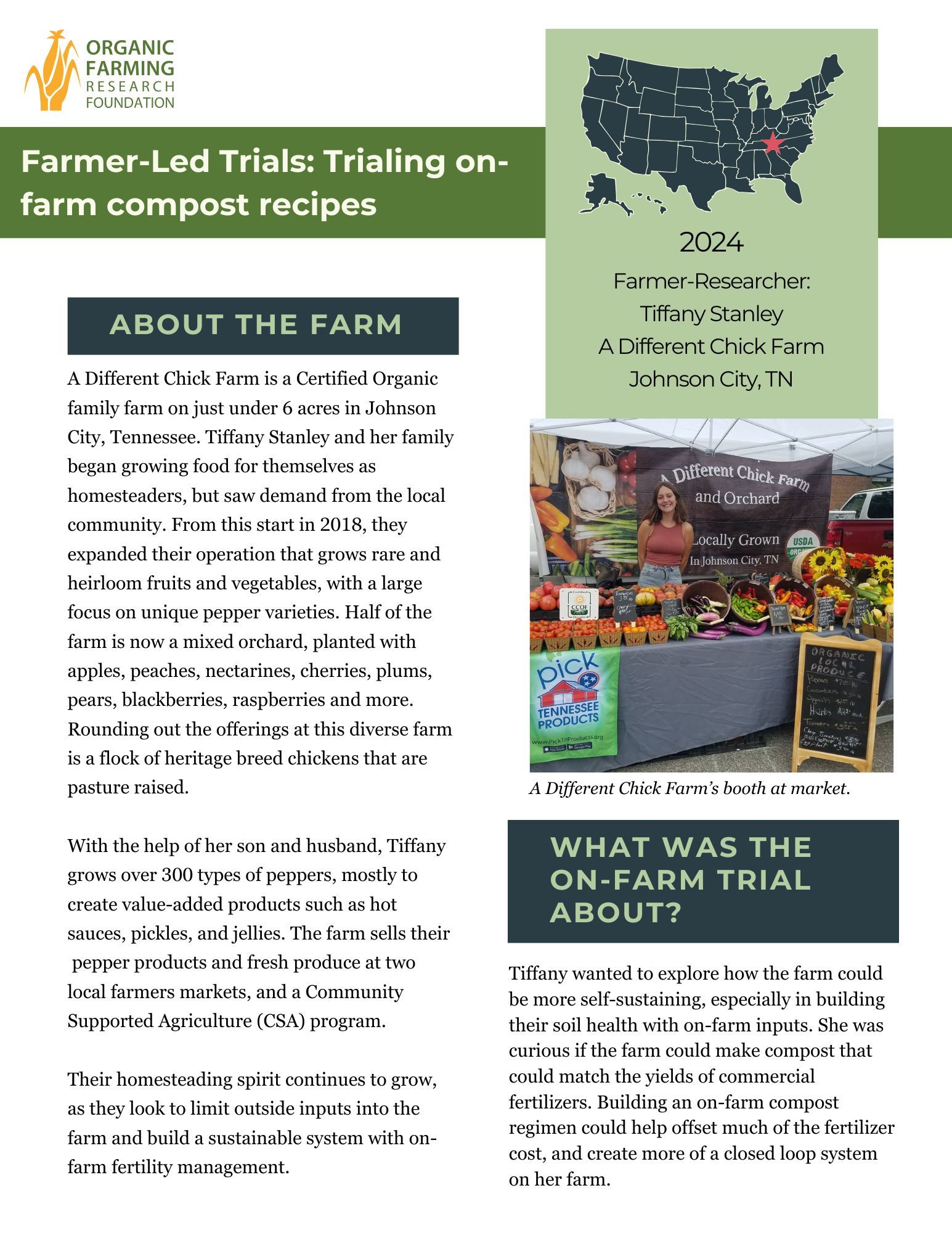
Rhianna has been using occultation tarping to terminate cover crops and manage weeds while protecting soil health for years. In two different locations, she converted 10-acre hay fields into no-till, row-cropping systems using only occultation tarping. To do this, in 4-6 week increments, she places a vinyl tarp on top of the soil to act as a ‘smother,’ which encourages the biological activity of the soil to eat the organic matter on the soil (and under the tarp). In the past, farmers employed solarization, but this method allows sunlight to heat the soil but does not encourage biological activity, which happens only in the darkness (occult = dark). By not allowing any light through, occultation tarping supports the soil food web and can help suppress weeds, terminate cover crops, and protect the soil from erosion. This practice has a lot of potential to help small-scale organic farms, especially in no-till systems. Occultation removes the need for tilling to terminate weeds and crops. Rhianna is passionate about sharing the multiple benefits of using occultation tarping in small farms, but she has often found a lack of trusted information and research demonstrating the usefulness of this practice. 

The Farm Trial

With technical support from OFRF, Rhianna decided to create a farm trial that would compare the use of occultation tarping in no-till and tilled conditions. This means that she is investigating two different practices in the same trial: tarping and tilling. Soil sampling will be the primary way to measure differences in these practices and will evaluate soil parameters such as soil organic matter, carbon mineralization potential, and aggregate stability. The yield of planted crops will also be compared among treatments. 

Rhianna began the farm trial in a non-cultivated field in mid-April. Before placing the tarps, she took a baseline soil sample and sent it to Oregon State University Soil Lab for analysis. As planned in her research design, she laid tarps on the no-till fields for 6 weeks, and in late June, she removed the tarps and direct seeded the field with a reliable polyculture that includes popcorn, bush beans, radish, basil, beets, and fava beans. Rhianna and the OFRF team are excited for the yield and soil sample data that will be taken after harvest this fall. 

Rhianna is invested in this farm trial in the long term, as she has been awarded additional funds from Western SARE Farmer / Rancher grant to continue this research for 3 years. At OFRF, we are excited to be part of Rhianna’s effort to investigate the potential of these practices for small-scale organic farmers in the region and beyond.

Below images: On the left – A view of the tarping and tilling trial. On the right  – another view of the farm trial showing tarping and non tarping areas.

“The OFRF Farmer-Led Trial program offers an incredible opportunity for farmers to explore innovations we have developed. OFRF provides financial assistance to offset expenses of the project, and access to technical assistance from their trained professionals. This program has given me the courage and support I needed to pursue my research in no-till farming through occultation tarping, and to share the impacts so that others benefit. I feel honored to be part of this effort.” – Rhianna Simes, M.S.Ed., Verdant Phoenix Farm, owner/ farmer/ organic soil nerd

Research Results

Rhianna Simes’ farmer-led trial investigated the effectiveness of occultation tarping as a no-till strategy for weed suppression and soil health management. By comparing tarped and tilled plots, she measured soil moisture, weed termination, and biological activity to evaluate the practice’s impact.

Key Findings:

  • Effective Weed Suppression: Tarped plots had significantly fewer weeds, demonstrating that occultation tarping is a viable alternative to tillage for weed control.
  • Increased Soil Moisture Retention: Soil moisture levels were higher in tarped plots compared to non-tarped areas, highlighting the potential of this method to improve drought resilience.
  • Short-Term Reduction in Soil Respiration: While tarping suppressed weeds effectively, it also temporarily reduced soil respiration and nitrogen levels, suggesting lower microbial activity in the short term.
  • Long-Term Soil Health Benefits: Despite initial reductions in biological activity, visual observations showed improved soil structure and aggregation in tarped plots, indicating potential long-term benefits for soil health.

Based on these findings, Rhianna plans to continue using occultation tarping as a tool for weed management and soil conservation. Future research could explore how repeated tarping affects soil biology over multiple seasons and its impact on crop yields.

For full details on the study’s methodology and results, read the final report.

“The OFRF Farmer-Led Trial program removes barriers for organic farmers to conduct research on strategies that can and will revolutionize farming. We are innovators in our fields, and the solutions we create today are the answers to tomorrow’s challenges. This program helps to legitimize the research, and trial and error experimenting that, as farmers, we do everyday.” – Rhianna Simes 

To learn more about the work Rhianna does, check out the Verdant Phoenix Farm website https://verdantphoenix.com/about/

This story is part of a series profiling farmers who are taking part in OFRF’s Farmer-Led Trials (FLT) program. Farmers receive technical support from OFRF to address their challenges through structured on-farm trials. To learn more about OFRF’s Farmer-Led Trials Program, visit our website page at https://ofrf.org/research/farmer-led-research-trials/

By |2025-12-17T17:36:37-05:00July 15th, 2024|Farmer Stories, News|

Farmer-Led Trials Program Spotlight: Bob Quinn

Written by Jose Perez, OFRF’s Research & Education Engagement Coordinator

Bob Quinn is a well-known fourth-generation organic farmer growing grains in the plains of Montana. His farm grows winter wheat, alfalfa, and other grains. Bob is a long time organic farmer and advocate and is recognized as the pioneer of Kamut, a type of wheat that is now produced by more than 250 organic producers. His latest venture is the Quinn Institute, a recently launched nonprofit farm dedicated to conducting organic farming research. This year, he is also a participating farmer in the first cohort of OFRF’s Farmer-Led Trials (FLT) Program.

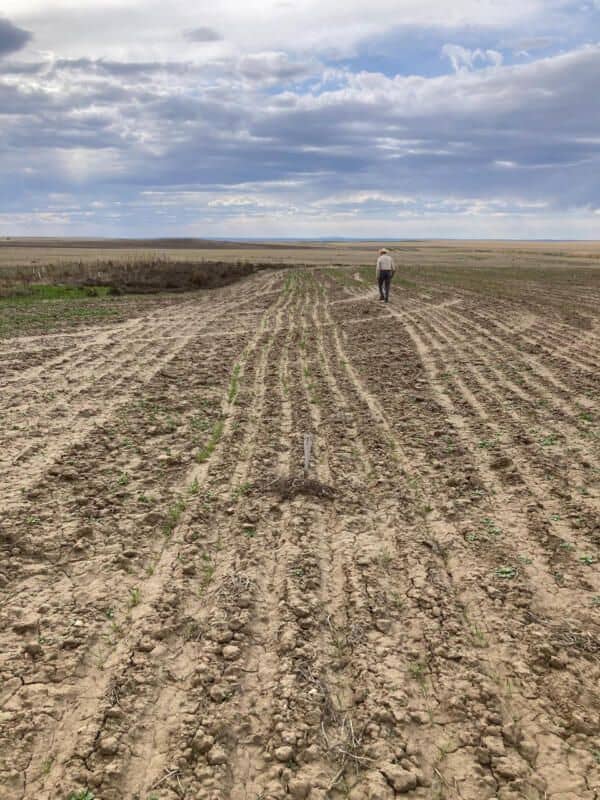
Image at right: A view of the research plot crop lines growing in May.

A Quest for a Hardy White Winter Wheat

Growing spring wheat in this region has become increasingly risky for farmers due to climate change challenges that include shorter rainy seasons and earlier than usual summer heat onset. Years ago, Bob felt that growing a hardy and resilient white winter wheat was a good solution, but he found no locally adapted varieties available. Winter wheat varieties are planted in the fall, go dormant in the winter, and are harvested in the summer. These varieties have more time to get established and could reduce the risk of crop loss due to the climate change patterns mentioned above. Bob looked for options that would show promise in the genetic diversity stored in the USDA National Small Grain Seed Collection. When Bob heard about OFRF’s Farmer-Led Trials Program, he thought it would be a good opportunity for research collaboration.

The Farm Trial

Starting with 100 selections from the USDA small grains collection, Bob has now winnowed down possible wheat lines to 15 types that show promise in the field. From the baker and consumer perspectives, Bob hopes to select a nutrient-dense wheat that produces bread loaves that are not as dark as those produced with hard red winter wheat.

Harvest from each line will be tested through a bake test for loaf size, texture, taste, and aroma by our bakery partner, Grist Mills, in Missoula, Montana, and compared to a complete baking test by the bread lab at Montana State University. The goal for this year’s farm trial is to select the top 5 or 6 lines to be grown again next year. The final goal of this research project is to produce a free, open mixed population of white winter wheat that can be used by organic farmers in the region that can be used by bakers to produce a highly nutritious tasty bread for their customers.

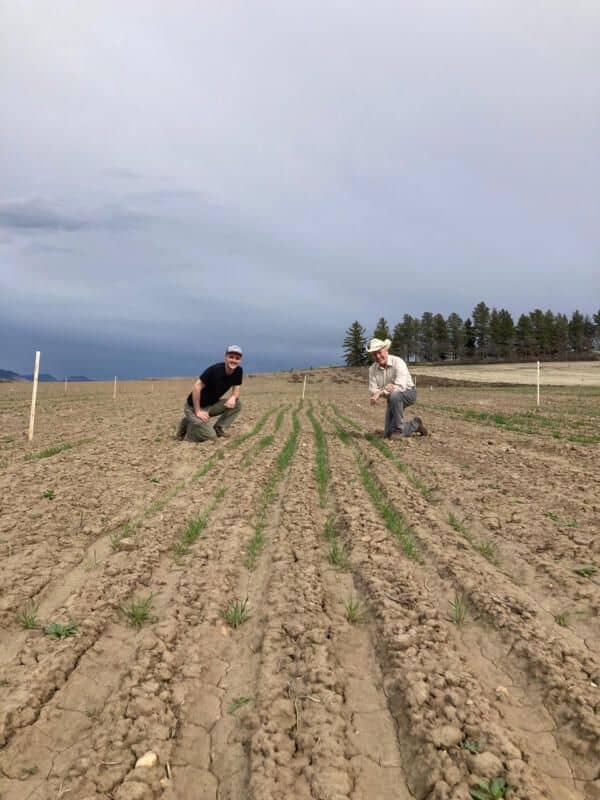
Below images: Bob, and Research Coordinator Josh, inspecting winter wheat survival in mid-April.

“Many farmers do not know where to start, how to proceed and what to do when problems arise and therefore are reluctant to convert to organic systems.  Programs such as those sponsored by OFRF help farmers overcome transition barriers and also overcome challenges along the way.  When I saw an opportunity to participate in farmer-led trials sponsored by OFRF, I was immediately interested. These are the kinds of opportunities that help farmers answer questions specific to their operation which in the end could have significant positive impacts for many others across the country and even the world.  They fill a gap between no help and the giant multiyear grants and projects, which also play an important roll, but most of which are beyond the reach or means of most farmers to apply for and to execute.  I am very thankful for the resources offered by OFRF to insure the experiments can be designed and carried out in a manner that can produce significant results.” – Bob Quinn

Trial Updates

The current crop was planted in October last year, survived the winter, and is currently growing vigorously, thanks to the better-than-expected rainy season. Harvest is fast approaching and scheduled for late July. OFRF is excited about Bob’s trial and hopes it leads to resilient variety alternatives for organic farmers.

To learn more about USDA germplasm resources, visit the USDA Germplasm Resources Information Network https://npgsweb.ars-grin.gov/gringlobal/search  

To learn more about the Quinn Institute, visit https://quinninstitute.org/ or take a peek at this recent article about their work: https://www.prweb.com/releases/agricultures-new-frontier-the-quinn-institute-unveiled-302134818.html

Research Results

Bob Quinn’s farmer-led trial focused on developing a hardy white winter wheat variety for organic production in the Northern Great Plains. By evaluating 15 wheat lines for yield, lodging resistance, purity, kernel color, and baking quality, the study aimed to identify the best-performing selections for organic farmers and whole grain bakers.

Key Findings:

  • Promising Wheat Lines Identified: Six lines exhibited strong agronomic performance, with Line 19 standing out for its high yield, superior bread quality, and potential nutritional benefits.
  • Excellent Baking Potential: Grist Milling and Bakery’s tests revealed that several lines produced high-quality whole grain bread, with ideal texture, aroma, and taste.
  • Lodging and Purity Considerations: While most lines performed well, three exhibited significant lodging issues, and a few had purity or kernel color inconsistencies requiring further evaluation.
  • Potential Nutritional Advantages: Line 19’s yellowish hue suggests it may offer increased nutritional value, prompting further lab analysis to confirm its nutrient profile.

Based on these results, Quinn plans to advance the top-performing wheat lines into further trials in 2025. Future research will involve expanded baking tests with additional bakeries and continued seed selection, with the goal of releasing a resilient organic wheat variety by 2027.

For full details on the study’s methodology and results, read the final report.

This story is part of a series profiling farmers who are taking part in OFRF’s Farmer-Led Trials (FLT) program. Farmers receive technical support from OFRF to address their challenges through structured on-farm trials. To learn more about OFRF’S Farmer-Led Trials Program, visit our website page at https://ofrf.org/research/farmer-led-research-trials/

By |2025-12-17T17:38:21-05:00June 7th, 2024|Farmer Stories, News|

Farmer-Led Trials Program Spotlight: Green Things Farm Collective

Written by Jose Perez, OFRF’s Research & Education Engagement Coordinator

Nathan Lada is one of the four co-owners of Green Things Farm Collective, a diversified vegetable farm located in Ann Arbor, Michigan. The farmers produce an array of fresh market vegetables and cut flowers for CSA memberships, farmers’ markets, small grocery and small wholesale markets. The bulk of the production takes place in five acres of permanent no till/low till, deep mulch bed system from early April to October. The farmers also raise beef cattle and manage 40 acres of woods.

Nathan and his wife Jill started farming in this farm location in 2011, but the farm became what it is now when a longtime employee and two other independent farmers joined them in 2020. Since then, they have managed the farm as a single-unit LLC. The farm has been certified organic under the USDA since 2015, and has been Real Organic Project certified since 2020.

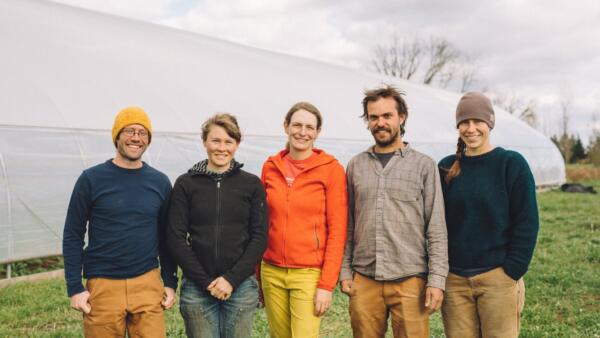
At right: Collective Farmers in 2020: Eric Kampe (left the farm in 2022), Hannah Weber, Jill Lada, Nate Lada, Michelle Brosius.

Figuring out plant spacing and densities

“Our primary focus is producing high-yielding species and varieties with lots of hand labor,” said Nathan. The farm operation employs between 15 to 20 people in the main season with the goal of maximizing production. “It’s hard to find information from other growers about their trials on spacing and plant densities, especially for high organic matter, high fertility, and fast turnover bed systems,” continued Nathan. When he heard about OFRF’s Farmer-Led Trial program from one of his employees, it immediately piqued his interest. 

While the farm has done some limited experiments, they do not have comprehensive data to help them determine which row spacings are best for their production practices. Nathan and his colleagues hope that maximizing yield per bed will help the farm increase production without needing to develop new growing spaces. Nathan is excited to see the results and share the outcome of this trial with other growers looking for similar information.

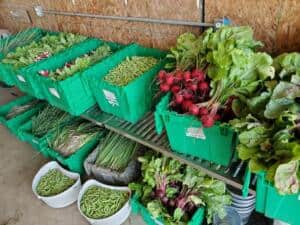
harvested vegetables at Green Things Farm Collective in Ann Arbor, Michigan

“I think it is important that farms can conduct their own trials and research in a practical way to figure out what will work best under their cultivation systems.  Our opportunity to work with OFRF will not only inform us about specific densities to improve production on our farm, but will also hopefully inform a repeatable pathway for us and others to make small improvements to our production based on practical farm-based trials that are simple and bring value to the farm.” – Nathan Lada

Farm trial plan

Beets and radishes are the focus of the farm trial because they are among the most produced crops at the farm, being planted in succession every week or every other week during the season. Although the farm already collects yield and some crop quality data per bed, conducting the on-farm trial with OFRF will provide the direct technical support to be more methodical and comprehensive in designing the farm trial, conducting data collection, and drawing trustworthy results. 

Preliminary farm trial plans include comparing two crop configurations for one beet variety and two crop configurations for two varieties of radishes for yield and crop marketability. Potential measurements identified include overall yield (bunches per bed, pounds per bed), losses due to undersized or oversized crops, losses to disease, days to maturity, and crop quality.

The farmers have participated in on-farm research in the past, but felt that those trials did not reflect farm working conditions. One goal Nathan expressed was to integrate the trial into their existing production plan, so OFRF is working with Nathan and his team to design an on-farm trial that is both useful and practical for the farm without disrupting their seasonal production. At OFRF, we are excited to be a part of Green Things Farm Collective’s journey, and hope that their work will inspire more farmers to conduct research trials on their farms.

Research Results

Green Things’ farmer-led trial examined the impact that row spacing of direct-seeded crops had on marketable crop yields.

Key Findings:

  • For beets, the number of rows per bed (3 vs. 4) did not have an effect on marketable beet yield, percent loss, or number of bunches harvested.
  • Yields were slightly higher in the plots where beets were grown at a density of 4 rows per bed, but more investigation is needed to confirm this as there were only two replications of beets planted. Also, because beets were harvested multiple times in a treatment area, unharvested beets were given some extra time to size up which was likely a factor in the increased yield.
  • For radishes planted at 5 and 6 rows per bed, data for each variety were analyzed using paired t-test comparisons. Average marketable yield was slightly lower in the 6 rows per bed plots, but number of rows per bed did not have a significant effect on yield. While the 6 row treatment was easier to seed (2 passes with a 3 row seeder vs 5 passes with a single row seeder), harvesters were taking more time to sort through more radish rows for roughly the same number of bunches as the 5 row treatment. 

In the future Nate and his colleagues would like to explore a similar process of adjusting planting population in crops on the farm to increase overall marketable yields in direct seeded crops. This would not only adjust row counts, but also adjust in-row seeding density to compare different populations.  The farmers’ suspicion is that in-row density is just as important as overall row density for marketable yields, and without adjusting both it will be hard to determine the best configuration for growing these crops in a permanent bed system.  In future trials, they would also focus on fewer plantings and more replications to create a better data set.

For full details on the study’s methodology and results, read the final report.

This story is part of a series profiling farmers who are taking part in OFRF’s Farmer-Led Trials (FLT) program. Farmers receive technical support from OFRF to address their challenges through structured on-farm trials. To learn more about OFRF’s Farmer-Led Trials Program, visit our website page at https://ofrf.org/research/farmer-led-research-trials/

By |2025-12-17T17:38:35-05:00May 10th, 2024|Farmer Stories, News|
Go to Top