
Insects & Diseases

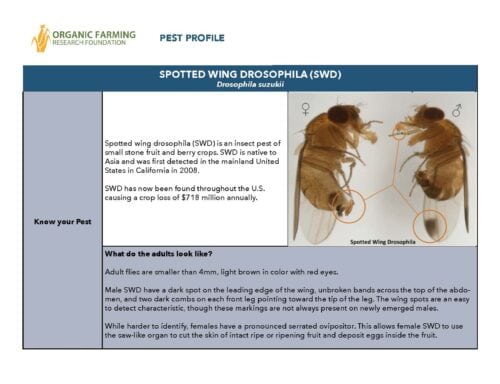
Spotted Wing Drosophila: Identification & Management Basics

This factsheet outlines how to recognize Spotted Wing Drosophila (SWD) adults, eggs, and larvae, and explains the insect’s life cycle, timing, and factors driving its abundance. It provides key ecological pest management strategies—monitoring presence, using time and space to your advantage, maintaining clean fields, and supporting beneficial insects. Farmers will gain practical tools to limit SWD infestations and protect fruit crop quality and yield.
By |2026-03-02T11:38:27-05:00October 27th, 2022|Insects & Diseases, Resource|

Solanaceae Flea Beetles: Organic Pest Profiles

This factsheet covers identification of tuber flea beetles and pale striped flea beetles, detailing their behavior, life cycles, and preferred hosts in the nightshade family. It outlines key ecological pest management strategies, including stressing the pest, supporting beneficial insects, and strengthening crop diversity. Farmers gain practical, organic tactics to limit flea beetle damage and protect solanaceous crops.

By |2026-03-02T11:39:21-05:00October 27th, 2022|Insects & Diseases, Resource|

Brassica Flea Beetles: Organic Pest Profiles

This factsheet provides clear identification guidance for striped and crucifer flea beetles, including eggs, larvae, and adult stages. It outlines key ecological pest management strategies, emphasizing pest suppression, enhancing beneficial insect populations, and maintaining healthy crop diversity. Farmers will gain practical, organic tools to reduce flea beetle pressure and protect brassica crops.

By |2026-03-02T11:37:30-05:00October 27th, 2022|Insects & Diseases, Resource|

2021 CALIFORNIA ORGANIC RESEARCH AGENDA

California is the nation’s top producer of organic agricultural commodities and specialty crops. Thus, it
is imperative to understand the unique needs of the organic growers in the nation’s most agriculturally
productive state. The 2021 CORA report provides up-to-date information on the stewardship practices
used by organic producers across the state and identifies the most pressing production and non-production
challenges faced by organic California growers. The findings presented in this report: 1) highlight the soil
health management practices that organic producers in California are currently implementing, 2) outlines the most pressing challenges and needs of certified organic producers in California, and 3) outlines priorities and recommendations to address those needs through public policy, research, and Extension programs.

2021 California Organic Research Agenda report
By |2026-03-02T11:40:58-05:00April 7th, 2022|Advocacy, Insects & Diseases, On-Farm Research, Resource|

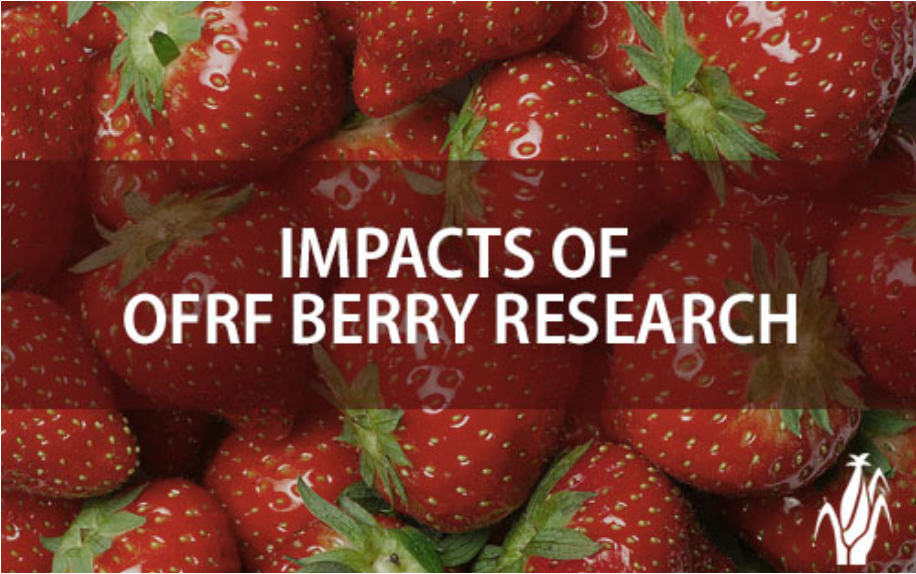
Impacts of OFRF Berry Research

This report offers a detailed review and impact assessment of OFRF-funded research on organic
berry production, with a focus on strawberries. These research projects address the most pressing
issues in the industry and this evaluation clearly indicates that OFRF investments have resulted
in important advances in organic berry production knowledge and practices, especially in
California. Overall, OFRF grant funding has advanced scientific knowledge and improved the
practices, ecological sustainability, and economic prosperity of organic berry farming. This
report recommends continued research support for organic insect, disease, and weed
management research efforts in berry production.

By |2026-03-02T11:42:18-05:00September 25th, 2019|Advocacy, Insects & Diseases, On-Farm Research, Resource|
Go to Top