Plant Breeding & Variety Selection

An Organic Approach to Increasing Resilience

Few farmers need official reports to tell them that “increasing weather volatility” and climate change threaten their livelihoods and the resilience of their farming and ranching operations. With historic droughts, wildfires, flooding, and hurricanes in recent years, more farms are facing variable yields, crop losses, increased weed, pest, and disease pressures, and intensifying soil degradation, erosion, and compaction.

By utilizing organic and sustainable practices to build soil health, farmers and ranchers can improve their resilience and reduce risk as our climate changes. While practices can vary depending on your operation, establishing optimum soil organic matter (SOM) and biological
activity will help your operation through the difficult times to come.

TOMI: Organic Management and Improvement of Tomatoes

Building on previous research (TOMI Phase I), the Tomato Organic Management and Improvement – TOMI Phase II project integrates soil microbiome research, induced systemic resistance, and farmer-participatory breeding to develop disease-resistant, flavorful tomatoes for organic systems. Microbial biofungicides and organic amendments support healthy soils while reducing pathogen risks. Advanced breeding lines show promise for regional adaptation and market-ready quality. Download the full report to learn more about tomato varieties and soil-based disease management strategies.

Carrot Improvement for Organic Agriculture: Leveraging On-Farm and Below-Ground Networks

The Carrot Improvement for Organic Agriculture (CIOA) project develops carrot varieties suited to organic systems, using farmer-participatory trials and soil microbiome research. These efforts improve disease resistance, nutrient uptake, flavor, and market traits. Advanced breeding lines include orange, purple, red, and yellow carrots with improved resilience and quality. Download the full report to learn more about these varieties and on-farm research insights.

Organic Farmers Withstand Climate Change with Living Soils and Regional Seed Breeding

A look at the Organic Microbiome Project

By Brian Geier

Organic farmers understand that soil health is paramount to our success. More specifically, we know that the living, microbial part of soil, sometimes called the soil microbiome, is something our farming practices can quickly and drastically alter, having serious implications for organic systems that rely on organic processes in the soil. But even though we understand that preserving soil life is good practice, we often do not know how soil life is changing, how farming practices are affecting those changes, and which practices are responsible for increases or decreases in crop or animal health because of those changes. 

To address this knowledge gap, researchers at Cornell University are utilizing a novel, farmer-led approach to studying what organic farmers are already doing on their farms and monitoring how the soil microbiome is changing over time. What they find could provide key insights into which organic farming practices might be helping producers promote and maintain soil health through droughts and other climate extremes. 

The Human Body and the Soil: An Analogy for Understanding the Soil Microbiome

To help us understand the importance and complexity of the soil microbiome (the living part of the soil that is composed of soil microorganisms), organic researcher Elias Bloom (a member of the Casteel lab at Cornell University) suggests beginning with an analogy. “The human body has more microbiome cells than it does human cells,” Bloom explained at a recent eOrganic webinar. Over 10,000 different species of microorganisms live in and on the human body, and they can have broad implications for human health. Essentially, a healthy human body is driven by a healthy microbiome.

Compare this analogy with the soil: one teaspoon of soil may have over one BILLION microorganisms living in it. And in just one small teaspoon of soil, there are often over 10,000 species of microbes, similar to the number of species found in the human body. Since microbes are involved in everything from water-holding capacity to promoting disease resistance, one begins to see that what a farmer does everyday can have serious effects on current and subsequent crops.

The Importance of the Soil Microbiome

The living portion of the soil is a primary driver of nutrient cycling, a pillar of healthy soil structure, and can enhance resilience to climate change and pests. The microbiome also helps break down pesticides, toxins, and excess nutrients. It is generally understood that high soil microbe diversity promotes pest suppression and that organic land tends to have higher soil diversity than conventional fields. Still, in some cases increases in diversity can mean increases in plant pathogens. For farmers and researchers, understanding which farming practices result in a ‘healthy microbiome’ and translate to positive effects on crop production, is complex.

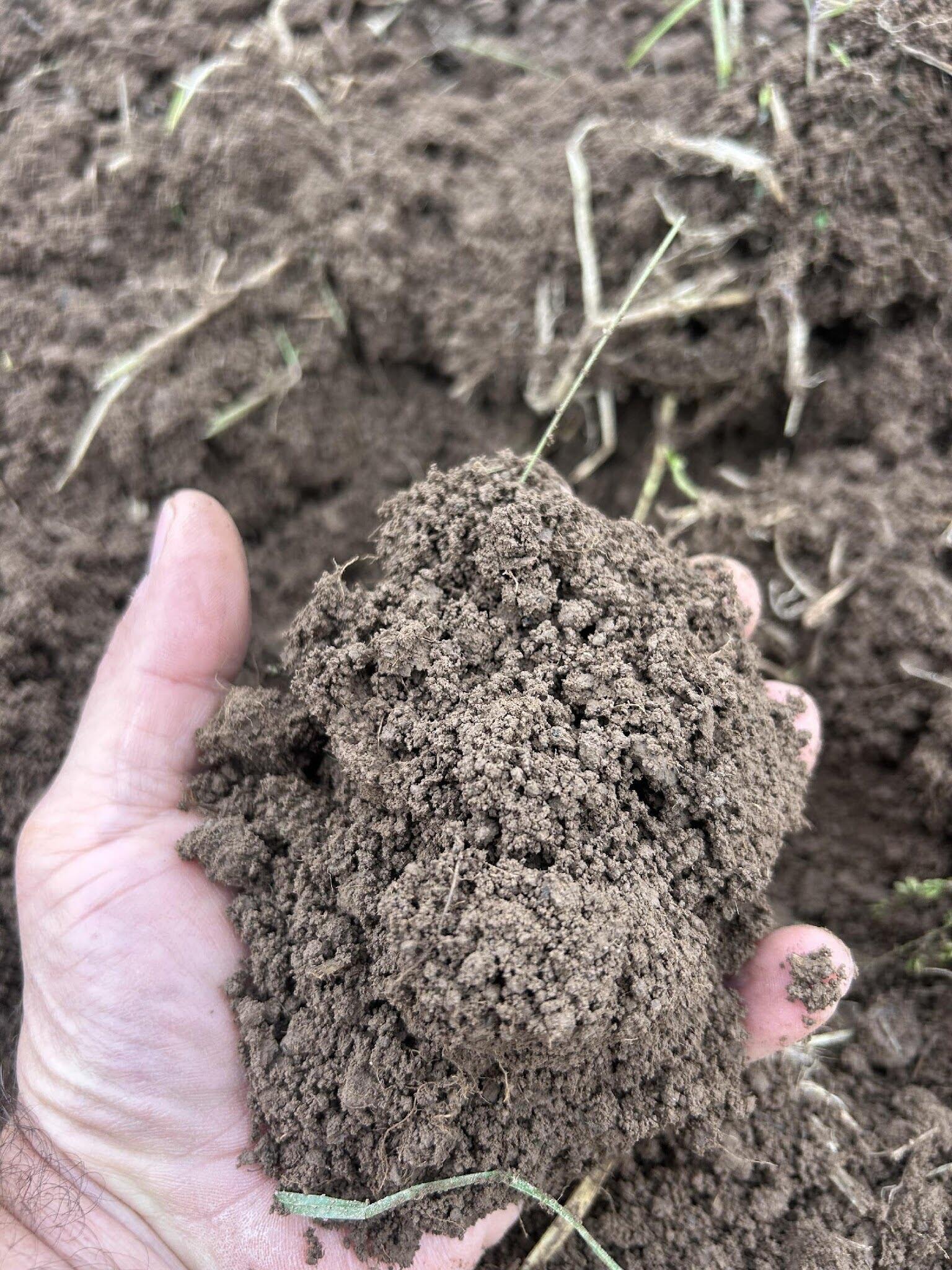
The hand of a farmer holds a handful of soil.

A handful of soil at Four Fold Farm, one of 80 participating organic farms sending soil samples and production practice to the Organic Microbiome Project. Photo credit: Steven Crist

Organic Farmer Driven Research on the Soil Microbiome at Cornell 

To approach this complexity, research projects led at the Casteel lab are utilizing a unique, participatory research approach where organic farmers are providing key insights on soil management practices that could be helping them withstand pests and extreme weather events. 

“The conservation of soil microbes that promote pest management is a new and potentially groundbreaking area for organic agriculture. These microbes naturally occur on organic farms, promote plant chemical defense, and control pests.” -The Organic Microbiome Project

The Organic Microbiome Project is perhaps the largest effort to date that is documenting the soil microbiome on organic farms. Over 80 organic farms are participating. Essentially, organic farmers are sending soil samples in, accompanied with answers about farming practices, and the lab documents changes within the soil microbiome, driving some interesting findings. Rather than deciding what practices to focus on and then involving farmers, the project starts by following practices organic farmers already employ. “We allowed farmers to submit up to two samples from two different fields where they have been using different practices, and we encouraged them to pick comparisons they were interested in,” explained Casteel. In this sense, the project is inherently farmer-led, and evaluates the effects of organic farming practices already being utilized on working farms. While results are still coming in, one thing is clear: when research follows the lead of farmers, it is closely watching how farmers are adapting and building resiliency in real time.

A field at an organic farm has strips tilled with brown soil showing in between green pathways covered with grass.

Strip tillage is one of may practices used to try to help protect soil health at Four Fold Farm, NY. Researchers with the Organic Microbiome Project encourage farmers to send soil samples from areas of their farm they are interested in comparing, leading to farmer-driven insights.

Changes to the soil microbiome and shifts in plant defenses that followed certain farming practices are shown in a table form.

Some interesting insights found so far are illustrated in this graphic. On the left, some organic practices that participants are using on their farms are listed. In the middle, a summary of the change to the microbiome, and on the right, if the crops there exhibited increased or decreased plant defenses.

Standing on the Shoulders: Recent Microbiome Research and Ongoing Seed Breeding

Another project carried out by Dr. Casteel, Dr. Eli Bloom and Ethan McAnally, Leveraging Soil Microbiomes to Promote Climate Change Resilience and Adoption of Organic Agriculture (funded by USDA/NIFA’s Organic Transitions Program) is looking closely at the soil microbiome and organic seed breeding. Also partnered with organic producers, this time specifically seed breeders, the project again follows the lead of farmers, who seem to be lighting the way toward a more regional approach to seed saving that might help withstand climate change. 

The project builds on previous research on both soil microbiomes and regional seed saving, and explores several themes: 

  • Pest pressure is reduced when crops are grown in soil where they are bred. The same effect was observed when the crops were grown with soil microbiomes from regional organic farms.
  • Crops bred under protection and irrigation performed poorly during droughts. When drought conditions were introduced to the study, kale performed better than tsa tsai. Tsa Tsai has been bred in irrigated, protected conditions (greenhouses), while kale is unirrigated and often outside. These results may reflect the maxim “stress as strength”.
  • Some farms’ soil microbiomes may offer protection against drought. All crops performed slightly better during droughts on certain farms in the study.

Voices from the Organic Seed Breeders

“We believe that soil and seed are everything,” Steven Crist, farmer at Four Fold Farm and Hudson Valley Seed Company, and partner on the project, explains. “The more we grow a crop, the better it becomes.” Crist gives a powerful insight into how stress as strength is working through the long-term relationships formed when seedspeople breed crops over time on their farms.

Seed crops that make it through the challenge are almost always more resilient, year to year. We believe this has everything to do with adaptation, directly linked to the microbiome, and to seed memory. That is a slightly pseudo-scientific term but that’s how I call it in the field. The more we grow a crop, the better it becomes, is the long and short of it.” -Steven Crist, Four Fold Farm

At Four Fold Farm, Crist utilizes best practices for protecting the living soil including “mulches, compost, cover cropping, rotation, repeat”. He is also experimenting with biochar, utilizing a New York Carbon grant, and incorporating local ecotypes of native plants, which he theorizes may provide unique and potent additions to his farm’s soil microbiome by attracting and promoting native insects. This approach follows the adage “As above, so below” and Crist suggests that the breeding and feeding of native insects might be mirrored by the breeding and feeding of soil microbes below. 

Lia Babitch, organic farmer at Turtle Tree Seed Initiative and another collaborator on the project, suggests that the social and ecological aspects of growing seed are intertwined. 

The varieties that we carry have become like our children, and like our friends. They’ve grown with us and we’ve watched their steady improvement and occasional shenanigans. And they’ve become rooted in the context of this valley both agriculturally and socially.”  -Lia Babitch, Turtle Tree Seed Initiative

Turtle Tree offers a novel approach to selling seeds that connects buyers to the seedspeople (and potentially the microbiomes there) with what Bloom calls “decision support” for farmers: for varieties of seed in Turtle Tree’s catalog, potential buyers can see the farms and regions where particular lots of seed are from. (Note this option is only available in their catalog, and that it may be added to the website later.)

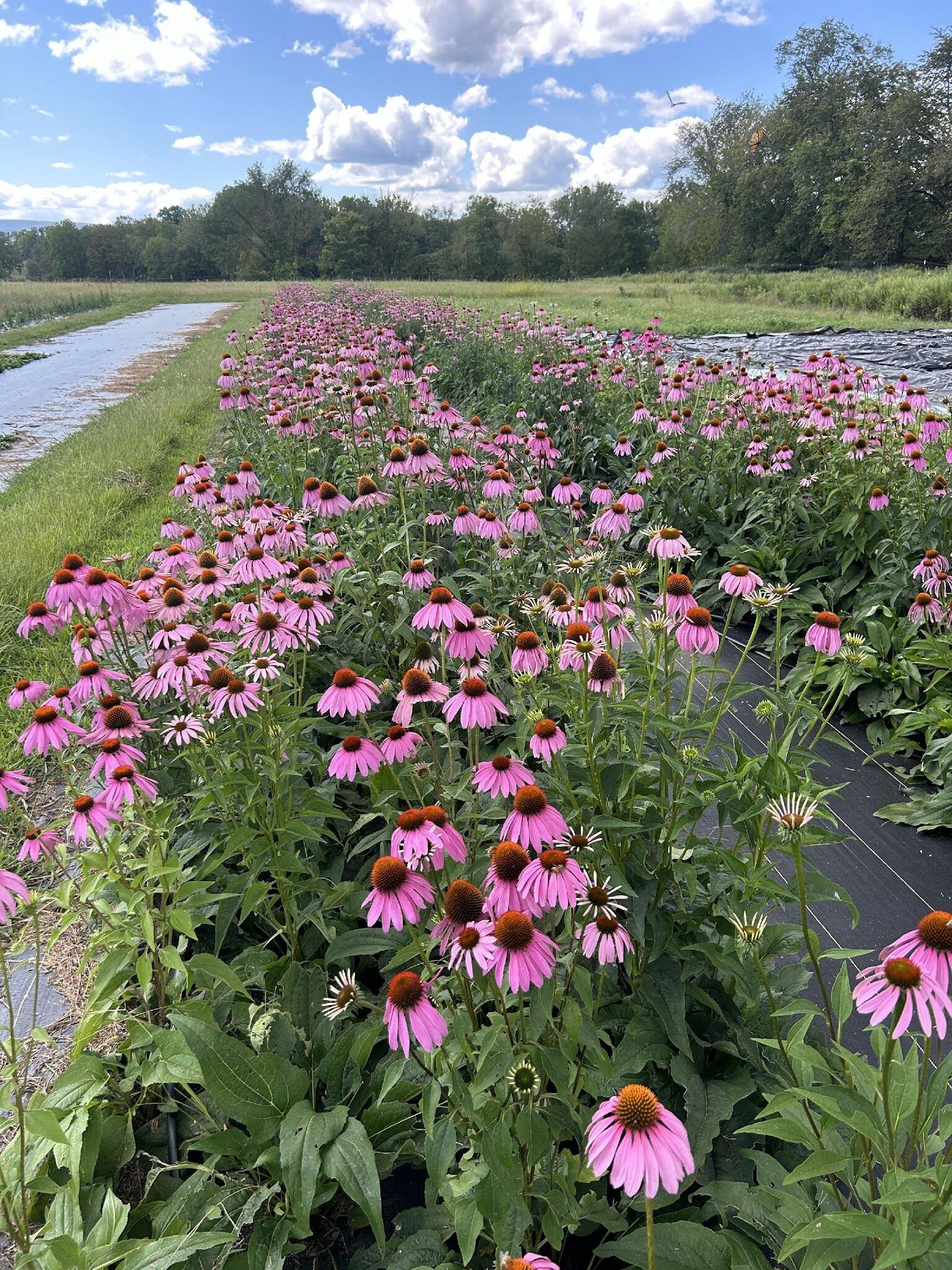
A field of echinacea grows at Four Fold Farm, an organic farm in New York State.

Conservation or production plantings of native plants like this echinacea at Four Fold Farm can attract specialized, native insects and birds. Some organic farmers are asking how plantings of native species may be affecting the soil microbiome through the introduction and presence of the insects and birds that the plants provide habitat for. 

Looking Ahead: The Triad of People, Plants, and Place

As time goes on, and provided funding for research like this continues, we will see more and more insights about how organic farmers’ practices are affecting the soil microbiome and resulting in increased resiliency to climate change. And along the way, it is clear that when researchers study what farmers are already doing, those insights will remain timely, farmer-driven, and translatable to other farmers eager to learn from each other.

Farmer-Led Trials Program Spotlight: Ledoux Grange

Can teff handle high winds? This on-farm trial aims to find out.

Written by Mary Hathaway, OFRF’s Research & Education Program Manager

Ledoux Grange, situated at 7,400 feet in Mora, New Mexico, is an organic-certified, 34-acre operation focused on regenerative agriculture. Farmer Kristin Swoszowski-Tran has been cultivating Lilium species (a genus of herbaceous flowering plants growing from bulbs, including lilies) and hybrids  – since the 1990s, registering novel cultivars with the Royal Horticultural Society in Great Britain. As a member of the Southwest Grain Collaborative, Ledoux Grange also specializes in growing drought-tolerant, high-altitude pulses, legumes, grains, and cover crops, and is committed to bringing culturally rich, locally-grown produce to their community.

Testing Teff for Lodging Resistance

One of the grains that Ledoux Grange grows is Teff, an annual grass, a species of lovegrass native to Ethiopia, where it first originated in the Ethiopian Highlands. It was one of the earliest plants to be domesticated and is one of the most important staple crops in Ethiopia. Ledoux Grange is currently testing 14 teff accessions rated for their lodging resistance in its characteristically windy location. Teff’s versatility as human food, livestock fodder, and a drought-tolerant cover crop suited for high altitudes makes it a promising addition to their operation. The farm owner, Kristin, is enthusiastic about experimenting with various accessions, drawing inspiration from past successes with teff in the area. She has a broader interest in lovegrass species and is eager to observe their growth, hoping to identify types that will flourish and resist lodging in her environment.

Terminology Touch Point

ACCESSION: a distinct sample of germplasm representing a cultivar, breeding line, or a wild or cultivated population, maintained in a genebank for conservation and use. Its genetic stability is optimally preserved through careful monitoring and multiplication.

Source: GGCE

On-Farm Trial Plan

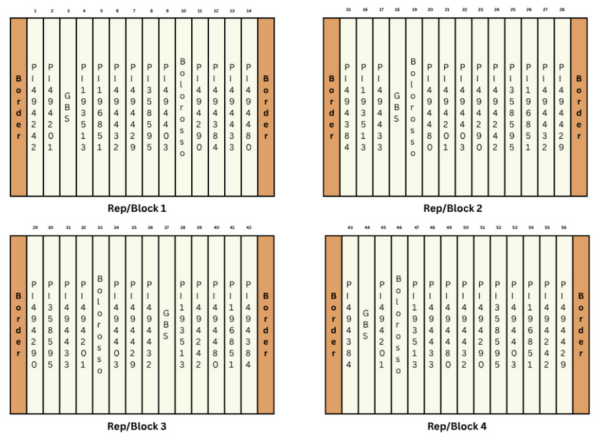
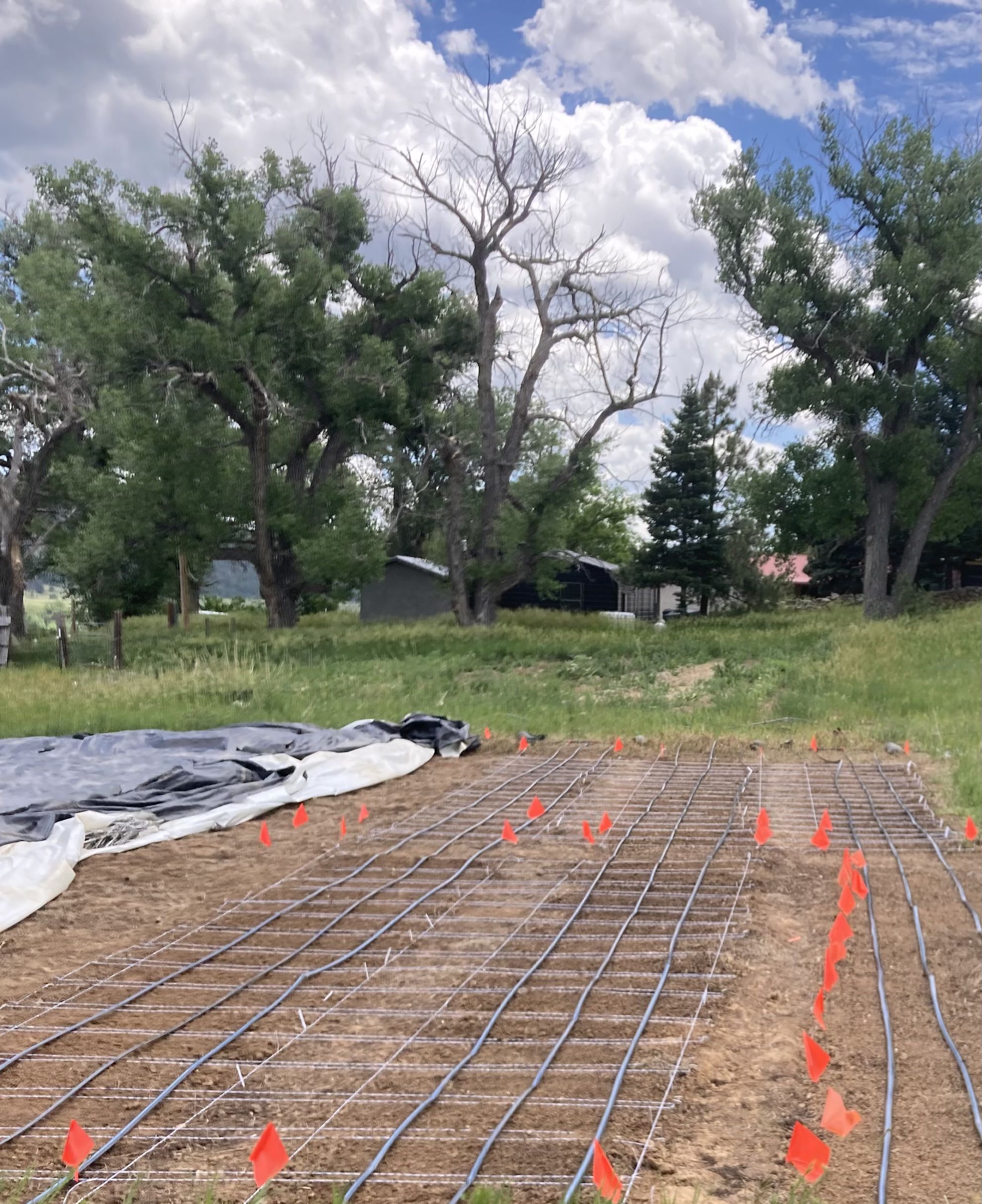
The plot layout includes 12 accessions from a western regional station, all of Ethiopian origin, alongside two commercially available varieties: ‘Bolorosso’ from Experimental Farm Network and teff from Great Basin Seeds. The experiment includes four replications, and is laid out in the field as four blocks border rows on each end. Each packet contains 200 seeds, with 50 seeds per plot, weighed out for accuracy. Rows will be one meter long, with seeds distributed evenly within each plot area. Planting is scheduled for late June, following thorough bed preparation.

Trial Evaluation Metrics

Data collection will be comprehensive, focusing on key metrics such as days to emergence, vigor, time to flowering, time to maturity, tillering, height, and lodging. Grain yield and seed color will also be recorded. Vigor will be assessed using either GRIN standards or a custom scale. Lodging will be rated on a 1-5 scale. To assess the tillering, she will record the number of tillers on 10 plants per plot and calculate the average. Grain yield will be determined by weighing the collected seeds. Seed color will be evaluated with a pantone scale.

Plot Map

Looking Ahead

The evaluation of these teff accessions will help Kristin identify promising teff accessions, and will facilitate seed increases for subsequent on-farm research at Ledoux Grange. Looking to the future, Kristin aims to address key challenges for this specific environment, like lodging prevention and optimal timing for growth relative to the monsoon season. Ultimately, Ledoux Grange hopes to expand crop diversity in the region, provide the community with nutrient-rich food options, and create new market opportunities.

Farmer-researcher Kristin Swoszowski-Tran

“I believe that it is crucial to conduct trials in diverse agricultural ecotypes so that we can perpetuate and ensure suitable, local production to idiosyncratic conditions. It is an honor and privilege to work with OFRF staff members, Mary and Heather, to organize this trial. They’ve made an easy and seamless process to plan the implementation. My hope is that we can identify drought-tolerant candidates that can withstand our windy conditions here at this elevation. I’m eager to see what this trial produces!”

– Kristin Swoszowski-Tran, Ledoux Grange

Teff trial layout.

Stay tuned:

This is part of a series of blogs highlighting farmers who are participating in OFRF’s Farmer-Led Trials program. Farmers receive technical support to address their production challenges through structured on-farm trials. To learn more about OFRF Farmer-Led Trials Program, visit our website page at https://ofrf.org/research/farmer-led-research-trials/ 

To learn more about Ledoux Grange visit https://www.facebook.com/ledouxgrange 

Lessons from Organic Seed Usage Farmer Listening Session

Certified organic producers share their challenges and opportunities in organic seed use

Written by Brian Geier

In the sixth Seeds of Success: Farmer to Farmer Networking Session, held on March 5, 2025, nearly 40 participants gathered virtually to share their thoughts and firsthand experiences using and producing organic seed. The session was co-hosted by the National Organic Coalition (NOC), Organic Seed Alliance (OSA), Organic Farming Research Foundation (OFRF), Organic Farmers Association (OFA), and the Ohio Ecological Food and Farming Association (OEFFA). Like all Seeds of Success sessions, this was a facilitated, farmer-to-farmer conversation designed to support farmer-driven solutions, information sharing, and the identification of areas for future research and support.

Understanding the Organic Seed Requirement

The USDA’s National Organic Program (NOP) requires the use of organic seed unless the seeds farmers need, including equivalent varieties, aren’t commercially available, per the Seeds and planting stock planting standard (7 CFR 205.204).

The purpose of the current organic seed exemption is to provide a transition time for the seed industry to catch up to demand and to allow organic growers to find suitable varieties to transition to, with the goal of eventually achieving 100 percent organic seed sourcing. The allowance for non-organic seed is important for growers who lack access to appropriate organic seed for their operations. While it is no one’s intention to force organic growers to use organic seed that may not be optimal for their operations, continuous improvement in organic seed sourcing is essential to incentivizing growth in the organic seed supply and strengthening organic integrity. 

The dialogue from participants in this networking session is summarized below and will help guide advocacy for balanced solutions that strengthen organic integrity and the seed supply.

The State of Organic Seed report from the Organic Seed Alliance provides insights on organic seed usage and an action plan to increase organic seed supply while fostering decentralized organic seed grower networks.

Key Insights from the Listening Session

Seed Grower and Researcher Perspectives 

  • Organic seed availability: Availability varies by crop and scale. Small-scale farmers can often source organic seeds, but large-scale operations struggle, especially for grains, cover crops, and certain vegetables.
  • Challenges in organic seed supply: Limited year-round availability, lack of regionally adapted varieties, and difficulties in securing non-proprietary and open-pollinated (OP) seeds.
  • Improving NOP seed regulations: Calls for 100% organic seed requirements, incentives for seed stewardship, cost reductions for certification, and stricter enforcement of organic seed sourcing.
  • Handlers & certifiers’ role: Processors often dictate seed choices, limiting organic adoption. NOP could regulate processor demands and improve certifier tools for verifying organic seed availability.
  • Organic seed database: A centralized database could help track seed availability and genetics, but concerns exist over maintenance, participation, and potential large-scale buyouts by industrial players.

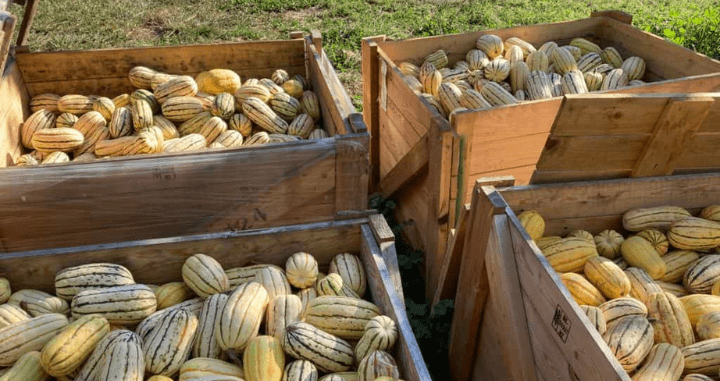
A Delicata squash seed crop cures in bins at White Oak Farm and Education Center, Oregon.

Producer Insights 

  • Organic seed value: Many farmers see organic seed as important for soil health, resilience, and expanding organic acreage. However, cost and availability remain major concerns.
  • Barriers to organic seed use: High costs, limited availability, and documentation challenges make it difficult for some farmers to use exclusively organic seed.
  • Recordkeeping & compliance: Some producers find documentation burdensome, while others see it as manageable or even beneficial for farm planning.
  • Suggestions for NOP: Farmers suggest stricter organic seed regulations, incentives for seed saving, and better coordination with seed breeders to address regional challenges.
  • Seed breeding needs: More transparency, regional adaptability, and climate-resilient varieties are key priorities for growers. Many emphasize the importance of seed saving and collaboration.

Voices from Technical Service Providers, Policymakers, and Educators

  • Organic seed challenges: Farmers struggle with sourcing organic seed due to cost, limited availability, and contract restrictions. Wholesalers often don’t prioritize organic-specific varieties.
  • Mentorship & seed production: Limited mentorship opportunities for organic seed growers. Some interest exists, but infrastructure and certification barriers remain.
  • Certifier & inspector role: Inspectors find it difficult to enforce commercial availability rules and assess variety choices. A shift to acreage-based benchmarks for organic seed use may be more feasible.
  • Database for organic seed: Need for a centralized, up-to-date seed availability database, but challenges exist in funding, maintenance, and neutrality. Potential for regional databases or collaboration with certifiers.
  • NOP & seed policy: Calls for stronger organic seed regulations, incentives for growers, and addressing handler influence on seed selection.

Looking Ahead

We are incredibly grateful to our co-hosts for this session — NOC, OSA, OFA, and OEFFA — whose collaboration, recruitment, and facilitation support made the conversation possible.

We are looking forward to disseminating these findings with the National Organic Standards Board, the National Organic Program, and the entirety of the organic seed industry spectrum (from growers, to seed breeders, retailers, and researchers). Based on the interest of participants and registrants, we are looking at hosting similar iterations of the conversation, making space for more voices and perspectives.

For another perspective and complementary summary, we recommend reading this recap of the listening session from the National Organic Coalition, which includes additional context and reflections.

About the Seeds of Success Series

OFRF has partnered with the Organic Farmers Association (OFA) and National Organic Coalition (NOC) to lead a series of virtual farmer-to-farmer networking sessions. These facilitated events will be engaging opportunities for farmers to share their challenges and successes, and will be accompanied with relevant resources you can use.

To learn more about these and other events from OFRF visit: https://ofrf.org/events/

Funding for this series is provided by a cooperative agreement between OFRF and USDA- NIFA to highlight research investments made through both OREI and ORG grant programs.

Learn more about the Organic Agriculture program at USDA-NIFA at:  https://www.nifa.usda.gov/grants/programs/organic-agriculture-program

By |2025-12-09T17:41:12-05:00May 15th, 2025|News, Plant Breeding & Variety Selection|

Organic Research in the Balance: What’s Happening in Wisconsin

Written by Brian Geier, OFRF Communications Manger. This article was originally published in the Spring 2025 Organic Broadcaster by Marbleseed.

In labs in Wisconsin and Indiana, researchers are studying how microbial communities found on different varieties of carrots might help lead to disease resistance on organic farms. At a field day in Illinois, ten varieties of carrots are served on paper plates to attendees, who taste and rate the sweetness, texture, and color. And on forty farms across the country, farmers try the new carrot varieties on-farm, via a decentralized trial service called Seedlinked. All are part of the “Carrot Improvement for Organic Agriculture” (CIOA) project, led by Dr. Phillipp Simon at the University of Wisconsin (UW) and partnered with the Organic Seed Alliance (OSA). The effort aims to develop and release new seed lines that can support a surging organic carrot industry that already represents 12% of the carrots grown in the US and is valued at over $120 million annually.

Advanced breeding lines of carrots are being evaluated at the Hoagland Lab at Purdue University, a partner on the CIOA project. To learn more, visit CIOA’s eOrganic page. Photo credit: Purdue University.

The CIOA is one of several projects developed and led in Wisconsin that are responding to the needs of various organic industries and doing critical work to empower farmers to elevate their operations. It serves as just one example of how the organic community in Wisconsin is leading the way toward new innovations through research, helping to advance organics nationwide.

Organics in Wisconsin

Wisconsin is undoubtedly a leader in organic farming. It ranks 5th in the nation in terms of organic market value, after having grown 16% in just two years to $312 million in 2021. The state has the highest number of organic farms of any state outside California, with 1,455 certified operations, representing 8% of the nation’s total. And, Wisconsin is the nation’s leader in the number of organic farmers statewide in several commodities: field crops, livestock and poultry, layer chicken farms, and pig farms. 

By many indicators, the growth trend for organic in Wisconsin is poised to continue: the state ranks second in the number of non-certified farms with transitioning organic acres, an indicator of the potential for growth in a state’s organic sector. And according to UW, the majority of organic farmers in the state (80%) plan to maintain or increase their organic production.

Federally-Funded Research in Wisconsin

To begin a discussion on Federal funding, it can be useful to decode some alphabet soup. Organic research funding reaches Wisconsin through the USDA’s National Institute of Food and Agriculture (NIFA) via the Organic Research and Extension Initiative (OREI), the Organic Transitions Program (ORG), and the Agricultural Research Service (ARS). Project leads are often researchers at universities, but many projects involve collaborative teams of researchers in other states, and many have organic farmers collaborating in research as well.  

Project leads often have ongoing connections to organic farmers, and ideas for research can come from a variety of places including formal surveys or simply through discussions with growers. According to the 2022 National Organic Research Agenda, a comprehensive survey of organic producers across the country conducted by the Organic Farming Research Foundation (OFRF), organic farmers in the Great Lakes ag-ecoregion have identified three key research concerns: 

  • Climate adaptation and resilience. 
  • Weed, pest, and disease management.
  • Soil health.

NIFA has awarded over $19 million in grants to the state’s research institutions for organic research to address these and other concerns. These grants translate to over $380 million in economic activity, since every dollar invested in agricultural research generates about $20 in benefits, according to a long-term study by the USDA’s Economic Research Service (ERS). UW has played a crucial role, securing and investing $8 million of those grants. The ARS has historically funded 20 projects in the state researching organic topics, but currently, only two of those remain active, revealing a gap in the institution’s portfolio.

Innovative Projects Ongoing in Wisconsin

Research led by Dr. Yang, left, seen here standing in his lab alongside business collaborator Daniel Burgin, is bringing new biological agents to organic growers that can help protect apple, tree, and citrus trees from disease. Photo credit: UW.

Organic research underway in Wisconsin serves a diverse range of production systems, from vegetables to tree fruits and dairy. 

Besides the CIOA, which is funded through OREI, another project at UW-Madison, led by Dr. Rebecca Larson and funded by ORG, is partnering with organic dairy farmers through the Organic Valley Cooperative. The team is developing life-cycle analysis models for eight dairy-producing regions so farmers can measure and meet conservation goals. Also funded by ORG but headquartered at UW-Milwaukee, a project led by Dr. Ching-Hong Yang is working to boost the efficacy of a bacterial strain in controlling fire blight in organic apple and pear trees. Dr. Yang, along with a business partner and researchers at the University of Florida, is also testing the same strain for efficacy in lessening the severity of citrus greening.

Wisconsin’s organic producers have a diverse range of operations, and the challenges that organic farmers face are varied. Researchers are answering the calls with strong collaborations, multi-state networks, and dissemination components to bring key findings that farmers can use to inform decisions on their operations. 

Resources and Insights from Research Completed in Wisconsin

Celery variety trials at UW. Photo credit: The Organic Center.

The Organic Alternatives to Conventional Celery Powder project, led by Dr. Erin Silva at UW, addressed a constraint of the organic processed meat industry. This was a timely project, as the National Organic Program (NOP) was about to sunset the allowance of non-organic celery powder. But the question remained: can organic systems produce celery powder with the nitrate content needed for curing meat? The project verified that organic production systems can produce celery powder with sufficient N content for the industry.

Another project, called Connecting Community to Strengthen Organic Seed Breeding and Research and led by the OSA, responded to an urgent need to recruit and train a new generation of plant breeders specializing in cultivar development for organic systems. Plant breeders whose methods comply with organic standards have become an endangered species. The needs of organic seed farmers were collected and presented in OSA’s 2022 State of Organic Seed Report. And yes, 2022 is the same year as OFRF’s NORA report mentioned above. In fact, OFRF and OSA collaborated on an OREI-funded project to conduct the surveys and produce both reports!

OSA’s seed-breeding project conducted the Student Organic Seed Symposium (SOSS), an annual networking and professional development opportunity for graduate students in plant breeding and seed production for organic systems. The symposium was held at West Virginia University to convene a greater geographical and ethnic diversity of students. A speed-mentoring activity amongst participants was found to be especially valuable in identifying the next steps in their professional development. Reflecting on the Symposium, one seed-breeder-in-training stated: “It takes all of us (farmers, researchers, chefs, storytellers) to further our aims of creating genetic diversity and adapting to climate change.”

While research projects in Wisconsin may have been born from the challenges that Wisconsin’s organic farmers face, the knowledge and resources created by projects in the state have made significant contributions to the broader organic community.

Advocacy to Protect Federal Funding for Organic

Certified organic produce now makes up more than 15% of total produce sales in the United States. Organic dairy and eggs now constitute more than 11% of the total market. And overall, organic sales have doubled over the last 10 years and in 2024 made up about 6% of the total US food market. By most measurements, organic food is trending upward nationally, not just in Wisconsin. Most notably, the growth of organic sales is consistently outpacing the growth of the overall food market. To say it another way, we might be heading into a future that is more and more organic! 

But will we get there? 

Despite the growth of the organic sector, organic agriculture research funding makes up less than 2% of the total research budget at the USDA, and less than 1% of the Agricultural Research Service’s (ARS) budget. Additionally, much of the research focused on conventional agriculture relates to chemical applications or genetic traits—technologies that organic producers do not, and if certified, can not, use. To put it another way, organic research benefits all farmers, including conventional ones, but not the other way around.

In order to sustain the growth in organic acreage, producers, and products, it is crucial that more USDA funding be organic and applicable to all farmers. National policy priorities identified by OFRF include:

  • Increasing USDA’s research funding for organic research through both competitive grant programs at the National Institute of Food and Agriculture (NIFA) and intramural research at ARS to reflect its market share and growth trajectory.
  • Fully funding the Organic Data Initiative to provide the necessary market analysis of an increasingly sophisticating sector. 
  • Expanding the accessibility and applicability of technical and financial assistance programs for organic farmers. 

At the time of this article’s writing (early 2025), uncertainty abounds within the organic community as federal funds for a number of programs related to organic farming, addressing climate change or support for specific farming communities ,are currently inaccessible due to executive action by the new administration in January. A federal judge recently ruled against the, but congressionally appropriated funds for active, ongoing organic research, conservation practices, and other services that organic farmers and researchers rely on remain inaccessible. This is causing immense uncertainty and disruption. 

The moment calls for steadfast advocacy and a commitment to organic research programs. OFRF offers resources and ways to get involved: join OFRF’s newsletter to stay informed, share your story if you are a farmer or researcher impacted by interruptions or resumptions of Federal funding, and visit OFRF’s advocacy page to learn more.
By |2025-12-09T17:40:32-05:00April 30th, 2025|Insects & Diseases, Livestock, News, Plant Breeding & Variety Selection|

Farmer-Led Trials Program Spotlight: Trouvaille Farm

Written by Mary Hathaway, OFRF’s Research & Education Program Manager

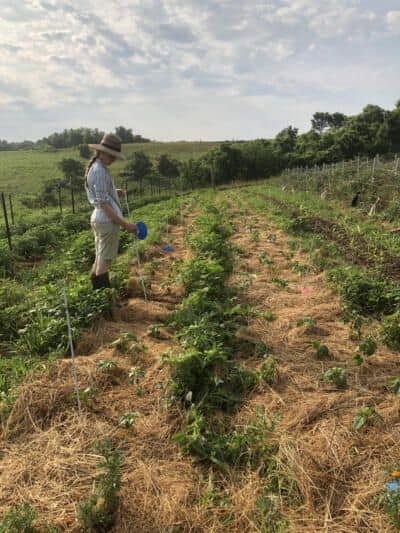
female organic farmer in Ohio inspects pepper plants as part of an on-farm research trial

An apprentice in the pepper field at Trouvaille Farm.

In the hills of Southeastern Ohio you will find Lindsay Klaunig on her farm: Trouvaille Farm. While she has been a grower for more than 20 years, this her seventh season as owner and operator of Trouvaille Farm, something that the name itself acknowledges (Trouvaille means lucky find).  

The farm landscape is a patchwork of diversity. There are grass-fed beef and goats on pasture, heirloom crops on the ridge tops and fruit trees throughout the farm. Many of the open-pollinated varieties are being grown to maturity and processed as seed crops, to be sold through small regional seed companies. 

Lindsay manages the land using regenerative, organic practices and focuses on building healthy soil, and increasing biodiversity so that she can provide nutritious food for her family and neighbors. To avoid using pesticides, there are insectaries, rows of flowering plants that attract beneficial insects, throughout the farm that naturally keep pests under control.

Open Pollinated Seeds for Climate-Resilience

As a seed grower, it is important for Lindsay to have access to varieties that are regionally adapted and able to thrive in low-input systems. She sees the opportunity of open-pollinated seed varieties as a tool that is vital as the climate changes and modern hybrids may not have the same capacity to thrive in severe weather events. Seeds from open-pollinated varieties can be saved by the grower and selected for those that best meet the demands of their own particular climate, growing systems and market. This is ever more important for growers using organic systems, where farmers look to cover crops and compost for soil fertility rather than synthetic fertilizers.

In recent years, the extremes of heat and drought have been a major challenge for many of her long-season summer crops, like tomatillos and peppers. Lindsay has been interested in trying shade cloth on her peppers to help nurture them through extreme weather conditions, but she wasn’t sure if it would have a negative effect on fruit set or seed production. After learning about OFRF’s Farmer-Led Trial program, she decided this would be a relatively risk-averse way to see the impact of this growing practice on her harvest.

Farm trial plan

Plot map – legend S= shade; N= no shade

After considering some of the logistics of on-farm research trials with OFRF staff, Lindsay was able to develop a question that would help her decide if shade cloth would help, or hurt her seed harvest. The trial was further narrowed down to peppers. Research Questions: Will using shade cloth improve fruit set in pepper plants grown for seed? And if so, will that lead to early mature harvest and overall higher yields? 

The trial was designed as a paired comparison with the treatments being peppers that were given 35% black netting shade cloth vs. peppers that received no shade cloth. The measurements Lindsay decided upon were to weigh the fresh fruit harvested and the fresh and dried seed weight in addition to taking basic fruit quality observations. Since she often sells her peppers for seeds, rather than as fresh fruit, this was the most helpful measurement for her production practices.

Trial updates

Harvest data is almost complete, with the first harvests beginning in late September, much later than expected due to the extreme drought conditions. Once the harvests are complete, Lindsay and the OFRF staff are excited to see the results and impact of shade cloth on pepper production.

“Every season we adjust our growing methods and try out new techniques. But inevitably the season gets busy, we lose track of outcomes and end up with incomplete impressions of what worked or didn’t. With the FLT program, I had support in designing a solid project, and funds to allow me allocate time and focus to data collection and analysis.”

– Lindsay Klaunig, Trouvaille Farm

seed saving from organic pepper research trial
Trouvaille Farm farmer-led trial organic peppers
harvesting peppers for on-farm research at Trouvaille Farm in Ohio
shade net over organic peppers during on-farm research at Trouvaille Farm in Ohio

Research Results

Lindsay Klaunig’s farmer-led trial experimented with using shade cloth to improve fruit set in pepper plants grown for seed, and examined the impact on fruit yield, seed yield and seed quality (germination rate).

Key Findings:

  • Total fruit yield (Harvest 1+Harvest 2) was significantly higher in non-shaded plots, with a total yield of 10.9 lb compared to just 4.7 lb in shaded plots (Table 2). Seed yield (per plant and per bed ft) was also higher in non-shaded plots. Seed yield per lb of fresh fruit was higher in shaded plots, but this is likely due to the low fruit yield in these plots.
  • There were, however, some differences between results from the two separate harvests in September and October. For example, in Harvest 1, seed yield per bed ft was not significantly different in shaded vs unshaded plots, but in Harvest 2, seed yield per bed ft was significantly higher in unshaded plots.

The season that this trial took place was one of the warmest and driest on record. The use of black shade cloth may have increased the temperature rather than provide any shade relief, as intended. In the future, Lindsay would like to try white shade cloth, and be sure to use larger hoops to allow space for more airflow over bushier crops like peppers.

For full details on the study’s methodology and results, read the final report.

This story is part of a series profiling farmers who are taking part in OFRF’s Farmer-Led Trials (FLT) program. Farmers receive technical support from OFRF to address their challenges through structured on-farm trials. To learn more about OFRF Farmer-Led Trials Program, visit our website page at https://ofrf.org/research/farmer-led-research-trials/

To learn more about bell pepper research, click the following link: Bell Pepper (Capsicum annum L.) Crop as Affected by Shade Level: Fruit Yield, Quality, and Postharvest Attributes, and Incidence of Phytophthora Blight (caused by Phytophthora capsici Leon.)

To learn more about Trouvaille Farm, visit https://www.trouvaillefarm.com/

By |2025-12-17T17:37:44-05:00November 7th, 2024|Farmer Stories, News, On-Farm Research, Plant Breeding & Variety Selection|

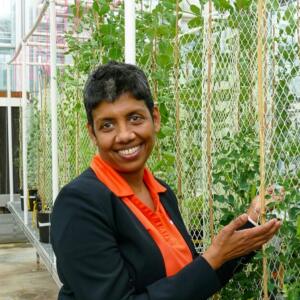
Organic Researcher Spotlight: Dr. Dil Thavarajah

A breeding pipeline is developing improved pulse crops for organic farmers in the southeast

Written by Brian Geier

New cultivars of pulse crops (lentils, chickpeas, and field peas) may soon be available to organic farmers! These improved varieties, under development through a project led at Clemson University (CU), will: 

  1. be suitable for crop rotations with cash crops currently being grown on organic farms in North and South Carolina,
  2. have high protein content and quality, and 
  3. be climate resilient (to heat, drought, and cold stress). 

The Principal Investigator on the project, Dr. Dil Thavarajah, is an internationally-recognized leader in pulse biofortification (breeding for nutritional traits) who leads CU’s Pulse Biofortification and Nutritional Breeding Program. Her project, Sustainable, high-quality organic pulse proteins: organic breeding pipeline for alternative pulse-based proteins, is funded by USDA/NIFA’s Organic Agriculture Research and Extension Initiative (OREI), a program OFRF’s advocacy work aims to bolster and protect. 

Dr. Thavarajah brings an extensive background in pulse breeding and an international focus to the effort to develop organic cultivars for farmers in the southeast.

 “I think the international component is very important because pulse crops especially are inbred and they are not very genetically diverse. Major universities with pulse breeding programs in the US are all conventional. We need to exchange material because the material they develop for conventional is not going to work with organic. Organic is a whole different ball game.”  -Dr. Dil Thavarajah

The project builds on a previous OREI grant that helped to identify varieties that worked well in organic crop rotations with sorghum. These varieties are now being evaluated to identify those with higher protein and sugar content, and better protein quality (measured both by digestibility and consumer preference). Dr. Thavarajah calls her approach “participatory breeding” that includes both consumers and farmers in the process. Interestingly, higher sugar content not only makes pulse crops sweeter and preferred by consumers, but also makes the plant more climate resilient. Having more sugar alcohols in the plants means the plants are more likely to remain healthy through drought stress, extreme heat, or cold snaps.

Ultimately, though, the farmer-collaborators are the centerpiece of the breeding program. “I don’t think I could be successful without my growers,” she admits. The willingness of farms like W.P. Rawl and Sons to trial new varieties and crop rotations led to successful grant proposals and may very well lead to new cultivars being released to farmers very soon. To acknowledge this, Dr. Thavarajah looks forward to releasing new varieties that bear the names and legacies of the farmers involved in the project. 

Learn more about Dr. Thavarajah’s work (including advice for fellow researchers applying for OREI funding) by watching the following short video interview with OFRF, and follow her work to stay updated on the release of biofortified pulse crops for organic farmers in the southeast!

This research is funded by the USDA/NIFA’s Organic Research and Extension Initiative. To learn more about OFRF’s advocacy work to protect and increase this type of funding, and how you can help become an advocate for organic farming with us, see our Advocacy page.

Go to Top