
Written by Mary Elizabeth Kidd, OFRF Communications Associate
As the Organic Farming Research Foundation (OFRF) team continues its work facilitating the USDA’s Transition to Organic Partnership Program (TOPP) to strengthen organic farming communities and encourage farmers to transition their farming systems for organic certification, we’re hosting Seeds of Success virtual networking sessions across the country.
The goal of these sessions is to give regional farmers a platform to share knowledge and ask questions on the organic certification process.
OFRF recently hosted an Organic 101 Seeds of Success for the Northwest region. The first half of the webinar was geared toward extension agents and technical service providers (TSPs), and the second half featured a farmer-led panel discussion. The call began with OFRF team members sharing what those without organic expertise need to know: the basics of organic, the National Organic Program (NOP) standards, and compliance basics.
The three farmer-panelists for this call were April Thatcher of April Joy Farm in Washington, Diane Green of Greentree Naturals in Idaho (a Northwest TOPP mentor), and Beth Hoinacki of Goodfoot Farm in Oregon, whose current role as an organic farmer and past role as an organic certifier brought well-rounded expertise on navigating the certification process.
These farmers hold over 80 years of collective experience and expertise in organic farming and certification, and the message they shared was unanimous: you simply cannot do it alone.
When it comes to the rigorous process of organic certification, it’s essential to: 1) lean on other organic farmers, mentors, and TSPs, and 2) you must know your WHY for organic farming and become an expert on your farm’s organic systems and the certification process.
Read on as we share key takeaways from the panel discussion. To listen or watch the session, click here (the farmer panel begins around minute 39:15).
Meet the Farmers
 Source: Odeani Baker, Courtesy of Oregon Tilth
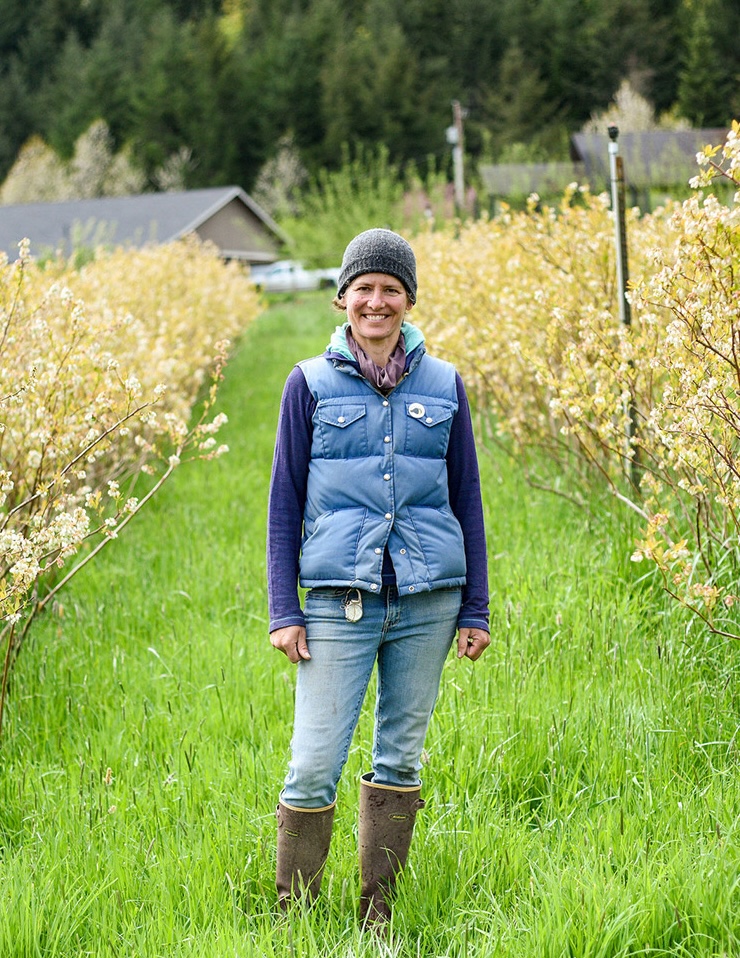
Beth Hoinacki of Goodfoot Farm
Where: Philomath, Oregon (Benton County)
Established: late 1990s
Certification: Demeter Certified Biodynamic® since 2012, previously Oregon Tilth Certified Organic
Acres: 5
Markets: Farmers’ markets, CSA, restaurants
Social Media: Facebook, Instagram
Read more: Goodfoot Farm: Conservation Champion from Oregon Tilth
 Source: April Joy Farm
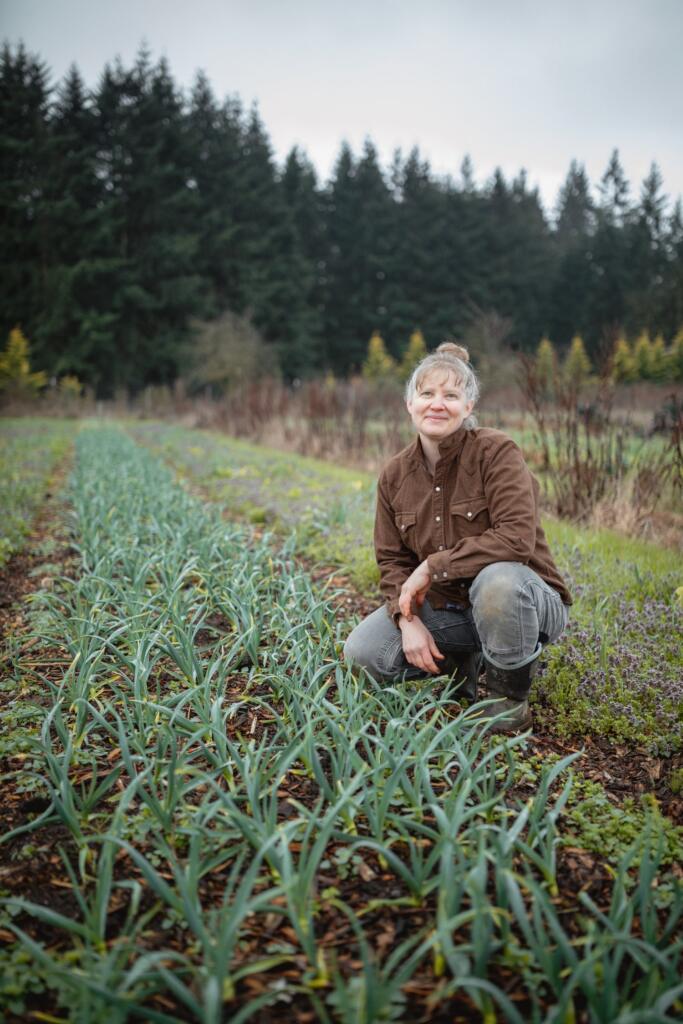
April Jones Thatcher of April Joy Farm
Location: near Ridgefield, Washington (Clark County)
Established: 2006
Certification: Washington State Department of Agriculture Certified Organic since 2007
Acres: 24
Markets: Farmers’ markets, CSA, restaurants
Read more: Working with NRCS: April Joy Farm’s Story and Recommendations
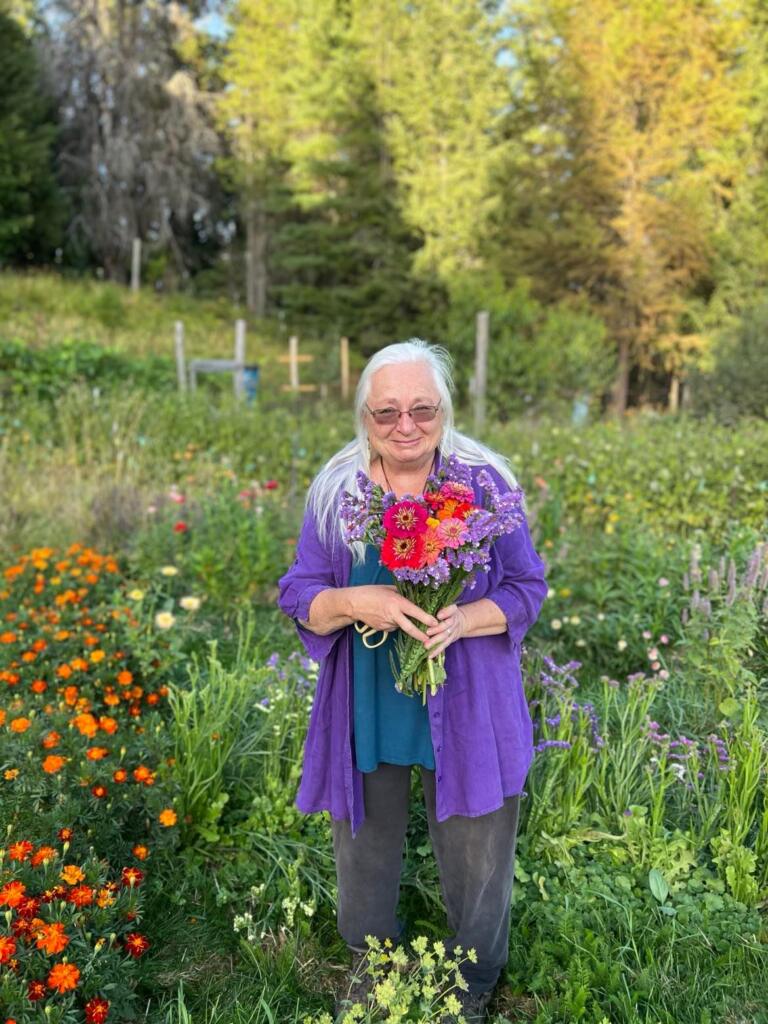 Source: Greentree Naturals
Diane Green of Greentree Naturals Farm
Location: Sandpoint, Idaho (Bonner County)
Established: 1990
Certification: USDA Certified Organic for over 30 years
Acres: 1
Markets: Weekly on-site farm stand
Social Media: Facebook
Read more: Farmer Stories: Diane and Greentree Naturals
Why Organic?
April Jones Thatcher (April Joy Farm): It made a lot of sense to think about the farm as a living and biological system. Then, if I put my business hat on, it really was market differentiation for us, since there were very few certified organic farms in my county.
And personally, there was a lot of joy to farm in a way that didn’t require me to handle toxic pesticides, to really get my hands in the living soil.
Diane Green (Greentree Naturals Farm): Organic is the only way I’ve ever grown. I started growing an organic garden in 1970. So, for me, it’s making the commitment to support organic certification; it was just a natural thing as far as motivation, to hold true to the integrity of what organic certification stands for.
We have new customers and longtime customers who have been with us for 25 years and are frequently saying, “Thank you for being certified organic.” That keeps us growing, and we’ll keep going with that.
Beth Hoinacki (Goodfoot Farm): We’ve been on our farm for 30 years. We were first certified organic in 2009 and then certified biodynamic in 2012. I’ve worked on organic farms for most of my life and actually worked in certification before I started my own farm, so that was super helpful in the certification process and has also just helped with our general farming approach.
Think Like a Certifier: Record-Keeping = Business Planning
Beth (Goodfoot Farm): [As a former organic and biodynamic certifier], I knew a lot about certification before I got into it so nothing surprised me.
One of the most challenging aspects of engaging in certification is that the National Organic Program (NOP) standard is essentially one-size-fits-all. So you need to understand how the standard works and what parts are more challenging for your size farm. Small or large, organic farms are subject to the same kind of regulatory and recordkeeping requirements.
Diane (Greentree Naturals Farm): The paperwork is extensive and when I’m mentoring farmers who are transitioning to become organic, I’m helping them understand the expected documentation and how partnering that with your business plan can help you manage your business in a much more holistic way—looking at the big picture and fine-tuning it to meet all the documentation that’s required.
It makes a big difference if you’ve got a mentor or a partner helping walk you through that process.
April (April Joy Farm): Understanding the language, documentation, and the steps of what an organic system plan entails can be daunting unless you have an adviser, a mentor, or somebody who’s been through it who can really help translate some of that jargon.
As a small business owner, there’s a lot of information being asked of you, so you want to make sure you understand how it’s going to be used. You want to be honest and represent your operation realistically and you want to make sure you get a sense of how this information gets tracked.
>> Read more: Explore the first in our Seeds of Success series in From Conventional to Certified, where Lynn Schaal of Life Springs Farm in Twin Falls, Idaho, shared a record-keeping hack that kept his inspections less stressful. (Spoiler: Lynn digitally scans ALL applications, receipts, and documentation using an app like Genius Scan.)
Find Support: People & Resources
Beth (Goodfoot Farm): Other farmers are your number one source. Especially local grower networks. I can’t emphasize it enough. And I would also say our university extension agents, because they’re involved with local growers and networks, so they have really relevant information.
And thirdly, I would say some of the other technical service providers (NRCS, for example), but I think you need to be careful. I had the experience early on of TSPs that were promoting hot new sustainable practices that didn’t really work for me. When you enter into these relationships, have the information that’s really relevant to your operation.
April (April Joy Farm): I would add that certifying agencies have been helpful too, in my experience–shout out to the Washington State Department of Ag–they have been a great resource and have a lot of expertise. They obviously can’t provide you with recommendations, but certifiers can help you understand the documents and recordkeeping that’s required.
It really is about that network.
Diane (Greentree Naturals Farm): I’m forever grateful to have established relationships and partnerships with the University of Idaho extension in the very beginning, around 1997, when we worked together to develop the first sustainable, small-acreage farming organization in the Inland Northwest. That was the farmers working side-by-side with extension to come up with what that would look like. It was always the farmers working with extension to look at what we need and what’s there.
Personally, I think empowering the next generation of sustainable and certified organic growers is the best thing we have to offer, and I’ll keep doing it for as long as I’m able.
We farmers want to learn from farmers, and we need to do what we can to promote partnerships with extension to be allies that serve our communities very well.
Next Steps & Resources
Interested in transitioning your farm for organic certification in the Northwest or beyond?
Explore these key resources and connect with mentors, certifiers, and Technical Support Providers (TSP) near you.
Locating Support Providers and Mentors:
- Connect with a local TOPP Mentor or Become a Mentor
- Find a local Technical Service Provider (TSP)
- Organic Certifier locator
- Conservation Technical Assistance (CTA)
Organic Farming Research Foundation resources:
- All Transition to Organic Partnership Program (TOPP) resources
- Events, Resources, and News for Northwest TOPP
- OFRF Resource Hub
USDA resources:
- TOPP General Interest Form
- NOP Handbook: Guidance & Instructions for Certifying Agents & Certified Operations
- Organic Recordkeeping: Guides, Templates, and Other Resources
- National List of Allowed and Prohibited Substances
Connect with OFRF: