
NRCS Toolkit

Conservation Stewardship Program (CSP)

Farmers across the U.S. are eligible for significant technical and financial assistance from the Natural Resources Conservation Service (NRCS).

Versión en español a continuación.

If you are engaging in environmental stewardship and conservation efforts on your farm, the Conservation Stewardship Program (CSP) can help support your progress. CSP compensates agricultural producers who agree to increase conservation on their farm by adopting additional conservation activities or improving upon existing practices. With technical assistance from a conservation planner, farmers will work to increase conservation through practices best suited to their operation, like cover cropping, integrated grazing, or building wildlife habitats.

Obtain additional translated materials, or schedule interpretation services for phone calls or in-person visits, at farmers.gov/translations, or request personalized Spanish language support for any USDA resource, at farmers.gov/translations#spanish-request.

Important Points:

  • CSP provides annual payments for farmers, with the annual minimum being $4,000, for a 5-year contract for installing, maintaining, and improving existing conservation on a farm.
  • CSP payments are reported to the IRS and should be treated as taxable income.
  • Unlike the Environmental Quality Incentives Program (EQIP), there are no minimum acreage requirements, but the program requires whole-farm enrollment. The applicant’s farm must be in existing production; the program generally will not support land being cleared or prepared for future production.
  • Contacting your local NRCS office is a key step in determining your eligibility and beginning your application process.
  • Applications are accepted on a rolling basis and will be reviewed on the next ranking date for your state. Begin your application process as soon as possible to ensure completion by the next deadline! Applications are prioritized by local resource concerns and the applicant’s level of need.
    • The 2026 batching deadline was January 15, 2026, for all states. 
  • You will need to create a free online account at Farmers.gov and ensure that it is up to date.
  • If you do not own your land, you will need to submit written permission from the owner with your application.
  • New this year: the Regenerative Agriculture Initiative may be an opportunity for organic and transitioning-to-organic producers to leverage their operational status for qualifying for contracts.

Step 1. Research Your Options.

CSP offers support for a broad scope of conservation activities and projects to producers, including both financial and technical support. CSP contracts last 5 years, with the option for renewal. Read up on the program to determine your eligibility and brainstorm how you already are, or would like to, increase conservation on your farm. For some possible project inspiration, check out NCRS’s Conservation at Work video series.
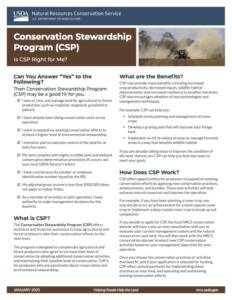
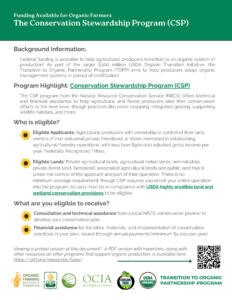
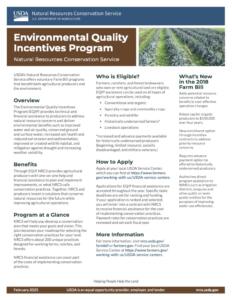
Front page of a CSP factsheet in English
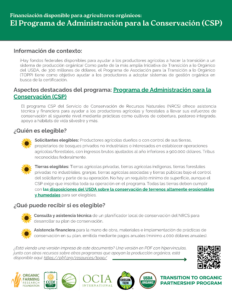
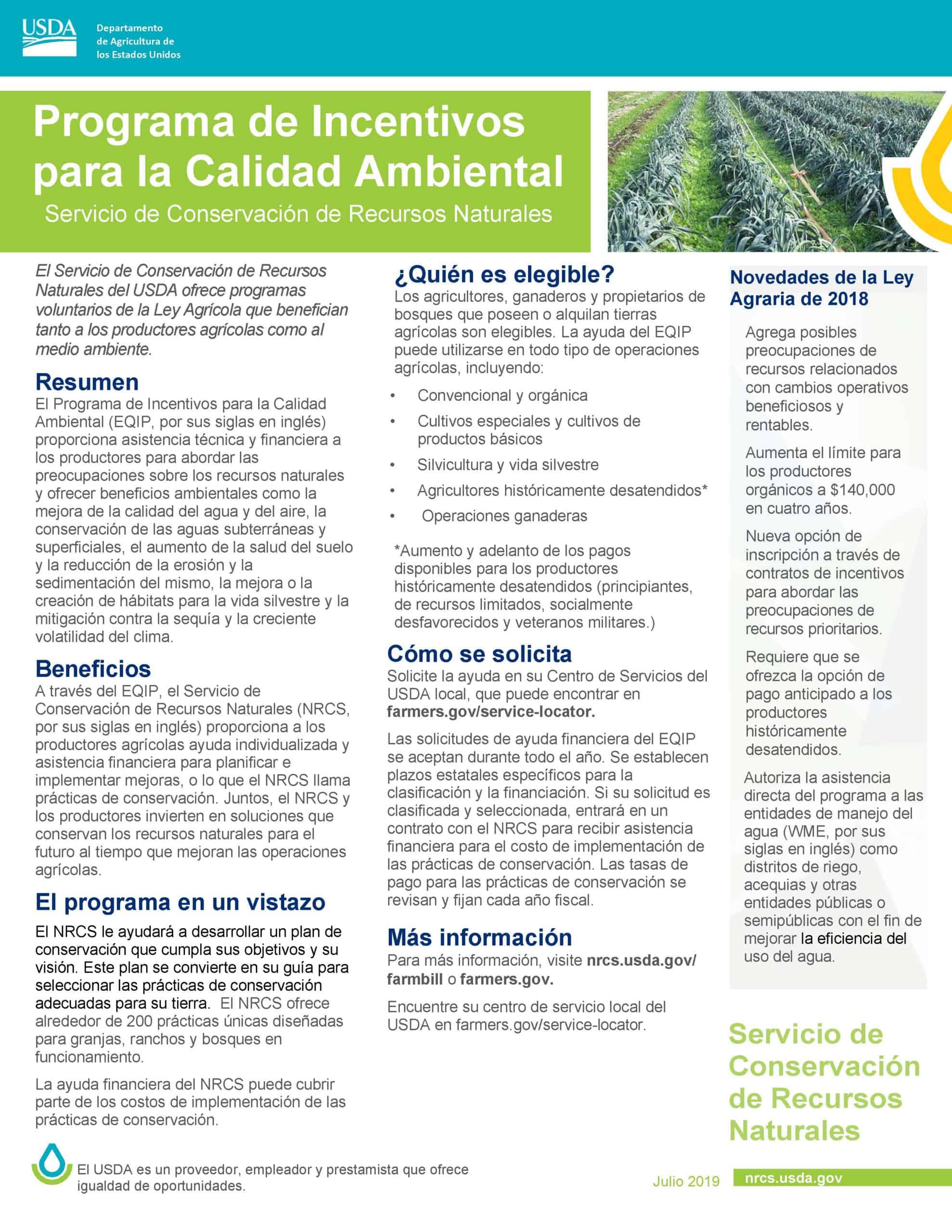
Front page of a CSP factsheet in Spanish

Step 2. Connect with USDA.

Create or update your account at Farmers.gov, and contact your local NRCS office to get started. Your conservation specialist will confirm your eligibility and help you determine your farm’s current stewardship thresholds. A stewardship threshold is NRCS’s benchmark for whether a CSP applicant is meeting or exceeding the level of conservation for a specific natural resource concern. To qualify, applicants must meet the threshold for at least two priority resource concerns across all land uses in their operation and commit to meeting or exceeding at least one additional concern by the end of their contract.

Guiding questions for initial contact with NRCS:

  • “I’m interested in  _conservation project(s) of interest_. What do you need from me to get started on my application?”
  • “What additional funding opportunities are available to my farm?”
  • “When is the deadline for the next CSP ranking period?”
  • “I _(own/rent)_ my land. What documents will you need for completion of my CSP application by the deadline?”
  • “My farm is _certified/transitioning_ to organic. What additional will you need for completion of my conservation plan and application by the deadline?”

Step 3. Gather your application documents.

You’ll need your:

  • Official tax ID (Social Security Number or Employer Identification Number)
  • Adjusted gross income certification (Form CCC-941), which requires your Taxpayer ID Number and AGI from the previous 3 tax years.
  • Deed, or property lease agreement, and written authorization from the landowner to install structural or vegetative practices.
  • A map showing all land uses and acres in the operation, and a map or other documentation identifying any known ineligible land and associated acreage amounts (NRCS staff will help you obtain this information if you don’t already have it).
  • Farm tract number (obtained from Farmers.gov or FSA membership).
  • Documentation of organic certification (if applicable).
  • Documentation of your land’s irrigation history (if applicable to project).

Step 4. Complete your application & submit!

Your NRCS conservation specialist will complete and submit your application form (CPA 1200) based on your established conservation plan.

Step 5. Implement your plan.

If your application is selected, NRCS will offer a contract outlining the approved conservation activities, payment rates, and other terms. CSP contracts last five years and begin only after both the farmer and NRCS sign the agreement. NRCS provides technical assistance, verifies completion of contract activities, and issues annual payments after October 1 each year.

Apply for CSP now to take conservation efforts on your farm to the next level! 

All of this information is summarized in a printable, downloadable PDF below in English and Spanish.
Los agricultores de todo Estados Unidos son elegibles para recibir asistencia técnica y financiera del Servicio de Conservación de Recursos Naturales (NRCS).

Si usted participa en esfuerzos de gestión ambiental y conservación en su granja, El Programa de Administración para la Conservación (CSP) puede ayudarle a apoyar su progreso. El CSP compensa a los productores agrícolas que aceptan aumentar la conservación en su granja adoptando actividades adicionales de conservación o mejorando prácticas existentes. Con la asistencia técnica de un planificador de conservación, los agricultores trabajarán para aumentar la conservación mediante prácticas más adecuadas a su explotación, como la construcción de cultivos de cobertura, el pastoreo integrado o la construcción de hábitats para la vida silvestre.

Obtenga materiales traducidos adicionales, programa servicios de interpretación para llamadas telefónicas o visitas presenciales, en farmers.gov/translations, o solicite apoyo personalizado en español para cualquier recurso del USDA, en farmers.gov/translations#spanish-request.

Puntos importantes:

  • CSP da pagos anuales a los agricultores, con un mínimo anual de 4.000 dólares, por un contrato de 5 años por instalar, mantener y mejorar la conservación existente en la granja.
  • Los pagos del CSP se reportan al IRS y deben considerarse ingreso sujeto a impuestos.
  • A diferencia del Programa de Incentivos para la Calidad Ambiental (EQIP), no existen requisitos mínimos de superficie, pero el programa exige la inscripción de toda la granja. La granja del solicitante debe estar en producción existente; El programa generalmente no apoya la limpieza o preparación de terrenos para futuras producciones.
  • Contactar con la oficina local del NRCS es un paso clave para determinar su elegibilidad y comenzar el proceso de solicitud.
  • Las solicitudes se aceptan de forma continua y se revisarán en la siguiente fecha de clasificación para su estado. ¡Comience su proceso de solicitud lo antes posible para asegurarse de finalizar antes de la próxima fecha límite! Las solicitudes se priorizan según los recursos locales y el nivel de necesidad del solicitante.
    • La fecha límite para 2026 fue el 15 de enero de 2026 para todos los estados. 
  • Tendrá que crear una cuenta online gratuita en Farmers.gov y asegurarse de que está actualizada.
  • Si no es propietario de su terreno, tendrá que presentar un permiso por escrito del propietario con su solicitud.
  • Novedad de este año: la Iniciativa de Agricultura Regenerativa podría ser una oportunidad para que los productores orgánicos y en transición a orgánicos aprovechen su estatus operativo para calificar para contratos.

Paso 1. Investigue sus opciones.

El CSP ofrece apoyo para un amplio alcance de actividades y proyectos de conservación a los productores, incluyendo apoyo financiero y técnico. Los contratos CSP duran 5 años, con opción de renovación. Infórmese sobre el programa para determinar su elegibilidad y haga una lluvia de ideas sobre cómo ya está, o le gustaría, aumentar la conservación en su granja. Para alguna posible inspiración en proyectos, revise la serie de videos sobre Conservación en el Trabajo de NCRS.

Front page of a CSP factsheet in Spanish
Front page of a CSP factsheet in English

Paso 2. Contacte con USDA.

Cree o actualice su cuenta en Farmers.gov y contacte con la oficina local del NRCS para empezar. Su especialista en conservación confirmará su elegibilidad y le ayudará a determinar los límites actuales de gestión de su granja. Un umbral de manejo responsable es el referente de la NRCS para determinar si un solicitante de CSP cumple o supera el nivel requerido de conservación para una inquietud específica de recursos naturales. Para calificar, los solicitantes deben cumplir el umbral para al menos dos inquietudes prioritarias de recursos naturales en todos los usos del suelo en su operación y comprometerse a cumplir o superar al menos una inquietud adicional antes de finalizar su contrato.

Preguntas orientadoras para el contacto inicial con el NRCS:

  • “Me interesa el/los _proyecto(s) de conservación(es) que le interese. ¿Qué necesitan de mí para empezar con mi solicitud?”
  • “¿Qué oportunidades adicionales de financiación hay disponibles para mi granja?”
  • “¿Cuándo es la fecha límite para el próximo periodo de clasificación CSP?”
  • “Yo _(poseo/alquilo)_ mi tierra. ¿Qué documentos necesitarán para completar mi solicitud CSP antes de la fecha límite?”

Paso 3. Reúna sus documentos de solicitud.

Necesitará su:

  • Identificación fiscal oficial (Número de Seguro Social o de Identificación del Empleador)
  • Certificación de ingreso bruto ajustado (Formulario CCC-941), que requiere su número de identificación de contribuyente y AGI de los 3 años fiscales anteriores.
  • Escritura, o contrato de arrendamiento de propiedad, y autorización por escrito del propietario para instalar prácticas estructurales o vegetativas.
  • Un mapa que muestre todos los usos del suelo y acres en la operación, y un mapa u otra documentación que identifique cualquier terreno no elegible conocido y las extensiones asociadas (el personal de NRCS le ayudará a obtener esta información si aún no la tiene).
  • Número de parcela de la granja (obtenido de Farmers.gov o de la membresía FSA).
  • Documentación de certificación orgánica (si procede).
  • Documentación del historial de riego de su terreno (si es aplicable al proyecto).

Paso 4. ¡Complete su solicitud y envíela!

Su especialista en conservación del NRCS completará y enviará su formulario de solicitud (CPA 1200) en base a su plan de conservación establecido.

Paso 5. Implemente su plan.

Si su solicitud es seleccionada, el NRCS ofrecerá un contrato que detalle las actividades de conservación aprobadas, las tarifas de pago y otros términos. Los contratos CSP duran cinco años y solo comienzan después de que tanto el agricultor como el NRCS firmen el acuerdo. El NRCS proporciona asistencia técnica, verifica la finalización de las actividades contractuales y emite pagos anuales después del 1 de octubre de cada año.

¡Solicite CSP ahora para llevar los esfuerzos de conservación en su granja al siguiente nivel! 

Toda esta información se resume en un PDF imprimible y descargable a continuación, disponible en inglés y español.
By |2026-01-22T12:38:40-05:00January 15th, 2026|Federal Assistance, News, Spanish Resources, TOPP West|

Environmental Quality Incentives Program (EQIP)

Farmers across the U.S. are eligible for significant technical and financial assistance from the Natural Resources Conservation Service (NRCS).

Farmers and technical service providers know firsthand that the most significant barriers to developing sustainable infrastructure and production practices are due to time and resource scarcity. NRCS’ EQIP program offers financial assistance and technical support to implement new conservation practices on your farm, with additional support for historically underserved applicants, including socially disadvantaged, beginning, veteran, and limited-resource farmers and ranchers. In this blog post, we’ll provide an overview of what EQIP has to offer and the steps to utilizing this program.

Obtain additional translated materials, or schedule interpretation services for phone calls or in-person visits, at farmers.gov/translations, or request personalized Spanish language support for any USDA resource, at farmers.gov/translations#spanish-request.

Important Points:

  • EQIP is a reimbursement program; most operations will have to pay for improvements up-front and get funding to cover those costs.
  • Do not begin reimbursable conservation activities and projects prior to completion of your application process and contract with NRCS.
  • Contacting your local NRCS office is a key step in determining your eligibility and beginning your application process.
  • Applications are accepted on a rolling basis and will be reviewed on the next ranking date for your state. Begin your application process as soon as possible to ensure completion by the next deadline! Applications are prioritized by local resource concerns and the applicant’s level of need.
    • The 2026 batching deadline is January 15, 2026, for all states. 
  • You will need to create a free online account at Farmers.gov and ensure that it is up to date.
  • If you do not own your land, you will need to submit written permission from the owner with your application.

Step 1. Research Your Options.

EQIP offers support for a broad scope of conservation activities & projects to producers, including both financial and technical support. EQIP provides funds to reimburse costs associated with specific practices or infrastructure projects on a farm. EQIP’s most popular sub-programs include the High Tunnel Initiative, which covers the cost of high tunnel installation for production farms, the On Farm Energy Initiative, which covers the cost of energy-saving equipment and infrastructure improvements such as refrigeration units or greenhouse improvements, and the Organic Initiative, which provides up to $140k to certified organic or transitioning farms to implement conservation practices such as design and installation of efficient irrigation systems, nutrient & pest management strategies, or developing a grazing plan. Funding availability varies by state. As of 2026, not all initiatives are offered in every state. Check with your local NCRS office to determine what funding pools are available in your state.

Front page of a CSP factsheet in English

Step 2. Connect with USDA.

Create or update your account at Farmers.gov, and contact your local NRCS office to get started. Your conservation specialist will confirm your eligibility and help you identify which projects & practices best suit your operation. 

Guiding questions for initial contact with NRCS:

  • “I’m interested in applying for EQIP’s  _initiative(s) of interest_ for my farm to help finance _conservation project of interest_. What do you need from me to get started on my application?”
  • “What additional funding opportunities are available to my farm?”
  • “How soon can a conservationist help me set up a conservation plan (AD 1026)?”
  • “When is the deadline for the next EQIP ranking period?”
  • “I am eligible for the increased and advanced payment option for Historically Underserved farmers. How will this change my application process?”
  • “I _(own/rent)_ my land. What documents will you need for completion of my EQIP application by the deadline?”
  • “My farm is _certified/transitioning_ to organic. What additional will you need for completion of my conservation plan and application by the deadline?”

Step 3. Schedule your conservation plan development.

Your NRCS conservation specialist will work with you to develop a conservation plan for your operation and complete the AD 1026 form.

Step 4. Gather your application documents.

You’ll need your: 

  • Official tax ID (Social Security Number or Employer Identification Number)
  • Adjusted gross income certification (Form CCC-941), which requires your Taxpayer ID Number and AGI from the previous 3 tax years.
  • Deed, or property lease agreement, and written authorization from the landowner to install structural or vegetative practices.
  • Farm tract number (obtained from Farmers.gov or FSA membership).
  • Documentation of organic certification (if applicable).
  • Documentation of your land’s irrigation history (if applicable to project).

Step 5. Complete your application & submit!

Your NRCS conservation specialist will complete & submit your application form (CPA 1200) with you using your established conservation plan and the above documents. 

Step 6. Implement your plan.

If you’re selected, you can choose whether to sign the contract for the work to be done. You’ll be provided with guidelines and a timeframe for implementing your plan. Once the work is implemented and inspected, you’ll be paid the rate of compensation for the work.

Apply for EQIP now and unlock a more affordable path to sustainable agriculture. Your farm deserves the support it needs.

All of this information is summarized in a printable, downloadable PDF below, available in English and Spanish.

By |2026-01-15T10:21:50-05:00January 5th, 2026|Federal Assistance, News, Spanish Resources, TOPP West|

NRCS Organic Practice 823: Strategies and Best Practices

During this session of the Seeds of Success series OFA explores NRCS Organic Practice 823.

The National Resources Conservation Service (NRCS) has many programs to help farmers convert to organic farming operations. The Environmental Quality Incentives Program (EQIP) is a conservation program that helps farmers, ranchers and forest landowners integrate conservation into working lands. Under EQIP, Organic Transition Initiative 823 (OTI) is specifically meant to help those transitioning to organic operations, by cost-sharing and providing technical support on practices organic and transitioning farmers want to implement on their farms.

This program is relatively new, and a little different than other NRCS practices. Hear directly from ag professionals and farmers about their experiences with 823 and their ideas regarding how to best utilize this valuable conservation planning tool.

By |2026-01-16T11:26:02-05:00December 17th, 2025|Certification & Compliance, Federal Assistance, Resource|

Why Technical Note 12 Is Such a Big Deal

By Gordon Merrick, OFRF’s Senior Policy & Programs Manager

Versión en español a continuación.

The Need that Technical Note 12 Meets

The Natural Resources Conservation Service of the United States Department of Agriculture (USDA-NRCS, NRCS) has been one of the most impactful modern agencies in the adoption of conservation practices and systems in the United States. Only recently did the NRCS publish a technical note that will aid Field Agents and other Technical Service Providers (TSPs) administer these programs on organic operations. Technical Note 12 – Conservation Activities in Organic Farming Systems (Tech Note 12) provides a wealth of knowledge needed to effectively support the unique requirements of organic producers. Recently, as part of our work for the Transition to Organic Partnership Program (TOPP) in the West/Southwest region, we have developed a toolkit designed to raise awareness among farmers of this resource, which is now in the hands of NRCS staff and TSPs. In this blog post, we’ll briefly discuss what Tech Note 12 is, how it benefits farmers, and how it helps NRCS staff and TSPs.

What Is Tech Note 12?

A technical note, as defined by the NRCS, is an authoritative document designed to provide detailed guidance on specific technical subjects relevant to conservation planning and implementation. These documents serve as essential resources for NRCS field staff, TSPs, and producers, offering in-depth information and practical instructions to support the effective management of natural resources and address resource concerns. Technical notes are developed to address a wide range of topics, including soil health, water quality, wildlife habitat, and agricultural practices. They offer step-by-step procedures, best management practices, and innovative solutions to common challenges faced in the field. By standardizing and disseminating this knowledge, technical notes help ensure consistency and quality in applying NRCS conservation programs and practices.

Tech Note 12 is intended to provide all this information—as it relates to organic agricultural production. It offers detailed guidance on conservation activities that are compatible with organic standards and provides real-world examples that illustrate how conservation activities have been implemented.  

How Tech Note 12 Helps Farmers

Tech Note 12 helps organic producers articulate the conservation benefits of their practices in the language used by NRCS field agents and TSPs. This clarity is crucial for accessing NRCS programs such as the Environmental Quality Incentives Program (EQIP) and the Conservation Stewardship Program (CSP), which provide financial and technical assistance to improve farm operations.

How Tech Note 12 Helps NRCS Staff and TSPs

For NRCS field agents and TSPs, Technical Note 12 is an invaluable tool for conducting thorough assessments of organic farming operations. By referencing the document, agents can identify appropriate conservation practices that address resource concerns while complying with organic standards. This approach ensures that the proposed solutions are both effective and aligned with the unique traits of organic farming, such as soil fertility, water management, pest control, and habitat conservation.

How to Access and Use Tech Note 12

To effectively use Tech Note 12 for your organic farming practices, start by contacting your regional Natural Resource Conservation Service (NRCS) office. Your NRCS field agent can provide helpful guidance on applying the recommendations in Tech Note 12 to your conservation planning while meeting organic standards.

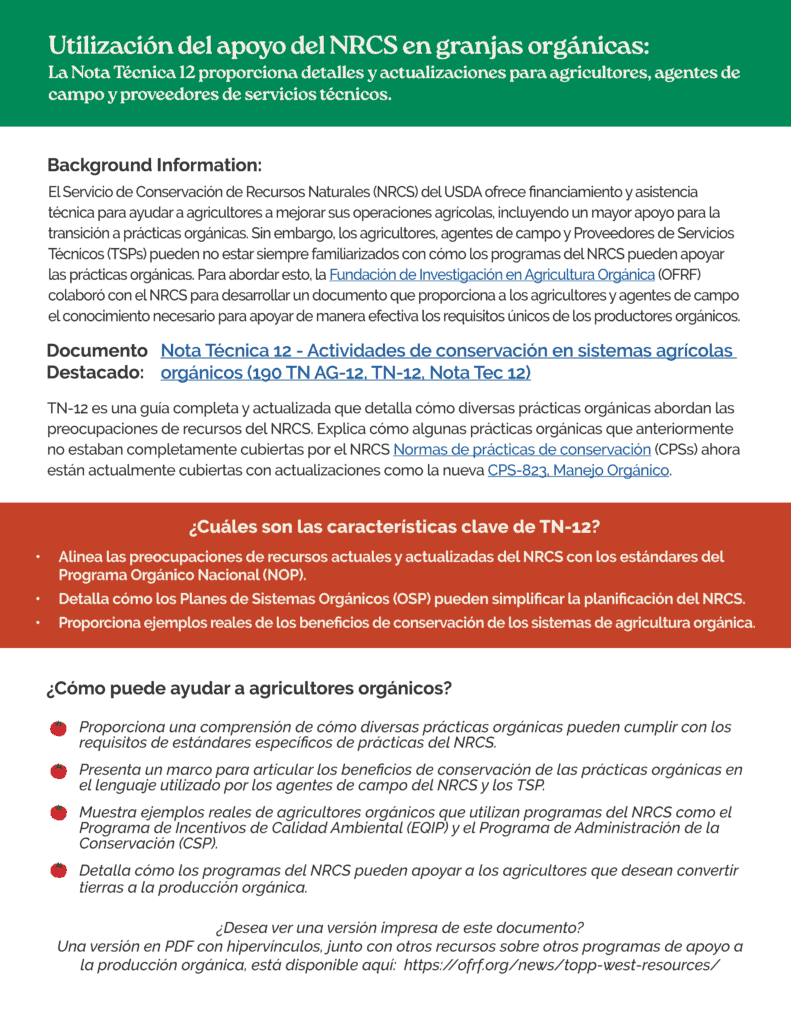
For additional information and resources, download our Tech Note 12 flyer here. The flyer includes a summary of Tech Note 12, practical tips for using it, and suggested questions to ask your NRCS agent. This will help you get the most out of your NRCS support and prepare for your discussion.

Don’t miss out on valuable resources like this one—subscribe to our newsletter for groundbreaking organic farming research, educational guides, and critical funding and policy updates.

Brochure of how to utilize NRCS support on organic farms (includes background information, link to Tech Note 12, features, resources).

¿Por qué es tan importante la Nota Técnica 12?

La Necesidad que Satisface la Nota Técnica 12

El Servicio de Conservación de Recursos Naturales del Departamento de Agricultura de los Estados Unidos (USDA-NRCS, NRCS) ha sido una de las agencias más influyentes en la adopción de prácticas y sistemas de conservación en Estados Unidos. Recientemente, el NRCS publicó una nota técnica que ayudará a los Agentes de Campo y otros Proveedores de Servicios Técnicos (TSP) a administrar estos programas en operaciones orgánicas. Nota Técnica 12 – Actividades de conservación en sistemas agrícolas orgánicos (Nota técnica 12) proporciona una gran cantidad de conocimientos necesarios para apoyar de manera efectiva los requisitos únicos de los productores orgánicos. Recientemente, como parte de nuestro trabajo para el Programa de Asociación para la Transición a la Agricultura Orgánica (TOPP) en la región Oeste/Suroeste, hemos desarrollado un kit de herramientas diseñado para concienciar a los agricultores sobre este recurso, que ahora está en manos del personal del NRCS y los TSP. En esta publicación del blog, discutiremos brevemente qué es la Nota Técnica 12, cómo beneficia a los agricultores y cómo ayuda al personal del NRCS y a los TSP.

¿Qué es la Nota Técnica 12?

Una nota técnica, según lo define el NRCS, es un documento autoritativo diseñado para proporcionar orientación detallada sobre temas técnicos específicos relevantes para la planificación e implementación de conservación. Estos documentos sirven como recursos esenciales para el personal de campo del NRCS, los TSP y productores, ofreciendo información detallada e instrucciones prácticas para apoyar la gestión efectiva de los recursos naturales y abordar las preocupaciones de recursos. Las notas técnicas se desarrollan para tratar una amplia gama de temas, incluyendo la salud del suelo, calidad del agua, hábitat de la vida silvestre y prácticas agrícolas. Ofrecen procedimientos paso a paso, mejores prácticas de gestión y soluciones innovadoras a desafíos comunes enfrentados en el campo. Al estandarizar y difundir este conocimiento, las notas técnicas ayudan a garantizar la consistencia y la calidad en la aplicación de los programas y prácticas de conservación del NRCS.

La Nota Técnica 12 está destinada a proporcionar toda esta información, en lo que respecta a la producción agrícola orgánica. Ofrece orientación detallada sobre las actividades de conservación que son compatibles con los estándares orgánicos y proporciona ejemplos reales que ilustran cómo se han implementado las actividades de conservación.

Como la Nota Técnica 12 ayuda a los agricultores

La Nota Técnica 12 ayuda a los productores orgánicos a articular los beneficios de conservación de sus prácticas en el lenguaje utilizado por los agentes de campo y los proveedores de servicios de conservación del NRCS. Esta claridad es crucial para acceder a programas del NRCS como el Programa de Incentivos a la Calidad Ambiental (EQIP) y el Programa de Administración de Conservación (CSP), que de asistencia financiera y técnica para mejorar las operaciones agrícolas.

¿Cómo Ayuda la Nota Técnica 12 al Personal del NRCS y a los TSP?

Para los agentes de campo del NRCS y los TSP, la Nota Técnica 12 es una herramienta invaluable para realizar evaluaciones exhaustivas de las operaciones de agricultura orgánica. Al consultar el documento, los agentes pueden identificar las prácticas de conservación apropiadas que aborden las preocupaciones de recursos mientras cumplen con los estándares orgánicos. Este enfoque asegura que las soluciones propuestas sean tanto efectivas como alineadas con las características únicas de la, (agricultura orgánica) tales como fertilidad del suelo, manejo del agua, control de plagas y conservación del hábitat.

Cómo Acceder y Utilizar la Nota Técnica 12

Para utilizar eficazmente la Nota Técnica 12 en sus prácticas de agricultura orgánica, comience contactando a su oficina regional del Servicio de Conservación de Recursos Naturales (NRCS) (Oficina del Servicio Regional de Conservación de Recursos Naturales (NRCS) Su agente de campo del NRCS puede ofrecerte orientación útil sobre cómo aplicar las recomendaciones de la Nota Técnica 12 en su planificación de conservación mientras cumple con los estándares orgánicos.

Para más información y recursos, descargue nuestro folleto sobre la Nota Técnica 12 aquí. El folleto incluye un resumen de la Nota Técnica 12, consejos prácticos para su uso y preguntas sugeridas para hacerle a su agente del NRCS. Esto le ayudará a aprovechar al máximo el apoyo del NRCS y prepararse para su conversación.

No se pierda recursos valiosos como este: (Suscríbase a nuestro boletín) para recibir investigaciones innovadoras en agricultura orgánica, guías educativas y actualizaciones importantes sobre financiamiento y políticas.

By |2026-01-15T10:31:41-05:00September 13th, 2024|Advocacy, Federal Assistance, News, Spanish Resources, TOPP West|

Organic Transition Initiative (OTI)

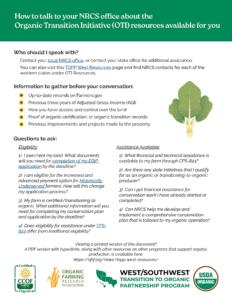
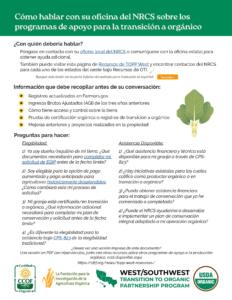
OFRF has developed a PDF to help farmers communicate with NRCS about accessing the Organic Transition Initiative.

It is available in both English and Spanish. >>>

“How to talk to your NRCS office about the
Organic Transition Initiative (OTI) resources available for you”

“Cómo hablar con su oficina del NRCS sobre los
programas de apoyo para la transición a orgánico”

Organic farmers must manage their land without prohibited inputs for 3 years for their products to be certified. This transitioning period can be incredibly challenging as farmers and their land adjust to new production practices. OTI is intended to help producers implement conservation activities required for certification, receive expert technical support, and recover foregone income due to reduced yields during the transition period through EQIP.

Step 1. Research your options.

Step 2. Connect with USDA. Create or update your account at Farmers.gov, and contact your local NRCS office to get started. Your conservation specialist will confirm your eligibility and help you identify which projects & practices best suit your operation. Directing the agent to NRCS-sponsored webinars and training modules the Organic Farming Research Foundation and Oregon Tilth have developed for NRCS field agents may be helpful.

Contact your state office for additional assistance:

Guiding Questions: Check out our “How to talk to NRCS about the OTI” PDF for additional topics, available above!

  • I __own/rent__ my land. What documents will you need for completion of my EQIP application by the deadline?
  • I am eligible for the increased and advanced payment option for Historically Underserved farmers. How will this change my application process?
  • My farm is __certified/transitioning_ to organic. What additional information will you need for completing my conservation plan and application by the deadline?
  • Can I get financial assistance for conservation work I have already started or completed?
  • Can NRCS help me develop and implement a comprehensive conservation plan that is tailored to my organic operation?
  • When is the deadline for the next EQIP ranking period?

Step 3. Schedule your conservation plan development. Your NRCS conservation specialist will work with you to develop a conservation plan for your operation and complete the AD 1026 form.

Step 4. Gather your application documents.

  • Official tax ID (Social Security Number or Employer Identification Number)
  • Adjusted gross income certification (Form CCC-941), which requires your Taxpayer ID Number and AGI from the previous 3 tax years.
  • Deed, or property lease agreement and written authorization from the landowner to install structural or vegetative practices.
  • Farm tract number (obtained from Farmers.gov or FSA membership).
  • Documentation of organic certification (if applicable).
  • Documentation of your land’s irrigation history (if applicable to project).
  • Documentation of previous improvements made to the property.

Step 5. Complete your application & submit! Your NRCS conservationist will assist you in finalizing your application. 

Step 6. Implement your plan. If you’re selected, you can choose whether to sign the contract for the work to be done. You’ll be provided with guidelines and a timeframe for implementing your plan. You will be reimbursed after your work is inspected and approved. Advanced payments not expended within 90 days of receipt must be returned to NRCS.

As essential stewards of the land, organic farmers deserve support. Don’t let funding be a barrier to realizing your farm’s potential. Take the first step towards growth and sustainability by applying for assistance through the Organic Transition Initiative before your state’s deadline.

Note: all of this information is available below in Spanish. Obtain additional translated materials, or schedule interpretation services for phone calls or in-person visits, https://www.farmers.gov/translations, or request personalized Spanish language support for any USDA resource, https://www.farmers.gov/translations#spanish-request.

By |2026-01-15T10:15:37-05:00January 31st, 2024|Certification & Compliance, Federal Assistance, News, Spanish Resources|
Go to Top