Organic Farmers Withstand Climate Change with Living Soils and Regional Seed Breeding
A look at the Organic Microbiome Project
By Brian Geier
Organic farmers understand that soil health is paramount to our success. More specifically, we know that the living, microbial part of soil, sometimes called the soil microbiome, is something our farming practices can quickly and drastically alter, having serious implications for organic systems that rely on organic processes in the soil. But even though we understand that preserving soil life is good practice, we often do not know how soil life is changing, how farming practices are affecting those changes, and which practices are responsible for increases or decreases in crop or animal health because of those changes.
To address this knowledge gap, researchers at Cornell University are utilizing a novel, farmer-led approach to studying what organic farmers are already doing on their farms and monitoring how the soil microbiome is changing over time. What they find could provide key insights into which organic farming practices might be helping producers promote and maintain soil health through droughts and other climate extremes.
The Human Body and the Soil: An Analogy for Understanding the Soil Microbiome
To help us understand the importance and complexity of the soil microbiome (the living part of the soil that is composed of soil microorganisms), organic researcher Elias Bloom (a member of the Casteel lab at Cornell University) suggests beginning with an analogy. “The human body has more microbiome cells than it does human cells,” Bloom explained at a recent eOrganic webinar. Over 10,000 different species of microorganisms live in and on the human body, and they can have broad implications for human health. Essentially, a healthy human body is driven by a healthy microbiome.
Compare this analogy with the soil: one teaspoon of soil may have over one BILLION microorganisms living in it. And in just one small teaspoon of soil, there are often over 10,000 species of microbes, similar to the number of species found in the human body. Since microbes are involved in everything from water-holding capacity to promoting disease resistance, one begins to see that what a farmer does everyday can have serious effects on current and subsequent crops.
The Importance of the Soil Microbiome
The living portion of the soil is a primary driver of nutrient cycling, a pillar of healthy soil structure, and can enhance resilience to climate change and pests. The microbiome also helps break down pesticides, toxins, and excess nutrients. It is generally understood that high soil microbe diversity promotes pest suppression and that organic land tends to have higher soil diversity than conventional fields. Still, in some cases increases in diversity can mean increases in plant pathogens. For farmers and researchers, understanding which farming practices result in a ‘healthy microbiome’ and translate to positive effects on crop production, is complex.

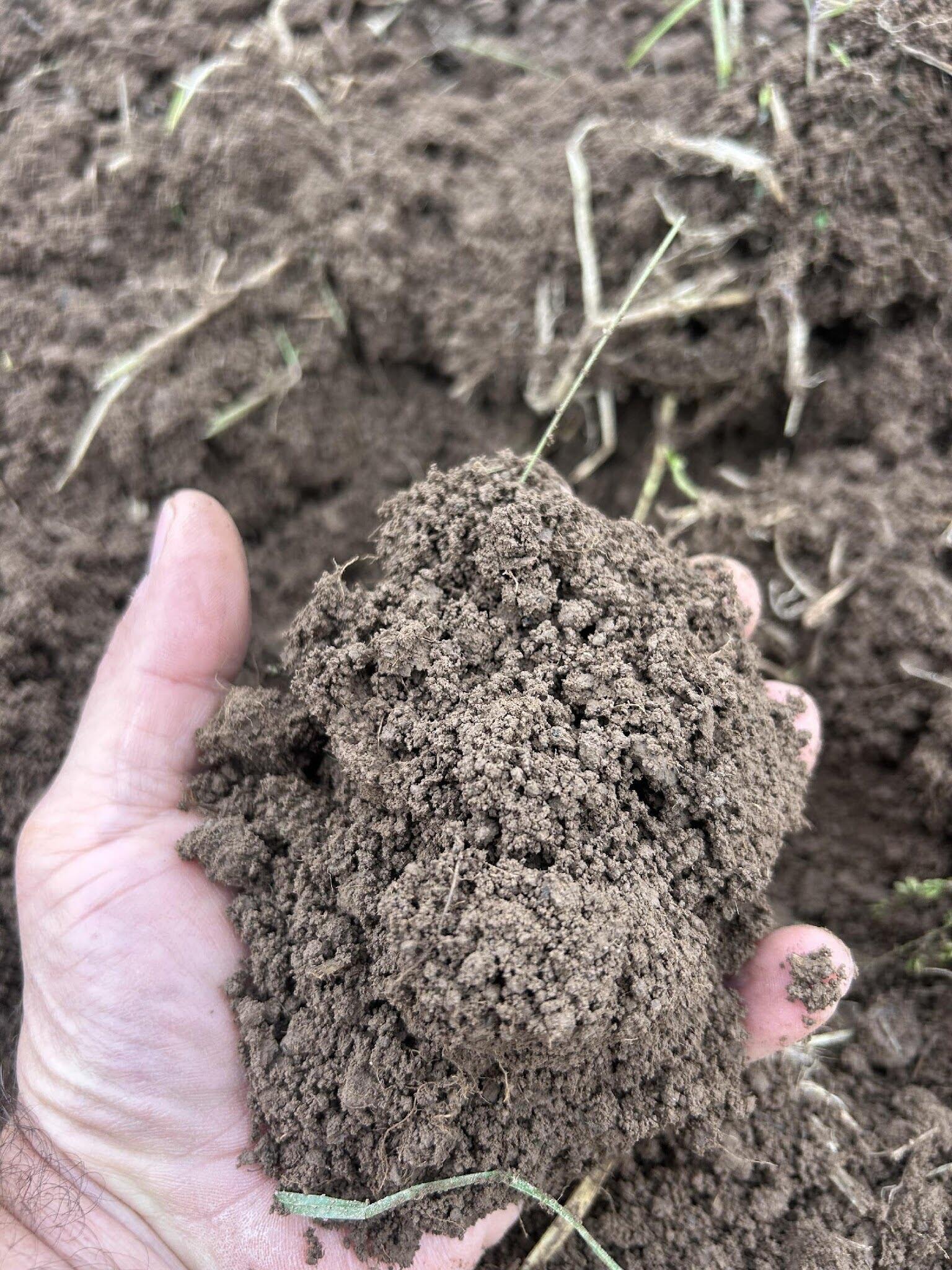
A handful of soil at Four Fold Farm, one of 80 participating organic farms sending soil samples and production practice to the Organic Microbiome Project. Photo credit: Steven Crist
Organic Farmer Driven Research on the Soil Microbiome at Cornell
To approach this complexity, research projects led at the Casteel lab are utilizing a unique, participatory research approach where organic farmers are providing key insights on soil management practices that could be helping them withstand pests and extreme weather events.
“The conservation of soil microbes that promote pest management is a new and potentially groundbreaking area for organic agriculture. These microbes naturally occur on organic farms, promote plant chemical defense, and control pests.” -The Organic Microbiome Project
The Organic Microbiome Project is perhaps the largest effort to date that is documenting the soil microbiome on organic farms. Over 80 organic farms are participating. Essentially, organic farmers are sending soil samples in, accompanied with answers about farming practices, and the lab documents changes within the soil microbiome, driving some interesting findings. Rather than deciding what practices to focus on and then involving farmers, the project starts by following practices organic farmers already employ. “We allowed farmers to submit up to two samples from two different fields where they have been using different practices, and we encouraged them to pick comparisons they were interested in,” explained Casteel. In this sense, the project is inherently farmer-led, and evaluates the effects of organic farming practices already being utilized on working farms. While results are still coming in, one thing is clear: when research follows the lead of farmers, it is closely watching how farmers are adapting and building resiliency in real time.

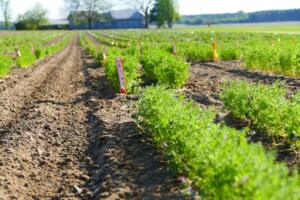
Strip tillage is one of may practices used to try to help protect soil health at Four Fold Farm, NY. Researchers with the Organic Microbiome Project encourage farmers to send soil samples from areas of their farm they are interested in comparing, leading to farmer-driven insights.

Some interesting insights found so far are illustrated in this graphic. On the left, some organic practices that participants are using on their farms are listed. In the middle, a summary of the change to the microbiome, and on the right, if the crops there exhibited increased or decreased plant defenses.
Standing on the Shoulders: Recent Microbiome Research and Ongoing Seed Breeding
Another project carried out by Dr. Casteel, Dr. Eli Bloom and Ethan McAnally, Leveraging Soil Microbiomes to Promote Climate Change Resilience and Adoption of Organic Agriculture (funded by USDA/NIFA’s Organic Transitions Program) is looking closely at the soil microbiome and organic seed breeding. Also partnered with organic producers, this time specifically seed breeders, the project again follows the lead of farmers, who seem to be lighting the way toward a more regional approach to seed saving that might help withstand climate change.
The project builds on previous research on both soil microbiomes and regional seed saving, and explores several themes:
- Pest pressure is reduced when crops are grown in soil where they are bred. The same effect was observed when the crops were grown with soil microbiomes from regional organic farms.
- Crops bred under protection and irrigation performed poorly during droughts. When drought conditions were introduced to the study, kale performed better than tsa tsai. Tsa Tsai has been bred in irrigated, protected conditions (greenhouses), while kale is unirrigated and often outside. These results may reflect the maxim “stress as strength”.
- Some farms’ soil microbiomes may offer protection against drought. All crops performed slightly better during droughts on certain farms in the study.
Voices from the Organic Seed Breeders
“We believe that soil and seed are everything,” Steven Crist, farmer at Four Fold Farm and Hudson Valley Seed Company, and partner on the project, explains. “The more we grow a crop, the better it becomes.” Crist gives a powerful insight into how stress as strength is working through the long-term relationships formed when seedspeople breed crops over time on their farms.
“Seed crops that make it through the challenge are almost always more resilient, year to year. We believe this has everything to do with adaptation, directly linked to the microbiome, and to seed memory. That is a slightly pseudo-scientific term but that’s how I call it in the field. The more we grow a crop, the better it becomes, is the long and short of it.” -Steven Crist, Four Fold Farm
At Four Fold Farm, Crist utilizes best practices for protecting the living soil including “mulches, compost, cover cropping, rotation, repeat”. He is also experimenting with biochar, utilizing a New York Carbon grant, and incorporating local ecotypes of native plants, which he theorizes may provide unique and potent additions to his farm’s soil microbiome by attracting and promoting native insects. This approach follows the adage “As above, so below” and Crist suggests that the breeding and feeding of native insects might be mirrored by the breeding and feeding of soil microbes below.
Lia Babitch, organic farmer at Turtle Tree Seed Initiative and another collaborator on the project, suggests that the social and ecological aspects of growing seed are intertwined.
“The varieties that we carry have become like our children, and like our friends. They’ve grown with us and we’ve watched their steady improvement and occasional shenanigans. And they’ve become rooted in the context of this valley both agriculturally and socially.” -Lia Babitch, Turtle Tree Seed Initiative
Turtle Tree offers a novel approach to selling seeds that connects buyers to the seedspeople (and potentially the microbiomes there) with what Bloom calls “decision support” for farmers: for varieties of seed in Turtle Tree’s catalog, potential buyers can see the farms and regions where particular lots of seed are from. (Note this option is only available in their catalog, and that it may be added to the website later.)

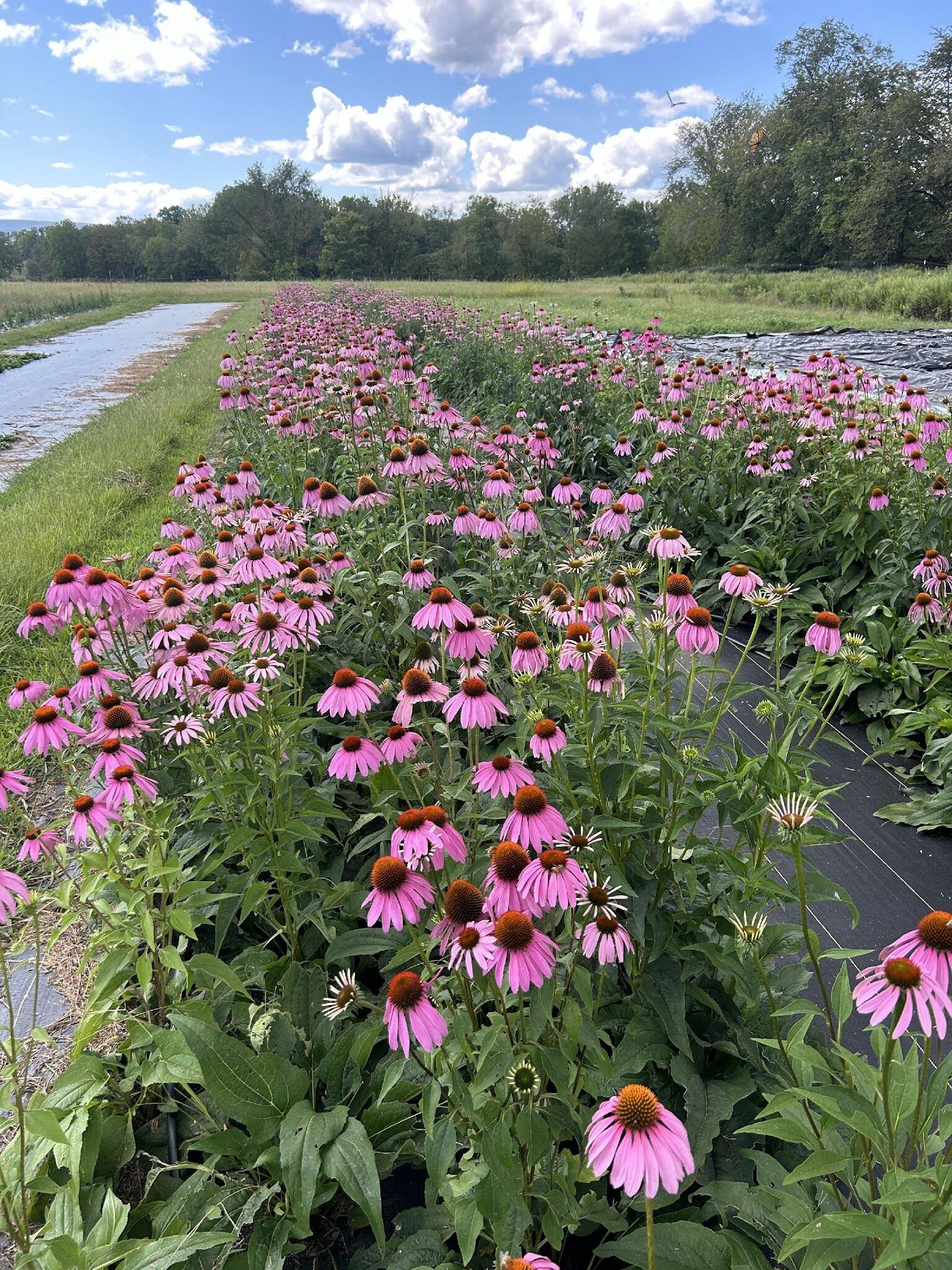
Conservation or production plantings of native plants like this echinacea at Four Fold Farm can attract specialized, native insects and birds. Some organic farmers are asking how plantings of native species may be affecting the soil microbiome through the introduction and presence of the insects and birds that the plants provide habitat for.
Looking Ahead: The Triad of People, Plants, and Place
As time goes on, and provided funding for research like this continues, we will see more and more insights about how organic farmers’ practices are affecting the soil microbiome and resulting in increased resiliency to climate change. And along the way, it is clear that when researchers study what farmers are already doing, those insights will remain timely, farmer-driven, and translatable to other farmers eager to learn from each other.