
News

Vilicus Farms

Impacts of Climate Disruption on a Diversified Organic Dryland Farm

Interview by Mark Schonbeck, Research Associate, Organic Farming Research Foundation

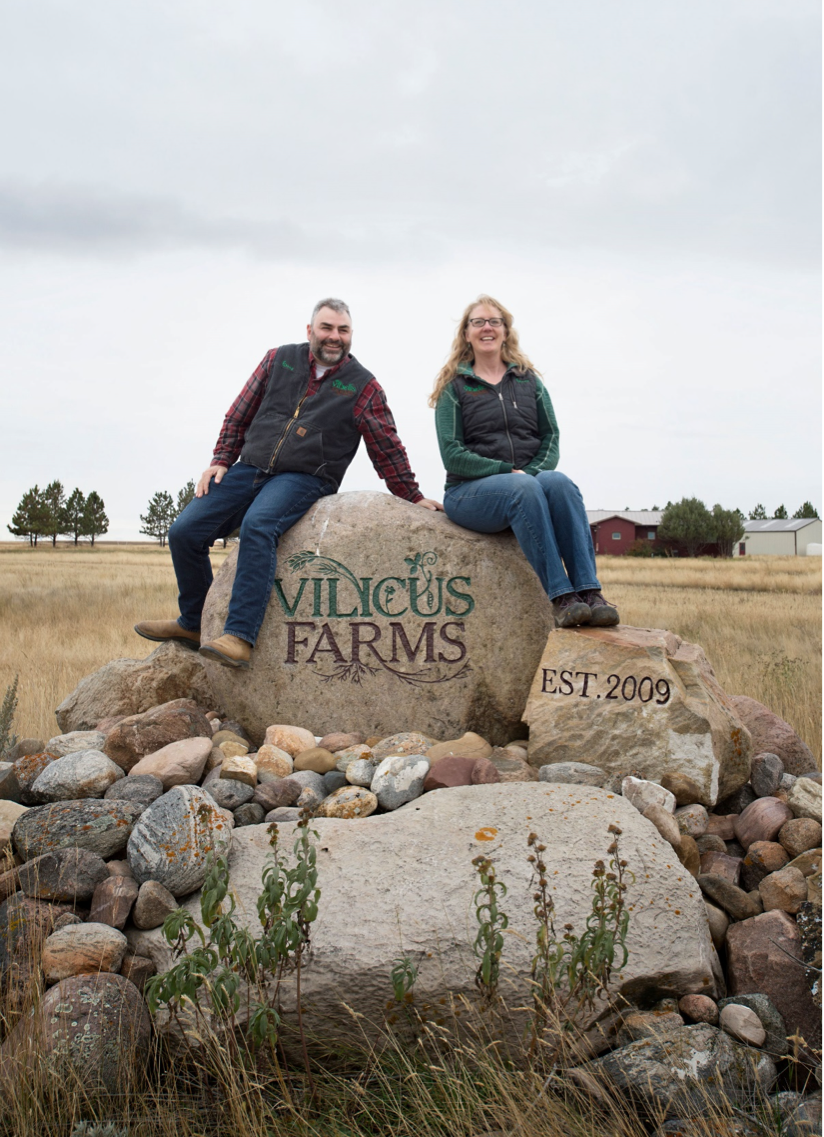
While scientists, policy makers, and carbon marketeers debate the best agricultural practices for absorbing excess atmospheric carbon dioxide (CO2) into the soil, farmers need tools and strategies now to help them meet the day-to-day challenges posed by climate change. Contemplating this challenge, I thought immediately of Doug and Anna Jones-Crabtree of Vilicus Farms (whose name means “stewards of the land”) and wanted to learn more about how their uniquely diversified system – 27 crop species with livestock integrated into the rotation – has helped them cope with the crazy weather and keep their 12,566-acre operation economically viable. So, I contacted Doug and he graciously offered more than an hour of his time on July 9 of this year to share his climate observations.

Weather timing is critical

“We got some rain recently,” he began. “We have had a storm every evening for several days, about 2½ inches this past week. It is too late for the fall-seeded crops but will help the spring plantings.” The rain temporarily eased the impact of a prolonged and severe drought, with just 3.7 inches of moisture from June 1, 2021 to June 1, 2022, compared to the long term average annual total of 11.7 inches. “There is no normal anymore,” Doug observed. “We just cannot predict what will happen.”

Historically, the region’s four wettest months have been June, May, September, and April, which provide about 80 percent of the year’s usable moisture. Winter snows are very dry (low moisture) and mostly evaporate rather than melting into the soil. The region’s cropping systems ranging from wheat-fallow to the diverse rotation at Vilicus Farms, have been designed for this seasonal pattern. However, “that is all out the window now. Changes in annual averages, such as becoming a degree or two hotter, or annual moisture 20% less, don’t tell the whole story. It is not only how hot and dry it is, but when it is hot and dry, and when the rain comes.”

For example, when I asked Doug whether the freak Pacific Northwest heat wave in 2021 reached his farm, he said, “yes, the middle of June was our hot spell. At that time of year, our cool season crops are in their critical stage of late vegetative growth when their yield potential is determined. Usually, June is the wettest part of the year, but June 2021 brought a week of 100°F+ temperatures. Crops looked great until then but gave poor yields. Normally, we get a week or 10 days of that kind of heat in late July, when it is actually good for grain ripening.”

A diverse farming system designed for soil health and resilience

In an earlier interview, Doug outlined their diversified cropping system, which stands in stark contrast to the region’s common wheat-fallow system, consisting of winter or spring wheat followed by 18 months of chemical no-till fallow which is intended to store up an extra year’s rainfall, but deprives the soil of cover and living roots for that time. One effect of climate change is that some farmers have taken advantage of milder winters to grow more winter wheat, which has a longer growing season but still leaves soil bare and lifeless for about 14 months.

Vilicus Farms uses the following flexible seven-year rotation on most of its acreage:

  • Year 1 Light feeding grain: spelt, emmer, einkorn, barley or soft wheat with lower demands for nutrients and moisture are planted April 15 – May 15. Grains are harvested in late July or August, leaving 4 – 8” stubble and straw spread across the field.
  • Year 2 Green fallow: annual legume or cocktail mix planted late March or early April, or biennial sweet clover interseeded with the preceding grain crop. In June, beef manure + bedding is applied just before terminating the green fallow with shallow tillage.
  • Year 3 Heavy feeding grain: hard red winter or spring wheat, or durum wheat, their highest-value crops, are planted after manure application to ensure sufficient nutrients.
  • Year 4 Broadleaf crop or oats: safflower, flax, mustard, camelina, buckwheat, or oats are planted in April – May and harvested in September. Oats are included in this block because “they have a beneficial effect on the soil ecosystem, very different from other cereals.”
  • Year 5 Pulse crop: pea, lentil, or chickling vetch for seed, sown in April – May and harvested in August.
  • Year 6 Oats, broadleaf, or light-feeding grain: A crop not grown in the field earlier in the rotation cycle is planted in spring and harvested in August or September.
  • Year 7 Green Fallow: sweet clover interseeded into the Year 6 crop (if annual covers in Year 2), or annual legumes or mix (if sweet clover in Year 2), terminated in June.

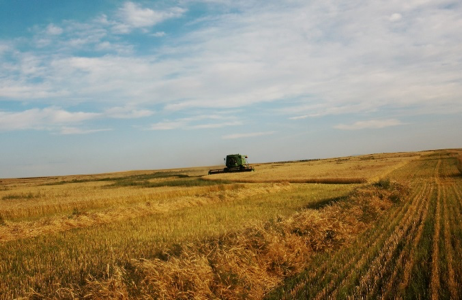
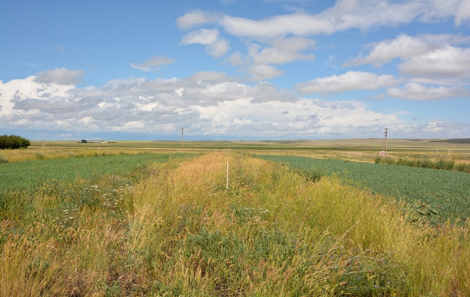
This rotation, combined with prairie strips (20-30 feet wide) for every 240 feet of cropped land, keep the soil covered year-round with living root for as much of the year as practical (Figure 1A and 1B: Unlike the region’s dominant wheat-herbicide fallow system, Vilicus Farms keeps all their acreage covered by living vegetation or residues year-round).

Augmenting soil health with mindful tillage, livestock integration, and compost

Doug and Anna have developed a tillage strategy to manage weeds and cover crops and prepare seedbeds, while protecting soil health. “I have seen a tremendous advantage to rotating type and depth of tillage,” he said. “We never use the same tool in the same field two years in a row.” Stubble and residues are left in place and are tilled just 7-10 days before planting the next crop. Their seeders are equipped with sweeps to take out small weeds that emerge during this interval. For each operation, tools are chosen based on soil conditions and the needs of the crop to be sown:

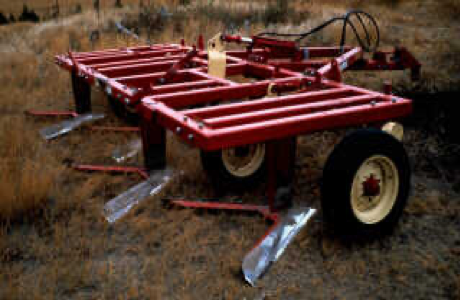
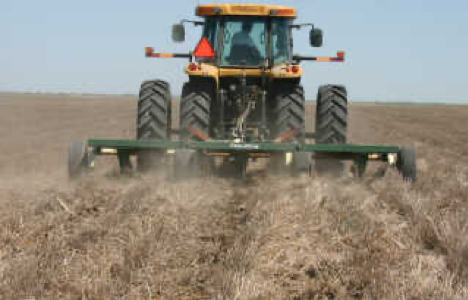
  • Blade plow, which shallowly undercuts cover crops and weeds (Figure 2A and 2B).
  • Speed disk, which works the top 2-3 inches of soil without inversion.
  • Chisel plow with wide sweeps to lift and loosen the top 3-4 inches, followed by a coil packer to firm the soil and make weeds emerge so that planter sweeps can take them out.
  • Moldboard plow 6-8 inches to bury weed seeds, then speed disk a week later. This is done for the least weed-competitive crops (flax and lentils), and only once per rotation cycle.

Additional steps to build healthy, resilient soils that the farm has undertaken in recent years include composting manure before application and integrating livestock grazing into the rotation. “Our operations foreman, Paul Neubauer, has a custom grazing business, and began grazing beef cattle on our land three years ago,” Doug said. “He developed a method to utilize grazing in lieu of tillage to terminate the green fallow. Cover crops are cut with a swather, then grazed for two or three days. I really like this system, as it effectively terminates the cover crop, and the manure stimulates soil biology.” Inspired by this success, Doug, Anna and Paul jointly acquired 12 head of Scottish Highland cattle, which they plan to breed for a future enterprise in grass-fed beef.

New climate challenges and adaptive strategies

When I asked Doug which of his crops performed best in all of the adverse weather of the past few years, he said frankly, “we don’t have any.” Fall of 2021 was so dry that fall planted grains either did not germinate or were too weak to winter over. All winter wheat and half of the rye failed, and fields were replanted with spring grains. Where rye did establish, stands are “thin and short – we’ll see what we can harvest.”

Part of the farm’s diversity and resilience strategy is increased emphasis on broadleaf and oilseed crops including mustard, camelina, and flax, as well as buckwheat for grain. Because the oilseed crops have very small seeds, the prescription for success is to till, allow weeds to emerge, then take them out with shallow sweeps mounted on the planter to provide a clean seedbed. However, the brutally dry spring of 2022 thwarted this strategy as well, as the first tillage did not stimulate weed emergence. Then, “we seeded into dust and the crop did not emerge until rain finally came in early June. The weeds came up then as well and grew faster than the crops.”

“We have asked ourselves whether we need to diversify into more warm season crops, such as millet or buckwheat,” Doug noted, adding that “we never had much success with warm season crops because July and August are usually super-dry, and we can have cold weather in June Climate change is bringing more variability, not a consistent change toward a new pattern” to which farmers might adapt by changing their crop mix or rotation. Thus, Doug and Anna face the as-yet unanswered question, “is the diversified annual cropping system we have built still viable in this ecosystem.?”

Another challenge has been the direct impact of climate disruption on soil health itself. Four out of the past five years (2017-2021) have had significantly below-average precipitation, which restricted plant growth, crop production, and net return of organic residues to the soil, making it more difficult for farmers to maintain SOM.

The Vilicus team have explored two additional approaches to diversification for climate resilience: crop-livestock integration and more perennial vegetation. “We have had times when we could grow forage but not grain, and thus we could raise meat,” Doug noted. While the green fallows provide grazing and fencing is do-able, providing water poses the steepest hurdle and greatest costs. “Livestock need to access water within a mile for the grazing system to work at all, and surface waters are scarce here, so we must truck or pipe it in.”

For grazing, Vilicus Farms prioritizes fields in which cattle have access to an installed “dugout” (pond) or other seasonal surface water feature within a half mile, or where water can be trucked from the pond to the grazing paddock. Buying and trucking-in water from the community water system is the backup plan, but it is not economically viable in the long run. Drilling new wells is risky, as groundwater is 500 to 700 feet deep, and drilling costs $30-40,000 per well regardless of whether the well provides water – which it may or may not.

While Doug does not see abandoning annual crop production as an economically viable option, he saw something this year that piqued his interest in integrating more perennials into the farm ecosystem. “In two fields with well-established shelterbelts of Russian olive (Elaeagnus angustifolius) and Russian pea shrug (Caragana frutex), the crops are noticeably healthier and more vigorous than crops elsewhere. The shelterbelts are 15-30 feet wide and occur every 200-300 feet across the field.” In contrast with low-growing prairie strips in other fields (Figure 1 right), the shrubs stand about 20 feet tall and greatly reduce wind speeds over a distance five times their height, thereby protecting the crops from drying damage by winds which can reach 50-70 mph in unprotected fields.

His observations of the shelterbelt benefits led Doug to ask, “how can we increase the proportion of perennials in our system? I like the idea of perennial grains, but they work better in Minnesota which receives more rain than Montana. Trees don’t grow here, so the next frontier may be to diversify into shrubby perennials. So often, farmers in our region are ripping out shelterbelts to increase efficiency of wheat production but getting more perennial shrub species into our system would increase resilience.” Practical hurdles to implementation include the initial cost of planting the shelterbelts and the added cost and labor to keep the plantings weeded and watered until they are well established.

As Doug contemplates options for responding to the climate challenges, he believes that we need both crops and animals, and a greater diversity of both. “I see little soil loss from native rangeland unless it is overgrazed. Look at nature – everything is polyculture. The more plant and wildlife species, the healthier and more resilient the system, so how can we emulate this?”

Rethinking farm policy and programming

For many decades, mainstream agriculture has increasingly relied on subsidies and crop insurance to remain economically viable, and these financial supports have focused on a short list of the most productive crops: wheat in Montana and other low-rainfall regions, corn and soy in the Midwest, and cotton in the South. As increasingly erratic weather has made yields more unpredictable and crop failures more frequent, crop insurance has become a vital component of climate resilience strategies for all farms. Vilicus Farms carries crop insurance, and in bad years, the indemnity payments have helped keep the farm afloat. He especially appreciated the supplemental check that arrived this spring as part of the Emergency Relief Program (ERP).

At the same time, Doug is extremely concerned that USDA programs and policies are designed to discourage the kind of agroecosystem and enterprise diversity that is so urgently needed for true resilience. “There are such excellent subsidies for wheat now that the intelligent economic response to the climate crisis at this time is – just grow wheat. The crop insurance is cheap, and it provides a tight safety net. It makes no sense not to carry multiperil insurance for primary crops like wheat – it is too good not to have. But it reinforces the lack of crop diversity.”

I asked, “what about the Whole Farm Revenue Program (WFRP) – isn’t that one designed for diversified systems, and to reward increased diversity?” In response, Doug noted that Vilicus Farm has carried WFRP for the past four or five years, as well as multiperil insurance for wheat and flax. However, WFRP coverage is not nearly as robust as the single-crop multiperil policies. In addition, while USDA rules allow farmers to carry both, the value of single-crop insurance coverage and any indemnity payments therefrom are deducted from WFRP, so that the latter rarely yields any benefit. Thus, Vilicus Farms will drop WFRP and seek crop-by-crop policies for all their crops.

While NRCS programs can support diversity (for example, the prairie strips and diverse rotation, which are part of Vilicus Farms’ CSP contract), “most of what the Farm Services Agency (FSA) offers works best for the least diverse farming systems.” For example, FSA requires semiannual, field-by-field reporting of crop plantings. This works OK for a wheat-only system, but “we grow 27 crops in small strips, so we have to track, in effect, 385 separate fields, a task that took three people two full days to complete.”

Citing an urgent need to decouple the long-term service work of land stewardship from the year-to-year income stream from farm production, Doug and Anna launched a new program in 2022: Community Supported Stewardship Agriculture (CSSA). While growing climate instability causes yields and income to vary wildly from year to year, Vilicus Farms remains committed to building the health of their soils and agroecosystem 365 days of every year and incurs the costs regardless of return. The new CSSA program offers people an opportunity for people who care about land stewardship, agriculture and food to have a direct connection to Vilicus and each other.

In conclusion, Doug notes that “We are trying to build climate resilience by doubling down on crop diversity, but this is counter to current policy and programs, which are based on assumptions widely held by society at large and are reflected in USDA programs.” In order to truly meet the challenges of the climate crisis, “we need a robust conversation at the highest levels of decision-makers on what kind of agricultural system we want to support.”

For me, these conversations with Doug also underlined the importance of research into truly climate resilient and climate-mitigating agricultural systems, with emphasis on functionally diverse agroecosystems including crop-livestock integrated, perennial-annual integrated, and agroforestry systems. USDA research should prioritize organic farming, which protects the soil life by avoiding synthetic agrochemicals and can build soil organic carbon and improve nutrient cycling through advanced soil health practices. Farmers must take their proper place as leaders and equal partners with university scientists to ensure that practical solutions emerge. Finally, it of utmost urgency that the US and the world cut greenhouse gas emissions sufficiently and soon enough to stop further climate disruption to save farmer livelihoods, food security, and the future of human civilization.

This story is based on telephone interviews with Doug Crabtree on March 23 and July 9, 2022.
By |2022-07-26T18:49:50-04:00July 26th, 2022|Farmer Stories, News|

State of Organic Seed: A Conversation with Organic Seed Alliance

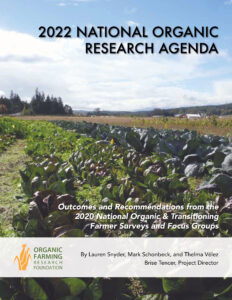
2022 National Organic Research Agenda CoverThe Organic Farming Research Foundation 2022 National Organic Research Agenda (NORA) is a report informed by surveys and focus groups conducted in 2020 with over 1,100 certified organic farmers and ranchers across North America.
What Farmers Said

  • In the NORA report, ~70% of organic crops are planted with certified organic seeds.
  • On-farm production of organic seed declined from 63% in 2015 to 46% in 2020, indicating a need for farmer training and technical support in organic seed production.

A Conversation with Organic Seed Alliance (OSA)

OFRF recently chatted with Kiki Hubbard, Organic Seed Alliance Directory of Advocacy & Communications, about the OSA’s State of Organic Seed 2022 report. This report was released concurrently with OFRF’s 2022 National Organic Research Agenda.

Watch the Video Online

Key Findings in the State of Organic Seed 2022 Report

  • Producers report variety unavailability as their top reason for not sourcing organic seed.
  • Furthermore, certifiers have a hard time identifying what might be substituted as an equivalent variety per the organic seed regulation.
  • Download the OSA’s Data Brief for Organic Producers

Cited Resources in the Video

By |2022-08-10T16:35:13-04:00July 15th, 2022|News|

OFRF Awards Two More 2021/22 Organic Research Grants Focused on Pulse Crops, Companion Planting

Organic Farming Research Foundation (OFRF), in partnership with the Foundation for Food and Agriculture (FFAR), is pleased to announce two more 2021-22 Organic Research grants, awarded to Travis Parker and Christiana Huss. Parker’s research will increase the productivity and market value of pulse crops for arid conditions. Huss will examine companion plantings for organic management of a new invasive Brassica pest. These awards are the third and fourth projects of six in OFRF’s current 2021-22 organic research grant cycle.

  • Travis Parker, with lead institution University of California, Davis, will focus their research on pulse crops, such as cowpea and tepary bean, which show exceptional resistance to heat, drought, and low soil fertility and make them particularly valuable under the context of climate change. This project will evaluate high market value varieties of common beans, cowpeas and tepary beans in arid organic systems, and conduct advanced genetic analyses for development of new high value varieties.
  • Christiana Huss, with lead institution University of Georgia, will focus their research on identifying companion plants that  can mitigate the recent attack of the invasive yellow-margined leaf beetle (Microtheca ochroloma) on leafy brassica greens across the Southeastern United States. This project will evaluate a very innovative landscape ecology approach that involves a combination of repellant intercrops and attractant companion plants in a “push-pull” design for bio-control of the pest.

OFRF’s grant program funds research on organic production systems and the dissemination of these research results to organic farmers and agricultural research communities. The 2021/22 grant cycle prioritized early career researchers and Black, Indigenous and People of Color (BIPOC) applicants, and awarded on-farm projects focused on climate mitigation and resilience. OFRF recently announced 2021/22 grantees focused on coffee leaf rust disease in organic production systems and climate mitigation for coffee producers.

As a result of OFRF’s research, education, and outreach efforts, thousands of farmers have received pertinent research and training information. Results from all OFRF-funded projects are available to access for free in an online database.

Thank you to FFAR and our research partners for making the 2021/22 organic research grant program possible.

OFRF Research Grant Partners


By |2022-07-13T16:09:56-04:00July 13th, 2022|News|

Sharing the Legacy of Eoin King

Eoin Jun King in the GardenWhen Eoin was 19, he said to his father that working in the tech industry where he’d been interning every high school summer, “wasn’t for him.” Instead, he wanted to focus on his true love while at Chico State University, enrolling in environmental science classes and growing organic vegetables in the backyard of his college rental. 

Tragically, Eoin Jun King died in a car accident in February 2022 at the age of 31, leaving behind his mother and father, Miyuki and Niall, and younger brother, Fionn. While the team at OFRF never knew Eoin, he made a decision some years ago that intertwined his life with our work: he made a bequest to use his IRA contributions from a past employer, Vital Garden Supply in Nevada City, CA, to support OFRF’s mission of improving and expanding organic farming systems, a sentiment that was very close to his heart. 

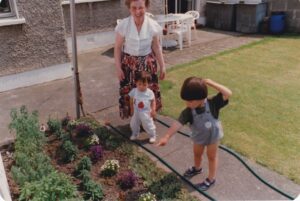
Eoin Jun King, as a baby, in the GardenEoin’s passion for organic began when he was a child growing up in Saratoga, CA where his mom introduced him to growing vegetables and fruits organically. Miyuki was raised in Japan, and every summer until college Eoin would go to Japan and see the family farm. He spent hours outside in the garden with his Mom, and grandparents, and Eoin quickly picked up on her adoration of nature. During college, along with his backyard veggie garden, he would bike to farmers markets, collect produce, and cook local foods for other students to try, calling it “Bike Kitchen.” His first job after college was at Chico Natural Foods Coop.

More recently, Eoin bought a property near Grass Valley, CA. A self-taught and gifted carpenter, Eoin began to build a large 8-ft fence around what would become an organic vegetable garden. Sadly, he hadn’t finished the fence or started the garden by the time of his death. Now his father is spending time at the house, learning about Eoin’s life in the Sierra foothills and maintaining the property. 

Eoin’s full name – Eoin Jun King – is a combination of his Irish and Japanese heritage and means “​​A Gracious Honest King.” And he lived up to his name. Eoin made connections with people from all walks of life and often supported friends in need. On trips to Japan with his family, Eoin seamlessly started conversations in fluent Japanese, taking full advantage of every day. His dad told us, “He put 90 years of life into 31. How many people go through life and do what they want to do?” Niall and Miyuki are proud that Eoin did.

We know these topics are not easy, yet Eoin has left us with two extremely special gifts – his story and his financial support to continue doing the work he cared so much about. We hope as you plan for your future, you consider giving to organizations and communities that you love, be it OFRF or others. Learn more about planned giving or email Leah Lawson, OFRF Partnership & Development Director (leah@ofrf.org), for more information.

By |2024-08-12T13:55:18-04:00July 12th, 2022|News|

Climate Impacts on a Small Scale Farm

2022 National Organic Research Agenda CoverThe Organic Farming Research Foundation 2022 National Organic Research Agenda (NORA) is a report informed by surveys and focus groups conducted in 2020 with over 1,100 certified organic farmers and ranchers across North America.
What Farmers Said

  • In the NORA report, nearly 80% of transitioning growers cited “greater resilience to climate change through organic practices” as a motivating factor to certify organic.
  • “Adapting to climate change” ranked in the top 10 production challenges faced by organic farmers.

A Personal Perspective
by Caroline Baptist, former OFRF Communications Manager and Owner/Farmer of River Valley Country Club

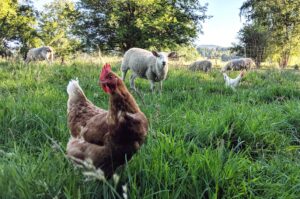
My farm is nestled in Washington state’s Snoqualmie Valley, an idyllic area just outside of the Seattle metro area held on the traditional lands of the Coast Salish people. Since 2017, I have raised sheep, heritage poultry, and organically grown row crop vegetables on five acres ( approximately three in current production). The farm is surrounded by three bodies of water: a natural slough, Patterson Creek, and the Snoqualmie River. The latter, which spans 45 miles through King and Snohomish counties, is prone to flooding which causes significant property and economic losses to local farms.

Farming on a floodplain and a floodway can be a challenge and changes in climate over the years has only exacerbated this issue. The property owner from whom I lease land from remembers experiencing 1-2 major floods a year when he first began farming in the area in 1993. More recently, we’ve seen these numbers double and triple — some years more frequently and across longer stretches of the winter and spring seasons.

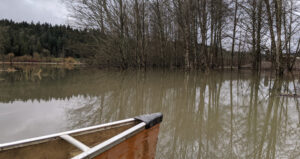
A surprise flash flood hit in October 2019 crested at 58 feet, putting my farm and neighboring lands underwater. “Catastrophic floods, arriving earlier in the season, close local roads and destroy any crops remaining in the fields,” the Snoqualmie Valley Preservation Alliance said in a statement. Local farms suffered crop and economic loss during what’s considered peak pumpkin patch season.

Having been “flooded in” by myself for the first time (as local access roads were closed), I waded through 4-5 feet of water to carry my neighbor’s pigs and our farm dogs to a farm pad. Some areas of the farm were under water by 15 feet and accessible only by canoe. The financial sting of losing cabbage, beet, and kale crops that I could no longer sell was superseded by the emotional grief of losing pastured animals whom I could not bring to higher ground quickly enough. This flood and every flood since is a sobering experience, illustrates clearly that the climate crisis is real, and it affects farmers firsthand.

Five more floods in a 7-week period hit this area from December 2019 to February 2020.

Conversely, the Snoqualmie Valley has experienced rising temperatures, a trend seen across the state, country and globe. According to NOAA, 2021 was the world’s 6th warmest year on record. A Pacific Northwest heat wave in June 2021 lasted three days with temps above 90 degrees, an unusually high number during a month that locals characterize as “June Gloom.” I lost over 1,000 cabbage plants that month, though fellow farmers market vendors suffered even greater losses.

Building strong healthy soil is crucial to avoid soil erosion that’s often caused by flooding.

Though these changes in climate are downright devastating to the well-being of my farm, the health of my flocks, and my vegetable yields, there are strategies I try to implement to protect the land and animals I am honored to steward.

  • Riparian buffer zones allow river waters jump the banks with less intensity, reducing flood peaks and erosion rates.
  • Cover cropping helps with soil water infiltration, helps dry out flooded soil, and promotes the growth of microorganisms that can manage nutrient cycling.
  • Rotationally grazing flocks across paddocks throughout the year to avoid soil compaction and helps manage animal waste that would otherwise be concentrated in one area.
  • Soil testing is conducted once soil ground is dry to determine what organic nutrient amendments might be appropriate for the coming production season.

Additionally, information-sharing amongst fellow farmers is crucial during extreme weather changes. A handy app for the Snoqualmie Valley that was created by and for residents and farmers in the area has proven invaluable during flood season.

By |2022-11-14T19:19:38-05:00July 10th, 2022|News|

Soil Health in the South

2022 National Organic Research Agenda CoverThe Organic Farming Research Foundation 2022 National Organic Research Agenda (NORA) is a report informed by surveys and focus groups conducted in 2020 with over 1,100 certified organic farmers and ranchers across North America.

What Farmers Said

  • In the NORA report, U.S. Southern farmers tended to use cover crops more often compared to other regions (60%).
  • This may reflect the greater need for cover crops in the rotation to replenish soil organic matter (SOM) and nitrogen (N) in Southern region soils, which tend to lose SOM rapidly and have lower inherent fertility than soils in cooler parts of the U.S. (Duncan, 2017).

A Snapshot of the Southern Region
Compared to other regions, NORA respondents from the South were considerably more likely to report many production challenges as substantial. For example, Southern region producers face intense weed, insect pests, and disease pressures, and organic producers incur substantial costs in managing these challenges. Additionally, many organic farmers surveyed from the South were challenged with:

  • Managing soil fertility and crop nutrition (44%).
  • Optimizing soil structure and avoid erosion (38%).
  • Minimizing adverse impacts of tillage on soil health (37%).

Addressing Soil Health in the South

Although there is no specific formula for building healthy soils organically in the South, experienced farmers can take a site-specific approach to building soil health, combining ingenuity with years of observation and trial-and-error to develop unique soil strategies for their operation (Schonbeck and Snyder, 2021).

  • Maintain living roots
  • Maximize crop diversity
  • Minimize soil disturbance
  • Energize the system with biodiversity

Applying Crop Varieties

Crops such as crimson clover, winter pea, arrowleaf clover, and ball clover are appropriate cool season legumes for Southern soils. Cowpeas, lablab beans, lespedeza, and soybeans can be planted to build soil health in warmer season.

For more NORA findings and recommendations to build soil health in this unique U.S. region, download OFRF’s Soil Health in South Infographic and the Building Healthy Living Soils for Successful Organic farming in the Southern Region.

By |2022-11-04T20:58:56-04:00July 9th, 2022|News|

OFRF Provides Testimony to full House Ag Committee on the Role of Climate Research Supporting Ag Resiliency

FOR IMMEDIATE RELEASE

(JULY 6, 2022) – Organic Farming Research Foundation (OFRF) Research & Education Program Manager Thelma Vélez, PhD, recently testified before the full House Agriculture Committee hearing on “The Role of Climate Research in Supporting Agricultural Resiliency.” As one of five panelists invited to share their expertise, Vélez summarized research findings that demonstrate the potential for organic systems to mitigate climate change and build resilience. Her testimony and extensive Q&A reflected Dr. Vélez’s 15+ years of interdisciplinary research experience and thorough recommendations for more investment in organic research, education, and extension to support American farmers and ranchers. The hearing took place on Wednesday, June 15, 2022 at 10:00 AM ET, and is publicly available for viewing on the House Ag Democrats YouTube channel. You can read Velez’s full written testimony here.

“OFRF was honored by the invitation to speak before the full House Agriculture Committee,” said Brise Tencer, OFRF Executive Director. “We are proud to share our expertise based on many years of reviewing and tracking research related to organic farming and climate mitigation and adaptation.”

Vélez was the first to speak before the full House Agriculture Committee, roughly 20 minutes into the livestreamed hearing. “While the organic method has been shown to have great potential to contribute to both climate mitigation and climate resilience, much more action-oriented research is needed to make widespread adoption possible,” testified Vélez.

Throughout the three-hour meeting, Vélez responded to questions from House Representatives including Alma Adams, Shontel Brown, Bobby Rush, Chellie Pingree, Glenn Thompson, Rick Allen, Annie Kuster, Angie Craig, and Jim Baird.

“It was an honor to be invited to weigh in on a critical issue facing our nation and impacting the backbone of our food system,” said Vélez. “It is clear that many representatives are concerned with building resilience across America’s farms and the message that organic growers are leaders in this movement was well received.”

In her testimony, Vélez cited OFRF’s recently published 2022 National Organic Research Agenda (NORA), a 230-page report compiling survey results and listening session data from over 1,000 certified organic producers. Over half of the farmers surveyed were concerned with adapting to climate change and nearly 90% stated they implemented regenerative soil health management practices, such as cover cropping, a climate-friendly practice.

When fielded a question from Rep. Kat Cammack, Vélez drew from experience with South Florida farmers who focused on carbon sequestration and soil fertility. In conversation with Rep. Stacey Plaskett, Vélez advocated for increased investment in climate research for U.S. Territories. Having researched and worked with farmers building resilience to a changing climate in the Caribbean, Vélez recommended a focus on farmer-led work and “researchers on the ground with farmers.”

OFRF has led organic farming and research initiatives since its inception in 1993 and has advocated for federal policy supporting integrated research, education, and outreach to farmers who build healthy resilient farming systems that withstand climate change and steward the land for future generations. “It is a testament to how OFRF serves as a reliable and consistent resource on the sound science behind organic farming systems,” said Tencer.

On June 24, 2022, OFRF submitted supplemental testimony to the House Committee on Agriculture. The organization recommends expanded support of key USDA research programs including the Organic Research and Extension Initiative (OREI) and the Sustainable Agriculture Research and Education program (SARE), in the next Farm Bill. Citing its 2022 NORA report, OFRF also advocates for investments in technical assistance, university extension, and farmer training.

The testimony also states that organic agriculture is a proven strategy to help build resilience in the face of supply chain disruptions and climate change. Organic agriculture maximizes the effective use and cycling of on-farm and regionally-sourced resources and minimizes reliance on industrially produced inputs. Organic farmers produce food every day without relying on synthetic fertilizer – supplies for which have been impacted by the war in Ukraine. OFRF supports actionable research that focuses on the wide adoption of organic systems of production and the climate resiliency services it offers.

###

About Organic Farming Research Foundation
Organic Farming Research Foundation works to foster the improvement and widespread adoption of organic farming systems. OFRF cultivates organic research, education, and federal policies that bring more farmers and acreage into organic production. https://www.ofrf.org/

Media Contact
communications@ofrf.org

By |2023-12-12T17:08:38-05:00July 6th, 2022|News, Press Release|

OFRF and FFAR Announce On-Farm Organic Research Grant Addressing Climate Resilience for Coffee Producers

FOR IMMEDIATE RELEASE

(June 29, 2022) – The Organic Farming Research Foundation (OFRF) and the Foundation for Food & Agriculture Research (FFAR) are pleased to announce its second award for the 2021/22 OFRF organic research grant cycle. Alejandra Guzman Luna, affiliated with Universidad Veracruzana and in collaboration with the Agroecology and Livelihoods Collaborative at the University of Vermont, was awarded $19,970 to evaluate organic farming practices for staple crops in Chiapas, Mexico.

Mexico’s highland region of Sierra Madre del Sur, known for its coffee production, has been severely impacted by the climate crisis. The local area experiences food insecurity and total profitability for smallholder coffee producers remains volatile. This project takes a participatory research and demonstration approach to develop and integrate organic staple crop production into more sustainable organic coffee agro-ecosystems.

“Diversity and mutual collaborations are always the best way to approach agriculture and research,” said Guzman Luna, principal investigator for the project. “I am thankful to OFRF for founding our Participatory Action Research designed and carried out with smallholder coffee producers to move staple crops into organic practices in the south of Mexico.”

The project will address the perceived lack of viable organic alternatives in growing staple crops such as corn and bean. The research team will conduct a participatory diagnosis of the challenges of growing staple crops organically; co-design and establish four experimental and educational plots; and systematize the results and widely disseminate them to local ag leaders and communities, other smallholder coffee cooperatives in the region, actors in the coffee value chain, scholars, and general public.

“Organic systems that emphasize soil health help farmers and ranchers increase resilience to the impacts of climate change,” said OFRF’s Executive Director Brise Tencer. “We are pleased to invest in farmer/researcher collaborations that support science-based solutions addressing the most pressing challenges facing organic farmers and ranchers today.”

This year’s program prioritized farmers, early career researchers and Black, Indigenous and People of Color (BIPOC) applicants. Six projects focused on climate mitigation and building on-farm resilience have been awarded a grand total of $119,817 in funding. The 2021/22 cycle was made possible by a $66,000 grant from FFAR and matching funds from OFRF and its research partners.

“FFAR is thrilled to support six organic research grants through this collaboration with the Organic Farming Research Foundation,” said Dr. LaKisha Odom, FFAR scientific program director. “These research grants are funding audacious soil management techniques that enhance crop productivity, improve environmental health and support increased farmer resiliency to severe weather events.”

To date, OFRF has invested over $3 million in 361 grants across North America to advance scientific knowledge and improve the ecological sustainability and economic prosperity of organic farming systems. All OFRF-funded research must involve farmers or ranchers in project design and implementation, take place on certified organic land, and include strong education and outreach components. All research results are freely available in OFRF’s online database.

(Photos: Traditional and organic milpa of Doña Amalia, a member of the coffee cooperative.)

###

Foundation for Food & Agriculture Research
The Foundation for Food & Agriculture Research (FFAR) builds public-private partnerships to fund bold research addressing big food and agriculture challenges. FFAR was established in the 2014 Farm Bill to increase public agriculture research investments, fill knowledge gaps and complement USDA’s research agenda. FFAR’s model matches federal funding from Congress with private funding, delivering a powerful return on taxpayer investment. Through collaboration and partnerships, FFAR advances actionable science benefiting farmers, consumers and the environment.

https://foundationfar.org/


Organic Farming Research Foundation
The Organic Farming Research Foundation (OFRF) is a non-profit foundation that works to foster the improvement and widespread adoption of organic farming systems. OFRF cultivates organic research, education, and federal policies that bring more farmers and acreage into organic production. Project results are shared freely at ofrf.org. OFRF also provides free access to all of its educational materials and resources.

https://ofrf.org

By |2022-06-29T23:01:44-04:00June 29th, 2022|News, Press Release|

Mendocino Wine Company

Mendocino Wine Company is located 125 miles north of San Francisco in Ukiah, where extremely hot temperatures and minimal rain make conservation techniques like cover cropping and efficient water management imperative.

Established in 1932, Parducci Wine Cellars is the longest running winery in Mendocino County.

The home estate has about 90 acres under vine. Just south lies La Ribera with about 150 acres under vine. Both properties were certified organic in 2007 by CCOF. While La Ribera has a portion that is still in transition, the vineyards will be fully certified in 2024.

The wines are sold through distributors in all 50 states and can be found in grocery stores and restaurants. They also sell direct from their website in states where it is legal to do so. Parducci is the largest brand. Paul Dolan is the 100 % organic brand. Moniker is the wine brand that will convert in 2024.

The winery is well integrated with the community and supports their employees with fresh produce and eggs from their 15-acre organic orchard/farm and several hundred chickens. Employees may farm up to two rows themselves. In addition to the tasting room, they invite visitors to come in and look at the property, especially their efficient gray water recycling system.

Soil health on the vineyard

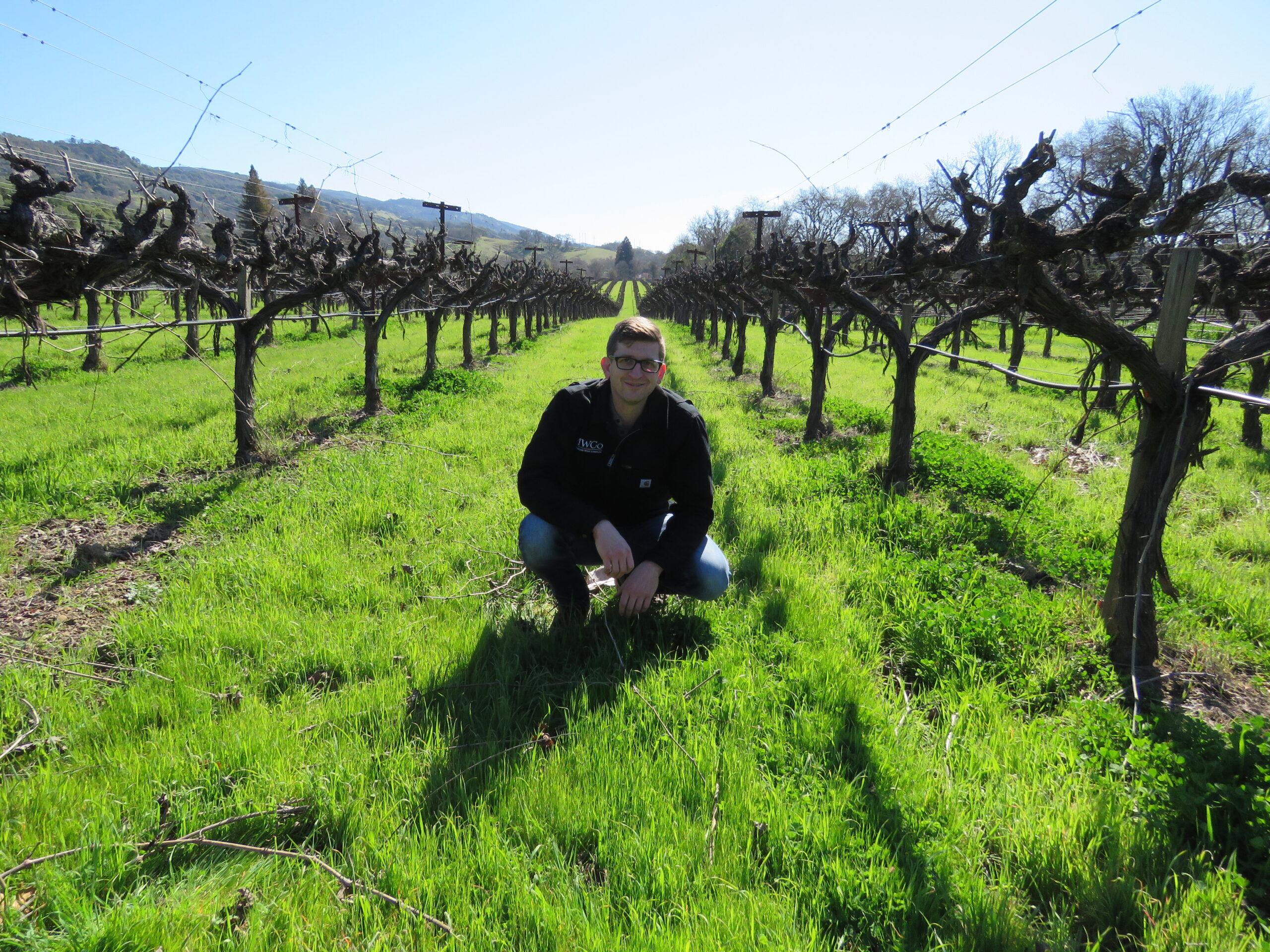
Chase Thornhill, Owner and General Manager, oversees soil health on the farm—anything that’s not directly connected to the vine. While it’s a whole different ball game farming row crops versus grape vines, Chase says he’s learned a lot about soil health by talking to other farmers. “This movement relies on farmers sharing information and people paying attention to what farmers are doing across crops, across the world. That is where this gets exciting and it has inspired us to go as far as we can with it.”

Traditionally, they would cover crop with a plow down in every other row. Another vineyard on the property might be no-till, but they wouldn’t plant anything there. Whatever vegetation was there would be mowed. These tillage methods were combined with some use of compost.

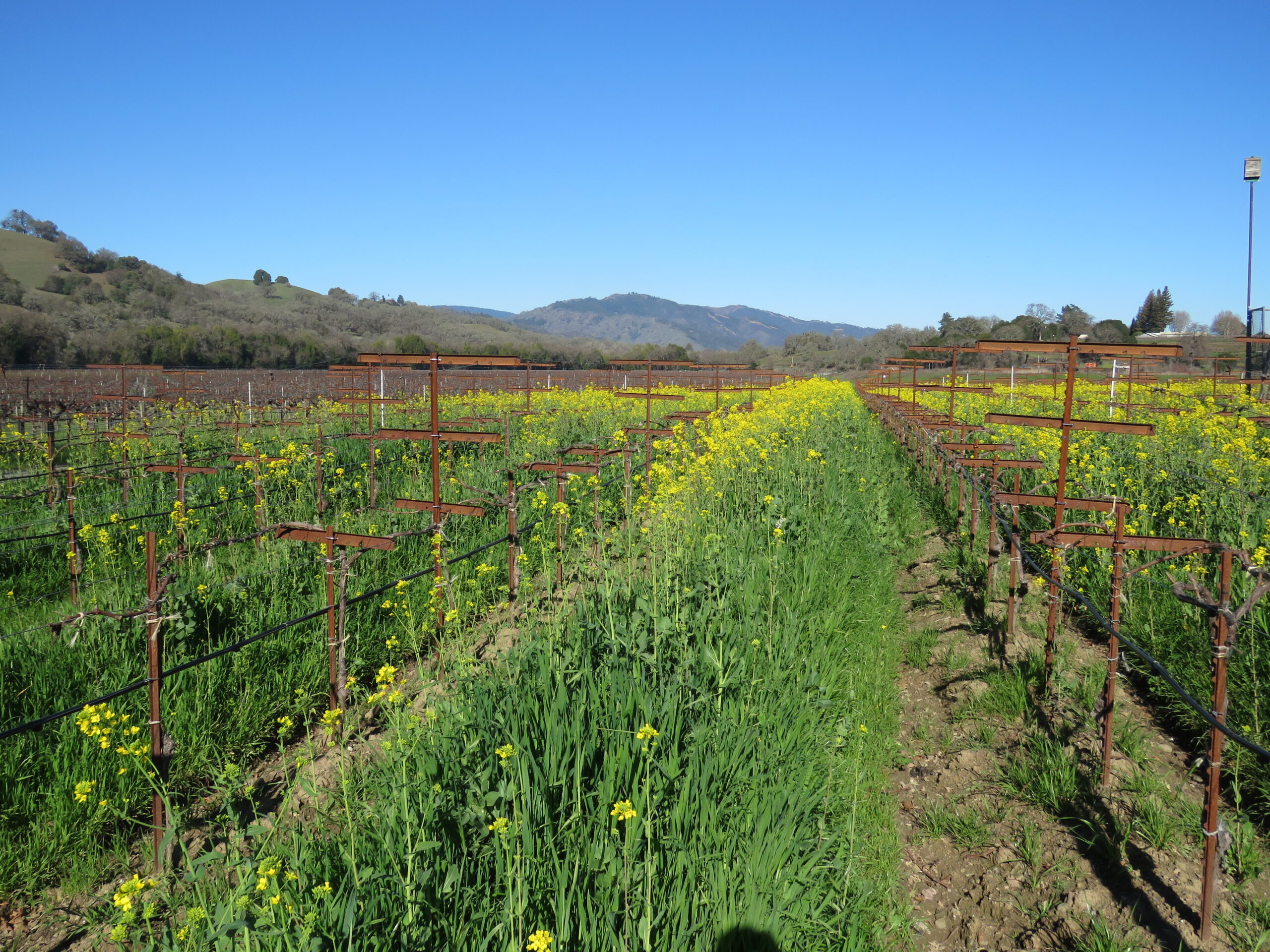
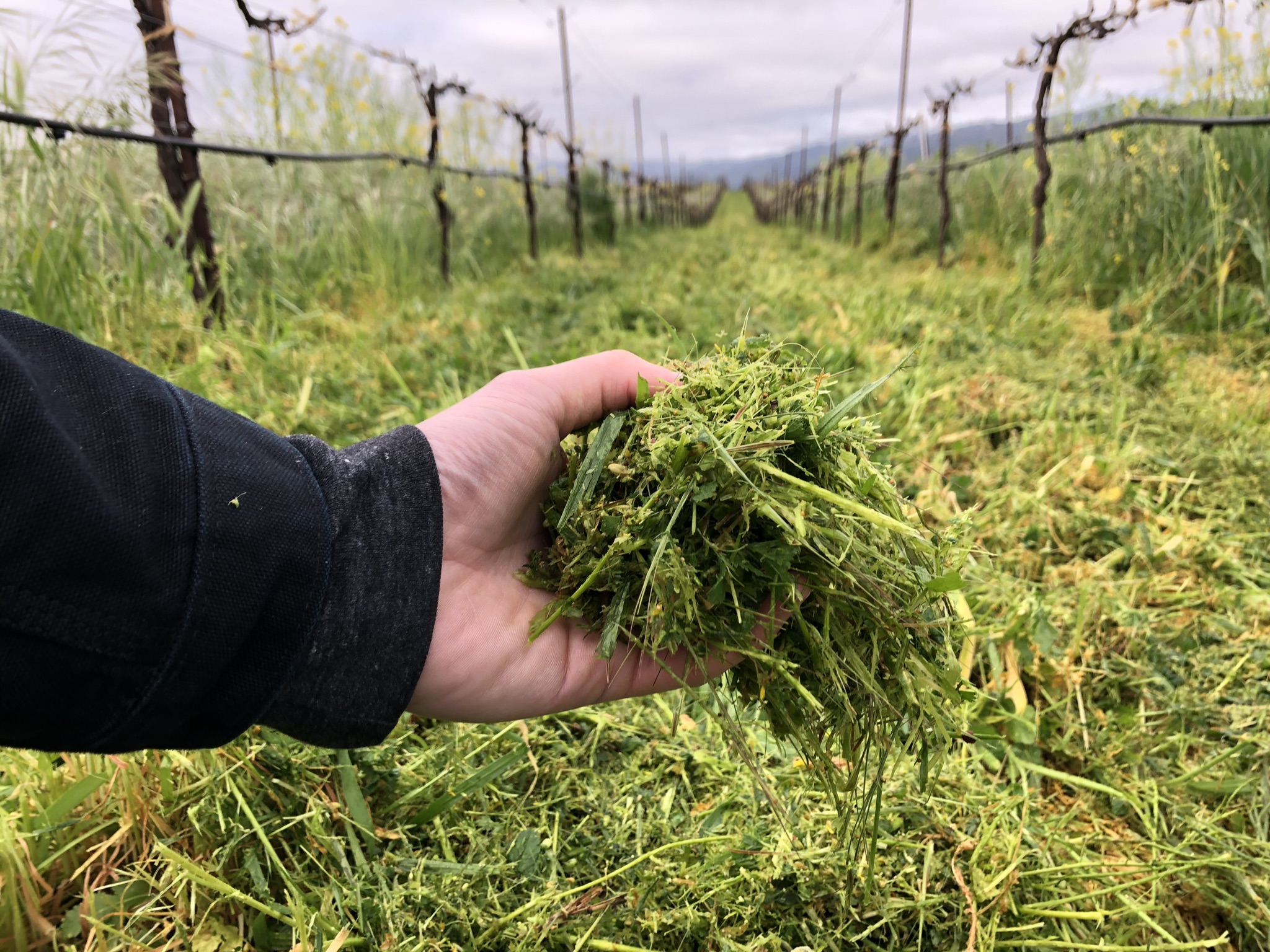
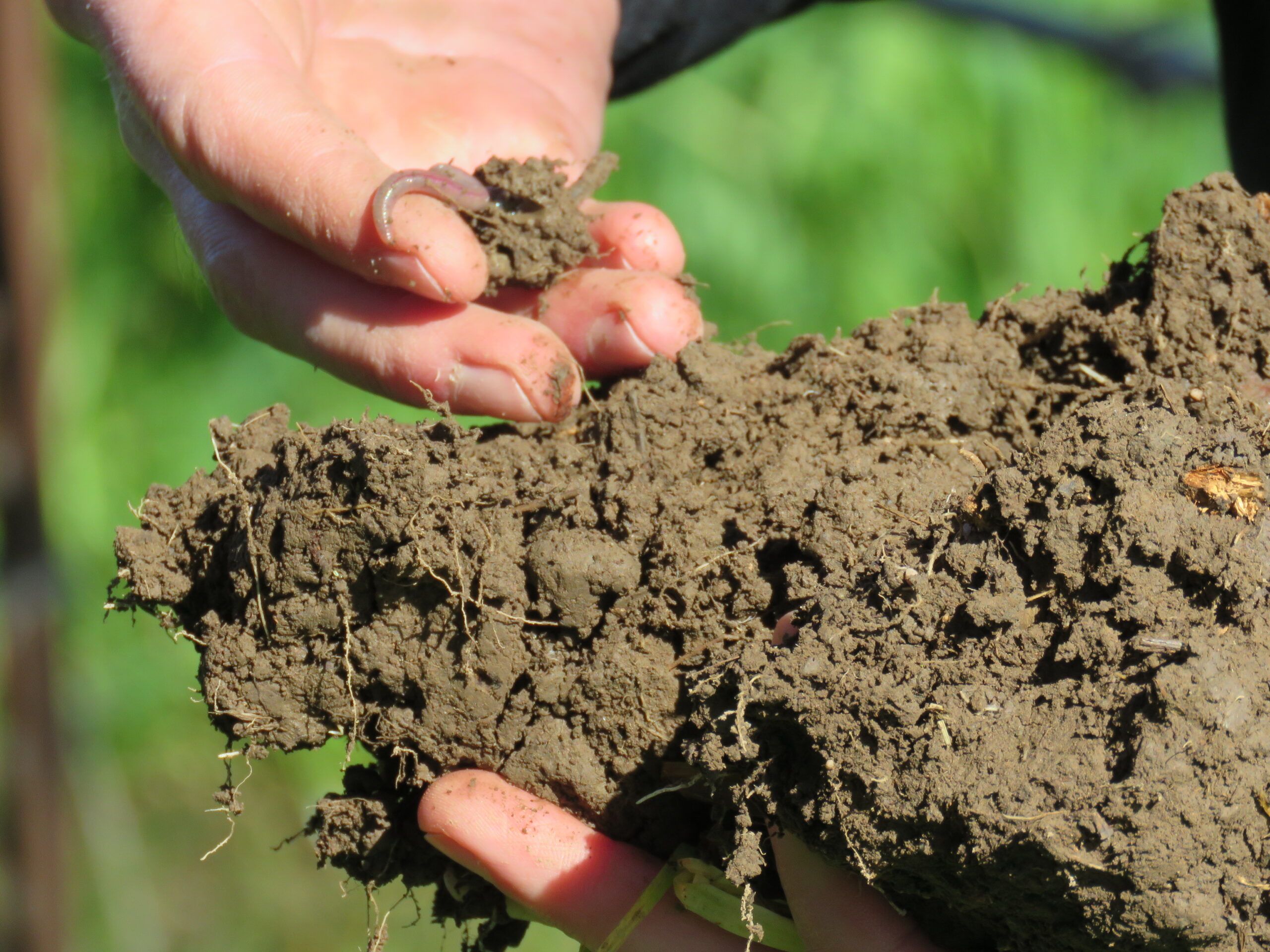
Composting is difficult in a vineyard though says Chase because it requires very narrow equipment, lots of trips, labor hours, and diesel. That’s why he’s putting more of the focus on getting nutrients through cover cropping and no-till by cover cropping every row every year. “If we want to build up the organic material and carbon, and we know that tilling dramatically reduces both of those things very quickly, then we really need to be looking at eliminating it.”

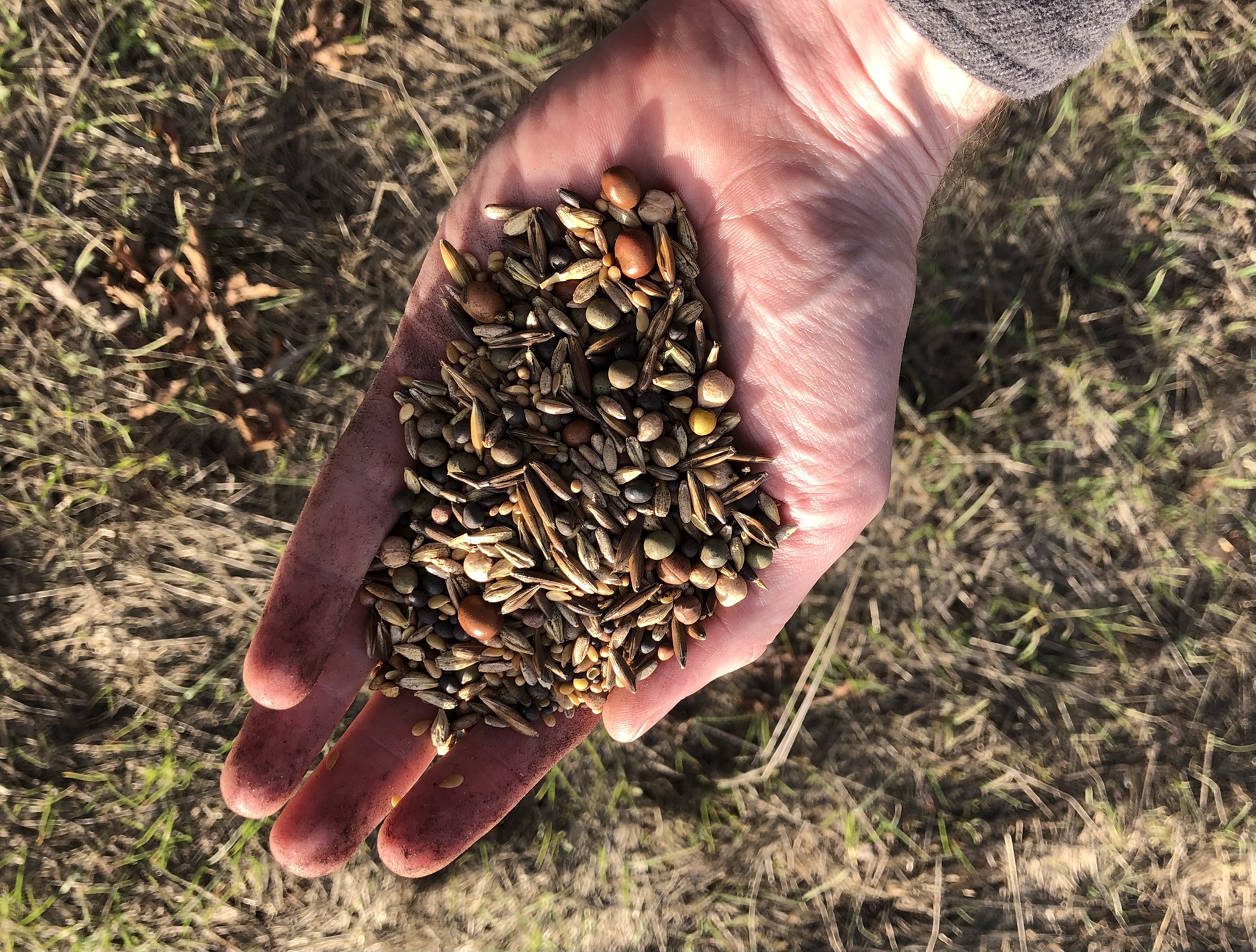
This year, they used a no-till drill on both properties, on all rows, planting a 12 species annual cover crop mix of legumes, grasses, brassicas, and some broad leaf. They’ve also been experimenting with flax.

The property, which was formed by flood plains, extends a mile a and a half along the Russian River. Chase says it’s been interesting to see how the different cover crops have responded in each area. “You could go block by block and swear we planted different mixes. But it is the same mix, and it is all responding differently. Some areas might be just the legumes, some just the grasses and brassicas, and some everything—which is ideal. The fields are self-regulating to the plants that grow well and give them what they need.”

The goal is to keep growing their own nitrogen by adhering to the four soil health principles as stated by the National Resources Conservation Service (NRCS): keep the ground covered, minimize disturbance, use plant diversity, and always have something green growing. Chase thinks vineyards offer a good opportunity for farmers to maximize the use of cover crops because so much of the infrastructure is already there and doesn’t move, and the vines grow at roughly the same time every year. “If we can use summer cover crops and grow 5,000 lbs/acre through the summer plus the 4-5,000 lbs. we grew through the winter, that’s where it starts to get really interesting.”

“The fun thing about a vineyard is that it’s a perennial deciduous crop. It’s only growing through this one period,” says Chase. “If we think about it like a relay race, the vines are going to hold the baton from bud break through leaf fall. Then, we can have the cover crop take that baton all the way through the winter and explode about a month or two before bud break. There is always going be this other part of the season where you can be maximizing the photosynthesis while the vines are dormant.”

The cover crop is typically terminated by mowing. “Occasionally, we have to apply some tillage but we try to minimize it,” explains Chase. “This year, we’re going to experiment with growing summer covers in the tractor row after we shape the field. A month after we mow the fall planted cover crop, we’ll do a light discing pass and go right back into a summer cover crop including sorghum sudangrass, safflower, sunflower, cow peas, and buckwheat.”

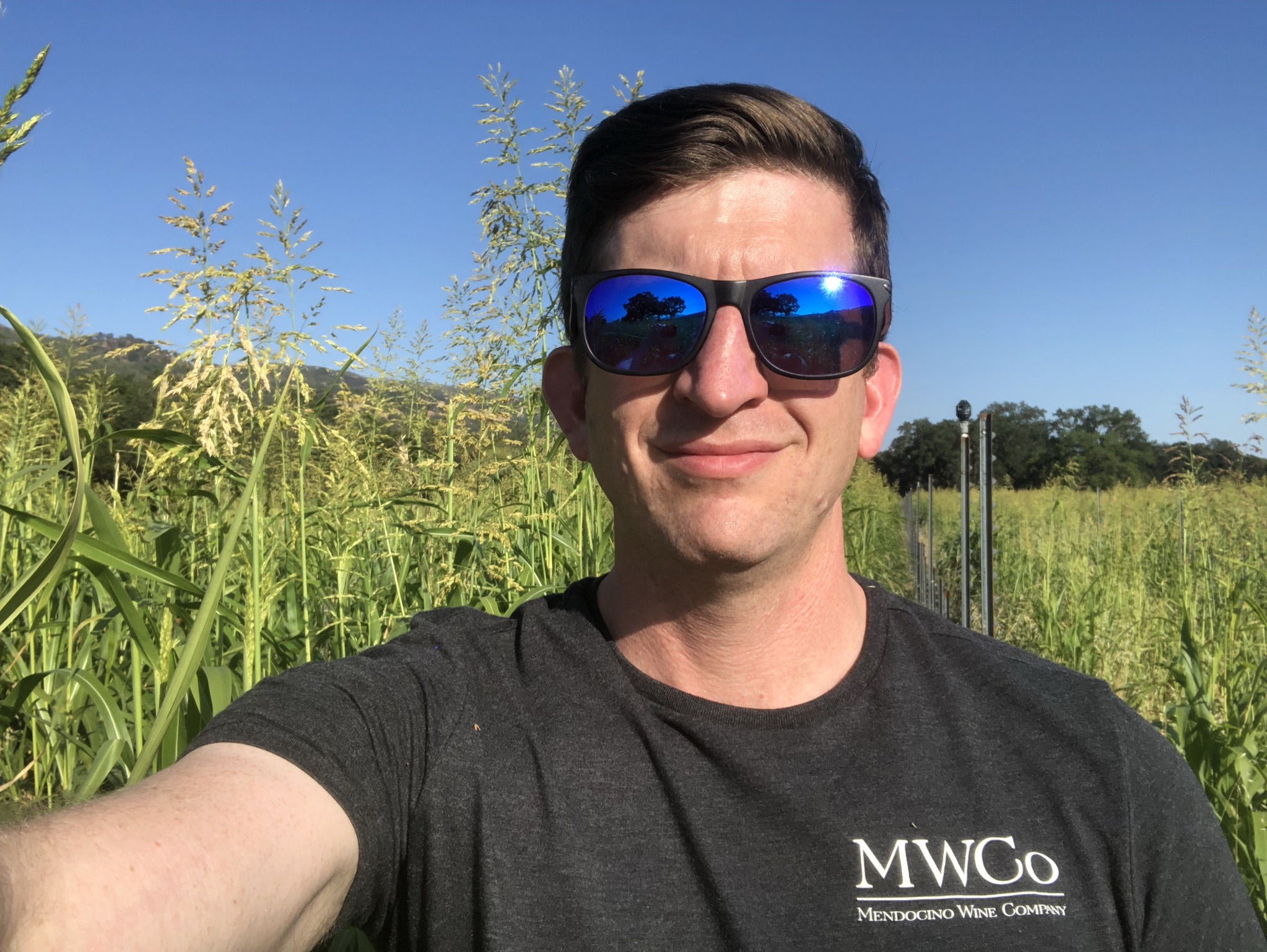
He doesn’t expect those crops to do much in the summer, except for the sorghum sudangrass, which is very water efficient. “We’ve had fields where the sorghum sudangrass has grown overhead with basically no water because these plants are so drought-tolerant. It’s going to add a lot more carbon to our fields.”

Like most farmers, Chase is thinking about disruptions related to climate change. “Evaporative demand has hit unprecedented levels, the highest ever recorded was last year. On the one hand we have this drought, so we don’t have enough precipitation. On the other hand, we’ve got this very high evaporative demand from wind, low humidity, and high temperatures.” In July, when it’s over 100 degrees and the afternoon winds pick up, he says it’s like standing in front of a hair dryer.

Planting a cover that can sustain the summer and keep the field green will lower the field temperature. “There’s a risk and concern that it is going to cause too much competition for the vines but I’m very hopeful that the benefit we will get from adding all that biomass to the field will outweigh the competition we experience.” And, while it remains to be seen whether it will reduce the need for water, Chase is expecting good results.

Chase says last year was a terrible year in general for the region, which made it a great year to be all in on the new practices because they weren’t any worse off than anybody else. “I’m really hopeful that as we move on, we’ll see the type of resilience that organic farmers see with other crops, so when we do have serious climatic events like we did last year, we won’t see massive yield reduction because we’ll have a more resilient system.”

Everything is on drip irrigation. Overheads are used in the vineyards only for frost protection. They have ponds on both properties for storing water from winter rains, using that water to run through the drip irrigation in the hot summer months. All gray water is processed onsite through a low-energy natural system that includes settling tanks, trickle towers, and man-made wetlands. Chase’s uncle, Tim Thornhill, designed the system more than a decade ago, describing it as a living green dialysis machine that cleans the water and puts it put into one of the irrigation ponds where it can be used the following season for drip irrigation.

They process 5,000-7,000 tons of grapes every year and all of the skins, seeds, and stems stay on the farm. “So, we’re carbon amending directly from the processing facilities into the vineyards. That material never leaves the property again except as wine.”

Support from NRCS & a Wish List

Participating in the Environmental Quality Incentives Program (EQIP) from NRCS provides support for cover cropping all rows every year. “There’s no question that the EQIP program, in providing financial assistance, is a huge help in getting over the hump of not doing these things. Plus, it got us committed to it.”

Chase adds that working with the local NRCS office is extremely easy. “Everyone has been super responsive and it has been a very easy program to get involved with. There are many other things I’d like to do with the property around conservation, so we’d like to participate in other programs as it makes sense.”

One example is composting. “Compost is wonderful if you have it and you have the ability to spread it. Having help from NRCS for composting, cover cropping and residue and tillage management is really helpful.”

Chase’s wish list as he works toward achieving the goal of soil health and being an organic system? “I’d like to see innovation in under vine vegetation control, something that’s faster and cheaper to move through the field, uses less diesel, and less labor. If we were going to be conventional, we would manage weeds and growth under the vines with glyphosate. What we are doing now works but it is much more expensive. To be an organic grower probably costs 20% more per acre than a conventional grape grower. A lot of that is from the ground cover management. It’s not even planting or moving the cover crop, it’s the under-vine growth.”

“The mowing equipment needs to be more like hay mowing equipment that’s compact enough to work in a vineyard. That equipment is designed to cut fast and it leaves the material more intact. Whereas, if you go through with a flail or rotary mover, you’re going to chop it all up and that material is going to start decomposing faster, volatizing the nitrogen faster. If it was more intact, we’d be able to achieve the lasting residue “soil armor” principle a little more effectively. You might say, why not just roller crimp? But it’s very difficult in a vineyard because you’re dealing with an area that’s not flat and is only five feet wide. There’s so much undulation to it that makes it really hard to terminate. Another challenge is that we’re trying to terminate before the reproduction stage.”

The alternative is to not have anything growing under the vine, but that’s where the irrigation is. Sub-surface irrigation in the vine row is would work because vine roots extend far enough to get that water. However, there are other challenges and Chase says they don’t yet have the right tools to make it work.

Lastly, Chase says some very simple documentation on how to use conservation techniques like cover cropping—in the context of a vineyard—would help folks understand how to convert to an organic system. “My experience level has been a double-edged sword. On the one hand, I haven’t been doing this long enough to make these decisions; on the other hand, I don’t know any better. We’ve done it the other way for so long and change requires a lot of knowledge and communication. Resources like Sustainable Agriculture Research and Education (SARE) and NRCS have been very helpful.”

In closing, Chase says farming organically is important because it’s doing things the way nature does. “There’s so much opportunity for us to do harm to the soil ecosystem with what we add to it, so I feel the most comfortable adding just what nature would have added. I know that farming is inherently extractive and exploitive of the land and if we weren’t there the land would be healthier. So, if we are going to be there, I want to work to fit into that system in the least destructive way we can—and that is being organic and regenerative.”

By |2022-08-24T16:30:35-04:00June 29th, 2022|Farmer Stories, News|

OFRF’s Thelma Vélez to Speak to House Agriculture Committee on Agricultural Resiliency, Climate Research

FOR IMMEDIATE RELEASE

(June 14, 2022) — Organic Farming Research Foundation (OFRF) Research & Education Program Manager Thelma Vélez, PhD, will testify before the full House Agriculture Committee hearing on “The Role of Climate Research in Supporting Agricultural Resiliency.” Vélez was invited to share her expertise and will be summarizing research findings that demonstrate the potential for organic systems to mitigate climate change and build resilience. She will also recommend more investment in organic research, education, and extension to support American farmers and ranchers in implementing the best practices for climate mitigation and adaptation. The hearing is scheduled for Wednesday, June 15, 2022 at 10:00 AM ET, and will be live streamed on the House Ag Democrats YouTube channel.

Vélez has over 15 years of interdisciplinary agriculture and food systems research experience. She will speak on behalf of Organic Farming Research Foundation, a national nonprofit that works closely with researchers, organic farmers, and policy makers across the U.S. to understand the challenges farmers face, and to provide the research and education tools needed to help them thrive.

OFRF recently published its 2022 National Organic Research Agenda (NORA), a 230-page report compiling survey results and listening session data from over 1,000 certified organic producers. Over half of these farmers were concerned with adapting to climate change and nearly 90% of NORA participants implemented regenerative soil health management such as cover cropping, a climate-friendly practice.

“Less than 1% of the USDA’s annual research budget is spent on organic production topics, which is not aligned with the organic sector’s continually growing market share of 6%,” says Vélez. “While the organic method has been shown to have great potential to contribute to both climate mitigation and climate resilience, much more action-oriented research is needed to make widespread adoption possible.”

###

Organic Farming Research Foundation
The Organic Farming Research Foundation (OFRF) is a non-profit foundation that works to foster the improvement and widespread adoption of organic farming systems. OFRF cultivates organic research, education, and federal policies that bring more farmers and acreage into organic production. Project results are shared freely at ofrf.org. OFRF also provides free access to all of its educational materials and resources.
https://ofrf.org

Media Contact
communications@ofrf.org

By |2023-12-12T17:10:00-05:00June 14th, 2022|News, Press Release|
Go to Top