
OSRI Act Introduced
Today, the Organic Farming Research Foundation (OFRF) is happy to deliver to the leadership of Senate Committee on Agriculture, Nutrition, & Forestry a letter in support of the Strengthening Organic Agriculture Research Act. OFRF and the undersigned believe this bill represents significant investments into answering research questions that organic producers continue to grapple with.
“We are excited to be able to work with Organic Champions in Congress to help ensure there are resources available to support the success of organic farmers and ranchers across the nation. Over the last several years OFRF has collected robust information from farmers about their research and education needs and these bills would provide much needed investment in solutions to these problems. These bills are also an important signal to early career researchers that organic agriculture research is an important, respected, and securely-funded area to engage in,” – Brise Tencer, OFRF Executive Director.
The 2018 Farm Bill was an important step towards recognizing the status of the organic agriculture industry, OREI reached mandatory funding levels. The organic agriculture market has continued to mature over the past five years of the Farm Bill, partly due to this increased investment. For this growth to continue, organic producers must be given their fair share of resources dedicated to agricultural research. This bill intends to do just that with the 2023 Farm Bill.
In the Senate, Senator Fetterman is joined by Senators Booker, Brown, Casey, Gillibrand, Welch, and Wyden to introduce the Organic Science and Research Investment Act. This legislation would increase the resilience of U.S. agriculture, create economic opportunity for producers, and result in improved ecological vitality of the landscape by:
- Creating the Coordinating and Expanding Organic Research Initiative. This initiative charges the Research, Education, and Economics agencies at USDA to catalog the current, ongoing research on organic food and agriculture topics and provide a path to increase organic agriculture research conducted and funded by the USDA.
- Directing the USDA to develop a plan to increase organically managed acreage. This plan will formulate how the Agricultural Research Service (ARS), the sole in-house research operation at USDA, will dedicate a portion of their research fields to organic agriculture research.
- Bolstering programs operated by the National Institute for Food and Agriculture (NIFA). The OSRI Act would provide stair-stepped budget increases to the Organic Research and Extension Initiative (OREI), expand the statutory priorities to include climate change, organic alternatives to prohibited substances, and Traditional Ecological Knowledge. The bill would also provide first-time Congressional authorization for the Researching the Transition to Organic Program (RTOP), currently known as the Organic Transition Research Program (ORG).
- Boosting funding for the Organic Production and Market Data Initiative (ODI). The data produced through the ODI is essential for the development of risk management products and targeted market development. The OSRI Act directs the Economic Research Service (ERS) to conduct a full, systematic evaluation of the economic impact organic agriculture has on rural and urban communities, taking into account economic, ecological, and social factors.
We at OFRF are excited about this opportunity to support the expansion of organic agriculture research, and look forward to working with our partners and collaborators to advance the OSRI Act in the Senate, and the SOAR Act in the House this Farm Bill season.
View the final OSRI Act sign-on letter here.
View our OSRI Act Toolkit, for resources on how you can help spread the word
Support for the OSRI Act
“The National Sustainable Agriculture Coalition strongly endorses the Organic Science and Research Investment Act (OSRI Act). The OSRI Act makes meaningful investments in providing organic producers with the research and tools they need to continue to improve upon already climate friendly and resilient farming systems and meet the growing market demand for organic products. In addition to increasing investments in critical organic research programs such as the Organic Agriculture Research and Education Initiative (OREI), this bill provides a structure for USDA to coordinate and expand organic agriculture research across REE agencies. This will increase the scientific research and economic data and analysis these agencies are able to provide so that both organic and conventional agricultural producers can sustain and improve their operations while helping us reach meaningful solutions for the climate crisis.” Nick Rossi, National Sustainable Agriculture Coalition
“As one of the oldest and largest organic certification agencies in the country, the Ohio Ecological Food and Farm Association applauds Senator Sherrod Brown for his leadership on the Organic Science and Research Investment Act of 2023. The increased research investments and coordination across the many USDA agencies will help farmers overcome production hurdles and implement holistic approaches to farming that result in better water management, water quality, soil health and resilience. It is critical that we focus on the development of new public plant cultivars and livestock breeds that are regionally adapted and appropriate for organic production in this time of increasing weather extremes. “ Amalie Lipstreu, OEFFA Policy Director
“The National Organic Coalition is thrilled to see the introduction of the Organic Science and Research Investment Act, and we appreciate the work of Senators Fetterman, Booker, Brown, Casey, Gillibrand, Welch, and Wyden to champion this bill. Research is key to tackling the many challenges farmers face and organic research benefits all farmers. In fact, many of the farming practices embraced by organic farmers, such as cover cropping and other regenerative agricultural practices, are now being adopted across the board to protect soil health and natural resources.” Abby Youngblood, National Organic Coalition
“The Northeast Organic Dairy Producer Alliance supports all the requests in the OSRI Act as a very necessary stage in the growth and stability of organic agriculture. Farmers need accurate data in establishing risk management, deciding to transition to organic and establishing a sustainable business plan. This is not available to the majority of organic commodities and presents difficulties in establishing safety net programs, disaster programs and incentives for transitioning to organic production.” Ed Maltby, Northeast Organic Dairy Producers Alliance
“By investing in organic research, adding climate mitigation/resilience to legislative goals of OREI, and fully recognizing the contributions of Traditional Ecological Knowledge to climate solutions, the OSRI Act will go far toward building an equitable, resilient, and climate-friendly agriculture and food system.” Mark Schonbeck, Virginia Association for Biological Farming
“The Women, Food and Agriculture Network (WFAN) recognizes the critical need for organic research for the responsible co-creation of just and ecological food and agriculture systems. The passage of the OSRI Act will provide vital funding to support this research.” Juliann Salinas, Women, Food and Agriculture Network
“This program has not only been a benefit to our faculty in staff working on organic agriculture, but has supported the transition of a lot of our partnering farms in the southeast.” Crystal James, Tuskegee University
“While organic agriculture makes up more than 6% of the food sales market, ARS and NIFA devote less than 2% of their research dollars to organic research. The policies in the OSRI Act signal to researchers that organic agriculture research is valued.” Jaydee Hanson, Center for Food Safety
“As a leader in organic rice and rice products, we are supportive of these efforts to grow and nurture the organic farming industry. We applaud the Senate’s leadership here and urge the body to adopt this legislation.” Natalie Carter, Lundberg Family Farms
“Continued funding and increased funding is necessary for equitable research for organic agriculture practices, materials, outreach and leading in promoting climate smart agricultural practices.” John McKeon, Taylor Family Farms

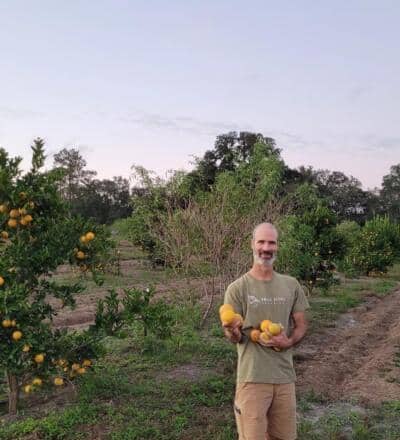
 When John Bitter and his wife Amy started Frog Song Organics on 5 acres in 2011, a vision of how to carefully scale-up the farm was long in the works. They both had several years’ experience working with farms in the area, and each knew nearby markets well enough to know they had opportunities to grow. Looking ahead, they had also spoken with the owner of neighboring land about leasing additional acreage in the future.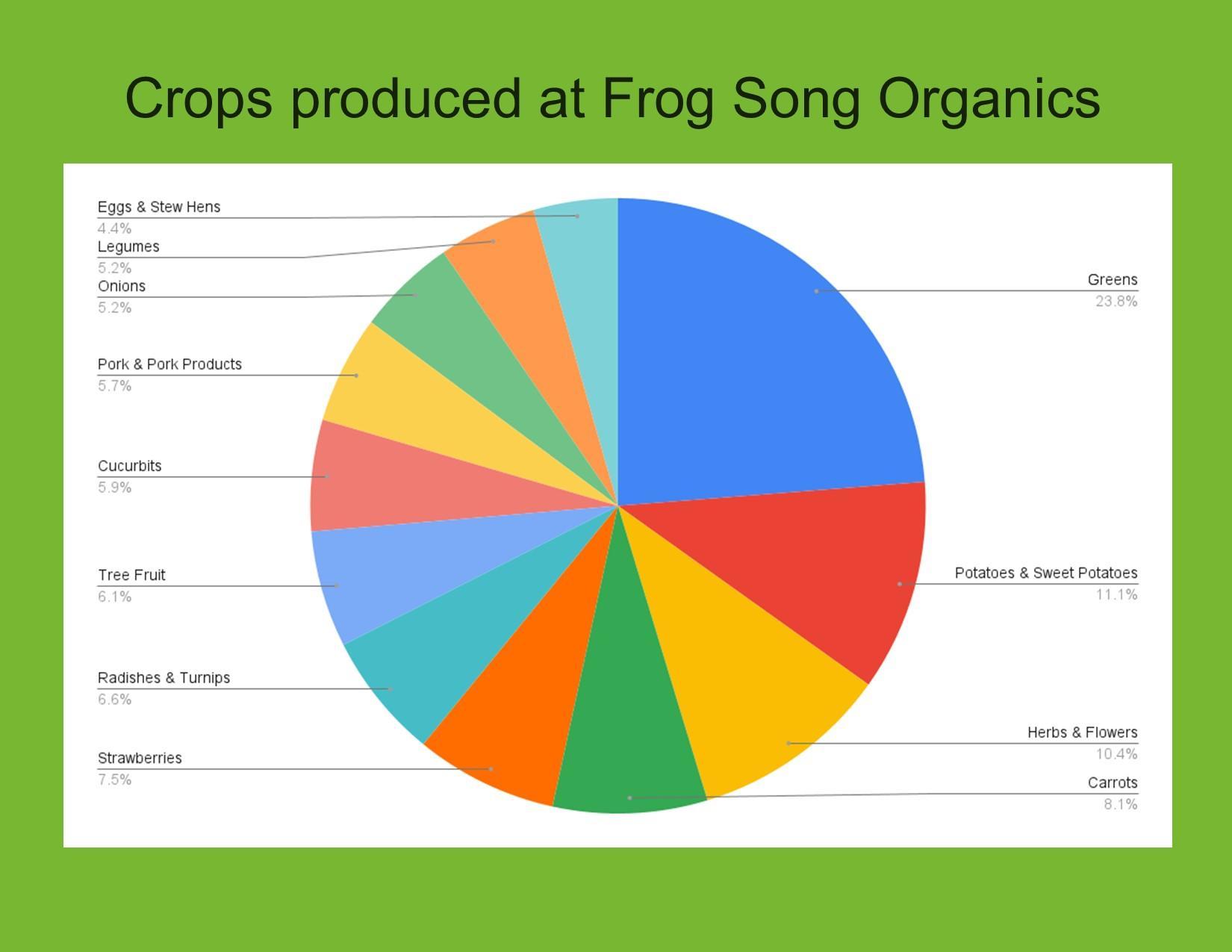
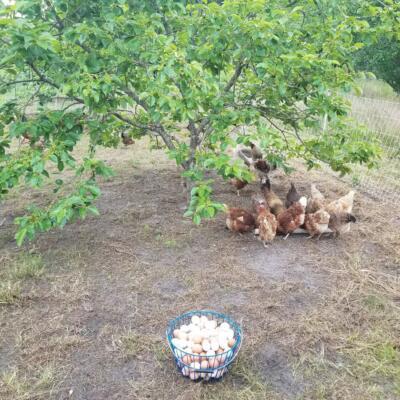

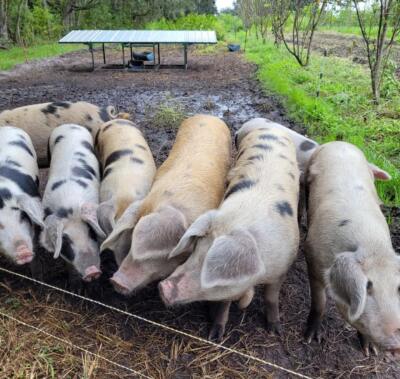
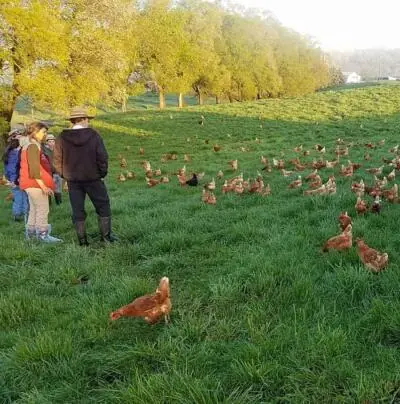
 Hidden Hollow Farm has also seen improvements in soil health since integrating the livestock onto the cropping ground. “Soil organic matter has increased faster than any other model of farming that I know of,” Arlen said. “The soil health really hums.” As the cows leave patties on the fields, dung beetles burrow into the ground and distribute that manure, transporting nutrients down into the soil. Earthworm activity also increases the soil biology, and the pathways left behind by the dung beetles and the earthworms aid in water infiltration and retention.
 Mike runs and operates Shady Side Farm in Holland, Michigan. Along with help from his wife, Lona, their adult children, and Mike’s parents he farms on 150 contiguous acres, and an additional 20 acres that they rent nearby. He was one of the
  Mike has found that he learns a lot from observing the animals. “We ran sheep for a number of years,” he said. “And then all of a sudden we ran into an issue with parasites in the sheep.” There was a patch of milkweed in the pasture [a host plant for monarch caterpillars], and Mike noticed that when the sheep got to that spot they were stripping the plants of their leaves. “I had to ask the question,” Mike continued, “why were they doing that? Come to find out it was a way that they were paying attention to their bodies, and their bodies needed some way to have parasite control.” Milkweed contains a toxoid that can take out or reduce the parasite load in grazers and Mike realized that was the reason the sheep were so aggressively grazing the milkweed. “So I started looking at where I could find those same things in some planting mixes I could use for the lambs to graze on,” Mike said.
 place, and then you don’t implement it for a number of years. It takes time to settle into the brain.”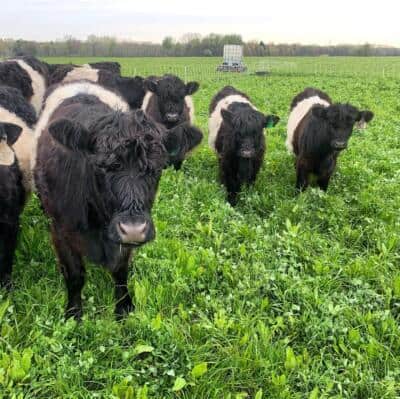
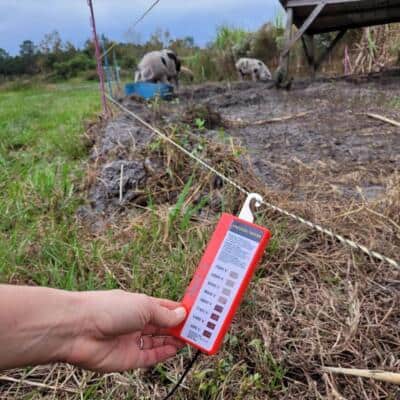
 With 20 acres in contiguous square blocks this gives Mike a perimeter fence that he can run electricity through. “We’ve got divider fences that can be hooked up with spring gates or string gates,” he said. “We can transfer power from the perimeter fence into an interior divide.” They use a variety of fencing for the cattle, sheep and lambs. The paddock systems get set up and moved on a daily basis throughout the summer, so that the animals are constantly moving around the farm.

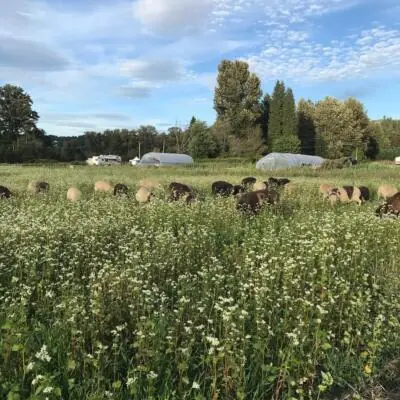 In answer to the question “which came first, the animals or the plants,” Emily said for her it was the animals. Local Color Farm and Fiber started out as a side project for Emily while she was working for another farm in the area. An acquaintance was getting rid of a small flock of Finn sheep, and Emily decided to take them on to graze at a neighboring property for fiber and meat production. She also began growing natural dye plants for dying the wool from the sheep, which gave way to her farm’s name. Now the sheep are integrated into her own farm business.
 In the five years that Emily has been farming on that site, she says she’s noticed a lot of benefits that she attributes to the integrated systems. “The organic matter has doubled in the time we’ve been here,” Emily said. Soil organic matter (SOM) content is a factor many farmers use to gauge overall soil health, as increases in SOM mean increases in the ability of soils to hold and deliver water and nutrients to crops. The higher the SOM the better. In Emily’s experience that increase has been significant. “Washington has a Mediterranean climate, very dry in summer,” she explained. “With increased organic matter we’ve had to irrigate less than we used to. Being able to intentionally integrate so many cover crops that are managed by grazing has been really helpful. The on-farm generated fertility is actually really amazing.”

 These facts are precisely why we are so enthusiastic about the organic leaders and champions we have in Congress. In the House, OFRF has been collaborating with Representatives Newhouse (WA-04), Panetta (CA-19), and Pingree (ME-01) to introduce the Strengthening Organic Agriculture Research Act (SOAR Act). Meanwhile, in the Senate, we have been working with supportive allies to develop a companion bill, and we will share more details in the upcoming weeks! We are offering various avenues for involvement to support these crucial pieces of legislation, including toolkits with templates for outreach and social media, explanations of the bills’ provisions, opportunities to share personal stories related to research, and more! If you wish to contribute to these efforts, please feel free to contact me at any time: