
Conservation Stewardship Program (CSP)
Farmers across the U.S. are eligible for significant technical and financial assistance from the Natural Resources Conservation Service (NRCS).
Versión en español a continuación.
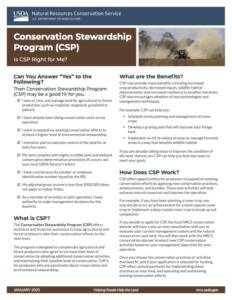
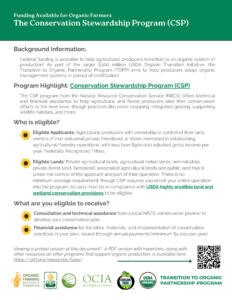
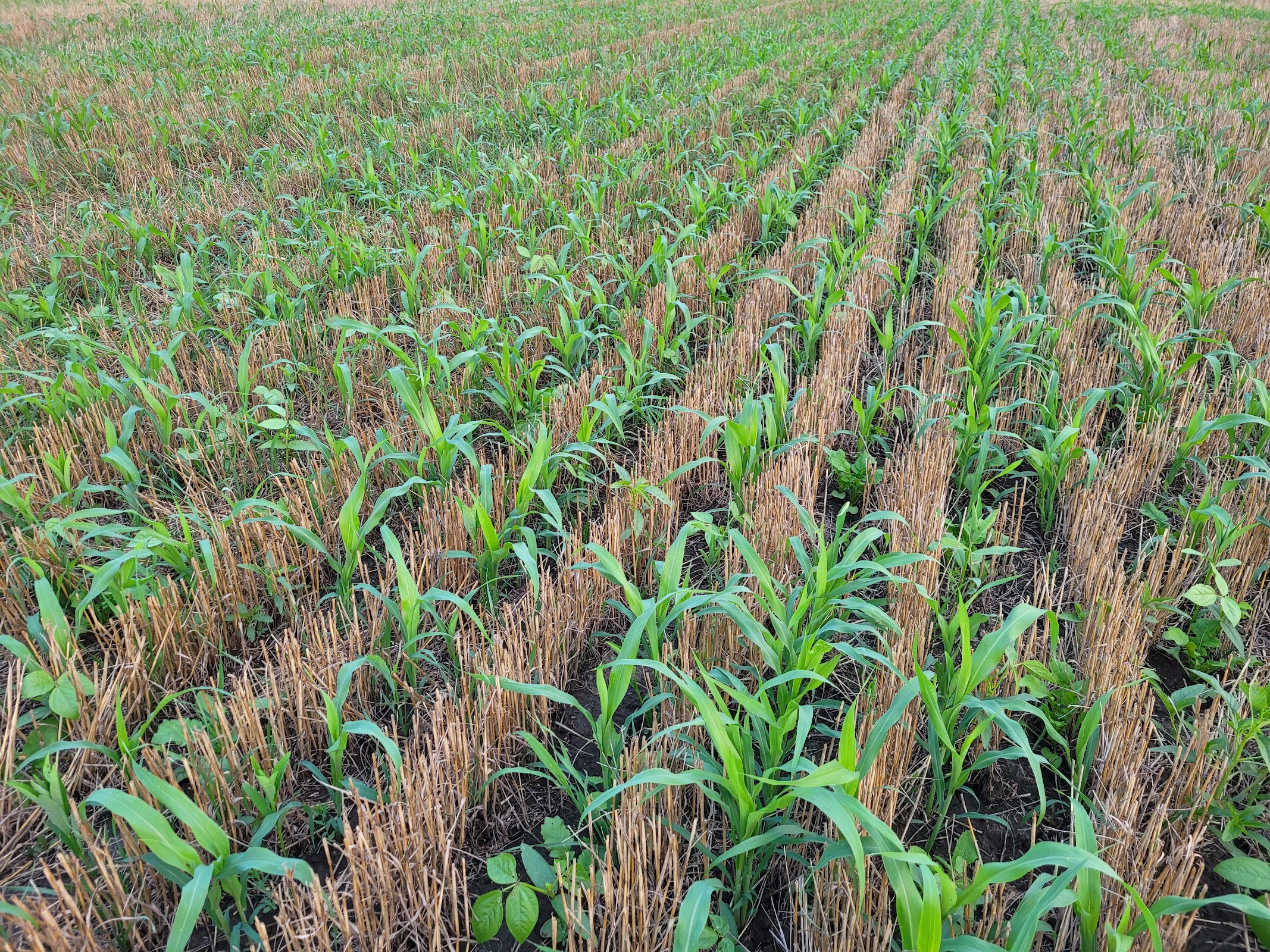
If you are engaging in environmental stewardship and conservation efforts on your farm, the Conservation Stewardship Program (CSP) can help support your progress. CSP compensates agricultural producers who agree to increase conservation on their farm by adopting additional conservation activities or improving upon existing practices. With technical assistance from a conservation planner, farmers will work to increase conservation through practices best suited to their operation, like cover cropping, integrated grazing, or building wildlife habitats.
Obtain additional translated materials, or schedule interpretation services for phone calls or in-person visits, at farmers.gov/translations, or request personalized Spanish language support for any USDA resource, at farmers.gov/translations#spanish-request.
Important Points:
- CSP provides annual payments for farmers, with the annual minimum being $4,000, for a 5-year contract for installing, maintaining, and improving existing conservation on a farm.
- CSP payments are reported to the IRS and should be treated as taxable income.
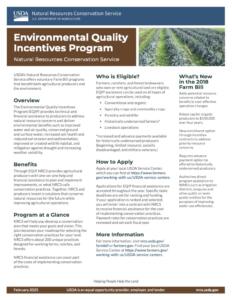
- Unlike the Environmental Quality Incentives Program (EQIP), there are no minimum acreage requirements, but the program requires whole-farm enrollment. The applicant’s farm must be in existing production; the program generally will not support land being cleared or prepared for future production.
- Contacting your local NRCS office is a key step in determining your eligibility and beginning your application process.
- Applications are accepted on a rolling basis and will be reviewed on the next ranking date for your state. Begin your application process as soon as possible to ensure completion by the next deadline! Applications are prioritized by local resource concerns and the applicant’s level of need.
- The 2026 batching deadline was January 15, 2026, for all states.
- You will need to create a free online account at Farmers.gov and ensure that it is up to date.
- If you do not own your land, you will need to submit written permission from the owner with your application.
- New this year: the Regenerative Agriculture Initiative may be an opportunity for organic and transitioning-to-organic producers to leverage their operational status for qualifying for contracts.
Step 1. Research Your Options.
CSP offers support for a broad scope of conservation activities and projects to producers, including both financial and technical support. CSP contracts last 5 years, with the option for renewal. Read up on the program to determine your eligibility and brainstorm how you already are, or would like to, increase conservation on your farm. For some possible project inspiration, check out NCRS’s Conservation at Work video series.

Step 2. Connect with USDA.
Create or update your account at Farmers.gov, and contact your local NRCS office to get started. Your conservation specialist will confirm your eligibility and help you determine your farm’s current stewardship thresholds. A stewardship threshold is NRCS’s benchmark for whether a CSP applicant is meeting or exceeding the level of conservation for a specific natural resource concern. To qualify, applicants must meet the threshold for at least two priority resource concerns across all land uses in their operation and commit to meeting or exceeding at least one additional concern by the end of their contract.
Guiding questions for initial contact with NRCS:
- “I’m interested in _conservation project(s) of interest_. What do you need from me to get started on my application?”
- “What additional funding opportunities are available to my farm?”
- “When is the deadline for the next CSP ranking period?”
- “I _(own/rent)_ my land. What documents will you need for completion of my CSP application by the deadline?”
- “My farm is _certified/transitioning_ to organic. What additional will you need for completion of my conservation plan and application by the deadline?”
Step 3. Gather your application documents.
You’ll need your:
- Official tax ID (Social Security Number or Employer Identification Number)
- Adjusted gross income certification (Form CCC-941), which requires your Taxpayer ID Number and AGI from the previous 3 tax years.
- Deed, or property lease agreement, and written authorization from the landowner to install structural or vegetative practices.
- A map showing all land uses and acres in the operation, and a map or other documentation identifying any known ineligible land and associated acreage amounts (NRCS staff will help you obtain this information if you don’t already have it).
- Farm tract number (obtained from Farmers.gov or FSA membership).
- Documentation of organic certification (if applicable).
- Documentation of your land’s irrigation history (if applicable to project).
Step 4. Complete your application & submit!
Your NRCS conservation specialist will complete and submit your application form (CPA 1200) based on your established conservation plan.
Step 5. Implement your plan.
If your application is selected, NRCS will offer a contract outlining the approved conservation activities, payment rates, and other terms. CSP contracts last five years and begin only after both the farmer and NRCS sign the agreement. NRCS provides technical assistance, verifies completion of contract activities, and issues annual payments after October 1 each year.
Apply for CSP now to take conservation efforts on your farm to the next level!
All of this information is summarized in a printable, downloadable PDF below in English and Spanish.
Los agricultores de todo Estados Unidos son elegibles para recibir asistencia técnica y financiera del Servicio de Conservación de Recursos Naturales (NRCS).
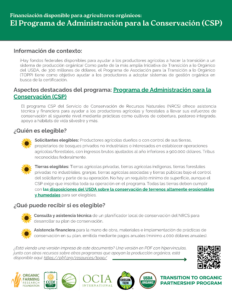
Si usted participa en esfuerzos de gestión ambiental y conservación en su granja, El Programa de Administración para la Conservación (CSP) puede ayudarle a apoyar su progreso. El CSP compensa a los productores agrícolas que aceptan aumentar la conservación en su granja adoptando actividades adicionales de conservación o mejorando prácticas existentes. Con la asistencia técnica de un planificador de conservación, los agricultores trabajarán para aumentar la conservación mediante prácticas más adecuadas a su explotación, como la construcción de cultivos de cobertura, el pastoreo integrado o la construcción de hábitats para la vida silvestre.
Obtenga materiales traducidos adicionales, programa servicios de interpretación para llamadas telefónicas o visitas presenciales, en farmers.gov/translations, o solicite apoyo personalizado en español para cualquier recurso del USDA, en farmers.gov/translations#spanish-request.
Puntos importantes:
- CSP da pagos anuales a los agricultores, con un mínimo anual de 4.000 dólares, por un contrato de 5 años por instalar, mantener y mejorar la conservación existente en la granja.
- Los pagos del CSP se reportan al IRS y deben considerarse ingreso sujeto a impuestos.
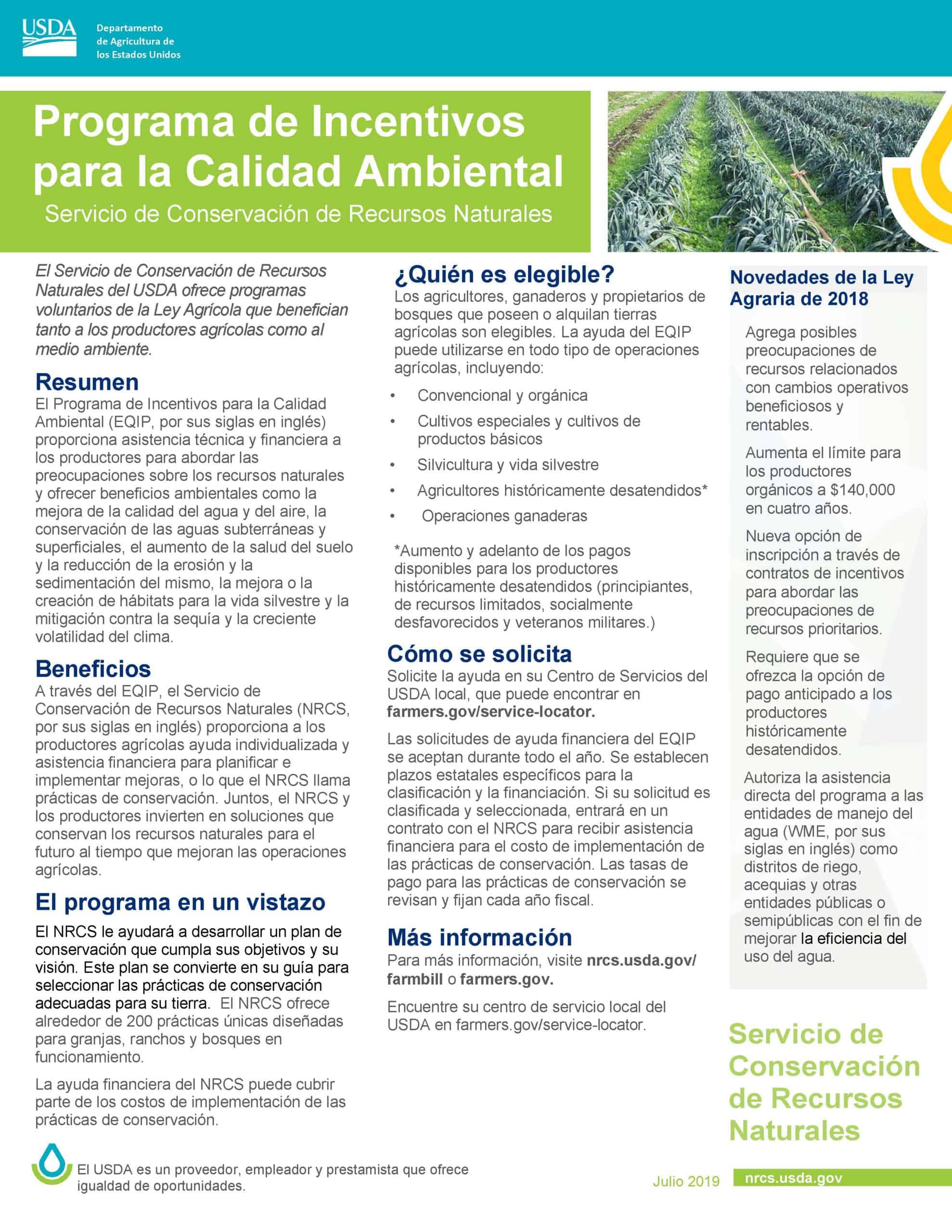
- A diferencia del Programa de Incentivos para la Calidad Ambiental (EQIP), no existen requisitos mínimos de superficie, pero el programa exige la inscripción de toda la granja. La granja del solicitante debe estar en producción existente; El programa generalmente no apoya la limpieza o preparación de terrenos para futuras producciones.
- Contactar con la oficina local del NRCS es un paso clave para determinar su elegibilidad y comenzar el proceso de solicitud.
- Las solicitudes se aceptan de forma continua y se revisarán en la siguiente fecha de clasificación para su estado. ¡Comience su proceso de solicitud lo antes posible para asegurarse de finalizar antes de la próxima fecha límite! Las solicitudes se priorizan según los recursos locales y el nivel de necesidad del solicitante.
- La fecha límite para 2026 fue el 15 de enero de 2026 para todos los estados.
- Tendrá que crear una cuenta online gratuita en Farmers.gov y asegurarse de que está actualizada.
- Si no es propietario de su terreno, tendrá que presentar un permiso por escrito del propietario con su solicitud.
- Novedad de este año: la Iniciativa de Agricultura Regenerativa podría ser una oportunidad para que los productores orgánicos y en transición a orgánicos aprovechen su estatus operativo para calificar para contratos.
Paso 1. Investigue sus opciones.
El CSP ofrece apoyo para un amplio alcance de actividades y proyectos de conservación a los productores, incluyendo apoyo financiero y técnico. Los contratos CSP duran 5 años, con opción de renovación. Infórmese sobre el programa para determinar su elegibilidad y haga una lluvia de ideas sobre cómo ya está, o le gustaría, aumentar la conservación en su granja. Para alguna posible inspiración en proyectos, revise la serie de videos sobre Conservación en el Trabajo de NCRS.
Paso 2. Contacte con USDA.
Cree o actualice su cuenta en Farmers.gov y contacte con la oficina local del NRCS para empezar. Su especialista en conservación confirmará su elegibilidad y le ayudará a determinar los límites actuales de gestión de su granja. Un umbral de manejo responsable es el referente de la NRCS para determinar si un solicitante de CSP cumple o supera el nivel requerido de conservación para una inquietud específica de recursos naturales. Para calificar, los solicitantes deben cumplir el umbral para al menos dos inquietudes prioritarias de recursos naturales en todos los usos del suelo en su operación y comprometerse a cumplir o superar al menos una inquietud adicional antes de finalizar su contrato.
Preguntas orientadoras para el contacto inicial con el NRCS:
- “Me interesa el/los _proyecto(s) de conservación(es) que le interese. ¿Qué necesitan de mí para empezar con mi solicitud?”
- “¿Qué oportunidades adicionales de financiación hay disponibles para mi granja?”
- “¿Cuándo es la fecha límite para el próximo periodo de clasificación CSP?”
- “Yo _(poseo/alquilo)_ mi tierra. ¿Qué documentos necesitarán para completar mi solicitud CSP antes de la fecha límite?”
Paso 3. Reúna sus documentos de solicitud.
Necesitará su:
- Identificación fiscal oficial (Número de Seguro Social o de Identificación del Empleador)
- Certificación de ingreso bruto ajustado (Formulario CCC-941), que requiere su número de identificación de contribuyente y AGI de los 3 años fiscales anteriores.
- Escritura, o contrato de arrendamiento de propiedad, y autorización por escrito del propietario para instalar prácticas estructurales o vegetativas.
- Un mapa que muestre todos los usos del suelo y acres en la operación, y un mapa u otra documentación que identifique cualquier terreno no elegible conocido y las extensiones asociadas (el personal de NRCS le ayudará a obtener esta información si aún no la tiene).
- Número de parcela de la granja (obtenido de Farmers.gov o de la membresía FSA).
- Documentación de certificación orgánica (si procede).
- Documentación del historial de riego de su terreno (si es aplicable al proyecto).
Paso 4. ¡Complete su solicitud y envíela!
Su especialista en conservación del NRCS completará y enviará su formulario de solicitud (CPA 1200) en base a su plan de conservación establecido.
Paso 5. Implemente su plan.
Si su solicitud es seleccionada, el NRCS ofrecerá un contrato que detalle las actividades de conservación aprobadas, las tarifas de pago y otros términos. Los contratos CSP duran cinco años y solo comienzan después de que tanto el agricultor como el NRCS firmen el acuerdo. El NRCS proporciona asistencia técnica, verifica la finalización de las actividades contractuales y emite pagos anuales después del 1 de octubre de cada año.
¡Solicite CSP ahora para llevar los esfuerzos de conservación en su granja al siguiente nivel!
Toda esta información se resume en un PDF imprimible y descargable a continuación, disponible en inglés y español.


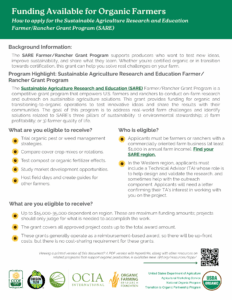
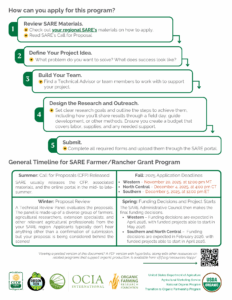
 The SARE Farmer/Rancher Grant Program is a competitive grant program that provides funding to producers who have designed their own research projects and teams. This program aims to award funding to projects that address real-world, on-farm challenges and include both research and outreach components.