
Farmer-Led Trials Program Spotlight: Mesta Meadows
The Impact of Grazing Lespedeza Pastures on Reducing Parasitic Worm Load
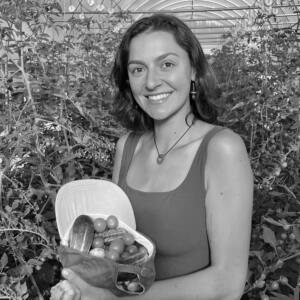
Written by Mary Hathaway, OFRF’s Research & Education Program Manager, and Ed Crowley, FLT Program participant
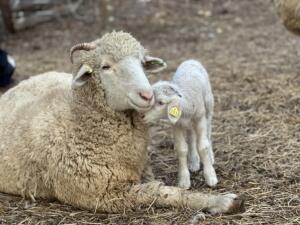
Lambing for Mesta Meadows FLT trial began in January 2026.
Tucked into the hills of the Ozarks, Mesta Meadows sprawls over 235 acres. The ranch, owned and operated by Ed Crowley, specializes in raising a variety of pasture-based livestock, including lamb, beef, pork, and poultry, along with sheep dairy production and fine wool harvesting. Ed prioritizes responsible land and animal stewardship, using practices like rotation grazing, establishment of native grasses, and providing low stress environments for all of his animals. The farm is currently in transition to organic certification.
Ed wears many hats–his off farm job is teaching entrepreneurship at Southeast Missouri State University, and his ranch hosts many micro-businesses, including an on-farm retail store, the Atelait Creamery (a premium ice cream brand manufacturing facility), and a nationally-renowned Fiber Festival on the farm. He is also Chairman of the Mayfield Entrepreneurial Center.
Using Forage Species as a Natural Deworming Agent
The ranch’s location in Glenallen, Missouri has very high humidity and usually sees more than 60 inches of rain annually. This results in lush pastures, but also increases the incidence of barber pole (Haemonchus contortus) worm load and a high lamb mortality rate after weaning. The treatment for barber pole worms is chemical drenches, however, Ed has seen increased resistance to almost all drenches for internal parasites.
Wanting to find a natural way to reduce the amount of chemical drenches he uses to protect his lambs, Ed has been investigating the potential of different forage species as an addition to his pasture grasses of fescue and clover. Anti-parasitic effects have been reported for a number of condensed tannin-containing forages, including lespedeza (Lespedeza cuneata), a warm season perennial legume which is well adapted to the warm climatic conditions of the southern states. In previous studies on goats in Oklahoma, lower fecal egg counts (FEC) were reported in goats grazing lespedeza compared with grass pasture. Ed is hopeful that working with lespedeza may help with internal parasite load in sheep and become a cost-effective, natural deworming agent.
On-Farm Trial Plan
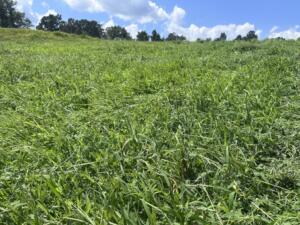
A mix of lespedeza and orchard grass was used for the trials.
With support from OFRF, the trial aims to quantify the effect of weaning lambs on lespedeza pastures compared to the ranch’s pastures that are planted in fescue and clover.
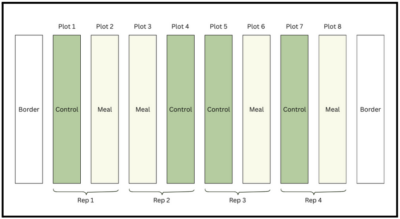
The trial will test the FEC on about 100 lambs. The lambs will be randomly assigned to one of eight groups: four lespedeza groups; four control groups; with 16 lambs in each group, respectively. All of the lambs will have fecal samples taken at four different time points: pre-weaning, to establish a baseline; at 3-4 weeks post-weaning; at 6-7 weeks post-weaning; and post-trial (2-3 weeks after groups are returned to the fescue/red clover mix). The final sampling will help to assess potential residual effects of the lespedeza pasture.
Trial Updates
The trial was initiated in June of 2025 to help establish the lespedeza in the pasture. Lambing began in January of 2026. The lambs will begin pre-weaning from the ewes in April or May, with sampling to begin prior to the lambs being placed out in the pasture.
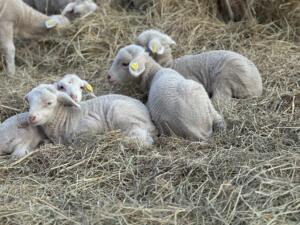
Lambs born in the 2026 season that will take part in the FLT trial.
“The FLT program was a great opportunity to partner with other researchers to find new, holistic methods to control barber pole worm, a major challenge for producers in my area.”
– Ed Crowley, FLT Program Participant
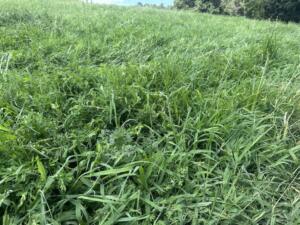
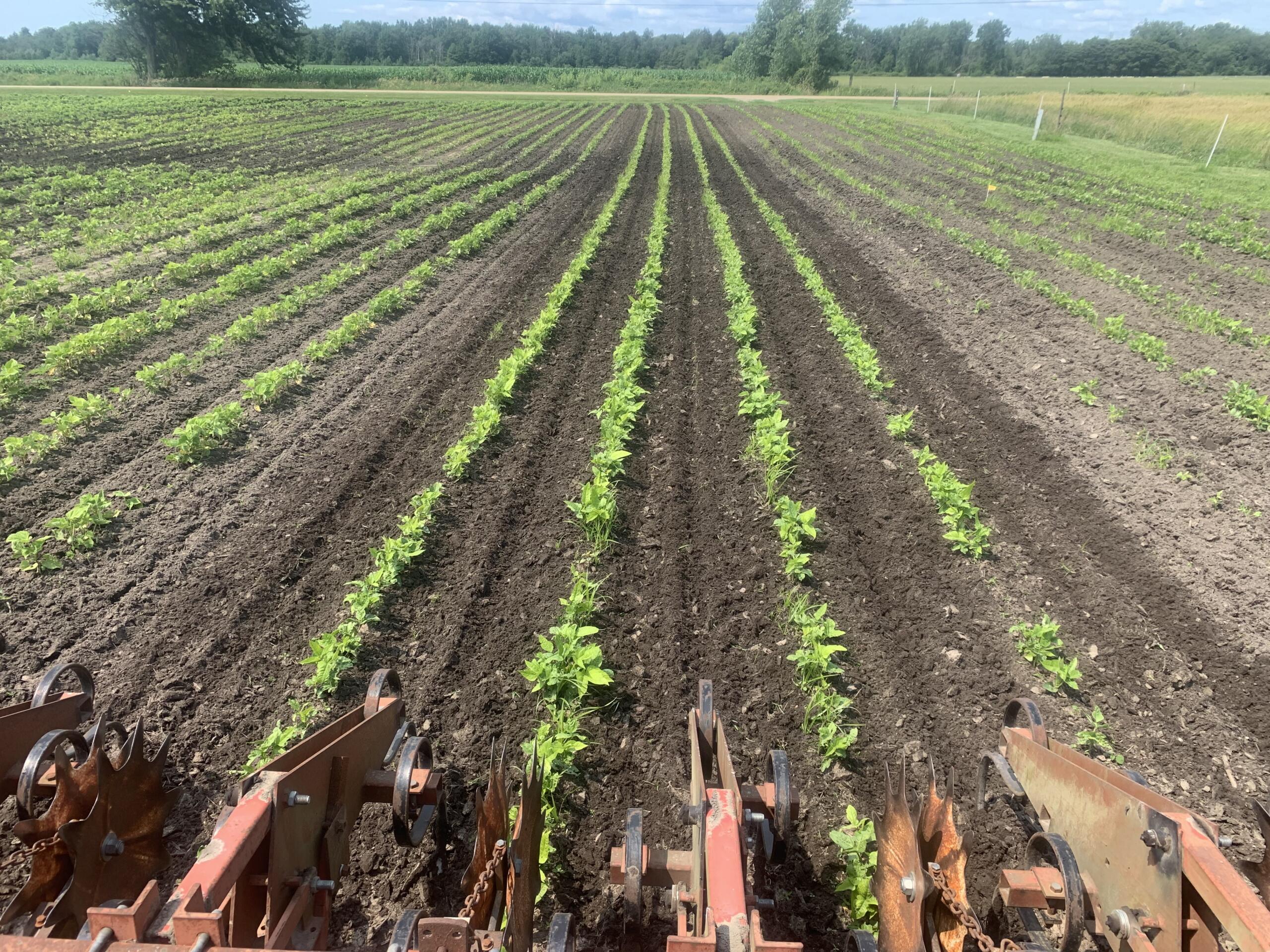
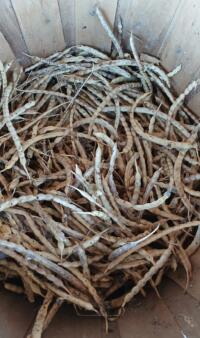
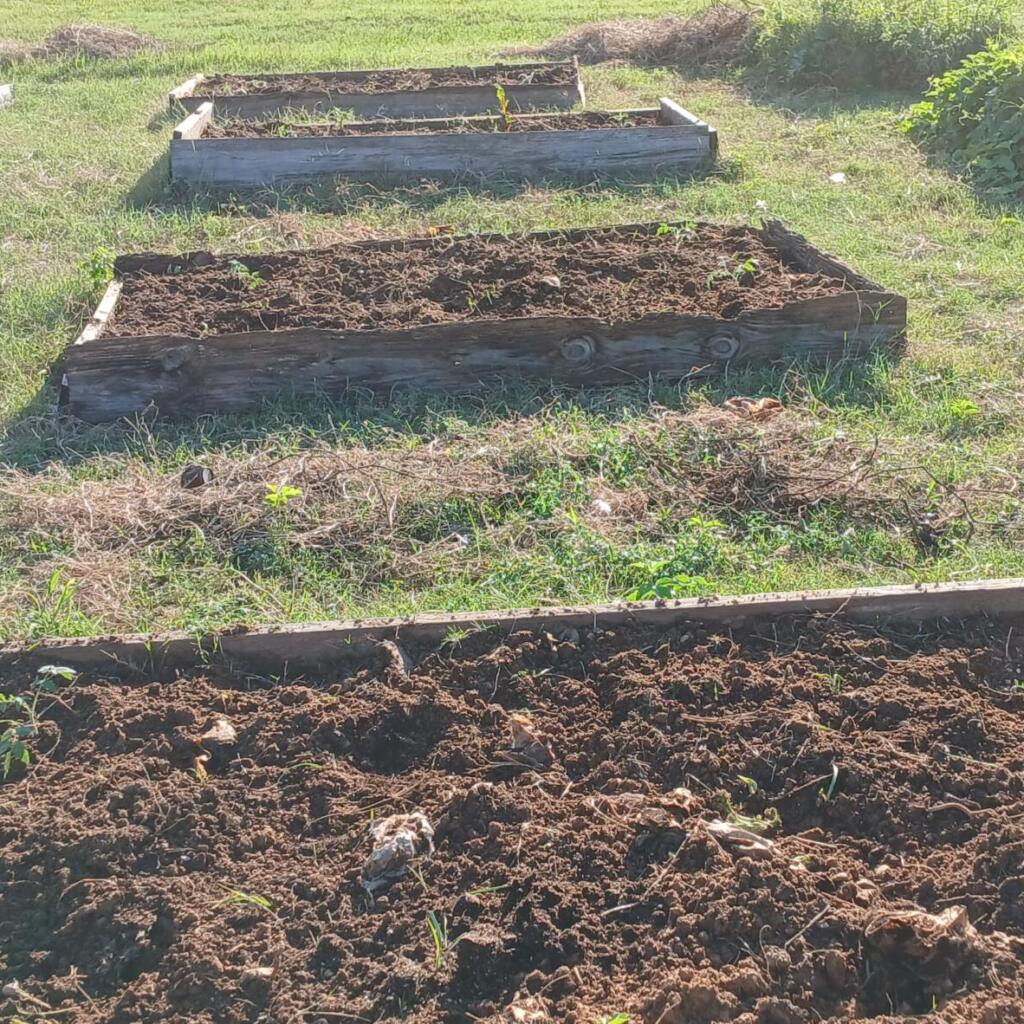
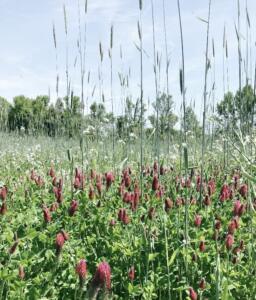
Lespedeza was established in 2025 to be ready for pasture in 2026.
This is part of a series of blogs highlighting farmers who are participating in OFRF’s Farmer-Led Trials program. Farmers receive technical support to address their production challenges through structured on-farm trials. To learn more about OFRF’s Farmer-Led Trials Program, visit our website page at https://ofrf.org/research/farmer-led-research-trials/
To learn more about Ed Crowley and Mesta Meadows, visit their website at https://mestameadows.com/