
OFRF and FFAR Fund Research on Increasing the Productivity and Market Value of Pulse Crops for Arid Organic Conditions
(SANTA CRUZ, CALIF. – December 23, 2022) – The Organic Farming Research Foundation (OFRF) and the Foundation for Food & Agriculture Research (FFAR) are pleased to announce its sixth award for the 2021/22 OFRF organic research grant cycle. Dr. Travis Parker of University of California – Davis was awarded $19,970.00 to research dependable pulse crops for arid regions that promote the ecological and financial sustainability of organic farms.
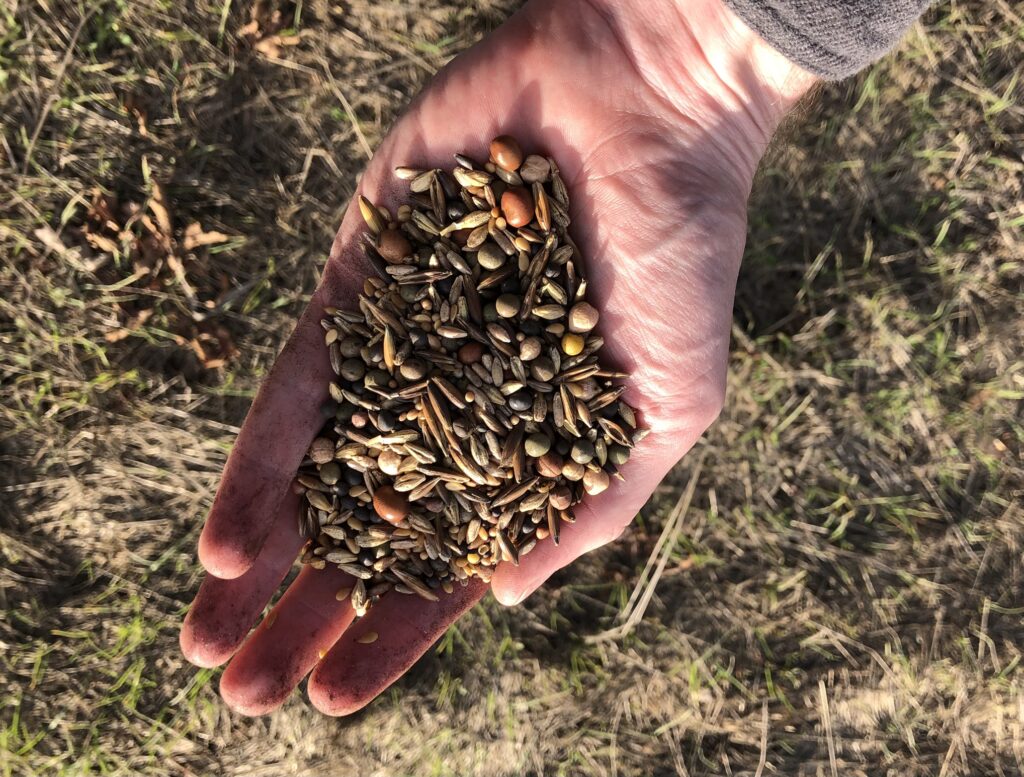
Legume crops provide plentiful plant protein and have several agronomic advantages for organic farmers, including the ability to fix atmospheric nitrogen. Certain legume species and varieties provide further advantages, including extreme heat tolerance, low water requirements, and high market value. Despite this, little is known about their yields in organically-managed arid environments, and little breeding has been done to improve their agronomic performance.
This research will screen diverse cowpeas and tepary beans to identify varieties that can outcompete standard commercial pulses, and evaluate and select varieties of common bean specifically for organic environments. Researchers will also use novel sequencing and molecular biology techniques to identify the genes governing the most valuable heirloom common bean seed color patterns.
By evaluating specific pulse varieties, researchers hope to find varieties with higher yields, while conducting genetic investigation that will facilitate genetics-informed breeding of high-value, high-productivity beans. A greater understanding of these traits will help lead to more widespread adoption of pulse crops for more dependable and resilient organic rotations in arid regions.
This year’s research grant program prioritized farmers, early career researchers, and BIPOC applicants. The six projects chosen focus on climate mitigation and building on-farm resilience and have been awarded a grand total of $119,817 in funding. The 2021/22 cycle was made possible by a $66,000.00 grant from FFAR and matching funds from OFRF and its research partners.
To date, OFRF has invested over $3 million in 361 grants across North America to advance scientific knowledge and improve the ecological sustainability and economic prosperity of organic farming systems. All OFRF-funded research must involve farmers or ranchers in project design and implementation, take place on certified organic land, and include strong education and outreach components. All research results are freely available in OFRF’s online database.
Foundation for Food & Agriculture Research
The Foundation for Food & Agriculture Research (FFAR) builds public-private partnerships to fund bold research addressing big food and agriculture challenges. FFAR was established in the 2014 Farm Bill to increase public agriculture research investments, fill knowledge gaps and complement USDA’s research agenda. FFAR’s model matches federal funding from Congress with private funding, delivering a powerful return on taxpayer investment. Through collaboration and partnerships, FFAR advances actionable science benefiting farmers, consumers and the environment.
https://foundationfar.org/
Organic Farming Research Foundation
The Organic Farming Research Foundation (OFRF) is a non-profit foundation that works to foster the improvement and widespread adoption of organic farming systems. OFRF cultivates organic research, education, and federal policies that bring more farmers and acreage into organic production. Project results are shared freely at ofrf.org. OFRF also provides free access to all of its educational materials and resources.
https://ofrf.org
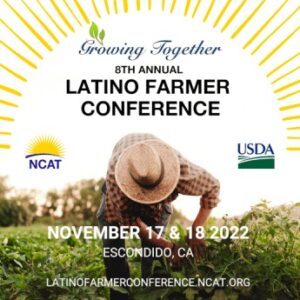 The National Center for Appropriate Technology (NCAT) and USDA’s Natural Resources Conservation Service (NRCS) partnered to host the 8th annual Latino Farmer Conference on November 17th and 18th at the California Center for the Arts in Escondido. This was a two day conference meant to bring together sustainable agriculture professionals for a special all Spanish-language event.
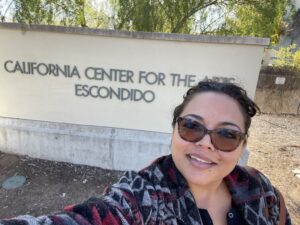 The conference was a much needed opportunity for Latino farmers and other service providers to convene. “With such strong Latino/a/x representation in agriculture, this conference was a wonderful opportunity to meet other Latino/a’s doing similar work and with like values,” said Dominica. “As a Latina in agriculture myself, I would love to see more opportunities like this for historically underserved farmers everywhere.” Topics covered at the conference included: sustainable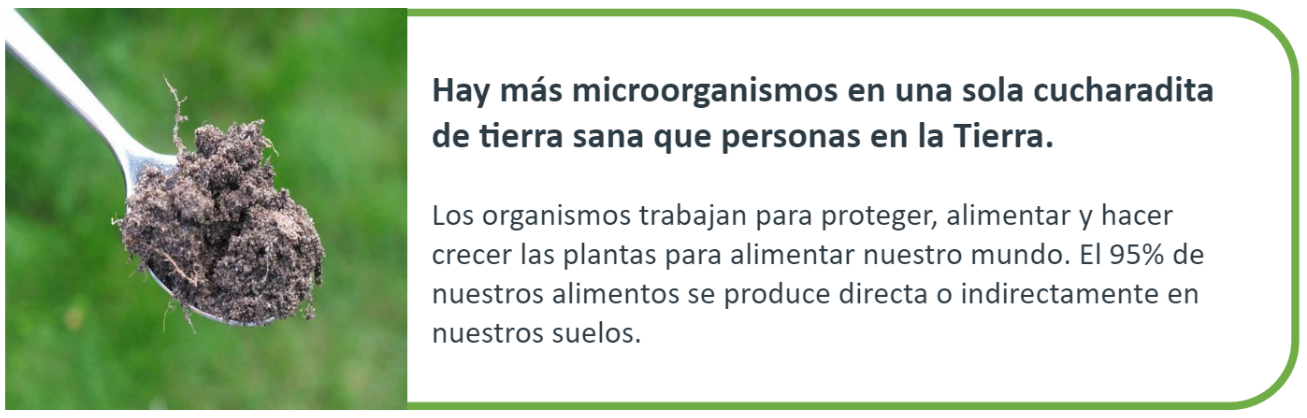
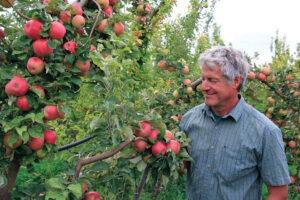
 “We grow many of the same crops my grandmother grew, such as unique varieties of delicious colorful vegetables, fruit, and herbs,” says Taylor. And while today the farming practices at LOF differentiate it from nearby farms (LOF is one of the only certified organic farms in the surrounding counties), growing organically is not new to the family’s farming practices. “When my grandmother was farming,” explains Taylor, “she used organic farming practices before organic certification even existed. For us, organic farming and agroecology not only builds healthy soil and healthy environments, but also supports access to healthy foods in our communities. I believe organic farming systems can, and should, be enjoyed by all farmers and consumers – in all communities.” LOF has been certified organic since 2011, and the label has helped them access markets. “It speaks to the customers,” Taylor says.