Farmer Stories

Beyercrest, LLC

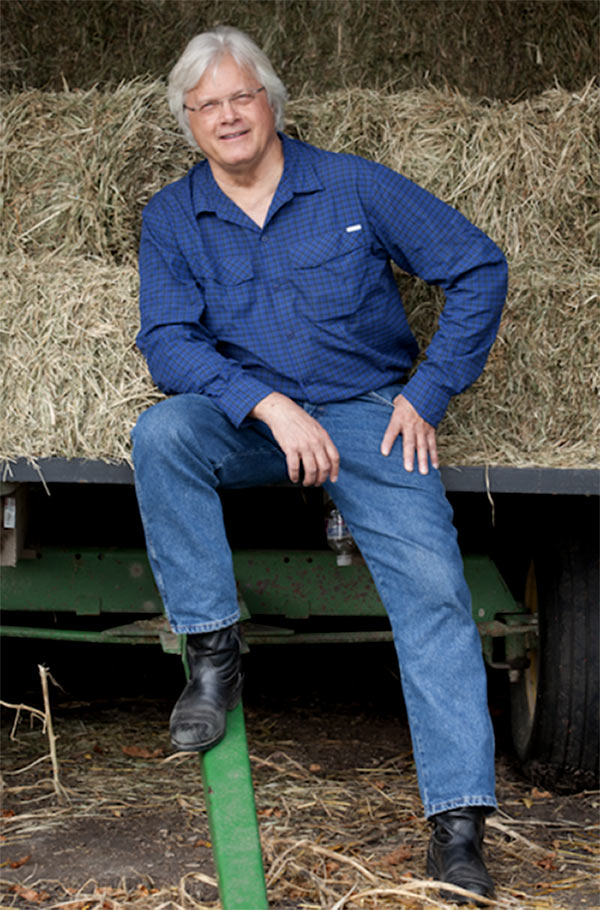
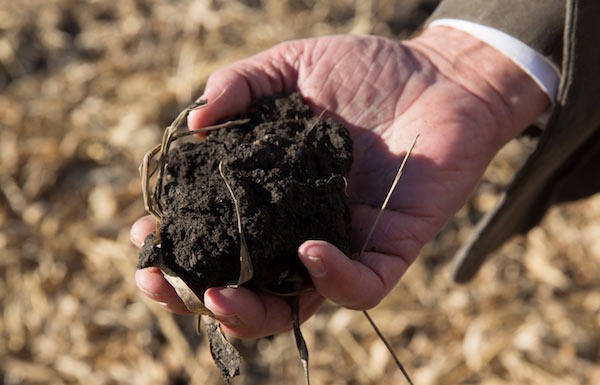
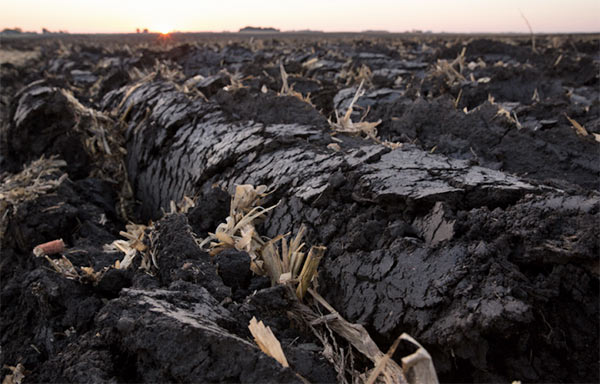
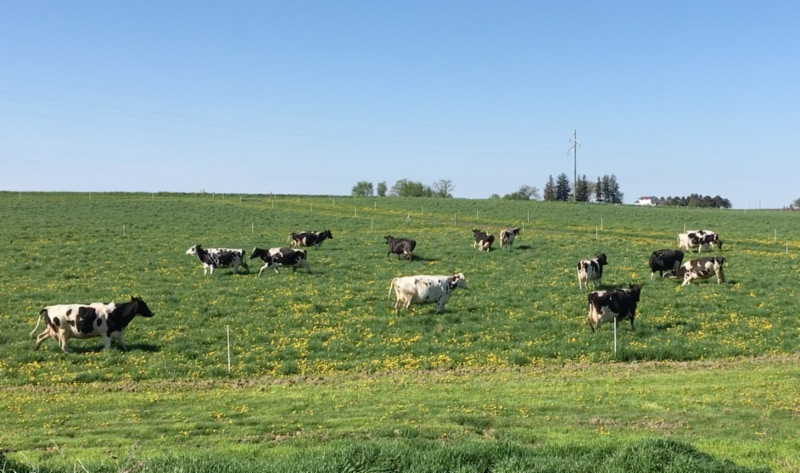
June 19, 2019 – Rory Beyer was raised on the dairy farm his parents have owned since 1973. After graduating from the University of Wisconsin-River Falls with a degree in Animal Science, he returned to the farm and several years later, made the transition to organic production. Today, the Beyers farm 385 acres, raising dairy, beef, corn, and small grains. Since going organic, Rory says the cows are healthier and producing more and, in seven years, they’ve seen their soil organic matter (SOM) go from 1.7% to 4.4% as a result of soil building practices such as cover cropping, managed rotational grazing, diverse rotations, and the use of organic soil amendments.
We caught up with Rory during a hectic spring due to early snow last fall and way too much rain this spring. He’d been up most of the night for weeks working to catch up. I asked him why they decided to transition the farm to organic in 2006 and he said even though they had a really good herd of cows at the time, it was difficult to turn a profit. Health was also a concern. After dealing with health issues all his life, he said it made sense to stop using chemicals.

A devastating flood in 2008—17 inches in 24 hours—also provided impetus for doing things differently. Rory realized he needed to build the organic matter in his soil to help control erosion, retain moisture and nutrients, and manage weeds. After cover cropping, he found the soil was holding better, the biological life was returning, and he was controlling weeds without chemicals.

It wasn’t easy though, he says. “When we were transitioning, the milk price was the lowest it had ever been in recorded history, and 2009 was the worst farming year on the planet. We ended up making it through and successfully transitioning to organic because we had a contract. The banks were willing to back us based on that contract but our production dropped after that. It was tough.”

Rory says they wanted to be with Organic Valley initially but the coop wasn’t taking any milk on at the time. “So, we went on contract with Kemp, and that contract was bought by H.P. HoodThe day we got the okay from the organic certifier, Hood shut down their program and Organic Valley picked up all the milk that Hood dropped. That was a stroke of luck. We forewent the last year of the contract just to be in the Organic Valley cooperative, so we made some sacrifices starting out, but it’s been a long-term good fit for us.”

What advice would he give to other farmers thinking about transitioning to organic production? “Take it easy, don’t rush to get there. It’s a long road, just let it happen naturally. Don’t transition all your land at once, do it in stages. We went full bore and probably could have done it a little easier.”

There was a real bright spot when it came to the cows though Rory says. “We wanted to transition all the cows right away too because we were going to have to know how to take care of them all without drugs to fall back on. The irony is, it ended up being easier. The drugs we were using were just costing us money. I had a $17,000 vet bill that went away in short order just by transitioning to organic and getting the cows into pasture. That’s what made the biggest difference for us. Once you get the cows out, it’s almost like the grass is healing.”

What helped during the transition? “Our biggest resource was the MOSES conference. It was forty miles away and that’s where everyone went. We had some neighbors that had been organic since about 2000 and we were getting advice from them too.”

And now? “The soil health guidebooks from OFRF have been really helpful since my focus is on building soil health. The research is important because It gives us a bridge to greater success in the future, having the understanding and knowledge of how things work can only benefit us.”

The good news is that Rory says he sees a lot of interest from other farmers in transitioning to organic. “I talked to our soil agronomist and he’s been on some farms in Iowa where they’ve been working on transitioning 300 or 400 acres at a time, and they’re having extreme success with tine weeders (a cultivation method that only disturbs the top inch of soil). They’re going out every three or four days and their fields are clean, almost as if they had sprayed. It’s impressive. So, the potential is there for larger farms to make the transition.”

“It’s important for us to know what’s in our food and that we’re doing the best we possibly can for future generations,” says Rory in closing. “We can’t keep using chemicals the way we have the last 70 years or so.”

Listen to the Land Stewardship Project’s podcast to hear Rory talk about building soil health on his organic farm.

By |2020-01-08T18:13:19-05:00June 19th, 2019|Farmer Stories, News|

April Joy Farm

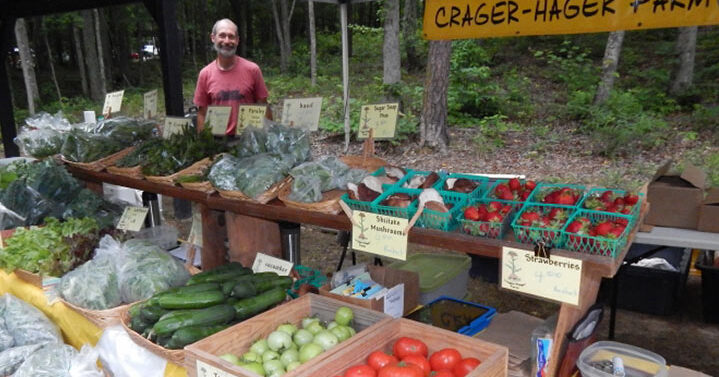
January 2, 2019 – April Joy Farm is located near Ridgefield, Washington on 24 acres above the Columbia River Slough. The farm was purchased on contract from Annie Peterson in 2003. Coming “home” to this farm was the realization of a dream for April Thatcher née Jones, who spent many happy childhood days helping the previous owners with farm chores. Today, April and her husband Brad provide healthy food to over sixty families in Clark County through their CSA, as well as top local restaurants.

“I grew up down the road, so I have a lot of great memories of being at Annie and Pete’s place,” April recalls. “My love of farming came in large part from being exposed to all the self-sufficiency projects they had going on. There was always something to learn or grow or help out with at their place. It was a small diversified farm. They were mainly homesteading, self-reliant fishermen and foragers, and had a huge garden, eating pretty much everything they grew.  I hope they would be pleased to see what the farm has become.”

April was working a traditional white collar job in the Midwest when she heard the land was for sale. “They say the right people fall into your life at the right time—the right land fell into my life at the right time. I’m a civil engineer by training and had just graduated with an MBA in entrepeneurship, so it was really fortunate timing that I had all this technical and project management experience and also had this business piece. I became a farmer out of absolute necessity because this land has always been a special place for me.”

According to April, there are three things that have to come together to make it all work. There is the land and what it needs and is uniquely suited to do, there’s your own talent and skill set and what you want to bring to the world, and there’s the community you’re operating in. “The best part is when those three things come together. My education was critical in helping me look at the big picture instead of just jumping in. I spent a lot of time thinking about those three things and doing my research.” Photo: David L. Reamer

From the beginning, there was no question April was going to farm organically. The previous owners hadn’t sprayed or done anything with the land for years, but they leased it to a berry grower that was chemical intensive, so the soil was pretty depleted. April let the entire land just rest for about three years before she got started. The first thing she planted was table grapes.

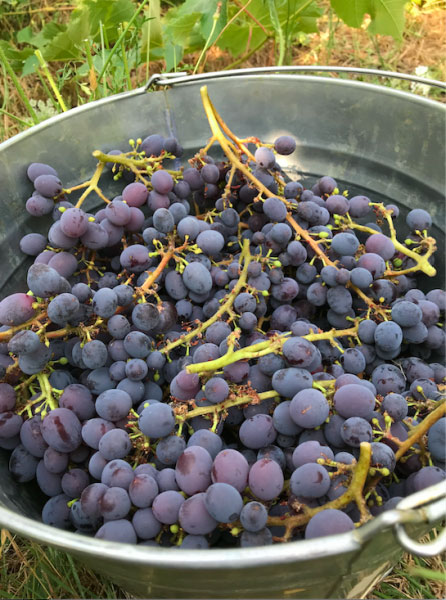
“I’m always intrigued with the crops that aren’t yet really well known but are appealing to me on some level. That’s how I got into grapes. There are a lot of wine grapes growing in the area but not table grapes. Yet, they grow exceptionally well here and there are varieties especially suited to organic production methods. I feel successful knowing that our families and chefs now understand how complex and flavorful grapes can be.”

Research was critical in helping April with her decision. “With perennial crops, you only get one shot, you don’t get to start over the next year. There were several extension publications, as well as a nurseryman and the author of a book on grape growing who both lived in the Willamette Valley and were working to bring a diversity of grapes varieties to our area. Having access to that research and knowledge base was invaluable.”

The research helped her determine what style of trellis to use, as well as which way to run it to reduce the disease issues that come with farming in a really wet, rainy climate. Good research also helped her figure out the best way to orient the vineyard to capture the prevailing winds that keep the leaves dry. “We don’t spray and we don’t irrigate. Because I had access to solid research, I made a number of good decisions early on. So ten years later, our grapes are both low maintenance and very high in value. This is a generously abundant crop, so we are also able to distribute some to families in need.”

April and Brad made a business decision to make the farm a livelihood for two people, with their families pitching in here and there. They grow all kinds of fresh produce and let CSA customers and restaurant clients select what they want from a list that typically includes 35 or so items—everything from apples to zucchini. This year, they added lots of herbs.

Laying chickens and two miniature donkeys that help with soil fertility complete the operation. “We wanted to have a secure, clean source of manure, because research has shown there is a class of herbicides used in the production of conventional hay. These chemicals do not break down in ruminant digestion. So off-farm manure poses a significant risk for our broadleaf market crops. Donkeys require a lower protein diet than horses, which compliments the feedstock we have available on the farm. We maintain our own hay field and the donkeys eat our hay exclusively, along with the occasional apple and carrot! We compost the manure and apply it to our fallow fields. We try to cycle the nutrients right on the farm as much as possible.”

As it turns out, like all good things in a system that works, the donkeys serve multiple purposes. “Kids love the donkeys, so they get to visit with them when their parents come to pick up their CSA share. We think it’s really important for families to see what a working organic farm looks like—to see the quality of food and that it’s not coming from the stereotypical picture of a farm with straight neat rows and uniformity. We have wild patches and forest and weeds that are growing quite contentedly and actually contributing to our system. That’s the education piece we really like, having families see a working farm, not one that’s been set up for somebody’s entertainment purposes.”

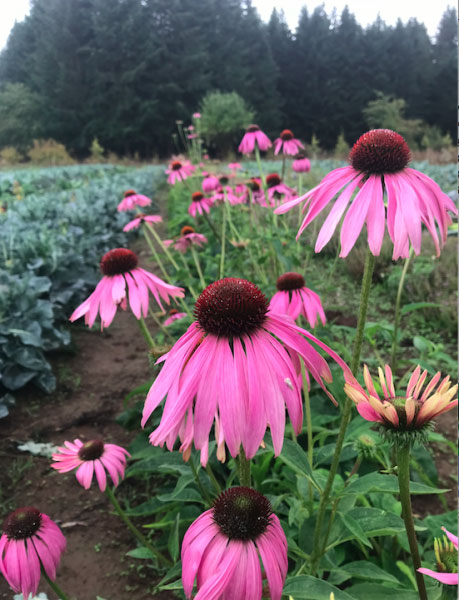
“We’re working with NRCS right now on a conservation stewardship program, integrating 0.4 acres of pollinator habitat directly into our annual crop fields and it’s already added value in multiple ways. We put pollinator strips every few hundred feet and vegetables in between them. It’s pretty unique and really phenomenal how much that’s improved the quality of our brassica crops due to reduced pest damage.”

They’ve also opened the farm to Washington State University researchers for a number of years, including a couple of graduate students who are in their third year of doing insect and wild bird counts as part of the Avian Biodiversity and Biocontrol project. There’s been an extraordinary spike in beneficial insects and it showed in the quality of their fall brassica crops. The researchers documented a spike in syrphid (hoverflies) larvae. Adult syrphid flies required habitat the pollinator strips provide in abundance.  These insects are predators of aphids, a primary crop pest. “I also think having some of these perennial crops in the field is helping with the soil structure, providing a safe, untilled haven for healthy microbes and mycorrhizal fungi.”

Last year, April received a grant in partnership with her conservation district to fund soil health research on the farm. “The two most important elements of this project were that it provided me the financial resources and a direct partnership with a regional soil scientist who was specifically interested in looking at my farm and helping me craft pragmatic strategies. Diversified farms are so complex. Being able to call a researcher and ask for help in answering the questions I have about what I’m experiencing in the field has made a huge difference in my approach. Diversified farmers create crop plans every year. Why aren’t we also creating a comprehensive management plan for our most precious resource, the soil?  I’ve learned so much, and have made a number of changes that I would have never understood or been inclined to push for if I hadn’t had research support.

It’s been a game changer for me. The research is farmer directed so I was the one that crafted the work. I wanted to understand all the pieces that play into the health of my soil in terms of how I’m interacting with it, and better understand the nuances so I could create a framework, a soil health roadmap, to guide me in making practical management decisions. Farming can be isolating, and creating farmer-scientist partnerships are crucial. We teach and learn from each other. My soil health roadmap enabled me to make immediate, impactful changes—specifically, how early I’m working to establish my winter cover crops, and how to better manage nitrogen loss. I found out the biggest nutrient losses weren’t coming from produce sales, but rather leeching from heavy winter rains. I’m armed with more knowledge now and feel as if I have real research partners who care about the success of my farm. My goal for the next two years of the grant is to help other diversified farmers create soil health roadmaps that are specific to their farms. Meanwhile, my interns get the benefit of everything I’ve learned so they don’t make the same mistakes I have.

It’s fundamental that we have research and that it’s dedicated to organic systems because we are operating in a different mindset. We see ourselves as land stewards, rather than just trying to produce something for profit in a mechanistic way. The systems we’re engaging with and the disease and pest pressures are very different. Continued research is crucial because the more we know, the more we learn that we don’t know. The most successful trials that I’ve been involved with are those that weren’t just by an individual farmer or researcher but by the partnership between the two.”

Top two images – photo credit: David L. Reamer

By |2020-04-17T23:24:09-04:00January 2nd, 2019|Farmer Stories, News|

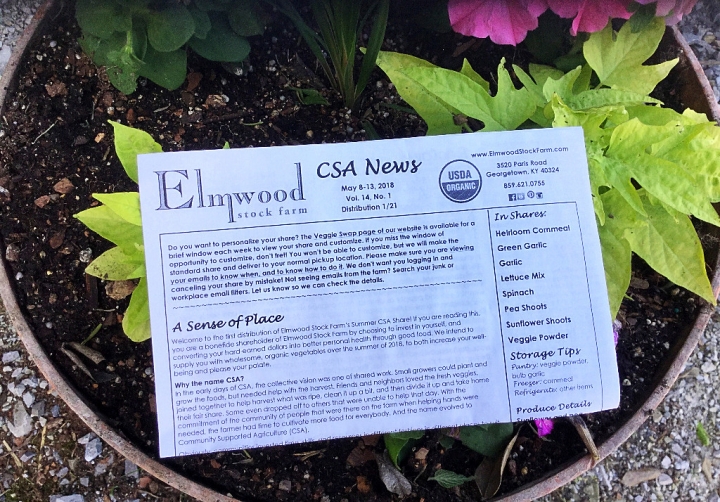
Elmwood Stock Farm

October 31, 2018 – Elmwood Stock Farm is a 6th-generation family farm in Lexington, Kentucky that began as a producer of Black Angus breeding-stock cattle. The cattle are still an important part of the farm ecosystem and farm business, though over the past decade the family has branched out to produce a variety of organic vegetables, fruits, meats, eggs, and cornmeal. Organic certification and close family involvement ensure that safe and sustainable farming practices are followed, livestock are well cared for, and land and water conservation remain a priority.

Today, farm owners, Cecil and Kay Bell reside and farm full-time at Elmwood. Cecil oversees his Black Angus cattle herd, makes hay, and maintains pastures, barns and on-farm construction projects. Cecil’s son, John Bell, and his wife, Melissa Bell, oversee all of the vegetable production, are partners in the cattle herd, and raise pastured pigs. John’s sister, Ann Bell Stone, and her husband, Mac Stone, maintain the organic poultry, sheep flock, and CSA pickups of Elmwood products. Mac’s tours of the farm help visitors understand where their food comes from and what it takes to be successful farmer. Mac served two terms on the OFRF board from 2005-2010.

Elmwood Stock Farm began transitioning to organic around 2000 and it took them about 12 years to get their 575 acres shifted over. Now Mac says everything they do is certified organic or they don’t do it. “My brother-in-law had gone off to to college, studied abroad, and come back to farm with his dad,” Mac explains. “When he had a bug or disease problem, he’d figure out what he should spray, but didn’t like the idea of having to wear a respirator to drive a tractor on his fields. And, he was smart enough to recognize that the spraying was still just a band aid. He was looking at more long-term solutions like rotations and cover crops. Parallel to that, my wife was selling at the farmers’ market. The customer engagement about organic and pesticides brought them to the common goal of eliminating pesticides for both reasons.

“We give tours of the farm and it’s all about how organic works and the biology behind it. The premise for our farm tours was that the people we know and love were making really bad food choices. The tours have been really well received and people always go away with a different image of food and farming.”

The tours also play an important role in educating consumers on the integrity of organic. “When I explain how the certification process works, with the inspections and audit trails, people are shaking their heads, they have no idea. It’s more stringent than a health inspection at a restaurant. I share the process in a way so it’s not, oh look what I have to do, but look what I get to do.”

The family farms about 55 acres of vegetables each year, keeping the rest either in hay or pasture, which is very integral to the produce production. They have an eight-year crop rotation with five years of alfalfa for hay, then vegetable crops for three, then back to alfalfa for five.

Elmwood’s CSA includes about 600 members and they do four farmers’ markets on weekends. They also maintain a few restaurant and retails accounts, but it’s not a big volume for them.

We have 11 workers from the H2A guest worker program and another 12-15 for farmers’ markets and delivery. “It is skilled labor and we were glad to see our workers come back this year,” says Mac. “We were nervous about it.”

When asked what his most value able resource was when he began farming organically, Mac says OFRF was a groundbreaker. “Back then, organic was a sore word, in Kentucky anyway. There were just a handful of organic farmers. I didn’t care if people snickered, I knew it was the way I wanted to farm. But, truthfully, OFRF was a legitimate information supplier and you could have confidence in their information.”

Things have improved over time says Mac. “Now we are able to communicate a lot better. Three universities have certified organic acreage, so that really helps. As kids are graduating out of those programs, they’re getting jobs and legitimizing it. We’re starting to build a little steam.”

What role does research play on the farm today? “We’re in a little inside state debate, where some are saying that organic is starting to suck all the resources,” says Mac. “But so much of it is transferrable to commercial vegetable growing—whether you’re selling organic or not. Why not improve your soil health? Why not rotate crops? Still some of the basic organic documentation has to be done at each different place. We’re out here on our own and we don’t have the tech guides and tech services available to affirm how these complex systems can work. It’s not just whether a certain chemical works. It’s so important to verify how plants and insects respond.”

“We have a soil scientist from the University of Kentucky doing a research project on our farm now. She’s evaluating the microbial health in our eight-year crop rotation. We’re asking several questions. Are we slowly mining our soils or are we keeping pace? As production grows to meet demand and we go to more plant intensive farming, is the next generation going to be as fertile as it is now? Her data is showing that we’re keeping up, we’re building soil and sequestering carbon. It’s affirming what we’re seeing, but to know it, not just think it is a really big deal. We’re in about year five, but because of the way we rotate, she can see all eight years every year. She’s got five years of each set of data, so she’s pretty confident.”

Mac thinks the demand for organic will continue. “I have three daughters with young children and that generation is driving the market,” he says. “Our customer base is younger than it used to be. As more and more information comes out, it’s a matter of time. Once the true value of our nutrient dense organic foods becomes available, and that knowledge is more pervasive, our kale will be more valuable in the marketplace than pesticide laden kale. We’re just at the cusp I think.”

Wrapping up the conversation, Mac offers his top three reasons to go organic: 1) grass fed organic meat and dairy products are heart healthy. It’s been scientifically proven; 2) the balance of nutrients in the soil makes for a healthier plant biome, which in turn makes for a healthier human biome; 3) that same balance of nutrients will bring with it flavors and flavor profiles that you can’t get with simple chemical production of food.

By |2020-01-08T18:14:16-05:00October 31st, 2018|Farmer Stories, News|

Common Wealth Seed Growers

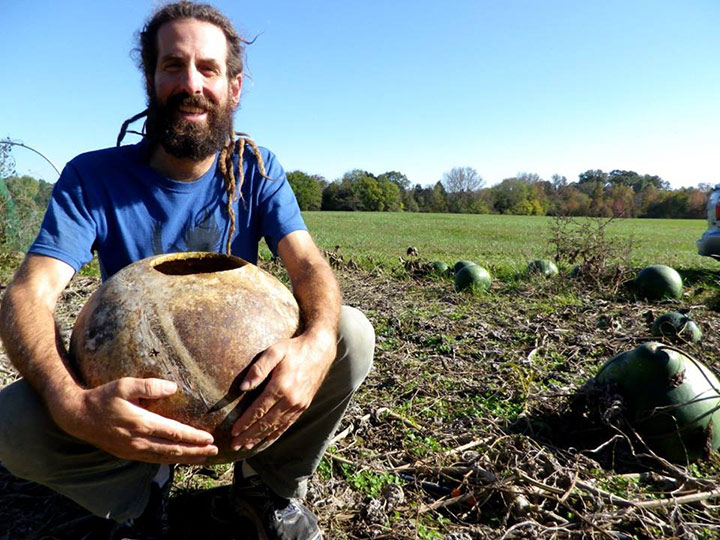
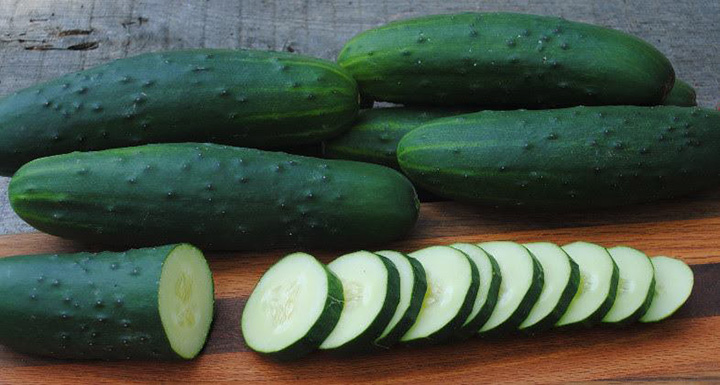
In 2018, OFRF awarded a grant to Edmund Frost of Common Wealth Seed Growers in Virginia to assess resistance to both Bacterial Wilt and Cucurbit Downy Mildew among selected cucumber and muskmelon seed stocks, and to continue with the development of a pickling cucumber that is resistant to both diseases.

Edmund’s first exposure to agriculture was a farm truck that came to his neighborhood on Saturdays from an organic farm called New Morning Farm in Pennsylvania, where he eventually did a short apprenticeship. He gained more experience working at Waltons Orchard in Northern Michigan, a certified organic and biodynamic farm that also grew vegetables. He continued his on-farm education by working at Food Bank Farm in Western Massachusetts, a very large, very efficient farm that ran a CSA for 600 people and supplied the food bank with produce.

Then, his interest in seed breeding took hold. Edmund began working with seeds at Southern Exposure Seed Exchange. He started doing contract seed crops for Southern Exposure and a few other seed companies, beginning with a ½ acre of seed crops and expanding to about six acres when he began getting contracts from more places.

His inspiration for thinking about bigger seed system issues came in 2012 after attending an Organic Seed Alliance conference. “I began thinking about how I could make organic seed systems in our region more functional. As a seed grower, I had been doing stock seed selection. I got more serious about that and started focusing on the varieties that stood out. I also started growing produce crops because I thought that would help make me a better seed grower.”

In 2014, he received a SARE (Sustainable Agriculture Research and Education) grant to do research on Curcubit Downy Mildew with cucumbers, melon, and winter squash. At the same time, he began collaborating with Michael Mazourek at Cornell University to try out some of the stuff he was developing. “Michael was a really good resource to have when I had questions about how to evaluate the crops and how to do the selection and lay out the trials. So, I kept on doing a lot of seed production but also a lot of research and breeding.”

He started Common Wealth Seed Growers to reach people more directly with the trialing and selection work he was doing. “When we were just growing crops for other seed companies, the value of the selection wouldn’t get transmitted to the customer,” he explains. “You put in a lot of work to do a really good job selecting something and then you get less money from the seed company because you were more selective about what plants you saved seeds from.”

He also wanted to have a project that would help bring needed energy and change to the state of Southeast seed systems. “We saw a big unmet need in the Southeast where a lot of organic growers who want organic seeds are purchasing mostly from Northeast seed companies. A lot of the seeds out there aren’t really addressing our needs in the Southeast. Downy Mildew for instance, has been less of a concern in the Northeast, although now it’s becoming more of a concern.” (see related blog, Of Mildews and Men by OFRF Board President Jeremy Barker-Plotkin of Simple Gifts Farm).

“As a seed grower and plant breeder, I focus on the power of varietal choice and varietal development to address disease and pest problems. That’s part of the research I’m doing this year funded by OFRF.”

Common Wealth Seed Growers sells directly to farmers online and at farm conferences. “We’re starting to meet some bigger farmers now and see interest from larger seed distributors. We have a few unique varieties that stand out for Downy Mildew resistance, and people are interested in those. I think that’s the direction we’re headed in, not being a one-stop-shop for seeds but a supplier of a handful of good disease resistant varieties.”

“If I develop a variety that has really good disease resistance, it’s going to result in farmers spraying a lot less herbicides and it will be a lot healthier for the farmers, farmworkers, land and waterways, as well as the people eating the food. Food should be something that increases our health not diminishes it. I think it’s essential that we find ways of farming that are good for the land and good for our health.”

By |2020-03-26T18:57:30-04:00August 28th, 2018|Farmer Stories, News|

Simple Gifts Farm

May 15, 2018 – We recently had the opportunity to talk with OFRF Board President Jeremy Barker Plotkin of Simple Gifts Farm in Amherst, Massachusetts. Jeremy and his team are stewards of the North Amherst Community Farm (NACF), community-owned land preserved in perpetuity for farming. They are working to ensure the land remains an organic community farm, a wildlife corridor, and a place for local residents to enjoy nature and walking trails. They run the farm as an ecological unit, integrating vegetable crops and livestock, and connecting the community with their food supply. They also run an apprenticeship program to train the next generation of organic farmers.

Have you always farmed organically? Why?

Right from the start. Moving towards more sustainable food production was the appeal. I don’t think I ever considered doing anything different. For me, farming is a way to embody my political ideals, do something positive, and provide a real tangible alternative.

How big is your farm?

It’s about 30 acres and we manage a neighboring farm that’s about 20 acres. We’re growing about 12 acres of vegetables. We’ve cut back from 18 to try to focus our efforts a little more, and we get as much out of 12 acres as we do out of 18 by taking better take of it.

What do you grow?

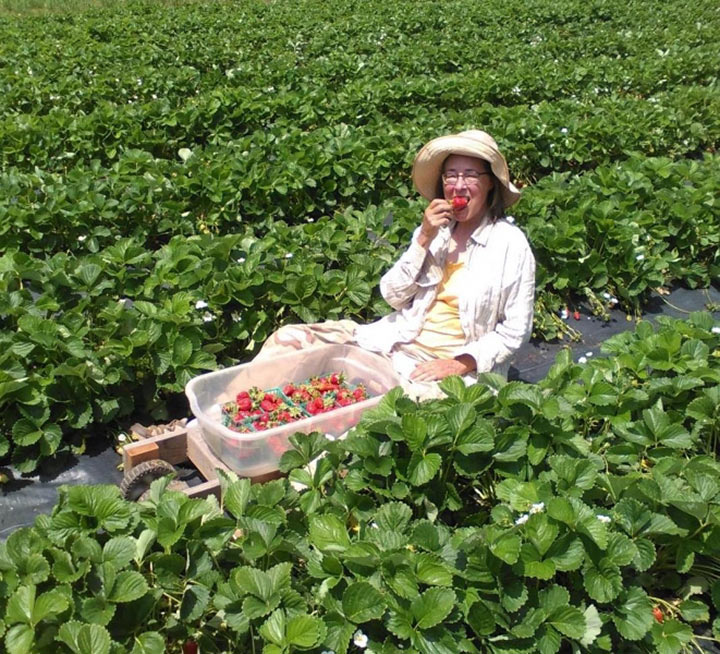
Quite a bit of lettuce, tomatoes, a fairly broad spectrum of seasonal vegetables, kale, chard. We have a whole pick-your-own garden that’s part of the CSA share that includes flowers, herbs, veggies, and about an acre and a half of strawberries.

We have about 250 laying hens, and pasture-raised eggs are available for most of the year. Pasture-raised pork and grassfed beef is always available for purchase by the cut.

Where do you sell your products?

We stopped going to farmers’ market after we opened our farm store last July. The store, CSA, and pick-your-own garden are all integrated now. People pick up their share at the store and the pick-your-own is part of the share.

I like the integrated experience. People participating in the CSA also get to spend time on the farm.

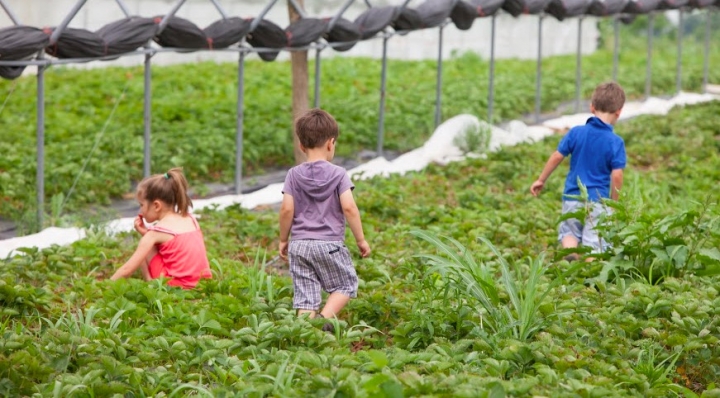
Especially during strawberry season, people love to bring their kids.

What do you you want people to know about why it’s important to support organic agriculture?

It’s just healthier. One of the objections I have to the way people talk about organic is that it’s all very focused on is it healthier? Is it free of pesticides? I think it’s also important to recognize the indirect benefits—knowing your water is cleaner and that there’s less chemicals in the environment because you’re buying organic food. Also, studies are finding that organic farming sequesters more carbon than non-organic farming and can be instrumental in reversing climate change.

What was your most valuable resource for information when you were a beginner farmer?

It was other farmers and that is still the case. I worked for other farmers before I started farming myself. I went to graduate school in Maine and visited a lot of farmers before I started farming myself.

I’m thinking about some of the next generation that want to farm organically or non-organic farmers that want to transition to organic that aren’t in areas where there are a lot of organic farmers. What do you think would be a good way to help?

We have an apprenticeship program that helps people that want to become organic farmers. Mentorship programs are great, especially for people transitioning to organic.

What is your most valuable resource now?

I get a lot of information from UMass Extension and the other Extension services in New England. Some of their expertise is exclusively organic focused and some of it is applicable to organic. There’s a lot of good information out there. Talking to other farmers, my neighbors, is still helpful. Actually, not going to farmers’ market has meant that I have less connection with other farmers. Part of what goes on at farmer’s market is talking to other farmers.

Switching gears a little bit, why do you think organic farming research is important?

Organic farming is a more knowledge- and science-based way of doing things. You need to understand the lifecycles of pests and the biological interactions. You need to know how soil works. There’s so much more you need to know to farm organically. Research focused on organic is much more valuable because the system is so different.

Organic farming, especially as it relates to certification, is about what you can’t do, what you can’t spray, what fertilizers you can’t use. When you take all of those things out of your toolbox, you have to use different tools. How do you control pests? There’s organic sprays out there but they don’t work as well. You get to a point where you need more knowledge in order to generate soil fertility without just getting it out of a bag.

Organic research can be good for any type of farmer, maybe some that are thinking about incorporating more sustainable practices. I think organic research benefits more than organic farmers.

Absolutely.

Do you have a story about how research helped you and your farm?

Right now, at the University of Massachusetts, they’re trying to figure out how to control cabbage aphids organically. This is a pest that has become a big problem with kale and all the fall brassicas. They’re doing some good work there figuring out how to deal with it.

I’ve done some research on my farm too. When we first started, I applied for SARE grants, which provided another source of income for me. We did two projects on disease resistance in tomatoes. Two seasons ago we were looking at different ways of fertilizing potatoes. There are growers who use a much more complicated intensive strategy that isn’t as focused on the macronutrients in the soil. It involves a lot of spraying of liquid nutrients and is supposed to maximize the health of your plants. While that way of fertilizing does work, we’ve achieved equivalent yields and disease pressure just by providing organic nitrogen based on our soil tests. This was a system I was interested in and had been playing around with—getting the SARE grant allowed me to look at it in a more rigorous way.

Do you think the demand for organic food will continue to grow?

Yes, it’s a consistent trend.

The organic label has come under attack in the media lately. Some people question whether the price differential is worth it, and whether products labeled organic are really following the organic guidelines. Also, with so many labels, things seem to be getting really confusing for consumers. What do think we need to do to preserve the integrity of the organic label?

Those issues have always been there. There may be a little more intensity right now, but they’ve always been there. As soon as we got under federal control it made the label subject to the political process and vulnerable to people messing with it. Organic is providing a minimum standard that says you can’t do certain things. There may be more, there may be further you can go, but that minimum standard means something to people. That’s why organic has been successful.

What do think of the movement to a regenerative certification?

I’m not 100 percent sure how it’s going to go. I can see the appeal of trying to put something forward that’s kind of more true to the original vision. I can also see the danger in fracturing and diluting the message a bit. I see how organic is the minimum standard and now people want to push it a little further. The thing I’m not sure about is it seems difficult to regulate, to come up with a unified standard for what regenerative agriculture means. That’s exactly why organic has come to mean what it has—you don’t use chemicals because that’s something you can take on in a regulatory way. You can’t take on biological soil fertility and crop rotations and all the kinds of positives of organic in a regulatory way. It’s not impossible, but I’m a little skeptical.

What are the top three reasons you think people should purchase organic whenever possible?

The environmental benefits, the soil carbon sequestration benefits, and the benefits to their personal health.

By |2020-03-26T18:56:51-04:00May 15th, 2018|Farmer Stories, News|

Soper Farms

February 15, 2018 – OFRF board member Harn Soper is part of a four-generation Iowa farming family based in Emmetsburg, Iowa. Soper Farms is a century farm, having been in the family for more than 100 years. The Soper family voted to transition the farms, which comprise about 800 acres, to organic, starting in 2010.

When I was eleven and working on my family farms in Emmetsburg, our license plate proudly stated “Iowa, A Place To Grow”. That has never been more true than today. What has changed for my family is how we farm, moving from conventional chemical-based farming to organic.

Today our organic crop rotations include corn, oats, soybeans, alfalfa and other small grains, all in support of feeding a hungry world. Each year our soil yields more information about our fields and as we learn, each year we adapt our rotations to support nature’s amazing ability to balance and produce. Little did I know back when I was eleven that farming could yield so much more.

Carbon Farming – Today, our organic farms also grow carbon in our soil by sequestering CO2, drawing it out of the atmosphere and storing in the ground. Listening to ESA, Ecological Society of America, “Over the past 150 years, the amount of carbon in the atmosphere has increased 30%. Most scientists believe there is a direct relationship between increased levels of carbon dioxide in the atmosphere and rising global temperatures”.

As reported in Science Magazine (in scientific detail), “The soil organic carbon (SOC) pool represents a dynamic equilibrium of gains and losses. Conversion of natural to chemical-based agricultural ecosystems causes depletion of the SOC pool by as much as 60% in soils …. mostly emitted into the atmosphere. Severe depletion of the SOC pool degrades soil quality, reduces biomass productivity, adversely impacts water quality, and the depletion may be exacerbated by projected global warming”.

Our organic farms follow the USDA organic standards as set forth by the National Organic Program (NOP) reversing the negative impact of chemical-based farming by increasing soil health, improving water quality while farming carbon back into the soil.

Energy Farming – In Iowa, we also grow energy, wind energy, that frees the world from a diminishing and polluting supply of fossil fuels. The power company MidAmerican Energy, recently announced that it has opened two huge wind farms in Iowa as reported by Climate Action, a UK-based non-profit. The two projects, called Beaver Creek and Prairie, total 169 turbines and have a combined capacity of 338 megawatts (MW), enough to meet the annual electricity needs of 140,000 homes in the state.

Climate Action goes on to report “Iowa is something of a hidden powerhouse in American wind energy. The technology provides an astonishing 36.6 percent of the state’s entire electricity generation, according to the American Wind Energy Association (AWEA). It also has the second largest amount of installed capacity in the nation at 6917MW; Texas is first with over 21,000MW. The wind farms form part of MidAmerican Energy’s major Wind XI project, which will see an extra 2,000MW of wind power built, and $3.6 billion invested, by the end of 2019. The company estimates it is the largest economic development project in Iowa’s history”.

Antibiotic Farming – As reported in The Scientist, dedicated to exploring life inspiring innovation, “Many of the most widely used antibiotics have come out of the dirt. Penicillin came from Penicillium, a fungus found in soil, and vancomycin came from a bacterium found in dirt. Now, researchers from Northeastern University and NovoBiotic Pharmaceuticals and their colleagues have identified a new Gram-positive bacteria-targeting antibiotic from a soil sample collected in Maine that can kill species including methicillin-resistant Staphylococcus aureus (MRSA) and Mycobacterium tuberculosis. Moreover, the researchers have not yet found any bacteria that are resistant to the antibiotic, called teixobactin.”

For this new bacteria-targeting antibiotic to thrive and save lives, it requires healthy soil that is not contaminated by chemicals designed to kill plants and diminish the soil biome.

Every dollar we spend anywhere is tightly connected to agriculture. Because if it weren’t for a six-inch layer of healthy topsoil and the fact that it rains … we would have nothing. Iowa organic farming is indeed, “A Place To Grow”.

Funding organic research restores our environment, literally energizes our communities and saves lives. What better way to support yourself and your family than to support organic research, education, and advocacy.

Thank you for supporting OFRF.

By |2020-01-08T18:14:34-05:00February 15th, 2018|Farmer Stories, News|
Go to Top