
On-Farm Research

Building Successful Farmer-Researcher Collaboration

Farmers and ranchers are natural researchers, regularly using trial-and-error to address on-farm questions and challenges. Research shows that farmers greatly benefit when they lead on-farm research trials.

Programs like the OFRF’s Farmer-Led Trials and the Sustainable Agriculture Research and Education’s Farmer-Rancher Grant put farmers in the driver’s seat, allowing them to conceive and carry out research on their farms.

For research involving farmers and University scientists, successful collaborations between farmers and researchers can greatly enhance results. However, these collaborations take time to build. Read our report on for lessons learned from organic farmers and researchers about how to form these effective collaborations.

Front cover of seeds of success resource
By |2025-12-19T12:51:02-05:00December 19th, 2025|On-Farm Research, Resource|

An Organic Approach to Increasing Resilience

Few farmers need official reports to tell them that “increasing weather volatility” and climate change threaten their livelihoods and the resilience of their farming and ranching operations. With historic droughts, wildfires, flooding, and hurricanes in recent years, more farms are facing variable yields, crop losses, increased weed, pest, and disease pressures, and intensifying soil degradation, erosion, and compaction.

By utilizing organic and sustainable practices to build soil health, farmers and ranchers can improve their resilience and reduce risk as our climate changes. While practices can vary depending on your operation, establishing optimum soil organic matter (SOM) and biological
activity will help your operation through the difficult times to come.

TOMI: Organic Management and Improvement of Tomatoes

Building on previous research (TOMI Phase I), the Tomato Organic Management and Improvement – TOMI Phase II project integrates soil microbiome research, induced systemic resistance, and farmer-participatory breeding to develop disease-resistant, flavorful tomatoes for organic systems. Microbial biofungicides and organic amendments support healthy soils while reducing pathogen risks. Advanced breeding lines show promise for regional adaptation and market-ready quality. Download the full report to learn more about tomato varieties and soil-based disease management strategies.

Carrot Improvement for Organic Agriculture: Leveraging On-Farm and Below-Ground Networks

The Carrot Improvement for Organic Agriculture (CIOA) project develops carrot varieties suited to organic systems, using farmer-participatory trials and soil microbiome research. These efforts improve disease resistance, nutrient uptake, flavor, and market traits. Advanced breeding lines include orange, purple, red, and yellow carrots with improved resilience and quality. Download the full report to learn more about these varieties and on-farm research insights.

Impacts of OFRF’s Grant Program on Organic Farming Research (2006–2014)

The Organic Farming Research Foundation (OFRF) has supported organic agriculture through targeted research funding since 1990. From 2006 to 2014, OFRF awarded 106 grants totaling $1.45 million to advance research in pest management, plant breeding, disease control, and weed management.

OFRF grants have strengthened the careers of early-stage scientists, enabled follow-on funding, and helped translate research into practical solutions for farmers. Many projects involved farmers as partners, ensuring results address real-world challenges and are quickly adopted.

Grants were funded in 25 states, with emphasis on regions experiencing rapid organic growth. OFRF’s grant program has expanded scientific knowledge, promoted sustainable practices, and supported collaboration between researchers and farmers, which continues to drive the growth of organic agriculture.

By |2025-12-15T11:47:35-05:00December 15th, 2025|On-Farm Research, Resource|

Impacts of OFRF Berry Research

This report offers a detailed review and impact assessment of OFRF-funded research on organic
berry production, with a focus on strawberries. These research projects address the most pressing
issues in the industry and this evaluation clearly indicates that OFRF investments have resulted
in important advances in organic berry production knowledge and practices, especially in
California. Overall, OFRF grant funding has advanced scientific knowledge and improved the
practices, ecological sustainability, and economic prosperity of organic berry farming. This
report recommends continued research support for organic insect, disease, and weed
management research efforts in berry production.

By |2025-12-16T10:37:32-05:00December 10th, 2025|Advocacy, Insects & Diseases, On-Farm Research, Resource|

2021 CALIFORNIA ORGANIC RESEARCH AGENDA

California is the nation’s top producer of organic agricultural commodities and specialty crops. Thus, it
is imperative to understand the unique needs of the organic growers in the nation’s most agriculturally
productive state. The 2021 CORA report provides up-to-date information on the stewardship practices
used by organic producers across the state and identifies the most pressing production and non-production
challenges faced by organic California growers. The findings presented in this report: 1) highlight the soil
health management practices that organic producers in California are currently implementing, 2) outlines the most pressing challenges and needs of certified organic producers in California, and 3) outlines priorities and recommendations to address those needs through public policy, research, and Extension programs.

2021 California Organic Research Agenda report
By |2025-12-16T10:57:08-05:00December 10th, 2025|Advocacy, Insects & Diseases, On-Farm Research, Resource|

Farmer-Led Trials Program Spotlight: The Woven Trifecta

Testing the Impact of Anaerobic Ferments on Crop Health

Written by Mary Hathaway, OFRF’s Research & Education Program Manager, and Samantha Otto, FLT Program participant

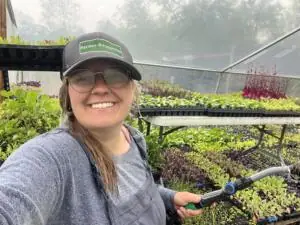
Samantha Otto is the founder and farmer of The Woven Trifecta, a 10-acre farm in western Michigan. Currently in transition to organic, the farm focuses on diversified vegetables for a CSA, local farmers market, as well as farm-to-school sales throughout the school year. Samantha raises Jacob sheep for fiber as well as assorted poultry for meat and eggs. The livestock is rotationally grazed on just over 3 acres of pasture, with 2 acres of no-till beds in production.
Samantha has a decade of hands-on farming experience and is a graduate of Michigan State University’s Agricultural Technology program. Since she started the farm, her primary focus has been on cultivating no-till organic vegetables and cut flowers. But as a curious farmer, she is continuously exploring innovative approaches to sustainable agriculture. Last year, as a participant in the Midwest GRIT program, she began integrating grains into her system, and  she has also recently incorporated livestock into her rotations to create a closed-loop system to help improve soil fertility.

From Waste Product to Resources: Building Fertility and Reducing Reliance in Off-Farm Inputs

One of the main goals of The Woven Trifecta is to reduce reliance on off-farm inputs, and to transform the farm waste products into a resource. Samantha has experimented with different anaerobic fermentation, and was interested in scaling up and fine-tuning its use as a soil amendment. She is particularly interested in incorporating waste from her livestock and compost into anaerobic ferments to improve soil fertility and plant health.

With the help of OFRF’s Farmer-Led Trial (FLT) Program, Samantha hopes to understand how anaerobic ferments impact the health of her crops. When considering which vegetable to test, the team landed on artichokes – a promising crop that her CSA members love and that has yielded well in past seasons. As a long-season vegetable with a short harvest window, the Tavor Artichoke was an ideal crop to trial.

Farm Trial Plan

To answer Samantha’s question, ‘Does an anaerobic compost tea impact yield or plant nutrition in artichokes?,’ she will weigh all harvested artichokes from each plot. Marketable artichokes will be weighed and counted separately. In addition to weights, leaf tissue samples will be collected prior to flowering stalk emergence. 10 representative samples will be taken from each plot, with one leaf collected per plant.

There are two treatments in the trial: a control with no ferment spray, and the anaerobic ferment foliar drench. Samantha will plant in 8 plots to provide sufficient replication. The trial is in a 30′ x 90′ space, in 3′ wide no-till beds, with each row containing 10 plants spaced 36’ apart. Buffer plots will be added on each side, planted with sunflowers.

plot map for on-farm trial at Woven Trifecta Farm

The recipe for the anaerobic fermentation is 60/40 with vegetation scraps and rabbit manure. Samantha brews a fresh batch every two weeks, beginning in early June and applies the fermented drench application biweekly.  A 5-gallon bucket will be suitable for each batch.

Recipe for Anaerobic Fermentation Fertilizer

Using 5-gallon buckets, mix: 

  • 60% vegetation scraps from on-farm and/or compost club program 
  • 40% manure from our rabbits.  
  • 4 cups of soil. 

These will be well mixed, with scraps being chopped into small pieces, and will fill about 3/4 of the 5-gallon bucket.  This mix will then be submerged in water (from well), covered with a lid and stored in the pump shed. The bucket will be fitted with a fermentation lid with spout to release any built-up gases over the course of the fermentation process. 

Ferment will be checked at 7, 14, and 21 days; ready to use at  21 days. Solids are then strained, and the liquid is bottled for use.  

Application: 1 part recipe to 20 parts water every 14 days, and apply it as a soil drench via backpack sprayer.

Samantha is excited to see how the ferment impacts the health and yield of her plants. The process of testing her application of the anaerobic ferment is something she hopes can impact her farm system, and possibly provide sustainable answers for other small farms like The Woven Trifecta.

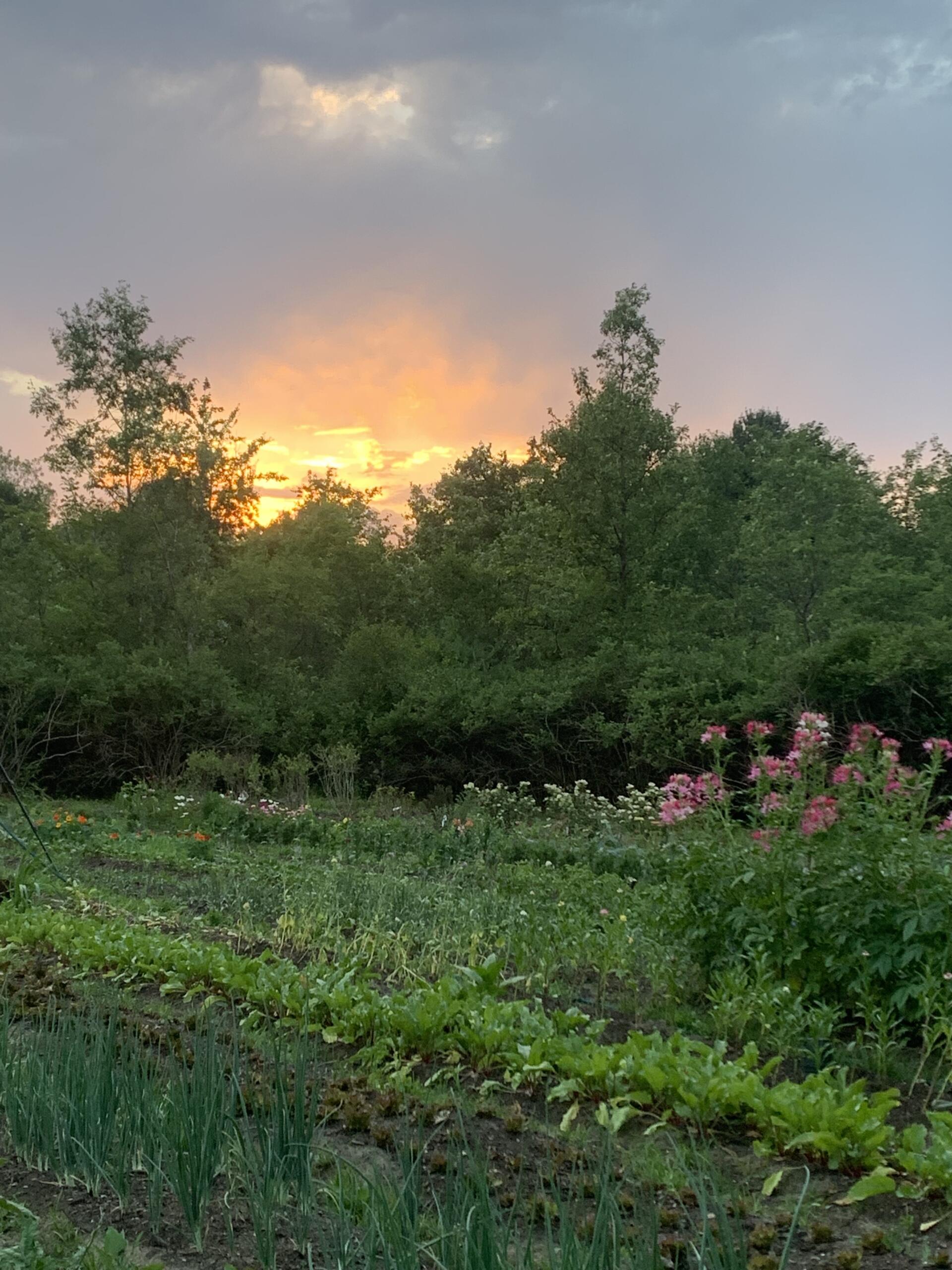
Sunset over a crop field at The Woven Trifecta

“Working with OFRF has been an amazing opportunity for our farm! Closing the loop in our production is a long-term goal of ours, and this project has provided the opportunity to take the time to explore a potential process for making that happen. It has been especially delightful to work with OFRF on creating the foundation of our project, making a once-intimidating idea very fun and feasible to trial! It has been a thrill to find on-farm solutions that support both our livestock and vegetable production. While we are a ways away from harvest, our on-farm ferment is visually showing benefits in our test plot. I look forward to collecting further data as the season progresses! This data will help us make decisions on how to incorporate ferments in our wider production in the future so that we can continue to grow beautiful, healthy, thriving vegetables for our community.

– Samantha Otto, The Woven Trifecta

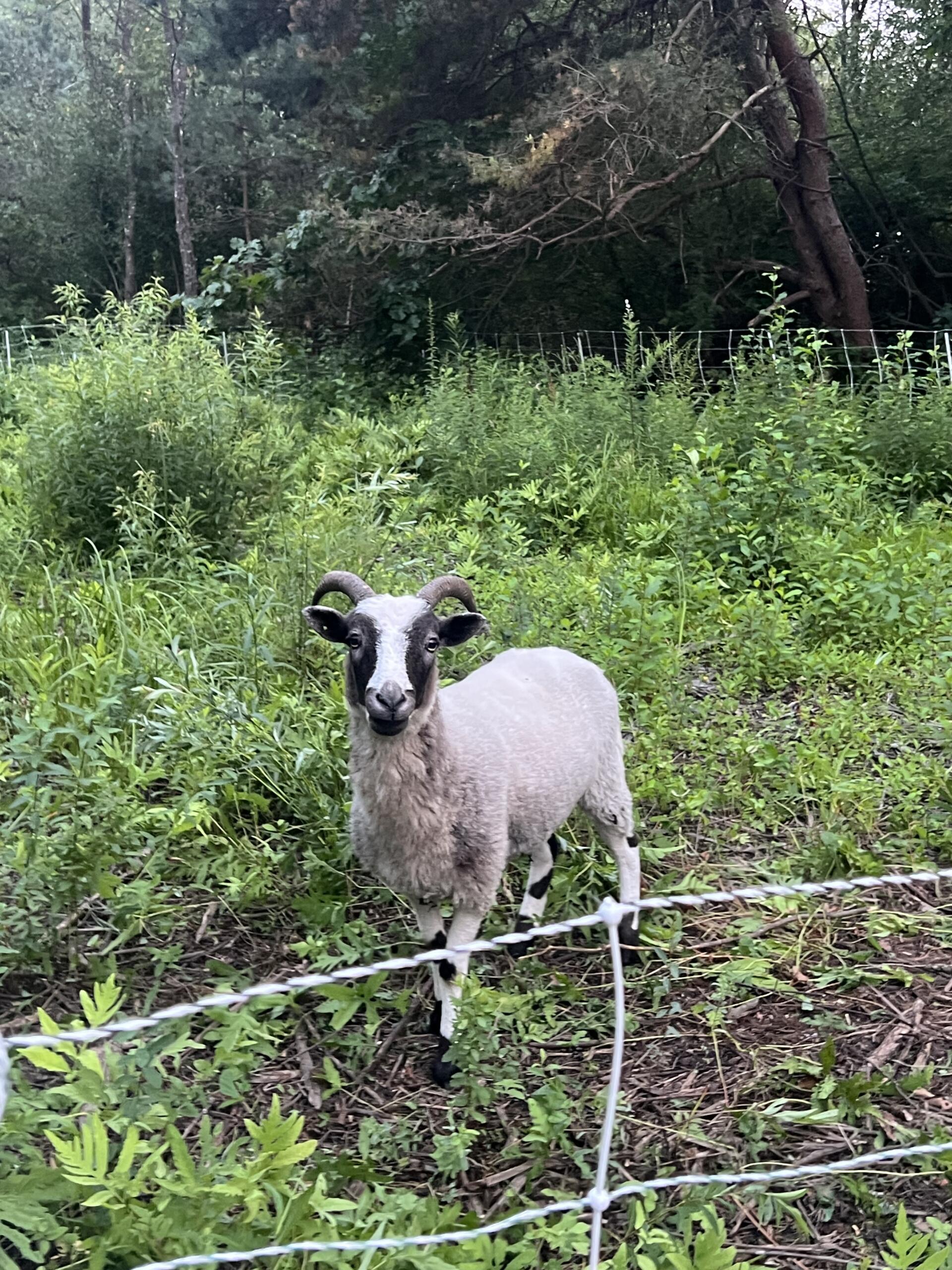
One of the livestock that Samantha integrates into her crop rotations

This is part of a series of blogs highlighting farmers who are participating in OFRF’s Farmer-Led Trials program. Farmers receive technical support to address their production challenges through structured on-farm trials. To learn more about OFRF’s Farmer-Led Trials Program, visit our website page at https://ofrf.org/research/farmer-led-research-trials/ 

To learn more about The Woven Trifecta, visit their website at https://thewoventrifecta.com/

By |2025-12-17T17:31:56-05:00September 2nd, 2025|Farmer Stories, Livestock, News, On-Farm Research, Soil Health|

Organic Farmers Withstand Climate Change with Living Soils and Regional Seed Breeding

A look at the Organic Microbiome Project

By Brian Geier

Organic farmers understand that soil health is paramount to our success. More specifically, we know that the living, microbial part of soil, sometimes called the soil microbiome, is something our farming practices can quickly and drastically alter, having serious implications for organic systems that rely on organic processes in the soil. But even though we understand that preserving soil life is good practice, we often do not know how soil life is changing, how farming practices are affecting those changes, and which practices are responsible for increases or decreases in crop or animal health because of those changes. 

To address this knowledge gap, researchers at Cornell University are utilizing a novel, farmer-led approach to studying what organic farmers are already doing on their farms and monitoring how the soil microbiome is changing over time. What they find could provide key insights into which organic farming practices might be helping producers promote and maintain soil health through droughts and other climate extremes. 

The Human Body and the Soil: An Analogy for Understanding the Soil Microbiome

To help us understand the importance and complexity of the soil microbiome (the living part of the soil that is composed of soil microorganisms), organic researcher Elias Bloom (a member of the Casteel lab at Cornell University) suggests beginning with an analogy. “The human body has more microbiome cells than it does human cells,” Bloom explained at a recent eOrganic webinar. Over 10,000 different species of microorganisms live in and on the human body, and they can have broad implications for human health. Essentially, a healthy human body is driven by a healthy microbiome.

Compare this analogy with the soil: one teaspoon of soil may have over one BILLION microorganisms living in it. And in just one small teaspoon of soil, there are often over 10,000 species of microbes, similar to the number of species found in the human body. Since microbes are involved in everything from water-holding capacity to promoting disease resistance, one begins to see that what a farmer does everyday can have serious effects on current and subsequent crops.

The Importance of the Soil Microbiome

The living portion of the soil is a primary driver of nutrient cycling, a pillar of healthy soil structure, and can enhance resilience to climate change and pests. The microbiome also helps break down pesticides, toxins, and excess nutrients. It is generally understood that high soil microbe diversity promotes pest suppression and that organic land tends to have higher soil diversity than conventional fields. Still, in some cases increases in diversity can mean increases in plant pathogens. For farmers and researchers, understanding which farming practices result in a ‘healthy microbiome’ and translate to positive effects on crop production, is complex.

The hand of a farmer holds a handful of soil.

A handful of soil at Four Fold Farm, one of 80 participating organic farms sending soil samples and production practice to the Organic Microbiome Project. Photo credit: Steven Crist

Organic Farmer Driven Research on the Soil Microbiome at Cornell 

To approach this complexity, research projects led at the Casteel lab are utilizing a unique, participatory research approach where organic farmers are providing key insights on soil management practices that could be helping them withstand pests and extreme weather events. 

“The conservation of soil microbes that promote pest management is a new and potentially groundbreaking area for organic agriculture. These microbes naturally occur on organic farms, promote plant chemical defense, and control pests.” -The Organic Microbiome Project

The Organic Microbiome Project is perhaps the largest effort to date that is documenting the soil microbiome on organic farms. Over 80 organic farms are participating. Essentially, organic farmers are sending soil samples in, accompanied with answers about farming practices, and the lab documents changes within the soil microbiome, driving some interesting findings. Rather than deciding what practices to focus on and then involving farmers, the project starts by following practices organic farmers already employ. “We allowed farmers to submit up to two samples from two different fields where they have been using different practices, and we encouraged them to pick comparisons they were interested in,” explained Casteel. In this sense, the project is inherently farmer-led, and evaluates the effects of organic farming practices already being utilized on working farms. While results are still coming in, one thing is clear: when research follows the lead of farmers, it is closely watching how farmers are adapting and building resiliency in real time.

A field at an organic farm has strips tilled with brown soil showing in between green pathways covered with grass.

Strip tillage is one of may practices used to try to help protect soil health at Four Fold Farm, NY. Researchers with the Organic Microbiome Project encourage farmers to send soil samples from areas of their farm they are interested in comparing, leading to farmer-driven insights.

Changes to the soil microbiome and shifts in plant defenses that followed certain farming practices are shown in a table form.

Some interesting insights found so far are illustrated in this graphic. On the left, some organic practices that participants are using on their farms are listed. In the middle, a summary of the change to the microbiome, and on the right, if the crops there exhibited increased or decreased plant defenses.

Standing on the Shoulders: Recent Microbiome Research and Ongoing Seed Breeding

Another project carried out by Dr. Casteel, Dr. Eli Bloom and Ethan McAnally, Leveraging Soil Microbiomes to Promote Climate Change Resilience and Adoption of Organic Agriculture (funded by USDA/NIFA’s Organic Transitions Program) is looking closely at the soil microbiome and organic seed breeding. Also partnered with organic producers, this time specifically seed breeders, the project again follows the lead of farmers, who seem to be lighting the way toward a more regional approach to seed saving that might help withstand climate change. 

The project builds on previous research on both soil microbiomes and regional seed saving, and explores several themes: 

  • Pest pressure is reduced when crops are grown in soil where they are bred. The same effect was observed when the crops were grown with soil microbiomes from regional organic farms.
  • Crops bred under protection and irrigation performed poorly during droughts. When drought conditions were introduced to the study, kale performed better than tsa tsai. Tsa Tsai has been bred in irrigated, protected conditions (greenhouses), while kale is unirrigated and often outside. These results may reflect the maxim “stress as strength”.
  • Some farms’ soil microbiomes may offer protection against drought. All crops performed slightly better during droughts on certain farms in the study.

Voices from the Organic Seed Breeders

“We believe that soil and seed are everything,” Steven Crist, farmer at Four Fold Farm and Hudson Valley Seed Company, and partner on the project, explains. “The more we grow a crop, the better it becomes.” Crist gives a powerful insight into how stress as strength is working through the long-term relationships formed when seedspeople breed crops over time on their farms.

Seed crops that make it through the challenge are almost always more resilient, year to year. We believe this has everything to do with adaptation, directly linked to the microbiome, and to seed memory. That is a slightly pseudo-scientific term but that’s how I call it in the field. The more we grow a crop, the better it becomes, is the long and short of it.” -Steven Crist, Four Fold Farm

At Four Fold Farm, Crist utilizes best practices for protecting the living soil including “mulches, compost, cover cropping, rotation, repeat”. He is also experimenting with biochar, utilizing a New York Carbon grant, and incorporating local ecotypes of native plants, which he theorizes may provide unique and potent additions to his farm’s soil microbiome by attracting and promoting native insects. This approach follows the adage “As above, so below” and Crist suggests that the breeding and feeding of native insects might be mirrored by the breeding and feeding of soil microbes below. 

Lia Babitch, organic farmer at Turtle Tree Seed Initiative and another collaborator on the project, suggests that the social and ecological aspects of growing seed are intertwined. 

The varieties that we carry have become like our children, and like our friends. They’ve grown with us and we’ve watched their steady improvement and occasional shenanigans. And they’ve become rooted in the context of this valley both agriculturally and socially.”  -Lia Babitch, Turtle Tree Seed Initiative

Turtle Tree offers a novel approach to selling seeds that connects buyers to the seedspeople (and potentially the microbiomes there) with what Bloom calls “decision support” for farmers: for varieties of seed in Turtle Tree’s catalog, potential buyers can see the farms and regions where particular lots of seed are from. (Note this option is only available in their catalog, and that it may be added to the website later.)

A field of echinacea grows at Four Fold Farm, an organic farm in New York State.

Conservation or production plantings of native plants like this echinacea at Four Fold Farm can attract specialized, native insects and birds. Some organic farmers are asking how plantings of native species may be affecting the soil microbiome through the introduction and presence of the insects and birds that the plants provide habitat for. 

Looking Ahead: The Triad of People, Plants, and Place

As time goes on, and provided funding for research like this continues, we will see more and more insights about how organic farmers’ practices are affecting the soil microbiome and resulting in increased resiliency to climate change. And along the way, it is clear that when researchers study what farmers are already doing, those insights will remain timely, farmer-driven, and translatable to other farmers eager to learn from each other.

Go to Top