
Soil Health

Farmer-Led Trials Program Spotlight: Jorge Reyes

Written by Jose Perez, OFRF’s Research & Education Engagement Coordinator
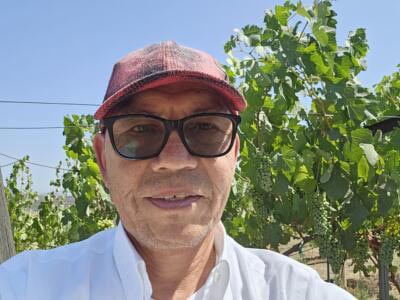
Image: Jorge Reyes in the vineyard.

Jorge proudly comes from a Mexican migrant farmworker family who had a dream of owning a farm one day. After retiring from the Navy, he was able to purchase a 3-acre vineyard located in Potrero, California. Jorge’s young vineyard produces organic grapes, and it is in the process of obtaining organic certification. Jorge plans to produce organic wine.

Finding the Right On-Farm Challenge to Focus On

Jorge was initially interested in conducting a farm trial to find solutions for suppressing gophers. These little creatures are a constant challenge at the vineyard because they burrow in the soil and chew on the roots, severely damaging or killing the vines. He was also interested in testing different practices to manage wasps during grape maturation and harvest. OFRF staff discussed with Jorge the difficulty of designing a farm trial based on these two challenges, given practical limitations, such as the size of the farm and the length of time needed.

The challenges on a young vineyard are not in short supply, so Jorge pivoted to focus on the use of mulch for soil moisture retention, weed management and grape quality. Improving soil moisture is critical to Jorge’s operation, as the irrigation depends on a solar-powered pump. The local climate conditions are generally very dry, with 9 to 11 inches of rain during the winter season. Wildfires are a frequent risk during the dry season, making soil moisture a critical factor and cost to Jorge’s operation.

On-Farm Trial Updates

With OFRF technical support, Jorge is now conducting a paired comparison where 10 grapevines with mulch will be compared with 10 vines with no mulch. Jorge applied 3 inches high of mulch around the vine (about a 4-foot area for each vine) in late May. He marked the trial area with stakes to identify each plant. 
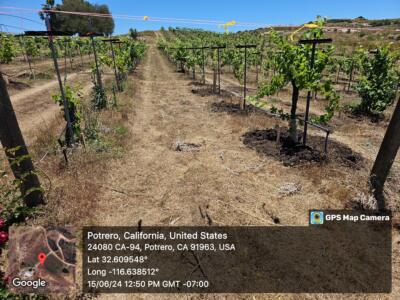
To compare the moisture levels of the two treatments, Jorge purchased a soil moisture sensor. To date, he has conducted two measurements, one in late June and one in mid-July. Based on those readings, Jorge already sees a clear winner: The soil around the mulched grapevines has consistently been showing good moisture levels, while the readings around the un-mulched plants show dry conditions. Jorge’s own observations confirm this: “The mulch is like a double win, the mulch holds the moisture for longer and it suppresses the weeds as well… There are also a lot of creatures and biological activity in the mulched areas, while just putting the soil probe into the un-mulched areas was a challenge, as the soil was hard,” Jorge said.

Image: Side-by-side trials of mulched and un-mulched grape vines.

Jorge has not cut back on irrigation, but after seeing the immediate effects of mulch, he is considering doing so, which would represent some energy and cost savings. In terms of weed suppression, the pictures Jorge took of the plants in late June are striking (see attached pictures). The mulch successfully suppressed weed growth and can represent some labor savings in the long term. Finally, Jorge is curious to know if the mulch will affect the grapes’ sugar content levels. He is planning to conduct these measurements at harvest through a Brix meter.

Below images: un-mulched grape vines on left and mulched grape vines on right. 
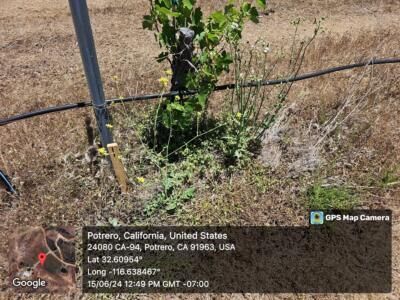
“The mulch provides a beneficial ecosystem that is thriving with beneficial organisms like rollie-pollies and pinchers which help increase the soil health. I plan to double my effort to increase the mulch application. This will lead to water conservation, increase soil health, increase my crop yield and reduce my labor requirement. This is a win-win for the environment and myself.” – Jorge Reyes
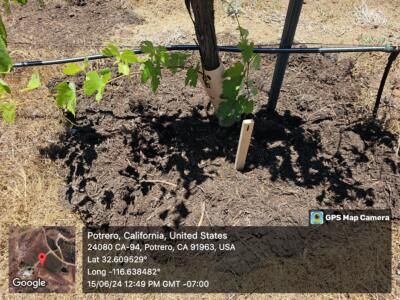
Research Results

Jorge Reyes’ farmer-led trial examined the effects of mulching on soil moisture retention, weed suppression, and labor reduction in his organic vineyard. Over the course of the growing season, Jorge applied a 3-5” layer of organic mulch around selected grapevines and monitored soil moisture levels, weed presence, and grape sugar content (Brix levels).

Key Findings:

  • Increased Soil Moisture: In both Syrah and Viognier grape varieties, mulched plots consistently retained higher moisture levels compared to unmulched plots. This effect was statistically significant in Syrah at all sampling dates and in Viognier at two out of three sampling dates.
  • Reduced Weed Pressure & Labor Needs: Jorge observed fewer weeds in the mulched plots, leading to reduced labor for trimming and vineyard maintenance.
  • Potential Impact on Grape Quality: While not formally evaluated, preliminary Brix readings suggest mulched vines had slightly higher sugar content (22 vs. 20) than unmulched vines, indicating potential effects on fruit ripening.

Encouraged by these results, Jorge plans to integrate mulching as a long-term vineyard management strategy. He is particularly interested in further exploring its impact on grape yield, soil biodiversity, and irrigation efficiency in future seasons.

For full details on the study’s methodology and results, read the final report.
At OFRF we are excited to partner with Jorge in his quest to produce a high quality organic wine, while sharing with other small scale grapevine producers the effects of mulching.

“I am 100% sold on organic, protecting our environment and learning to cohabitate with nature. Organic should be the only option, we need to consume healthy food that is not going to poison us.” – Jorge Reyes 

This story is part of a series profiling farmers who are taking part in OFRF’s Farmer-Led Trials (FLT) program. Farmers receive technical support from OFRF to address their challenges through structured on-farm trials. To learn more about OFRF’s Farmer-Led Trials Program, visit our website page at https://ofrf.org/research/farmer-led-research-trials/

Organic Researcher Spotlight: Dr. Ajay Nair

Integrating poultry, cover crops & vegetable production can reduce purchased inputs while increasing yields

Written by Brian Geier

Dr. Ajay Nair, Department of Horticulture Chair, Iowa State University

Organic farmers with successful Integrated Crop-Livestock Systems (ICLS) report benefits ranging from increased farm productivity and reduced inputs to improvements in soil fertility and increased nutrient density in food products. Additionally, organic farmers report site-specific benefits, for instance livestock grazing that provides unique options for crop pest control or decreases the need for mechanical cultivation (learn more about these specific benefits to organic farmers in OFRF’s Crop-Livestock Integration resources). 

While these benefits are becoming better understood, researchers at Iowa State University, led by Dr. Ajay Nair, wanted to look more closely at a specific crop-livestock integration scenario: poultry and diversified organic vegetable production systems. “Commonly researched and implemented methods of crop-livestock integration in the United States,” they write, “include grazing livestock on cover crops, rotational grazing of permanent pasture, and grazing livestock on crop residues such as corn or wheat. Several reviews on crop-livestock integration discuss its benefits, such as increased soil organic carbon, aggregate stability, enhanced nutrient cycling, and increased soil nitrogen (N). There is, however, limited research on the integration of animals in vegetable production.” Now, with funding from USDA’s Organic Agriculture Research & Education Initiative (OREI), Dr. Nair and a team of researchers across the country are evaluating poultry, cover crop and vegetable integration.  

Pastured Poultry: a unique fit for diversified vegetable production

Organic vegetable production systems are often highly diversified, requiring intensive management techniques and quick turnaround times between crops. Poultry, which require less space and are easier to move than other livestock could prove to be a unique fit for organic vegetable farmers. Add to that the relatively low capital investment and many growers and researchers wonder if integrating poultry with vegetables could be profitable while still meeting food safety and National Organic Program requirements. “‘How will I integrate poultry? Where? When?’ That was the number one question our growers had,” explains project lead, Dr. Nair.

Above, left: the three rotations in the study are: 1) vegetable > vegetable > cover crop (V-CC), 2) vegetable > cover crop > poultry (V-CC-P), and 3) vegetable > poultry > cover crop (V-P-CC). Above, right: a floorless coop moves around a cover crop in a plot where treatment 2 (V-CC-P) is being evaluated.

The research evaluates the effects of pasturing poultry in movable, floorless coops through vegetable and cover crop rotations. The multi-state project, which involves research in Iowa, Kentucky and California won’t conclude until August of 2024, but it already has several key findings:

  1. Poultry and cover crops can successfully be integrated with vegetable production systems.
  2. Where poultry are integrated with vegetable production systems, nitrogen inputs can be reduced while vegetable yields are increased.
  3. In field tests at Iowa State University, over time, more weeds accumulated in systems where poultry were integrated with vegetables than in systems without poultry.  
  4. Birds in this study are more efficient at converting food to meat. The Feed Conversion Ratio (FCR) of birds in this study is almost double that of conventionally raised broilers. 

The impact of USDA funding for organic research & farmers

Dr. Nair, a professor at the Department of Horticulture at Iowa State’s College of Agriculture and Life Science who in July of this year became the Department Chair, credits the USDA/NIFA’s Organic Research and Extension Initiative for making projects like his possible all over the country.

“OREI is the foundation for several of the organic projects that happen across the country, and we are very thankful for NIFA for having such a dedicated program for organic growers. It serves as a good platform for us to reach out to organic growers and for organic growers to reach out to us.” -Dr. Ajay Nair

You can learn more about this project and the importance of OREI in this video excerpt from OFRF’s interview with Dr. Nair in early 2024:

This research is funded by the USDA/NIFA’s Organic Research and Extension Initiative. To learn more about OFRF’s advocacy work to protect and increase this type of funding, and how you can help become an advocate for organic farming with us, see our Advocacy page.

By |2025-12-17T18:01:25-05:00July 17th, 2024|Livestock, News, On-Farm Research, Soil Health|

Crop Livestock Integration with John Bitter

In OFRF’s 2022 National Organic Research Agenda (NORA), organic farmers and ranchers across North America shared a common concern about the lack of technical assistance and educational resources available for Integrated Crop-Livestock Systems (ICLS). Integrating crops and livestock results in numerous benefits, however the process can also lead to increased complexity, especially for farmers who must adhere to National Organic Program rules and regulations.

This series of resources focused on Crop-Livestock Integration is informed by interviews with four highly-experienced organic producers that shared their challenges, successes, and advice for others interested in integrating livestock and crops on their organic farms.

This video features John Bitter, Production Manager and co-owner of Frog Song Organics. Frog Song is a diversified organic farm producing vegetables, orchard crops, herbs, flowers, pork, and eggs. Operating on 62 acres in north Florida, Frog Song employs about 30 full-time workers, supplies direct and wholesale markets in several nearby cities, and runs an online, customizable CSA program. In this video, John talks about integration of crop and animal production systems at this thriving organic farm.

Plants sprouting with the Organic Farming Research Foundation Logo

Benefits of Crop-Livestock Integration

In OFRF’s 2022 National Organic Research Agenda (NORA), organic farmers and ranchers across North America shared a common concern about the lack of technical assistance and educational resources available for Integrated Crop-Livestock Systems (ICLS). Integrating crops and livestock results in numerous benefits, however the process can also lead to increased complexity, especially for farmers who must adhere to National Organic Program rules and regulations.

This series of resources focused on Crop-Livestock Integration is informed by interviews with four highly-experienced organic producers that shared their challenges, successes, and advice for others interested in integrating livestock and crops on their organic farms.

Learn about the benefits of crop-livestock integration, including reduced inputs, improvements in soil tilth and health, higher nutrient densities in food and forages, pest control in crops and livestock, decreased need for mechanical cultivation, and more.

Benefits of Crop Livestock Integration report cover

Crop Rotations and Crop-Livestock Integration

In OFRF’s 2022 National Organic Research Agenda (NORA), organic farmers and ranchers across North America shared a common concern about the lack of technical assistance and educational resources available for Integrated Crop-Livestock Systems (ICLS). Integrating crops and livestock results in numerous benefits, however the process can also lead to increased complexity, especially for farmers who must adhere to National Organic Program rules and regulations.

This series of resources focused on Crop-Livestock Integration is informed by interviews with four highly-experienced organic producers that shared their challenges, successes, and advice for others interested in integrating livestock and crops on their organic farms.

Farmers with ICLS utilize carefully-planned rotations of  crops and animals that intersect and overlap to provide benefits to soil, crop, and livestock health. Read about and see illustrations of examples of integrated crop and animal rotations developed by organic farmers.

Crop Rotations and Crop-Livestock Integration report cover

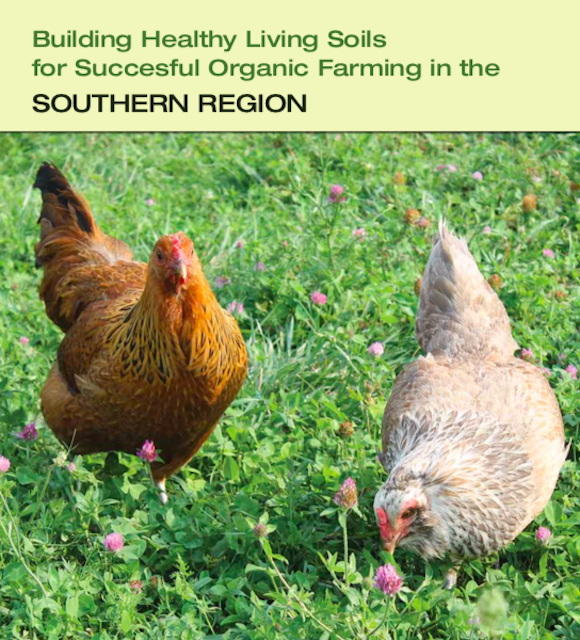
Building Soil Health in the South: OFRF’s New Guidebook Explores Latest Research

March 30, 2021 – Healthy, living soils provide the foundation for successful and profitable organic farming and ranching. In the South, organic producers face intense pressure from weeds, insect pests, parasitic nematodes, and plant-pathogens; summer heat extremes, drought, and flood; and soil types with inherent fertility limitations. In addition, long growing seasons can make it harder to rebuild soil organic matter, especially during intensive crop production.

In OFRF’s 2015 nationwide survey of organic producers, 79% of respondents from the South cited soil health as a high research priority, somewhat higher than the national average of 74% (Jerkins and Ory, 2016). Many respondents expressed a need for practical information on how to build soil health in hot climates that burn up soil organic matter (SOM) and promote aggressive weed growth. The goal of this new guidebook is to help the region’s current and aspiring organic producers develop effective, site-specific soil health management strategies that support successful, resilient enterprises.

Building Healthy Living Soils for Successful Organic Farming in the Southern Region explores how to apply organic soil health principles to the region’s soils through a series of practical steps and strategies, illustrated by innovative farmer stories and brief descriptions of underlying scientific concepts. The guidebook also includes a list of resources for additional reading, a description of the inherent properties of soil types commonly found in the South, and a summary of the latest soil health research being conducted in this region.

This latest guidebook builds on OFRF’s popular series of guidebooks and webinars focused on organic farming and soil health. The entire series is available to download for free.


By |2025-12-10T15:08:47-05:00March 30th, 2021|News, Soil Health|

Organic for Climate Research Priorities

September 1, 2020 – As legislators continue to consider comprehensive climate legislation, OFRF is working closely with Congress and partner organizations to ensure the voices of organic farmers are heard on Capitol Hill. Organic agriculture has great potential to sequester carbon, mitigate greenhouse gas (GHG) emissions, reduce the environmental impacts of fertilizers and pesticides, and build resilience to a changing climate in our farms, ranches, rural communities, and food systems. Significant investments should be made in organic agriculture to advance its climate change mitigation potential.

Historic wins for organic agricultural research in the 2018 Farm Bill provide $395 million for organic agriculture research and education over the next ten years and secure permanent funding for organic research at USDA. OFRF’s organic research priorities focus on ensuring this increased investment advances organic agriculture’s contribution to climate change mitigation and adaptation and responds to the top challenges facing producers who want to farm more sustainably.

Below is a summary of our recommendations:

  1. Advance soil health and fertility management to sequester carbon, reduce greenhouse gas emissions, and build resilience to climate change stresses – Soil health, soil biology and biodiversity, and fertility management remain top priority research topics for organic producers, especially as they experience the growing impacts of climate disruption. Further research is needed on organic soil management strategies that optimize agricultural resilience, carbon sequestration, and net GHG reduction.
  2. Increase research on systems-level approaches to weed, pest, and disease management to minimize pesticide use, conserve biodiversity, and enhance carbon sequestration – Organic farmers are prohibited from using synthetic inputs to manage weeds, pests, and disease, and therefore rely on some level of physical soil disturbance to control weeds. Crop diversification, cover cropping, weed-competitive cultivars, and sound nutrient management can limit weed pressures, reduce the need for tillage and cultivation, and thereby protect soil carbon and soil health. Organic farmers and all farmers will benefit from developing practical tools and integrated strategies to manage weeds with minimal tillage.
  3. Promote research on organic livestock and poultry, advanced grazing management, and crop-livestock integration to sequester carbon, reduce greenhouse gas emissions, and enhance climate resilience of livestock production systems – USDA-funded organic animal agriculture research continues to lag far behind consumer demand for organic meat, dairy, and eggs. Furthermore, recent research highlights the climate benefits provided by advanced rotational grazing and crop-livestock integration. More research is needed so organic ranchers are equipped with the tools and resources they need to manage livestock and poultry in climate-friendly ways.
  4. Promote breeding and development of new public crop cultivars for resilience to climate disruption and performance in climate-mitigating organic production systems – Privatization of the seed industry and replacement of public cultivars with patented seeds have substantially narrowed seed choices for farmers, and revoked their right to save and select seeds adapted to their local conditions. Furthermore, with ongoing climate disruption, farmers urgently need crop cultivars specifically developed for stress hardiness. Organic farmers need regionally adapted, climate resilient non-GMO seeds suited to their production systems and markets.

Read the complete research priorities here. Don’t forget to check out our climate toolkit for advocates, and policymakers and our policy recommendations for making regenerative organic farming systems part of the solution to the climate crisis.


By |2020-09-01T21:21:42-04:00September 1st, 2020|News, Soil Health|

Cover Crops for Weed Management

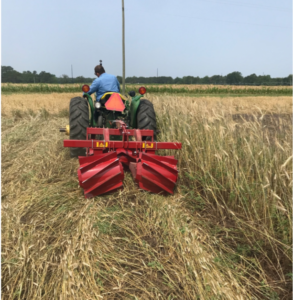
August 18, 2020 – Roller crimper termination of cover cropsBalancing soil health and weed management is a serious challenge for organic producers. Tillage is an effective method of controlling weeds, but is energy intensive and can degrade soil health. Cover cropping is an alternative practice that can suppress weeds and build soil health. However, when to terminate cover crops is not straightforward. Terminating cover crops using a roller crimper—a piece of equipment that gently pushes the cover crop residue over the soil surface—has been shown to effectively suppress weeds in row-crops such as soybean, but less is known about the efficacy of roller-crimped cover crops in vegetable production. In 2019, OFRF provided a grant to Professor Alex Woodley at North Carolina State University to begin addressing this question in sweet potatoes, an economically important crop in North Carolina.
The study used a roller-crimper modified for sweet potato beds to assess whether fall planted cover crops mitigated the need for economically and environmentally costly tillage practices in organic sweet potato systems. In response to farmer-identified challenges, the study also examined whether cover crops present a tradeoff between soil health and pest management by providing habitat for wireworms, a significant pest in the study region.

Overall, the study demonstrated that when cover crop biomass is low, weed suppression is limited in cover cropped sweet potato beds. Yields were also significantly reduced in cover cropped beds in comparison to tilled beds, as a result of strong competition from weeds for water and nutrients, which was controlled through repeated cultivation in the tilled beds. Palmer Amaranth was primary driver in yield loss, which showed a remarkable ability to reduce soil nitrogen by 60%. Issues with drought and deer pressure may have also contributed to reduced yields overall, as yields in the tilled beds were also lower than expected. Cover cropping did not appear to increase the presence of wireworms, suggesting there is not a tradeoff between soil health and pest management in this system.

The project identified significant obstacles associated with using cover crop litter for weed management in sweet potato systems, indicating further research is warranted to optimize weed control practices and yields. The preliminary findings of this OFRF-funded project were leveraged to secure a $1.9 million OREI grant that will continue to explore how to implement roller-crimped cover crops for weed suppression in organic sweet potatoes.

Read the final report here.


By |2020-09-08T23:24:37-04:00August 18th, 2020|News, Soil Health|

Soil Microbial Interactions in Organic Farming

This guide explores how diverse soil microorganisms—bacteria, fungi, protozoa, and microfauna—drive nutrient cycling, plant health, and ecosystem balance in organic farming systems. It covers microbial roles in plant nutrition, bioremediation of contaminated soils, and biological control of weeds and diseases. Readers will gain science-based insights into practices that build organic matter, support beneficial microbes, and strengthen soil resilience over time.

Photo of Soil Microbial Interactions & Organic Farming report cover
By |2026-03-02T11:45:29-05:00September 24th, 2019|Resource, Soil Health|
Go to Top