
Weeds

Crop Livestock Integration with John Bitter

In OFRF’s 2022 National Organic Research Agenda (NORA), organic farmers and ranchers across North America shared a common concern about the lack of technical assistance and educational resources available for Integrated Crop-Livestock Systems (ICLS). Integrating crops and livestock results in numerous benefits, however the process can also lead to increased complexity, especially for farmers who must adhere to National Organic Program rules and regulations.

This series of resources focused on Crop-Livestock Integration is informed by interviews with four highly-experienced organic producers that shared their challenges, successes, and advice for others interested in integrating livestock and crops on their organic farms.

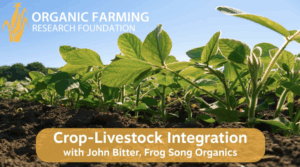
This video features John Bitter, Production Manager and co-owner of Frog Song Organics. Frog Song is a diversified organic farm producing vegetables, orchard crops, herbs, flowers, pork, and eggs. Operating on 62 acres in north Florida, Frog Song employs about 30 full-time workers, supplies direct and wholesale markets in several nearby cities, and runs an online, customizable CSA program. In this video, John talks about integration of crop and animal production systems at this thriving organic farm.

Plants sprouting with the Organic Farming Research Foundation Logo

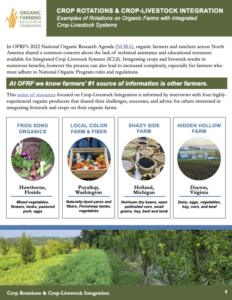
Crop Rotations and Crop-Livestock Integration

In OFRF’s 2022 National Organic Research Agenda (NORA), organic farmers and ranchers across North America shared a common concern about the lack of technical assistance and educational resources available for Integrated Crop-Livestock Systems (ICLS). Integrating crops and livestock results in numerous benefits, however the process can also lead to increased complexity, especially for farmers who must adhere to National Organic Program rules and regulations.

This series of resources focused on Crop-Livestock Integration is informed by interviews with four highly-experienced organic producers that shared their challenges, successes, and advice for others interested in integrating livestock and crops on their organic farms.

Farmers with ICLS utilize carefully-planned rotations of  crops and animals that intersect and overlap to provide benefits to soil, crop, and livestock health. Read about and see illustrations of examples of integrated crop and animal rotations developed by organic farmers.

Crop Rotations and Crop-Livestock Integration report cover

Organic Management Guide for Canada Thistle

Effective Canada thistle management centers on exhausting its storage roots and preventing new seed production. This factsheet highlights the critical role of timing, especially removing shoots in late spring, when root reserves are at their lowest. Farmers will find practical organic strategies to disrupt regrowth, reduce thistle vigor, and maintain long-term field health.

By |2025-12-08T12:36:12-05:00December 8th, 2025|Resource, Weeds|

Managing Yellow and Purple Nutsedge in Organic Systems

Controlling weeds is the top challenge for organic farmers, and nutsedges are among the most persistent weeds in organic production, with unique stress tolerances that make them difficult to control. This factsheet explains the biology and environmental preferences of yellow and purple nutsedge, along with organic management tactics tailored to their behavior. It also includes key preventative measures to help limit establishment and reduce long-term impacts on crop and soil health.

By |2025-12-08T12:30:19-05:00December 8th, 2025|Resource, Weeds|

Field Bindweed Management: Organic Weed Control Strategies

Controlling weeds is the top challenge for organic farmers, and field bindweed can be especially persistent. This factsheet provides species-specific strategies for managing and preventing field bindweed in organic cropping systems. It includes practical tactics, tips for integrating them into your operation, and links to additional resources for further guidance.

By |2025-12-08T12:21:30-05:00December 8th, 2025|Resource, Weeds|

Farmer-Led Trials Program Spotlight: Farmacea

Farmacea Strawberry Trial Explores Sustainable Mulching

Written by Mary Hathaway, OFRF’s Research & Education Program Manager

In the heart of Munith, Michigan, Farmacea is undertaking an exciting experiment to help enhance their farm systems and design. Run by Mike Lucas and Rollin Baker, the farm’s 31 acres had previously been dedicated to conventional corn production for many decades. Over the past two years, Mike and Rollin have been diligently working to convert about 2 acres into arable, quality land by incorporating leaf mold and other organic materials. As they work to transition their land to certified organic, they are excited and energized to grow healthy, sustainable fruits and vegetables for their community. Mike and Rollin are committed to bringing the land back to life and hope to honor the tradition of Food as First Medicine.

The Strawberry Trial: Plastic vs. Clover

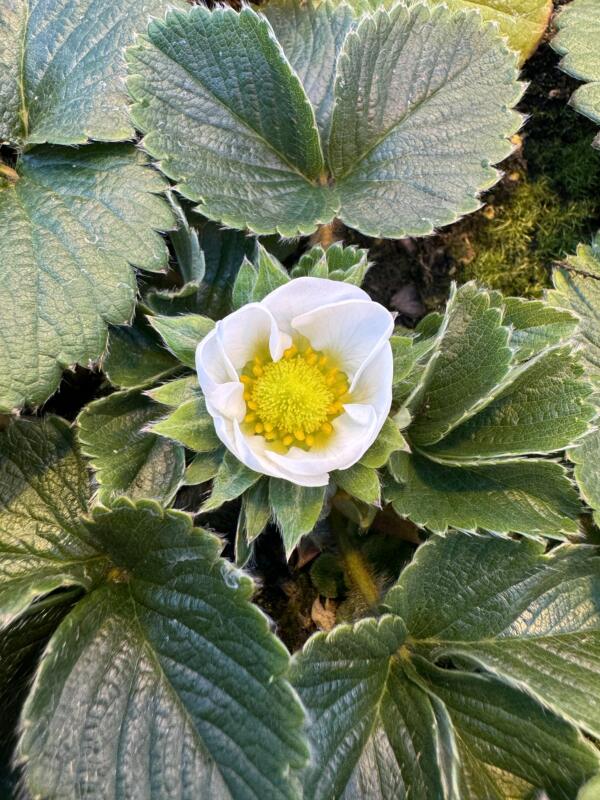
On-farm research trial at Farmacea comparing clover living mulch with conventional plastic mulch in organic strawberry crops.Farmacea’s project is a strawberry trial comparing traditional plastic mulch to a living mulch of white Dutch clover. Their research question is simple but will help Farmacea determine which strawberry planting system will work best for them in the coming years: “Does a living clover mulch produce higher strawberry yields than a plastic mulch?”.

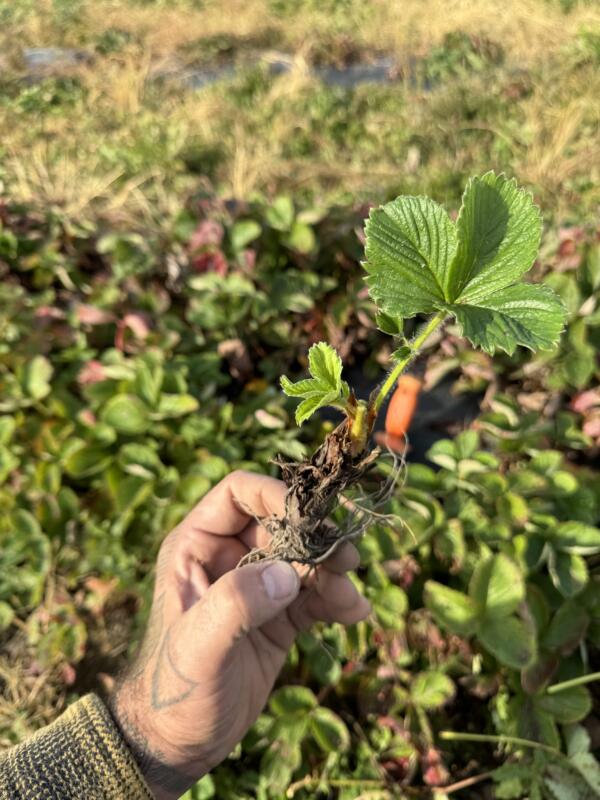
To answer this, they’ve set up six beds. Three beds use the conventional plastic mulch, while the other three are planted with New Zealand White Clover (Trifolium repens) to serve as a living mulch. Both sets of beds include a mix of strawberry cultivars: Earliglow, Chandler, Allstar, and San Andreas, ensuring consistency in strawberry varieties across the trial.

Careful initial planning was essential, focusing on a consistent number and mix of strawberry plants in each bed. Mike and Rollin standardized the beds and timed clover planting, which faced weather-related delays and farm facility damage. Additionally, deer intrusions necessitated the construction of higher fences to protect the crops.

What They’re Measuring

Farmacea will be tracking several key metrics to determine the success of each mulching method:

  • Yield: Weight of harvested berries, percent marketable yield, and pint counts.
  • Brix: A measure of sugar content in the berries.
  • Weed Pressure: Observations and frequency of weeding interventions.
  • Photo Documentation: Keeping a visual record of the trial’s progress.
  • Soil Testing: Collecting samples to analyze soil health.

Data is being collected consistently over the season, with harvests twice weekly. They plan to document everything from the number of pints of berries to the weight of both marketable and unmarketable yields. Brix levels are being measured to gauge the sweetness of the berries and will ideally be taken at three intervals during the strawberry season.

Why This Matters

Farmacea’s trial is about more than just growing strawberries. It’s about finding sustainable options for weed suppression and improving soil health through practices like cover cropping. They are also interested in decreasing their reliance on nonrenewable resources and preventing microplastic contamination in their soil. Implementing a living mulch strategy is intended to lessen the need for manual weeding, enhance soil structure, and foster an environment that naturally inhibits weeds.
“For too long, the bulk of attention, funding, and resources in the agricultural research world have gone toward so-called ‘conventional’ farming methods. As a result, advances in organic farming practices have stalled and many today consider it an inefficient, outdated, and impractical way to produce food. We couldn’t disagree more. We see participating in a research trial on organic farming to be an important step in turning this tide, and hope that it will lead to better understanding and acceptance of these essential practices.”

– Rollin & Mike, Farmacea
Looking Ahead

As the trial progresses, Farmacea will continue to monitor and collect data. Soil tests will be conducted, and observations on weed pressure will be recorded. At the end of the trial, they will analyze the results to determine which mulching method provides the best yields, berry quality, and weed control.

This trial at Farmacea is a perfect example of how farmer-led research can lead to valuable insights and sustainable agricultural practices. By sharing their findings, Farmacea contributes to a broader community of farmers and researchers working towards a healthier, more resilient food system.

Stay tuned:

  • Follow Farmacea on Instagram @farma.cea to see photos and updates as Farmacea’s strawberry trial unfolds!
  • Check back here for future blog posts on the trial’s progress.

This story is part of a series profiling farmers who are taking part in OFRF’s Farmer-Led Trials (FLT) program. Farmers receive technical support from OFRF to address their challenges through structured on-farm trials. To learn more about OFRF Farmer-Led Trials Program, visit our website page at https://ofrf.org/research/farmer-led-research-trials/

By |2025-12-17T17:37:24-05:00May 29th, 2025|Farmer Stories, News, On-Farm Research, Weeds|

What’s Happening with Organic Farming Research in Pennsylvania

Written by Brian Geier, OFRF Communications Manger. This article was originally published in Pennsylvania Certified Organic’s (PCO) Organic Matters publication. See the article in PCO’s Winter/Spring 2025 edition.

Before diving into the importance and impact of organic research in Pennsylvania, let’s start with some national context. Nationwide, certified organic produce now makes up more than 15% of total produce sales in the United States. Organic dairy and eggs now constitute more than 11% of the total market. And overall, organic sales have doubled over the last 10 years and in 2024 made up about 6% of the total US food market. By most measurements, organic food is trending upward. Most notably, the growth of organic sales is consistently outpacing the growth of the overall food market. To say it another way, we might be heading into a future that is more and more organic! 

But will we get there? 

Despite the growth of the organic sector, organic agriculture research funding makes up less than 2% of the total research at the USDA, and less than 1% at the Agricultural Research Service (ARS). Additionally, much of the research focused on conventional agriculture relates to chemical applications or genetic traits—technologies that organic producers do not, and if certified, can not, use. To put it another way, organic research benefits all farmers, including conventional ones, but not the other way around.

In order to sustain the growth in organic acreage, producers, and products, it is crucial that more USDA funding be organic and applicable to all farmers. National policy priorities identified by the Organic Farming Research Foundation (OFRF) include:

  • Increasing USDA’s research funding for organic research through both competitive grant programs at the National Institute of Food and Agriculture (NIFA) and intramural research at ARS to reflect its market share and growth trajectory.
  • Fully funding the Organic Data Initiative to provide the necessary market analysis of a rapidly sophisticating sector. 
  • Expanding the accessibility and applicability of technical and financial assistance programs for organic farmers. 

To learn more about this policy work that supports organic nationwide and in Pennsylvania, visit OFRF’s advocacy page.

Organic Research in the Keystone State

Pennsylvania is a powerhouse of organic agriculture. It ranked 4th in the nation with over 100,000 certified acres and 1,200+ farms generating $1 billion in sales in 2021, according to the latest organic survey by the National Agricultural Statistics Service.

The USDA’s NIFA has awarded over $28 million in grants to the state’s research institutions for organic research. Penn State University has played a crucial role, investing $12 million. The ARS has historically funded 17 projects in the state researching organic topics, but currently has no active projects. 

Organic farmers in the state and region have identified three key research concerns (according to the 2022 National Organic Research Agenda): 

  • Climate adaptation and resilience. 
  • Pest management.
  • Soil health.

Active Research Projects in Pennsylvania

Recent NIFA investments, through programs like the Organic Research and Extension Initiative (OREI) and the Organic Transitions Program (ORG), have provided nearly $12 million over the past four years to ongoing projects with an organic focus in Pennsylvania. Key projects at Penn State focus on intensifying production and improving resilience of organic grains, developing a nitrogen decision support tool, testing anaerobic soil disinfection (ASD) in fields and in high tunnels, tracking foraging patterns of organic bees, evaluating perennial crop rotations, and developing parasite resistance in dairy cattle. Another project looking at immersive experiential education of urban educators is underway at Drexel University.

Front cover of OFRF's Organic state Factsheet for the state of Pennsylvania

OFRF’s State-By-State leave-behinds provide data on the organic industry and organic research in states, and can be used to help farmers, researchers, and advocates when articulating needs for proposals or advocating for policy.

OREI-funded research on organic grain production (led by Dr. John Wallace) builds on previous research on reduced and no-til strategies, including planting into high-residue cover crops. Credit: Penn State Weed Science.

Besides providing new knowledge to organic growers, each of these research projects have other direct and indirect benefits worth noting. The Economic Research Service estimates that every $1 spent on agricultural research generates an additional $20 in benefits to the economy. In Pennsylvania, that means the $28 million for organic research translates to $560 million in economic activity. This effect can be seen given the growth of the value in Pennsylvania’s organic production between 2019 and 2021. In 2019, Pennsylvania had 1,039 organic farms with over $740 million in farmgate sales. In 2021, those numbers grew to 1,123 organic farms generating over $1 billion. Research provides real economic opportunities to farms looking to maximize both their economic return and their ecological impact.

Additionally, organic research provides professional training opportunities for undergraduates, graduates, and postdoctoral fellows on organic systems, and promotes symbiosis between up-and-coming researchers and the organic community. As Dr. Ajay Nair, newly appointed as the Department of Horticulture Chair at Iowa State University explained in a recent interview with OFRF, OREI “is the foundation for several of the organic projects that happen across the country. It serves as a good platform for us to reach out to organic growers and for organic growers to reach out to us and say, ‘Hey, can we address this particular issue that is coming up?’ These OREI grants,” he explains, are “actually helping to build our network…to help us build teams across the country.” 

How Pennsylvania Research Benefits Growers Across the Eastern US

Just as organic research can be applicable to all farmers, multi-state projects led in Pennsylvania are bringing new findings to organic farmers facing similar challenges across regions. For example, the OREI-funded project assessing ASD in field, led by Dr. Gioia at Penn State, includes similar research plots led by Dr. Xin Zhao at University of Florida. Results from Pennsylvania may provide insights for growers in the Northeast who face challenges managing soil borne diseases, while the plots in Florida reflect conditions faced by organic growers in the Southeast, but results from each region might inform growers who face similar challenges to similar cropping systems. Growers interested in managing soil health with ASD in the Upper Midwest or the Southeast might find the eOrganic webinar from Dr. Zhao valuable. The webinar focuses on selecting the right carbon source for the organic practice of ASD, which includes insights from the trials on Pennsylvania farms. All growers who want to use ASD to support their transition period to organic farming may be interested in the additional grant awarded to Dr. Gioia and his team to assess the economic viability of using ASD during the transition to organic to control pests and weeds. Additionally, any grower using or considering using ASD can share their story and contribute to the project. “The survey,” Dr. Gioia explains “is part of the bottom-up approach our team have been using to improve the ASD application method and make sure that our research is relevant to growers and meets their needs.”

Research at Penn State evaluates the impacts of cover crop residues combined or not with wheat bran and molasses as a carbon source for ASD applications on lettuce. The project supports similar research being conducted at the University of Florida. Credit: Francesco Di Gioia/Penn State.

Completed Projects Provide New Resources for Organic Growers

Aside from the active projects above, several NIFA-funded organic research projects have been completed in Pennsylvania. While they may be concluded, the benefits of these organic projects continue. The results of these studies are not limited to publication in academic scientific journals or relevant only to scientists. Researchers, farmers, and extension specialists often collaborate to share the results of studies in ways that are meaningful and applicable to farmers. 

Take soil microbial management, for example. An OREI-funded study led by Dr. Jason Kaye at Penn State involved adding different sources of microbes (composts, forest soils, and other sources) to soils and measuring microbial populations. The project partnered with Pasa Sustainable Agriculture to collaborate with working farmers to conduct studies on working farms. While measurements of soil microbes may not be enough to provide specific recommendations to growers, the knowledge of how microbe populations change under management conditions and how they interact with plant crops can help farmers make better decisions.

Assuming soil microbes are fascinating to everyone with an interest in organic matters, let’s digress here for a moment. There are a myriad of ways that microbes can help or hinder organic systems: Microbes called biostimulants can release hormones into the soil that can help increase plant growth, while others can degrade the stress chemicals that plants produce during drought, helping plants become more resilient. Some microbes called biofertilizers can unlock nutrients in soils that plants cannot access themselves, helping where there may be excess nutrients, while other biofertilizers exchange nutrients directly with the plants in exchange for carbon. And get this—some perform better than others. That is, some biofertilizers that exchange phosphorus for carbon, called arbuscular mycorrhizal fungi (AMF), offer plants more phosphorus in exchange for the same amount of carbon when compared with other AMFs. 

When research-generated insights like these are made available and then accessed, farmers can make better-informed decisions for years to come. All of this fascinating information and more is available to farmers on eOrganic (see Management of Soil Microbes on Organic Farms and Soil Microbes in Organic Cropping Systems 101). Launched in 2009, eOrganic is a national, internet-based, interactive, user-driven, organic agriculture information system for farmers and agricultural professionals.

Want To keep Up With Organic Research in Your State or Nationally?

Aside from using eOrganic, growers and researchers can look forward to a new Organic Content Hub being developed by the OFRF, coming in early 2025. The Content Hub will be searchable by topic, crop, and region, and will provide users with the most current research relevant to organic farming. (Follow OFRF on social media and sign up for our newsletter to get updates on the Content Hub, organic research updates, new organic resources, and more.)

A figure developed by a graduate student (Laura Kaminsky) working on an OREI-funded project during 2019-23 at Penn State, illustrates examples of beneficial microbes. The left diagram shows nitrogen-fixing bacteria, housed either in nodules on legume roots or free-living in the soil. The right diagram illustrates arbuscular mycorrhizal fungi (AMF) (pink) associated with plant roots. See Soil Microbes in Organic Cropping Systems 101.

Moving Forward With Organic Research 

Organic farming research is generating economic activity in Pennsylvania, providing professional development to researchers and students across the east, forming regional networks between researchers and growers, and producing publications being used by organic growers across the country. One might say that the current state of research in Pennsylvania is healthy and humming! 

Looking to the future, it is critical that federal funding keeps up with the growth of the organic movement nationally and in the state. OFRF and partners work daily to bolster and protect this funding, and we are always looking for farmer and researcher partners in this work. If you are an organic farmer or researcher and are willing to share your story, your experiences can be some of the best fodder for advocating for or directing future organic research in Pennsylvania.

By |2025-12-09T17:39:38-05:00March 20th, 2025|Cover Crops & Crop Rotation, Insects & Diseases, News, Soil Health, Weeds|

Farmer-Led Trials Forum 2024

OFRF believes in supporting organic farmers and ranchers in their constant search for innovation and farm profitability. The Farmer-Led Trials (FLT) program puts farmers in the driver’s seat and recognizes their wisdom, experimentation, and problem-solving skills. Built in the spirit of curiosity and collaboration, this program supports farmers and ranchers in conducting impactful research that can address their unique challenges. The FLT provides farmers with technical assistance and a small amount of funding to investigate and learn about solutions to their most pressing production challenges.

In this forum, you will hear from four of the organic farmers in the 2024 FLT cohort:

  • Maggie Dungan (Salad Days Farm, KY),
  • Jorge Reyes (Reyes Vineyard, CA),
  • Nathan Lada (Green Things Farm Collective, MI), and
  • Rhianna Simes (Verdant Phoenix Farm, OR).

OFRF staff will also provide an overview of steps to conduct on-farm research trials, share opportunities to participate in the program, and explain how it can impact your farm operation.

Farmer-Led Trials Program Spotlight: Salad Days Farm

Written by Mary Hathaway, OFRF’s Research & Education Program Manager

A female farmer in a purple coat smiles as the camera in front of rows of lettuce growing in a high tunnel.

Maggie Dungan, farmer at Salad Days Farm

Salad Days farm is a diverse vegetable operation situated on 30 acres in Versailles, Kentucky. Certified organic since 2015, farmer Maggie Dungan’s interest in growing food started with an education in nutrition and the long dream for her family to be self-sustaining. The farm grows year-round in the field and in hoop houses to supply their on-farm store, restaurants, schools, and four weekly farmers’ markets.

Maggie works hard to keep mechanization on her farm minimal, focusing on cover cropping, minimal tillage, and other soil health conservation practices. She keeps only 2-4 acres of the farm in production, allowing her to focus on the quality of her systems to grow high-value and sustainable food for her community.

Impact of Solarization on Soil Microbiology

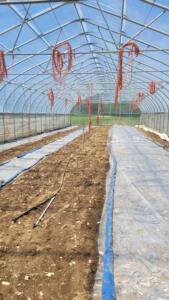
The inside of a high tunnel, showing alternating rows of uncovered soil and soil covered with clear plastic for solarization research.

Solarization plots in the high tunnel.

Maggie was first exposed to the practice of solarization using clear plastic in 2022 when the farm participated in a research project with the University of Kentucky. The project studied the effect of solarization in high tunnels on root-knot nematode populations. She was impressed by the results of the trial and saw first-hand how this technique impacted a persistent soil pathogen. 

Organic farmers like Maggie, who focus on minimizing tillage, must still manage pathogens, weeds, and other common challenges, and solarization offers potential benefits. However, Maggie was concerned about the impact of the treatment on her soil health, and had some questions – if solarization kills pathogens, won’t it kill the good microbiology, too? How does heat smothering with a plastic tarp impact soil microbial activity? What is the impact on fungal-to-bacterial ratios?

Before beginning to incorporate soil solarization into her field plans, Maggie wanted some answers, and applied for OFRF’s Farmer-Led Trial program to help her build out a solid research plan and find reliable results that would have a positive impact on her operation.

Farm Trial Plan

With technical support from OFRF, the Salad Days trial on soil solarization took shape. By refining her research question to: “What is the temporal and population effect of solarization on the beneficial microbes in the high tunnel?” the research team was able to build an approachable and testable project on the farm.  

Maggie and OFRF built out a block design with two treatments: No soil solarization in the hoop house, used as her control, or regular practice compared to soil solarization in the hoop house. Using her 30’x100’ hoop house as the location for the trial and mapping areas for the treatments, Maggie used a microbiometer to take three different soil samples: first a baseline reading, then one 2 weeks and 4 weeks, respectively, after the tarp had been removed from the treatment plots.

What is solarization?

Solarization is the process of placing a clear plastic tarp over a field or garden bed to heat up the soil underneath. The intention of solarization is to kill weeds or grass, but is also known to reduce pathogen populations in the soil.

On-Farm Trial Updates

Maggie took her final soil reading in early August, four weeks after she removed the tarps from their beds. While she originally hypothesized that the soil microbes would bounce back, she guessed that their populations would need some time to recover after the tarp treatment. 

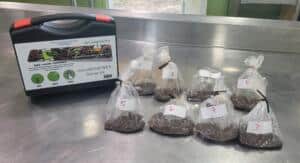
8 bags of soil sit on a metal counter next to a soil testing kit.

Soil testing for the on-farm trial.

The OFRF team has begun to work with the data collected to get an understanding of any significant differences. In Maggie’s experiment, we see that microbial biomass over time differed depending on whether or not the area had been tarped. Under solarization, microbial biomass increased over time, while biomass decreased over time in areas that had not been tarped. Also, the fungal-to-bacterial ratio was higher under solarization than in bare soil. The ratio was not affected by time after tarp removal.

The data is compelling, and OFRF will be looking into similar research to better understand the why of these results and give Maggie the assurance she is looking for to deploy a practice that continues to foster the health of her soil and improve her farming system.

“Being able to tailor a research project specific to my farm but useful to all growers has been a great opportunity and having the technical assistance from OFRF has been integral.”

– Maggie Dungan, Salad Days Farm

A graph showing the microbial biomass in solarized and non solarized plots over time, with solarized plots higher than the control.

Research Results

Maggie Dungan’s farmer-led trial examined the impact of soil solarization on microbial communities in high tunnels. Using a MicroBIOMETER, she measured soil microbial biomass and fungal-to-bacterial ratios before and after solarization to assess how the treatment affected soil life.

Key Findings:

  • Microbial Biomass Increased Over Time: Contrary to expectations, soil microbial biomass was higher in solarized plots compared to non-solarized plots, suggesting that the practice does not harm beneficial microbes.
  • Fungal-to-Bacterial Ratio Shifted: Solarized plots had a higher fungal-to-bacterial ratio, indicating a potential shift in soil microbiology post-treatment.
  • Potential for Weed & Pathogen Management: While originally concerned about negative effects, Maggie’s findings suggest that soil solarization can be an effective weed and pathogen control method without long-term damage to soil biology.

Encouraged by these results, Maggie plans to continue using soil solarization as part of her organic weed and pathogen management strategy. Future research could explore how different durations of solarization impact microbial communities and soil health over multiple growing seasons.

For full details on the study’s methodology and results, read the final report.

This story is part of a series profiling farmers who are taking part in OFRF’s Farmer-Led Trials (FLT) program. Farmers receive technical support from OFRF to address their challenges through structured on-farm trials. To learn more about OFRF’s Farmer-Led Trials Program, visit our website page at https://ofrf.org/research/farmer-led-research-trials/

To learn more about soil solarization, check out these helpful resources on the web: https://extension.umn.edu/planting-and-growing-guides/solarization-occultation 

To learn more about Salad Days Farm, visit https://www.saladdaysfarm.com

By |2025-12-17T17:37:59-05:00September 5th, 2024|Farmer Stories, News, On-Farm Research, Soil Health, Weeds|

Not All Tillage Is Created Equal

Balancing Soil Health and Weed Management in Organic Farming

By Thelma Velez and Heather Estrada

Organic farmers are often praised for their commitment to environmental stewardship. Indeed, these growers must adhere to rigid standards set forth through the National Organic Program, which delineates what is (and is not) allowed on organic operations. These standards are key to ensuring that the certified organic label is the same across the country. While many argue there is room for improvement in the label (and its enforcement), one thing is certain—farms under organic management are more ecologically sustainable than conventional operations. Organic farms are better for the environment, better for the people, and better for the planet. 

Mattawoman Creek Farm in Virginia uses a permanent raised bed system to eliminate soil compaction. Photo used with permission from www.mattawomancreekfarms.com

That said, organic farmers also face extensive criticism regarding their use of tillage. There is no denying that excessive or poorly timed tillage can lead to soil erosion or nutrient run-off, and there is mounting evidence that tillage can disturb fungal networks, harm larger soil organisms, and increase the decomposition of soil organic matter (SOM). However, it is worth “digging in,” “turning over,” and “exposing” why organic farmers till in the first place and how tillage practices and outcomes differ.

Why Do Organic Farmers Till?

So why do organic farmers till? In 2022, we published our National Organic Research Agenda (NORA) report. Organic farmers across the country indicated that their number one production challenge is managing weeds on their farms (Snyder et al., 2022). Tillage in organic systems is used for a variety of reasons, including weed management, but also for terminating cover crops or preparing seedbeds. While conventional growers use synthetic herbicides to terminate weeds, organic farmers are not allowed to apply these chemicals to the soil, nor would they want to, given the extensive evidence of the harm these chemicals cause to both humans and ecosystems. 

Building and maintaining healthy soil is the key for most successful organic farming operations (yes, this includes dairy and livestock operations where animals graze on pasture). Thus, co-managing soil health while also tackling weeds is something organic farmers deal with on a regular basis. Interestingly, there are researchers and farmers who have been studying soil for decades to better understand the impacts of tillage on different parameters of soil health, and what we are learning is that not all tillage is created equal. In fact, there are organic farms across the country that have been finding ways to keep weeds at bay while also improving soil health.   

The science of the last decade has begun to unravel some of the complexities related to how tillage depth and intensity affect soil organisms and soil organic carbon. 

Impact of Tillage on Soil Health

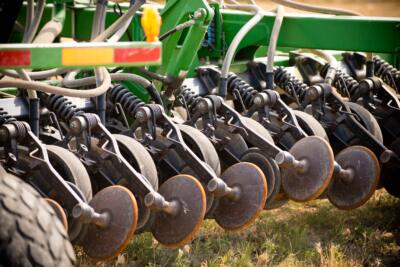
Amanda Gillett uses a no-till drill on her farm in Montana to eliminate tillage to save moisture and build soil health. Original public domain image from Flickr.

Studies have documented improvements in active soil organic carbon (SOC) and other soil health parameters when combining cover crops and compost applications, even with tillage (Cogger et al., 2013; Delate et al., 2015). Results from six long-term farming systems trials with organic crop rotations that included legume cover or sod crops, organic nutrient sources (compost or manure), and routine tillage actually accrued significantly more SOC than conventional corn-soybean rotations (Delate et al., 2015).  

Variability in Tillage Methods

Tillage is not a one-size-fits-all approach. There are major differences between deeper inversion tillage and shallow non-inversion tillage. In one meta-analysis, shallow inversion tillage resulted in higher soil carbon, more effective weed control, and only minimal yield reductions when compared with deeper tillage (Cooper et al., 2016). 

More invasive approaches, such as a moldboard plow, disk plow, or chisel plow at depths greater than six inches, will inherently create more disturbance, but taking a more shallow and judicious tillage approach is generally less harmful to soil health and can be compatible with soil building goals (Schonbeck et al., 2017; Dimitri et al., 2012). 

Additionally, there are meta-analyses with promising findings related to enhanced soil life in reduced tillage systems (Chen et al., 2016;  Li et al., 2020; Morugán-Coronado et al., 2022). Morugán-Coronado’s 2022 paper also included findings showing that reduced tillage systems outperformed full-tillage and no-till with respect to increases in microbial and fungal biomass (Morugán-Coronado et al., 2022).

Balancing Tillage and Soil Health in Organic Farming

While tillage is an essential tool in organic farming, its impact on soil health is complex and varies depending on the method and intensity used. The evolving science of soil management suggests that organic farmers can adopt practices that minimize soil disturbance while addressing production needs. This balanced approach helps to preserve and enhance soil health, supporting the overall sustainability of organic farming systems. 

For more information on balancing tillage and soil health, check out our guidebook “Practical Conservation Tillage,” which provides a practical means to reduce tillage and protect soil organic matter, soil life, and tilth through green manures, compost applications, and other organic practices.

How do you manage tillage in your farming practices? Email us at info@ofrf.org to share your experiences and insights, and stay informed about the latest research to continually improve your soil management strategies by signing up for our newsletter here.

References

Chen, G., C. R. Hooks, M. Lekveishvili, K. H. Wang, K. H., N. Pradhan, S. Tubene, S., R. R. Weil, and R. Ogutu. 2015. Cover Crop and Tillage Impact on Soil Quality, Greenhouse Gas Emission, Pests, and Economics of Fields Transitioning to Organic Farming. Final report for project ORG 2011-04944. CRIS Abstracts.

Cogger, C. G. M. Ostrom, K. Painter, A. Kennedy, A. Fortuna, R. Alldredge, A.; Bary, T. Miller, Collins, J. Goldberger, A. Antonelli, and B. Cha. 2013. Designing Production Strategies for Stewardship and Profits On Fresh Market Organic Farms. OREI award 2008-51300-04460. https://nifa.usda.gov/data/data-gateway.

Cooper, J., Baranski, M., Stewart, G., Nobel-de Lange, M., Bàrberi, P., Fließbach, A., Peigné, J., Berner, A., Brock, C., Casagrande, M., Crowley, O., David, C., De Vliegher, A., Döring, T. F., Dupont, A., Entz, M., Grosse, M., Haase, T., Halde, C., … Mäder, P. 2016. Shallow non-inversion tillage in organic farming maintains crop yields and increases soil C stocks: a meta-analysis. Agronomy for Sustainable Development, 36, 22. https://doi.org/10.1007/s13593-016-0354-1

Delate, K., C. Cambardella, and C. Chase. 2015. Effects of cover crops, soil amendments, and reduced tillage on Carbon Sequestration and Soil Health in a Long Term Vegetable System. Final report for ORG project 2010-03956. CRIS Abstracts

Dimitri, C., L. Kemp, J. Sooby, and E. Sullivan. 2012. Organic Farming for Health and Prosperity https://ofrf.org/wp-content/uploads/2019/09/HP-report-web.pdf

Li, Y., Q. Zhang, Y. Cai, Q. Yang, S.X. Chang. 2020. Minimum tillage and residue retention increase soil microbial population size and diversity: implications for conservation tillage. Sci. Total Environ., 716, 137164.

Morugán-Coronado et al., 2022. Agric., Ecosystems & Envir. 329, Article 107867.  Meta-analysis.

Schonbeck, M. D. Jerkins, and J. Ory. 2017. Soil Health and Organic Farming: Practical Conservation Tillage. https://ofrf.org/wp-content/uploads/2019/09/HP-report-web.pdf

Snyder, L., M. Schonbeck, T. Velez, and B. Tencer. 2022. 2022 National Organic Research Agenda: Outcomes and Recommendations from the 2020 National Organic & Transitioning Farmer Surveys and Focus Groups. Organic Farming Research Foundation.

By |2025-12-09T17:36:33-05:00August 12th, 2024|News, Soil Health, Weeds|
Go to Top