
Advancing Organic Agriculture: Sharing Corn Research with Congressmen Burchett and Ogles

Advancing Organic Agriculture: Sharing Corn Research with Congressmen Burchett and Ogles

By |2025-09-03T10:52:31-04:00July 16th, 2025|News|

Written by guest author Dr. Renata Nave Oakes, Associate Professor, Plant Sciences, University of Tennessee

Dr Renata Nave Oakes

Recently, I had the opportunity to join Gordon Merrick, Policy Program Director, Vinnie Trometter, Policy Fellow, and Rebecca Champagne, Conservation Scientist, at the Organic Farming Research Foundation, in a meeting with staff from Representative Tim Burchett (R–TN–02) and Representative Andy Ogles (R–TN–05)’s offices. I was proud to be able to share my perspective on how the Organic Transitions Program (ORG) supports my research of developing effective, science-based strategies for producing organic corn using living mulch systems in Tennessee and the Southeastern U.S.

Organic Corn Research in the Southeastern US

As an Associate Professor of Plant Sciences at the University of Tennessee, I am using the Organic Transitions Program to research how to improve soil health, reduce weed pressure, enhance nitrogen availability through biological fixation, and ultimately make organic corn production more profitable and practical for farmers in Tennessee and the Southeastern U.S. Organic corn is in high demand nationwide, especially for livestock feed, but domestic supply lags behind — forcing the U.S. to heavily rely on imports. This is especially true for the Southeastern U.S., where organic corn production is underdeveloped. Our research addresses the key barriers holding organic corn producers back: poor weed control, limited fertility options, and higher production costs. 

organic corn in field trialTo do this, we use a combination of greenhouse trials and multi-location field experiments at certified organic research sites in Tennessee. We’re testing organic seed treatments, comparing legume living mulch species, and monitoring soil health, nutrient cycling, weed pressure, and corn yield. We also conduct full economic analyses, including cost of production, breakeven yield, and net returns. We also work closely with the Tennessee Corn Promotion Board and local organic and transitioning-to-organic farmers, who help guide our work and provide field-level insight. The work is spearheaded through our multi-disciplinary team at the University of Tennessee, including agronomists, soil scientists, economists, and plant pathologists.

Early observations show promising establishment of legume living mulches like white clover and hairy vetch. These systems show potential to reduce nitrogen fertilizer needs and suppress weeds effectively — without harming corn yields.

Strong partnerships are being built with farmers who are excited about trying these systems. Stakeholders can access our research findings through field days, producer workshops, in-service training for Extension agents, conference presentations, and digital platforms. We’re also developing factsheets, video content, and practical tools to help farmers understand costs, benefits, and management recommendations for organic corn with living mulch.

I ultimately chose the Organic Transitions Program because it is uniquely positioned to support farmers and researchers working through the challenges of transitioning to organic. Our work aligns perfectly with the program’s goals — especially in building production systems that are ecologically and economically sustainable during and after the transition period.

Our Meeting With Congress

Our meetings with Congressman Burchett and Ogles’ offices were productive. Their staff listened attentively and asked thoughtful questions. It was encouraging to see their interest in the needs of the organic sector and in how research funding directly benefits rural economies and farmers in their states.

Legislators need to hear directly from researchers and farmers about how federal programs like Organic Transitions drive innovation, support rural communities, and reduce reliance on foreign supply chains. Our insights help bridge the gap between policy and real-world impact and ensure that science and farmer needs are reflected in future policy decisions.

Use Your Voice

Interested in sharing your research with legislators and the importance of continued public investment in organic research? Enroll in OFRF’s self-paced email course, Communicating with Legislators. This free, educational workshop is designed to equip researchers within the organic farming community with the tools and resources they need to effectively engage with and educate policymakers about the impact of their work.
Whole-Farm Revenue Protection (WFRP): Insurance Options for Organic and Transitioning Growers

By |2026-02-25T10:04:13-05:00July 14th, 2025|Federal Assistance, News, Spanish Resources, TOPP West|

Versión en español a continuación.

New farmer-friendly resource breaks down how to access whole-farm insurance coverage.

Organic and transitioning-to-organic producers face unique risks that aren’t always covered by traditional crop insurance. Fortunately, USDA’s Whole-Farm Revenue Protection (WFRP) program was designed with small-scale and diverse operations in mind, offering flexible, revenue-based coverage for farms of all sizes, including those growing specialty and organic crops.

To help farmers better understand and access this program, OFRF has developed a new Whole-Farm Revenue Protection toolkit with support from the Transition to Organic Partnership Program (TOPP) in the West/Southwest, Northwest, and Plains regions. This free resource is tailored to organic and transitioning producers and includes a clear overview of program benefits, eligibility, application steps, and key considerations, like how commodities are counted and what paperwork to prepare.

What is WFRP?

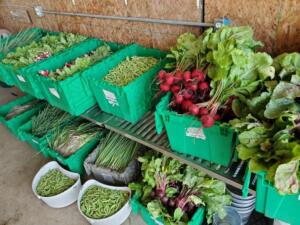
harvested vegetables at Green Things Farm Collective in Ann Arbor, Michigan

Harvested vegetables at Green Things Farm Collective in Ann Arbor, Michigan. The farm participated in OFRF’s Farmer-Led Trials program in 2024, examining the impact that row spacing of direct-seeded crops had on marketable crop yields.

WFRP is a federally approved crop insurance option that protects your entire farm’s expected revenue, not just the yield of a single crop. Designed with organic, specialty, and mixed operations in mind, it allows farmers to insure up to $17 million in revenue under one policy. 

It covers losses from natural disasters, market fluctuations, or pest and disease issues, and offers premium assistance for diversified farms. WFRP covers most operational costs, excluding post-harvest expenses like value-added processing. This program is also one of the few insurance options that values organic crops at organic market prices—a major benefit for organic farmers, provided they have certification or transition documentation. 

For farms with annual revenue under $350,000, the Micro Farm Policy offers a simplified option with easier paperwork requirements.

Why WFRP Matters

Unlike traditional insurance programs focused on yield, WFRP protects your expected revenue, not just production. This makes it ideal for operations with mixed crops and animals, especially when market value plays a bigger role than raw yield.

It is also available in all 50 states and can be used alongside other crop insurance policies.

Quick Facts About WFRP

  • Can cover up to 85% of your operation’s predicted revenue for the policy year.
  • Provides incentives for diverse commodities by offering higher premium discounts when policies cover at least two commodities; WFRP offers an 80% subsidy coverage from the USDA.
  • Covers high-value specialty crops that lack standard crop insurance, including organic herbs, organic eggs, and organic poultry.
  • Organic crops are valued at organic market price.
  • Provides up to 20% of expected revenue to cover replanting costs if at least 20% or 20 acres of an insured annual crop are destroyed or fail to establish due to a covered cause.
  • Allows carryover loss coverage if the insured is covered for the next year and a covered event decreases farm revenue over multiple years.
  • WFRP can be combined with or supplemented by other crop insurance policies.

2026 WFRP Spring Filing Dates*

  • Sales closing dates are February 28, March 15 and April 15, 2026.
  • Production reporting due date is April 29, 2026.
  • Acreage report deadline is July 15, 2026. 
  • Premium billing date is August 15, 2026. 
  • Harvest price is announced November 5, 2026. 

*Dates will vary by crop and location, please check with the local Risk Management Agency to confirm.

How to Get Started with WFRP

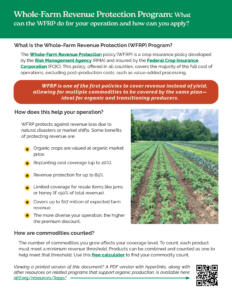
Applying for WFRP begins with reviewing your policy options, gathering paperwork, and connecting with your local RMA crop insurance agent. The steps are outlined in our printable flyer (image and link below) for easy reference. For farmers unfamiliar with the process, here’s a closer look at the documents you’ll need to prepare.

What paperwork is needed?

Even if you’re new to crop insurance, don’t worry—your insurance agent will help walk you through the forms. That said, having these documents ready will make your application process smoother and more accurate.

  • The last 5 years of IRS 1040 Schedule F Tax Forms.
    This is your farm’s income and expense tax form. WFRP uses it to calculate your average revenue. If you don’t have five years of records, the program allows flexibility, so just bring what you have from recent years.
  • The last 5 years of your Whole-Farm History
    This form documents the operation’s allowable revenue for each tax year used to determine your farm’s whole-farm historic average revenue. It can include digital or handwritten sales records such as point-of-sale (POS) reports, CSA sales logs, and receipts or invoices from markets or wholesale buyers. View examples on page 128 of the program’s handbook.
  • The last 5 years of Farm Operation Report
    This form outlines the commodities you expect to earn revenue from during the insurance period. It helps if you have at least two strong producing commodities that make the majority of your revenue. View an example on page 148 of the program’s handbook.
  • Organic certification
    If you’re certified organic, bring a copy of your certificate. If you’re in transition, you may still qualify for organic pricing if certification is expected by the acreage reporting deadline (usually July 15). Ask your agent what documentation is acceptable.

A few extra notes:

  • If you have less than 5 years of history for any of the forms above, talk to your insurance agent—there are options for newer farms.
  • Once enrolled, it is important to keep your Farm Operation Report updated throughout the year as things change. 
  • If you suspect a revenue loss from a covered event, you must notify your insurer within 72 hours of that event.
  • Because WFRP is revenue-based, losses may not be obvious right away. Track your sales and compare them to your expected revenue regularly to stay ahead of potential claims.

Understanding How Commodities Are Counted

WFRP uses expected revenue (not just crop type) to determine what counts as a commodity. The number of distinct commodities you grow influences your coverage level, with two or more qualifying commodities unlocking higher support. 

To count, each product must meet a minimum revenue threshold. Products can be combined and counted as one to help meet that threshold.

WFRP in Action

As of 2024, WFRP had its second-highest year of participation ever, with over 2,200 farms enrolled. And with recent improvements to reduce paperwork and broaden eligibility, more organic and transitioning producers are taking advantage of the program.

Explore your options and start preparing today. 

visual of front side of WFRP information flyer created by OFRF
visual of back side of WFRP information flyer created by OFRF

Programa de Protección de Ingresos para Toda la Granja (WFRP)

El nuevo kit de herramientas ayuda a los agricultores orgánicos y en transición a acceder a la cobertura de seguro para toda la granja.

Los productores orgánicos y en transición a lo orgánico enfrentan riesgos únicos que no siempre están cubiertos por el seguro de cultivos tradicional. Afortunadamente, el programa de Protección de Ingresos para Toda la Granja (WFRP, por sus siglas en inglés) del USDA se diseñó teniendo en cuenta las operaciones diversas y a pequeña escala, ofreciendo una cobertura flexible y basada en los ingresos para granjas de todos los tamaños, incluidas las que cultivan cultivos especializados y orgánicos.

Para ayudar a los agricultores a comprender y acceder mejor a este programa, OFRF ha desarrollado un nuevo kit de herramientas para la Protección de Ingresos para Toda la Granja con el apoyo del Programa de Asociación para la Transición a Orgánico (TOPP) en la región Oeste/Suroeste. Este recurso gratuito está diseñado para productores orgánicos y en transición e incluye una descripción clara de los beneficios del programa, la elegibilidad, los pasos de solicitud y las consideraciones clave, como cómo se cuentan la mercancía y qué documentación preparar.

¿Qué es el Programa de Protección de Ingresos para Toda la Granja (WFRP)?

WFRP es una opción de seguro de cosechas aprobada por el gobierno federal que protege los ingresos esperados de toda su granja, no solo el rendimiento de un solo cultivo. Diseñado teniendo en cuenta las operaciones orgánicas, especializadas y mixtas, permite a los agricultores asegurar hasta $17 millones en ingresos bajo una sola póliza.

Cubre pérdidas por desastres naturales, fluctuaciones del mercado o problemas de plagas y enfermedades, y ofrece asistencia premium para granjas diversificadas. WFRP cubre la mayoría de los costos operativos, excluyendo los gastos posteriores a la cosecha, como el procesamiento de valor agregado. Este programa también es una de las pocas opciones de seguro que valora los cultivos orgánicos a precios de mercado orgánico, un beneficio importante para los agricultores orgánicos, siempre que tengan certificación o documentación de transición.

 Para las granjas con ingresos anuales inferiores a $350,000, la póliza de micro granja ofrece una opción simplificada con requisitos de papeleo más fáciles.

¿Por qué es importante WFRP?

A diferencia de los programas de seguros tradicionales centrados en el rendimiento, WFRP protege sus ingresos esperados, no solo la producción. Esto lo hace ideal para operaciones con cultivos y animales mixtos, especialmente cuando el valor de mercado juega un papel más importante que el rendimiento bruto.

También está disponible en los 50 estados y se puede utilizar junto con otras pólizas de seguro de cultivos.

Datos breves sobre WFRP

  • Puede cubrir hasta el 85% de los ingresos previstos de su operación para el año de la póliza.
  • Proporciona incentivos para diversos productos al ofrecer descuentos más altos en las primas cuando las pólizas cubren al menos dos productos; WFRP ofrece una cobertura de subsidio del 80% del USDA.
  • Cubre cultivos especializados de alto valor que carecen de seguro de cosecha estándar, incluidas hierbas orgánicas, huevos orgánicos y aves de corral orgánicas.
  • Los cultivos orgánicos se valoran a precio de mercado orgánico.
  • Proporciona hasta el 20% de los ingresos esperados para cubrir los costos de replantación si al menos el 20% o 20 acres de un cultivo anual asegurado se destruyen o no se establecen debido a una causa cubierta.
  • Permite la cobertura de pérdidas arrastradas si el asegurado está cubierto durante el próximo año y un evento cubierto disminuye los ingresos de la granja durante varios años.
  • El WFRP puede combinarse o complementarse con otras pólizas de seguro de cultivos.

Cómo empezar con WFRP

La solicitud de WFRP comienza con la revisión de sus opciones de póliza, la recopilación de documentación y la conexión con su agente local de seguros de cultivos de RMA. Los pasos se describen en nuestro folleto imprimible (imagen y enlace a continuación) para facilitar la referencia. Para los agricultores que no están familiarizados con el proceso, aquí hay un vistazo más de cerca a los documentos que deberá preparar.

¿Qué documentación se necesita?

Incluso si es nuevo en el seguro de cultivos, no se preocupe, su agente de seguros le ayudará a guiarle a través de los formularios. Dicho esto, tener estos documentos listos hará que su proceso de solicitud sea más fluido y preciso.

  • Los últimos 5 años de los formularios de impuestos del IRS 1040 Anexo F.
    Este es el formulario de impuestos sobre la renta y los gastos de su granja. WFRP lo utiliza para calcular sus ingresos promedio. Si no tiene cinco años de registros, el programa permite flexibilidad, solo traiga lo que tenga de los últimos años.
  • Los últimos 5 años de su historial de su granja
    Este formulario documenta los ingresos permitidos de la operación para cada año fiscal, utilizado para determinar los ingresos promedio históricos de su granja. Puede incluir registros de ventas digitales o escritos a mano, como informes de punto de venta (POS), registros de ventas de CSA y recibos o facturas de mercados o compradores mayoristas. Véanse los ejemplos en la página 128 del manual del programa.
  • Los últimos 5 años de Informe de Operaciones Agrícolas
    Este formulario describe los productos básicos de los que espera obtener ingresos durante el período del seguro. Es útil si tiene al menos dos productos básicos de producción fuerte que generan la mayor parte de sus ingresos. Vea un ejemplo en la página 148 del manual del programa.
  • Certificación orgánica
    Si estás certificado como orgánico, traiga una copia de su certificado. Si se encuentra en transición, es posible que aún califique para los precios orgánicos si se espera la certificación antes de la fecha límite de presentación de informes sobre la superficie cultivada (generalmente el 15 de julio). Pregúntele a su agente qué documentación es aceptable.

Algunas notas adicionales:

  • Si tiene menos de 5 años de historial para cualquiera de los formularios anteriores, hable con su agente de seguros: hay opciones para granjas más nuevas.
  • Una vez inscrito, es importante mantener actualizado su Informe de Operaciones Agrícolas durante todo el año a medida que las cosas cambian. 
  • Si sospecha de una pérdida de ingresos por un evento cubierto, debe notificar a su aseguradora dentro de las 72 horas posteriores a ese evento.
  • Debido a que el WFRP se basa en los ingresos, es posible que las pérdidas no sean obvias de inmediato. Realice un seguimiento de sus ventas y compárelas con sus ingresos esperados con regularidad para adelantarse a posibles reclamaciones.

Comprender cómo se cuenta la mercadería

WFRP utiliza los ingresos esperados (no solo el tipo de cultivo) para determinar qué cuenta como mercadería. La cantidad de mercadería distinta que cultiva influye en su nivel de cobertura, y dos o más mercaderías calificadas desbloquean un soporte más alto. 

Para que se cuente, cada producto debe cumplir un umbral mínimo de ingresos. Los productos se pueden combinar y contar como uno solo para ayudar a alcanzar ese umbral.

WFRP en acción

A partir de 2024, WFRP tuvo su segundo año más alto de participación, con más de 2,200 granjas inscritas. Y con las recientes mejoras para reducir el papeleo y ampliar la elegibilidad, más productores orgánicos y en transición están aprovechando el programa.

Explore sus opciones y comience a prepararse hoy con nuestro kit de herramientas para la protección de ingresos para toda la granja.

visual of front side of Spanish WFRP information flyer created by OFRF
visual of back side of Spanish WFRP information flyer created by OFRF

What’s Going On? A Brief Update on What’s Happening in DC

By |2025-07-10T13:07:50-04:00July 9th, 2025|Gordon's Policy Corner, News|

By Gordon Merrick, OFRF Policy & Programs Director

If the past six months in the federal policy spheres have felt more like six years, know that you’re not alone. With endless stops and starts, shifting deadlines, and overlapping processes, it can be hard to track what actually matters and what is just noise. At OFRF, we want to keep our community grounded in the real implications for organic research and the systems that support and benefit from it. This month’s Policy Corner aims to give some brief updates on some of the processes we have been and continue to be engaged in, and how you can help support that work.

Reconciliation, the Farm Bill, and Legislative Movement

The reconciliation process is officially done, for now. While some Farm Bill programs were included in the final package, committee leadership has reiterated that they intend to try and pass the policy-focused Farm Bill provisions that were eliminated in the Senate’s “Byrd Bath.” This limited Farm Bill seems increasingly aspirational, with no clear floor time windows, mounting fractures in the traditional Farm Bill coalitions, and future reconciliation packages on the horizon, the outlook for passing a full, robust Farm Bill in the immediate term remains uncertain, and passing another extension of the 2018 Farm Bill increases in likelihood.

Meanwhile, the FY26 appropriations process is slowly moving ahead, but is significantly behind the normal schedule. OFRF worked with House offices on both sides of the aisle to ensure the House Report included important language supporting organic research and technical assistance. We’re now watching closely how that bill moves through the entire House as well as how the Senate version shapes up.

Programmatic Delays and Pending Announcements

We, like the entire research community, are still awaiting the release of the Organic Research and Extension Initiative (OREI), Organic Transitions Program (ORG), and all of the National Institute for Food and Agriculture’s (NIFA) Competitive Grant Requests for Applications. These funding opportunities were generally all posted earlier this year, then retracted for administrative review in February. After months of delay, time is running out to allow for a strong application window (at least 30 days), peer review (~60 days), and award process by the end of the Fiscal Year (Sept. 30th). We will continue to monitor this closely, and if you’re a researcher or a farmer working with researchers, keep an eye out for urgent updates from both NIFA as well as us.

NRCS Comment Period is Open

Right now, NRCS is accepting comments on its Conservation Practice Standards (CPSs) that have been selected for review this year. We’ll be submitting detailed comments, especially on CPS-595: Pest Management Conservation System, which still has room for improvement to allow for organic systems management. We want to hear from you if you’re a researcher or practitioner with insights on organic pest management, or other areas that are covered in the CPSs that are open for review.

Keeping You Connected

Regardless of legislative delays or agency slowdowns, our mission stays the same. We work every day to ensure that organic research, and the farmers and researchers behind it, receives more-robust support through federal and state programming. That includes helping our community connect with elected officials to help educate them on what they do, why they do it, and how it impacts their District, State, and oftentimes the entire Nation’s food system.

Want to get involved? Check out our free, email-based Communicating with Legislators course! If you have a story or a data point that you would like to share, please reach out and we are here to help.

Eat well and breathe deeply,

Gordon

P.S. You can catch up on recent editions of Gordon’s Policy Corner here.

Advancing Organic Agriculture: Sharing Tomato Research with Senators Tillis and Budd

By |2025-09-03T10:51:49-04:00July 3rd, 2025|News|

Written by guest author Dr. Dilip Panthee, Associate Professor, Tomato Breeding and Genetics, Horticultural Science, North Carolina State University

Dr. Dilip Panthee

I recently joined the Organic Farming Research Foundation’s team— Gordon Merrick, Policy & Programs Director; Vinnie Trometter, Policy Fellow; and Rebecca Champagne, Conservation Scientist—for a meaningful conversation with staff from Senator Thom Tillis (R–NC) and Senator Tedd Budd (R–NC)’s offices. Together, we discussed why the Organic Transitions Program (ORG) is vital for organic tomato growers like those I serve through my research on breeding organic tomatoes to resist new and emerging diseases.

As a tomato breeder at North Carolina State University, I’m focused on helping farmers grow better tomatoes even in the face of rising disease pressure and climate stress. Specifically, I work to develop tomato varieties that are resistant to bacterial, fungal, and viral diseases, while also improving fruit quality and increasing yield. Organic growers face significant risks from common, potentially devastating diseases such as late blight, bacterial spot, early blight, and Septoria leaf spot. These diseases are becoming more prevalent in organic tomatoes grown in the mountains and Piedmont regions of North Carolina, where rising temperature and humidity levels contribute to the problem. Similar trends are also occurring in other mountainous and hilly geographies across the Eastern Seaboard and across the country. Our work seeks to ensure the profitability of organic tomato growers in North Carolina and throughout the United States by developing varieties that are resistant to these emerging diseases. 

To do this, I use both conventional and molecular breeding methods to introduce target resistance genes into existing tomato lines. Our program develops and tests these technologies in-house, collaborating closely with organic growers across the state. In other words, we evaluate new varieties under both research station and on-farm conditions to ensure consistent performance. This dual approach enhances our confidence in the varieties we release. 

To date, we have successfully combined resistance to multiple diseases in several tomato hybrids, including resistance to late blight, early blight, Tomato mosaic virus, Tomato spotted wilt virus, and Fusarium wilt. While this progress is significant, we continue working to incorporate resistance to other critical diseases, such as bacterial spot and Septoria leaf spot. With continued support, we can expand these efforts further.

But developing better varieties is only part of the equation—we also need to make sure growers know about them. Our close collaboration with extension specialists is vital for disseminating our findings through various channels, informing growers and stakeholders about new developments in our research. Getting this information out to the fields is critical for increasing U.S. tomato production. Organic tomato production in the U.S. has declined in recent years, even as demand and consumption continue to grow. To meet this demand and make production more cost-effective, we need improved varieties with high yield potential and strong disease resistance. Our varieties are well-suited to both conventional and organic farming systems, but are particularly critical in organic systems—where the traditional use of pesticides is restricted.

I ultimately chose the Organic Transitions Program because it naturally aligned with my long-standing interest and work in organic tomato breeding. When the funding opportunity arose, it fit perfectly with my research goals and experience, making it an ideal platform to advance this work.

Our meetings with Senator Tillis’s and Senator Budd’s staff went very well. Both senators’ staff were attentive and interested in how my research impacts the region’s economy. I’m grateful for their time and hope they will support organic agriculture research. To remain competitive, the U.S. organic industry must address disease resistance breeding and improve crop quality. I’m optimistic they will champion this cause.

We can’t afford to stay silent. When researchers speak directly with legislators, they see federal programs in action. Legislators play a key role in shaping policies that directly affect agricultural research. As researchers, we cannot assume they are fully aware of our work and its impacts on local, regional, and national economies. Their support is essential for allowing us to advance work that benefits tomato growers nationwide. Regular engagement with lawmakers helps them understand the value of our research and how it contributes to the competitiveness and sustainability of the U.S. organic industry. I am eager to share my next research publication with these legislators to ensure they’re aware of the cutting-edge research happening in the state they represent. 

Use Your Voice

Interested in sharing your research with legislators and highlighting the importance of ongoing public investment in organic research? Enroll in OFRF’s self-paced email course, Communicating with Legislators. This free workshop gives researchers and advocates in the organic farming community the tools to confidently connect with lawmakers and make your work count where decisions are made.

Farmer-Led Trials Program Spotlight: Ledoux Grange

By |2025-12-17T17:36:23-05:00July 1st, 2025|Farmer Stories, News, On-Farm Research, Plant Breeding & Variety Selection|

Can teff handle high winds? This on-farm trial aims to find out.

Written by Mary Hathaway, OFRF’s Research & Education Program Manager

Ledoux Grange, situated at 7,400 feet in Mora, New Mexico, is an organic-certified, 34-acre operation focused on regenerative agriculture. Farmer Kristin Swoszowski-Tran has been cultivating Lilium species (a genus of herbaceous flowering plants growing from bulbs, including lilies) and hybrids  – since the 1990s, registering novel cultivars with the Royal Horticultural Society in Great Britain. As a member of the Southwest Grain Collaborative, Ledoux Grange also specializes in growing drought-tolerant, high-altitude pulses, legumes, grains, and cover crops, and is committed to bringing culturally rich, locally-grown produce to their community.

Testing Teff for Lodging Resistance

One of the grains that Ledoux Grange grows is Teff, an annual grass, a species of lovegrass native to Ethiopia, where it first originated in the Ethiopian Highlands. It was one of the earliest plants to be domesticated and is one of the most important staple crops in Ethiopia. Ledoux Grange is currently testing 14 teff accessions rated for their lodging resistance in its characteristically windy location. Teff’s versatility as human food, livestock fodder, and a drought-tolerant cover crop suited for high altitudes makes it a promising addition to their operation. The farm owner, Kristin, is enthusiastic about experimenting with various accessions, drawing inspiration from past successes with teff in the area. She has a broader interest in lovegrass species and is eager to observe their growth, hoping to identify types that will flourish and resist lodging in her environment.

Terminology Touch Point

ACCESSION: a distinct sample of germplasm representing a cultivar, breeding line, or a wild or cultivated population, maintained in a genebank for conservation and use. Its genetic stability is optimally preserved through careful monitoring and multiplication.

Source: GGCE

On-Farm Trial Plan

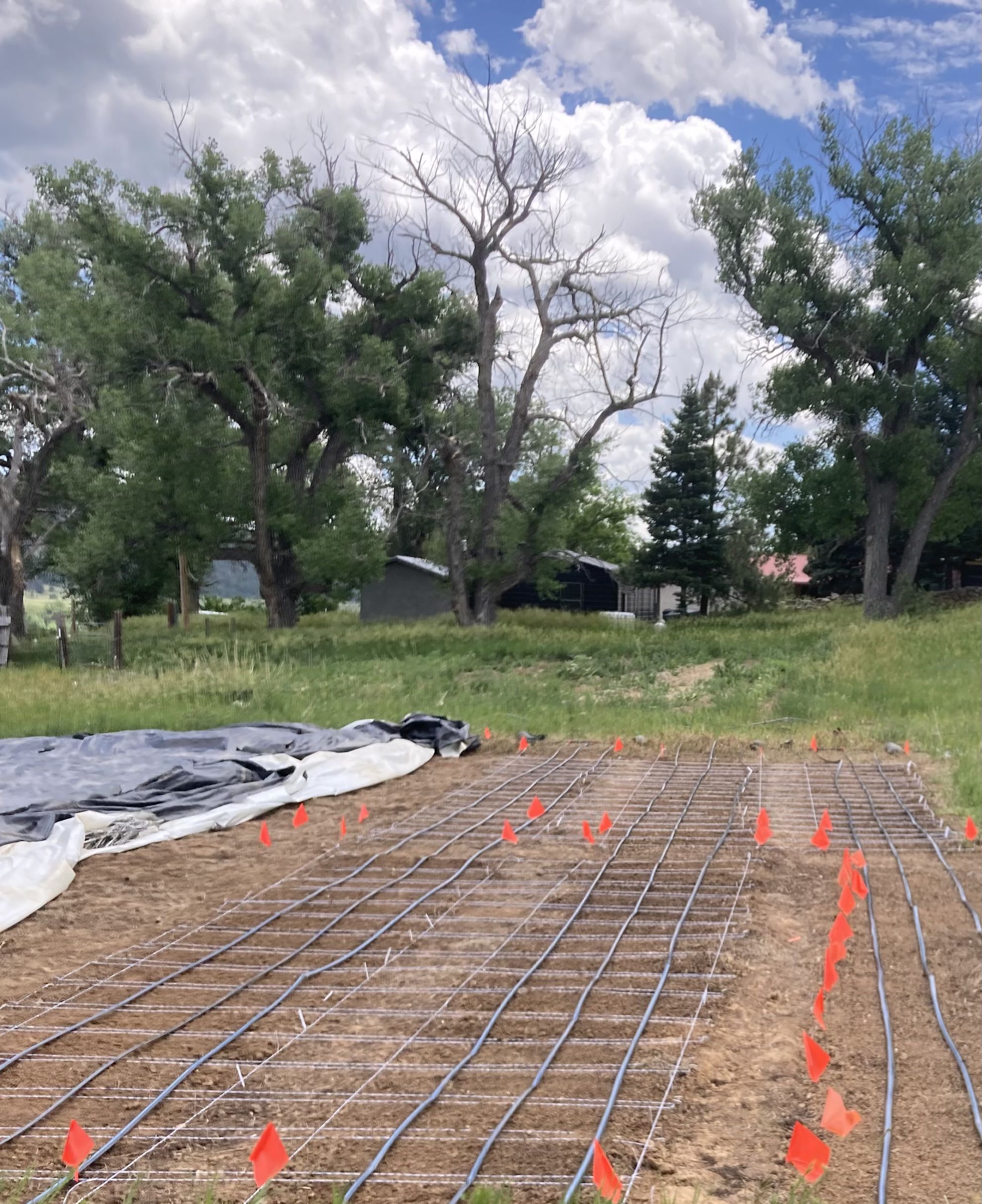
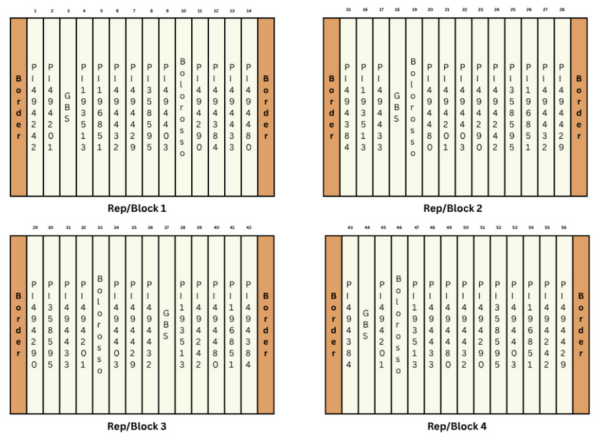
The plot layout includes 12 accessions from a western regional station, all of Ethiopian origin, alongside two commercially available varieties: ‘Bolorosso’ from Experimental Farm Network and teff from Great Basin Seeds. The experiment includes four replications, and is laid out in the field as four blocks border rows on each end. Each packet contains 200 seeds, with 50 seeds per plot, weighed out for accuracy. Rows will be one meter long, with seeds distributed evenly within each plot area. Planting is scheduled for late June, following thorough bed preparation.
Trial Evaluation Metrics

Data collection will be comprehensive, focusing on key metrics such as days to emergence, vigor, time to flowering, time to maturity, tillering, height, and lodging. Grain yield and seed color will also be recorded. Vigor will be assessed using either GRIN standards or a custom scale. Lodging will be rated on a 1-5 scale. To assess the tillering, she will record the number of tillers on 10 plants per plot and calculate the average. Grain yield will be determined by weighing the collected seeds. Seed color will be evaluated with a pantone scale.

Plot Map

Looking Ahead

The evaluation of these teff accessions will help Kristin identify promising teff accessions, and will facilitate seed increases for subsequent on-farm research at Ledoux Grange. Looking to the future, Kristin aims to address key challenges for this specific environment, like lodging prevention and optimal timing for growth relative to the monsoon season. Ultimately, Ledoux Grange hopes to expand crop diversity in the region, provide the community with nutrient-rich food options, and create new market opportunities.

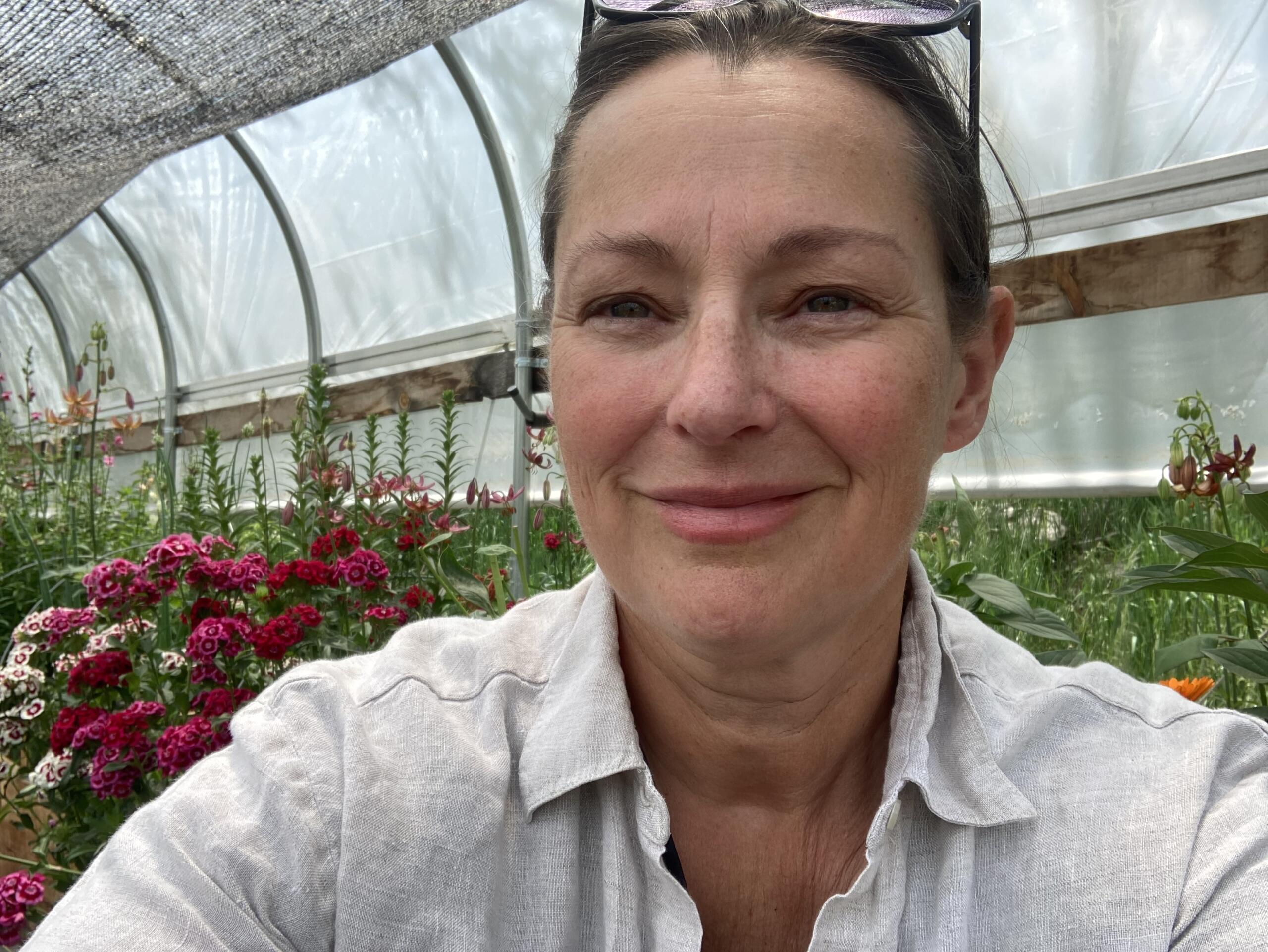
Farmer-researcher Kristin Swoszowski-Tran

“I believe that it is crucial to conduct trials in diverse agricultural ecotypes so that we can perpetuate and ensure suitable, local production to idiosyncratic conditions. It is an honor and privilege to work with OFRF staff members, Mary and Heather, to organize this trial. They’ve made an easy and seamless process to plan the implementation. My hope is that we can identify drought-tolerant candidates that can withstand our windy conditions here at this elevation. I’m eager to see what this trial produces!”

– Kristin Swoszowski-Tran, Ledoux Grange

Teff trial layout.

Stay tuned:

This is part of a series of blogs highlighting farmers who are participating in OFRF’s Farmer-Led Trials program. Farmers receive technical support to address their production challenges through structured on-farm trials. To learn more about OFRF Farmer-Led Trials Program, visit our website page at https://ofrf.org/research/farmer-led-research-trials/ 

To learn more about Ledoux Grange visit https://www.facebook.com/ledouxgrange 

Nearly 80% of New Organic Farmers Are Looking for Climate Resilience

By |2025-12-09T17:41:49-05:00June 24th, 2025|Climate Change, News|

By Elizabeth Tobey

There’s a reason why farmers are always talking about the weather–it affects everything they do. It doesn’t matter if they’re on hundreds of acres or a fraction-of-an-acre plot, farmers are deeply tuned in to the weather patterns in their region and how they affect their land and their crops.

Over the years, OFRF has spoken to dozens, if not hundreds, of farmers, and a noticeable increase in extreme weather events often come up in conversation. Whether it’s droughts and wildfires in the West, too much water swamping farmers in the South, increasing winds across the Midwest, or frost dates coming earlier or later than expected, nowhere is immune to the impacts of climate change.

However, organic production systems also offer a suite of tools to literally help farmers “weather the storms” of climate change. In the 2022 National Organic Research Agenda (NORA) report, nearly 80% of transitioning growers cited “greater resilience to climate change through organic practices” as a motivating factor to certify organic.

At OFRF, we recognize that organic is a climate solution. Regenerative organic farming is a proactive approach to climate resilience, reducing reliance on synthetic inputs while enhancing soil health, carbon sequestration, and biodiversity. Organic practices focus on using natural soil amendments like compost, manures, and animal byproducts, and preventative approaches to pests and disease such as selecting regionally-adapted and pest-resistant cultivars. These holistic farming systems improve water retention, reduce greenhouse gas emissions, and help farmers adapt to unpredictable weather conditions.

To better understand the challenges farmers are facing, and the solutions that organic agriculture offers, we’ve put together a collection of a few articles that highlight how organic farmers are both impacted by and well-poised to address climate change:

Farmers on the Frontlines: Climate Change and the Farm Bill

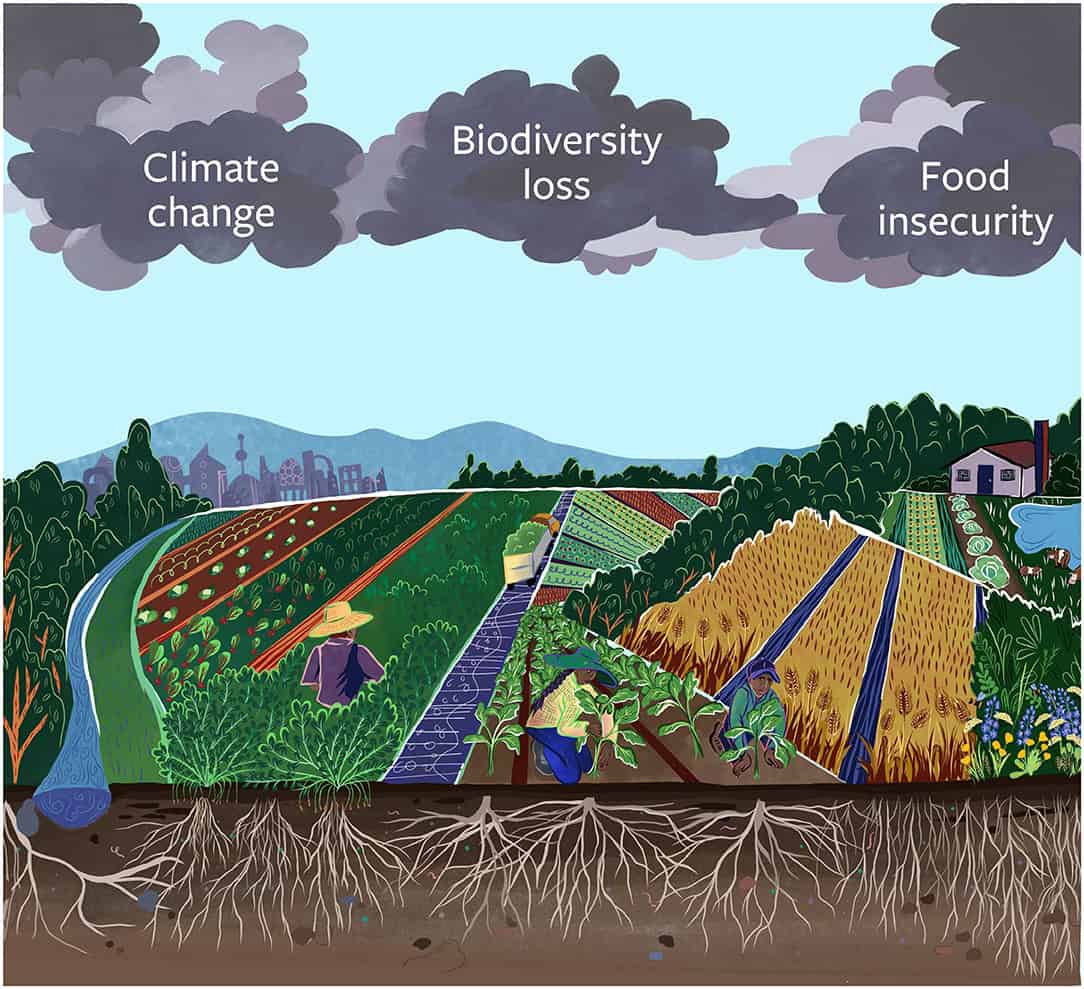
This article explores the “triple threat” facing farmers in the form of climate change, species loss, and food system industrialization. Featuring the personal experiences of several farmers, it also examines the potential opportunities for innovation and resilience that organic agriculture provides. It illustrates how policy decisions can promote (or hinder) the potential for a just transition to a climate-friendly and resilient agricultural production system. Read more.

Climate Impacts on a Small-Scale Farm

A personal account from former OFRF staff member and farmer Caroline Baptist, this article highlights the devastation and heartbreak that farmers experience in the wake of climate change-induced disasters. It also highlights the resilience and perseverance it takes to keep going and how Caroline finds hope in the soil. Read more.

Organic Farmers Lead the Way Toward Climate-Smart Agriculture

In Kentucky, farmer Bryce Bauman has shifted away from plastic mulch, choosing instead to focus on other, more climate-friendly strategies for weed mitigation. Working with the Organic Association of Kentucky (OAK), he is also conducting a thorough investigation into his farming systems and looking for ways he can implement more climate-smart practices. Read more.

>> Bonus Read: We’ve reshared the following three articles from our partners at the National Sustainable Agriculture Coalition (NSAC) because they so squarely hit the nail on the head for the importance of organic agriculture in navigating the climate chaos we are in:

As NSAC says in that last piece, it is vital that we “recognize the capacity of organic farming and ranching systems to build agricultural resilience to extreme weather events and make a significant contribution to carbon sequestration and mitigation of greenhouse gas emissions arising from agricultural production.” At OFRF, we are committed to advocating for the research funding and policy priorities that farmers need in order to care for the planet and feed their communities.

Are you a farmer navigating the impacts of climate change? We’d love to hear your story—your insights help inform the resources and advocacy we provide. Fill out this form and our team will be in touch shortly.

And, be sure to join our newsletter to stay in touch and receive updates about organic research, education, and advocacy.

Sharing the Latest Organic Research with NRCS: a new annual research report and webinar are available

By |2025-12-17T18:47:41-05:00June 20th, 2025|News|

Written by Rebecca Champagne, PhD, OFRF Conservation Scientist

Each year, as part of our Cooperative Agreement with the USDA Natural Resources Conservation Service (NRCS), the Organic Farming Research Foundation (OFRF) publishes a research summary and holds webinars on various organic topics to help build institutional knowledge of NRCS staff and equip them to better support the unique needs of organic and transitioning-to-organic farmers across the country. We recently published a new annual summary on the latest organic research and led an accompanying webinar for NRCS staff.

Annual Research Summaries from OFRF

These annual research summaries provide a look at the latest organic agriculture research across a variety of topics, meant to provide NRCS staff, organic farmers, and other interested parties with in-depth educational information on the conservation benefits of organic management. These summaries provide both brief research highlights and comprehensive summaries for each topic. Our 2025 summary covered research pertaining to organic pest management, fertilizers and soil amendments, soil organic carbon, diversified cropping systems, production of organic vegetable transplants, and nitrous oxide mitigation. You can check out both our 2025 and 2024 research summaries on our website!

Organic Research Updates: Pest Management, Diversified Cropping Systems, and Soil Organic Carbon

Rebecca Champagne, OFRF’s Conservation Scientist, and Mark Schonbeck, OFRF Research Associate, led a webinar for NRCS to accompany the research summary. Held on June 17, the webinar dove into select topics from the research summary including organic pest management, diversified cropping systems, vegetable transplants, and soil organic carbon. The webinar provided detailed scientific information in these areas and gave insight into peer-reviewed research treatments and results.The webinar concluded with a Q+A session so participants could ask follow up questions and get clarification on the topics discussed. Questions that were fielded from participants related to the effects of anaerobic soil disinfestation on microbial communities, economic comparisons of mulch systems, and the benefits of hedgerows.

Interested in viewing this webinar? A recording is now available online through Conservation Webinars!

Upcoming Organic Farming Webinars with NRCS

OFRF will be hosting three webinars each year over the next four years, covering various topics related to organic farming. Webinar participants also have the chance to test what they learn and earn Certified Crop Advisor Continuing Education Units (CEU) credits by answering quiz questions at the end of each webinar. By identifying and summarizing the latest peer-reviewed research and highlighting real-world farm examples, we aim to help NRCS staff and Technical Service Providers better understand organic production requirements, challenges, and what successful conservation practice implementation on organic operations can look like.

. . .

To learn more about our Cooperative Agreement with NRCS, contact Rebecca Champagne at rebecca@ofrf.org

To stay up-to-date with the latest organic farming news, research updates, and opportunities for advocacy, sign-up to receive the OFRF newsletter at https://ofrf.org/get-involved/receive-news/!

Ensuring a Sustainable Future With My Legacy to OFRF

By |2025-06-13T17:41:29-04:00June 13th, 2025|News|

Written by Katrina Heinze, OFRF Board Member from 2014-2023

A planned gift is a gift to the future. I support organic farming and OFRF because I care about the future health of our planet and its people. A planned gift to OFRF is a tangible way for me to pay it forward.

My mom fed me organic milk before “organic” was even a label. I grew up cooking and connecting with people through food. Later in my career, these interests led me to work in organic foods and organic policy. What a gift! Through my work, I learned about the care, hard work, and amazing knowledge that organic farmers bring to growing our food, as well as the challenges that make farming organically and bringing a farm’s goods to market difficult. 

In 2014, I joined OFRF’s board. Our farmer board members and farmer listening sessions taught me that organic farmers are experimenters and that we still have much to learn about the best production practices to nurture our environment, deal with and address the impacts of climate change, and provide healthy food for all—all while ensuring sustainable economics for farmers and farming communities.

OFRF’s mission is to foster the improvement and widespread adoption of organic farming systems. I love OFRF’s farmer-centered, science-based approach. Our work is long-term and requires long-term funding. For example, OFRF publishes the National Organic Research Agenda (NORA) every 5-6 years. The NORA Report is used to ask for Congressional funding for organic research, influence USDA’s grant funding, and help those of us in the organic food industry rally to support our farmers’ most important production (and non-production) needs. All of this contributes to new knowledge and support for organic farmers.

My husband and I have included OFRF in our will in addition to our regular OFRF donations. We did this to model our values for our family, demonstrate how we align our resources to those values, and be clear about the legacy we want to leave behind.

Estate planning can be easy to put off or avoid. However, we found that having conversations with our family about our wishes enriched our relationships. By discussing what mattered most to us and how we could best use our resources now and in the future, we’ve become better stewards of our resources today. We are glad we did this now instead of waiting or missing the opportunity altogether.

Planned giving can take place during your lifetime or at death, and it is a crucial part of your overall financial and estate plan. Typically larger than donations from ordinary income, planned gifts can provide income, financial security, and tax savings to you and your family, depending on how they are structured. In our case, our planned gift includes a multi-year commitment to OFRF now and a designation of a percentage of any remaining estate at our deaths.  

Planned giving is crucial for non-profits like OFRF, who depend largely on annual giving to “keep the lights on.” Although OFRF receives grants for key program initiatives, these grants don’t often pay for staff development, accounting, and the time-consuming work of helping policymakers understand the needs of farmers. Planned gifts build year-to-year stability for now and create a “savings account” for later.

I have seen the impact of planned gifts on OFRF. When I was on the Board of Directors, we received a planned gift. This single donation enabled us to hire a paid intern to support our research program. It also demonstrated to a future grant maker the value of our work, which has now resulted in a multi-year grant. Better still, the donor was unknown to us, and learning about why OFRF was important to them brought us joy and a renewed commitment to our mission.

A planned gift does not have to be complicated. Including OFRF as a beneficiary in your will or naming OFRF as a full or partial beneficiary of a life insurance policy or retirement account is a simple way to make a planned gift. Consulting with your financial and legal advisors can help you determine what is best for your situation and values. Once you have put a gift plan in place, let the beneficiary non-profit know. They will benefit from understanding what motivated you, and you will get to enjoy the impact of your thoughtful gift.

Together, let’s ensure the widespread adoption of organic farming practices. Our earth and farming communities depend on it. Please join me in planting a seed for the future by making a planned gift to OFRF today.

Sincerely,

Katrina

Keeping it Real: How OFRF Groundtruths Our Policy Priorities, and Why That Matters

By |2025-08-28T13:09:27-04:00June 3rd, 2025|Gordon's Policy Corner, News|

By Gordon Merrick, OFRF Senior Policy & Programs Manager

In today’s political environment, defined by complexity, shifting political winds, and consistently competing interests, clarity and consistency matter more than ever. That’s why it is all the more important that OFRF stays grounded by always adhering to one simple principle: our work must be rooted in the real needs of the organic farming and research community. Whether we’re advocating for research funding in the halls of Congress, submitting comments to the USDA, or analyzing the impacts of federal programs and decisions, we’re guided by what we hear directly from farmers, researchers, and partners across the United States.

OFRF Policy Priorities

OFRF’s policy work centers around three core goals:

  1. Invest in Organic Research that supports all farmers in building ecologically resilient, economically viable farming operations
  2. Expand access to technical assistance and financial tools that empower producers to implement research-backed, systems-based practices
  3. Grow organic as an economic engine, especially in rural communities, by ensuring federal policy recognizes and supports organic production systems as a public good

These priorities aren’t abstract, they’re rooted in field experience, producer feedback, and a clear-eyed assessment of what it takes to make organic agriculture succeed on the ground and in communities across the United States.

Our commitment to our community’s needs

OFRF does not set our policy agenda from an ivory tower or an echo chamber. We’ve committed to revisiting and updating our priorities annually in direct response to feedback from the communities we serve. We take seriously our responsibility to represent the diverse perspectives within the organic sector. That means staying connected to the farmers navigating certification, the researchers searching for funding that will facilitate their work, and the businesses and communities that depend on organic production.

That’s why we brought these priorities to our recent Organic Stewardship Council meeting. Producers like Anna Jones-Crabtree of Vilicus Farms reminded us that while organic systems offer tremendous benefits, too many federal programs still fail to recognize or accommodate how organic works. This on-the-ground story mirrors national research findings: current USDA programs are not designed with organic and agroecological systems in mind. This results in lost support, unfair pricing assumptions, and policies that treat organic like an outlier, rather than a proven system that feeds people and restores land (for reference, about 15% of our produce is organic by volume, but organically managed land represents less than 1% of all farmland).

The real experiences and stories shared in this discussion weren’t one-offs. They are part of the intentional work we do at OFRF in every conversation, farm visit, and research partnership. We aim to update our priorities annually in collaboration with farmers, researchers, and movement leaders. Through OFRF’s work with grass-tops organizations and directly with farms across the country, we work to build spaces for people to tell us their stories about what is changing on the ground. Whether it’s ensuring USDA’s technical and financial assistance programs are applicable to organic farms or fighting for parity in research investments, OFRF’s priorities are shaped by what people tell us they need, not what sounds good in D.C.

What you can do

There’s a reason this work feels more urgent right now. As several farmers noted in our recent conversations, organic is at an inflection point. Market premiums are narrowing. Other labels and claims are muddying consumer understanding. And more than 15,000 USDA staff are leaving the agency, threatening institutional memory and slowing urgently needed reforms.

OFRF doesn’t have all the answers; but we do have a clear mission: to cultivate organic research, education, and federal policies that bring more farmers and acreage into organic production.

If you are a farmer with organic acreage, a researcher studying organic agriculture topics, or just someone who has a story to share on the importance of organic agriculture, we are here to listen. If you want to make sense of the current policy landscape, we are here to help: our new, free, self-paced Communicating with Legislators email course is designed to support you in telling your story loudly and clearly. Farmers are doing the work. Our job is to make sure policy catches up. 

We’re here to make sure your voice is not only heard, but acted on.

Eat well and breathe deeply,

Gordon

P.S. You can catch up on recent editions of Gordon’s Policy Corner here.

Matt Jones (he/him)

By |2025-09-11T17:21:03-04:00June 1st, 2025|Staff|

Research and Education Program Fellow

email: matt[at]ofrf.org

Matt Jones (he/him) joins OFRF as the Research and Education Program Fellow after 15 years working with farmers on sustainable agriculture research. In this role he will be working on a national needs assessment to inform a National Organic Research Agenda report.

Throughout his career, Matt has worked with farmers across diverse agroecosystems, from organic lowbush blueberry growers in Maine to transitioning vegetable farmers in California. Most recently he’s been working as an independent consultant assisting growers, businesses and nonprofits in finding biologically-based farm management solutions. Previously he worked as Research Assistant Professor at Washington State University’s Tree Fruit Research and Extension Center. Earlier roles included a Fulbright Research Fellowship in New Zealand and a research technician for the USDA.

Matt has a Ph.D. in Entomology from Washington State University and an M.S. in Ecology and Environmental Science from the University of Maine. He and his wife live on a small farm in the Chumstick Valley of central Washington. When he’s not at work, you can find him digging in the dirt, pruning fruit trees, or climbing and skiing in the backyard mountains.

Go to Top