
General News

OFRF Announces Applications Opening for 2026 Farmer-Led Trials Program
The Organic Farming Research Foundation is excited to announce that applications are open for the next cohort of organic farmers who will be leading on-farm research trials with OFRF technical assistance in 2026.

The Government Shutdown: What it Means for Organic Farming and Research
In the midst of a government shutdown, with no clear end in sight, organic farming and research is taking a hit. A complete freeze in all federal work directly affects the nation’s programming at USDA, especially for organic producers and the agricultural research they depend on. This month’s Policy Corner breaks it down.
Two Years of Farmer-Led Trials
As we wrap up the second cohort of Farmer-Led Trials, and prepare to open applications for the third season, OFRF’s Research & Education Program Manager, Mary Hathaway reflects on the lessons, challenges, and highlights of supporting farmers in conducting their own research trials.

The Story Behind HEAL: Collective Power for Food System Change
HEAL Food Alliance is a multi-sector, multi-racial coalition dedicated to transforming food and farm systems through policy, education, and grassroots support. OFRF joined HEAL for a “Lunch and Learn” event recently, aimed at building stronger connections between our organization and others working in the food and agriculture sectors. We were inspired by the powerful work that HEAL is doing. Here are our takeaways.
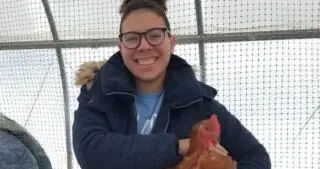
School Lunches Might Look Different This Year: Federal Funding Freezes Pinch School Food Programs
For a research project, OFRF’s Policy & Communications intern, Marina Santos, dove into understanding the impact of federal funding freezes on school lunch programs, farmers growing the food, and the communities they feed.

A Trio of Comments: OFRF Chimes in on USDA Actions
At OFRF, we know that strong, transparent, and farmer-informed federal agencies are essential for the success of all U.S. agriculture, but especially organic agriculture. This month, we acted on that knowledge when we submitted three different comments on USDA actions.

Farmer-Led Trials Program Spotlight: The Woven Trifecta
The Woven Trifecta, located in Western Michigan, focuses on diversified vegetables for a CSA, local farmers market, as well as farm to school sales throughout the school year. Farmer Samantha Otto, is participating in OFRF's Farmer-Led Trial Program to experiment with using anaerobic fermentation as a soil amendment to improve crop vigor and yield.
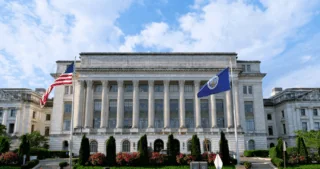
OFRF Raises Concerns on USDA Reorganization Plan
OFRF submitted comments opposing USDA’s reorganization plan, warning it would undermine research, conservation, and farmer access to vital programs.

Advancing Organic Agriculture: Dr. Walter Goldstein on Nitrogen-Fixing Corn with Congressman Steil
Dr. Walter Goldstein’s research is proving that you can breed organic corn varieties with similar yields to conventional corn that are competitive against weeds without the need to use synthetic fertilizers or herbicides. This work has huge implications on the future of corn production, climate resilience, and food security, and Dr. Goldstein is committed to sharing his story with the policymakers who need to know.

Organic Farmers Withstand Climate Change with Living Soils and Regional Seed Breeding
Over 80 certified organic farmers collaborate on the Organic Microbiome Project, a participatory research project led by Cornell University. By analyzing shifts in soil life and plant defenses where farmers are utilizing different farming practices, insights about resiliency to the stresses caused by extreme weather may be emerging.
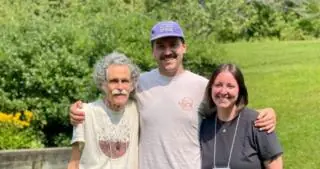
Farm Bill, Appropriations, and the Clock Ticking Toward September 30
This month’s Gordon’s Policy Corner comes from Vermont, where OFRF joined the National Sustainable Agriculture Coalition’s Summer Meeting. From Farm Bill and appropriations deadlines to shifts in how Congress and the Administration work together, we break down what’s at stake for farmers, researchers, and advocates. Now is the time to connect with your representatives and USDA officials to ensure your voice is heard.

Fields of Possibility: Tribal Food Sovereignty and Organic Agriculture
The Indigenous Food and Agriculture Initiative’s mission is to enhance the health and wellness of tribal communities by advancing healthy food systems, diversified economic development, and cultural food traditions. In a recent conversation with OFRF, we explored the history of Federal Indian Policy, its lasting impacts on food sovereignty, and the intersections with organic agriculture.

Farmer-Led Trials Program Spotlight: Parker Farms
Parker Farms, located in Warren, Ohio, is a small farm with a big heart, serving their community fresh, locally grown produce and promoting sustainable, urban agriculture. Farmer Markisha Parker, is in the second year of transitioning the farm to certified organic, and is participating in OFRF's Farmer-Led Trial Program to experiment with a variety of mulches to help manage moisture on her organic tomatoes.
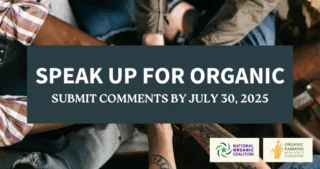
Help Us Strengthen Conservation Access for Organic Operations
Organic farmers deserve a seat at the table. OFRF and the National Organic Coalition are urging USDA’s NRCS to better support organic practices in key conservation standards—and your voice can help make it happen. Submit a comment by July 30 using our simple tool and speak up for soil health, biodiversity, and climate resilience.

Advancing Organic Agriculture: Sharing Corn Research with Congressmen Burchett and Ogles
Researchers have a powerful role to play in policy conversations and Dr. Renata Nave Oakes, is a great example. A researcher at the University of Tennessee, Dr. Oakes recently met with Congressmen Burchett and Ogles to share how she is using the Organic Transitions Program to research how to improve soil health, reduce weed pressure, enhance nitrogen availability through biological fixation, and ultimately make organic corn production more profitable and practical for farmers.

Whole-Farm Revenue Protection (WFRP): Insurance Options for Organic and Transitioning Growers
New to WFRP or not sure it applies to your farm? Our latest toolkit breaks down Whole-Farm Revenue Protection and shows how organic and transitioning growers can use it to protect diverse operations and income streams.

What’s Going On? A Brief Update on What’s Happening in DC
With endless stops and starts, shifting deadlines, and overlapping processes, it can be hard to track what actually matters in the federal policy spheres. At OFRF, we want to keep our community grounded in the real implications for organic research and the systems that support and benefit from it. This month’s Policy Corner provides brief updates on some of the processes we are engaged in, and how you can help support that work.
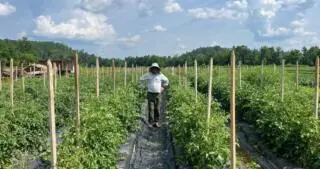
Advancing Organic Agriculture: Sharing Tomato Research with Senators Tillis and Budd
Dr. Dilip Panthee, an organic tomato researcher at North Carolina State University recently met with staff from Senators Tillis and Budd to talk about the importance of funding organic research. Learn how his work developing disease-resistant tomatoes is helping farmers—and why researchers have a powerful role to play in policy conversations.

Farmer-Led Trials Program Spotlight: Ledoux Grange
Ledoux Grange, in Mora, New Mexico, is an organic certified, 34-acre operation that grows regenerative organic grains, pulses, legumes, and cover crops. Farmer Kristin Swoszowski-Tran is participating in OFRF's Farmer-Led Trial Program to see if she can identify a lodging-resistant variety of the ancient grain, teff that can stand up to their high winds.

Nearly 80% of New Organic Farmers Are Looking for Climate Resilience
Over the years, OFRF has spoken to dozens, if not hundreds, of farmers, and increases in extreme weather events often come up in conversation. To better understand the challenges farmers are facing, and the solutions that organic agriculture offers, we’ve put together a collection of a few articles that highlight how organic farmers are both impacted by and well-poised to address climate change.