On-Farm Research

Organic Researcher Spotlight: Dr. Ajay Nair

Integrating poultry, cover crops & vegetable production can reduce purchased inputs while increasing yields

Written by Brian Geier

Dr. Ajay Nair, Department of Horticulture Chair, Iowa State University

Organic farmers with successful Integrated Crop-Livestock Systems (ICLS) report benefits ranging from increased farm productivity and reduced inputs to improvements in soil fertility and increased nutrient density in food products. Additionally, organic farmers report site-specific benefits, for instance livestock grazing that provides unique options for crop pest control or decreases the need for mechanical cultivation (learn more about these specific benefits to organic farmers in OFRF’s Crop-Livestock Integration resources). 

While these benefits are becoming better understood, researchers at Iowa State University, led by Dr. Ajay Nair, wanted to look more closely at a specific crop-livestock integration scenario: poultry and diversified organic vegetable production systems. “Commonly researched and implemented methods of crop-livestock integration in the United States,” they write, “include grazing livestock on cover crops, rotational grazing of permanent pasture, and grazing livestock on crop residues such as corn or wheat. Several reviews on crop-livestock integration discuss its benefits, such as increased soil organic carbon, aggregate stability, enhanced nutrient cycling, and increased soil nitrogen (N). There is, however, limited research on the integration of animals in vegetable production.” Now, with funding from USDA’s Organic Agriculture Research & Education Initiative (OREI), Dr. Nair and a team of researchers across the country are evaluating poultry, cover crop and vegetable integration.  

Pastured Poultry: a unique fit for diversified vegetable production

Organic vegetable production systems are often highly diversified, requiring intensive management techniques and quick turnaround times between crops. Poultry, which require less space and are easier to move than other livestock could prove to be a unique fit for organic vegetable farmers. Add to that the relatively low capital investment and many growers and researchers wonder if integrating poultry with vegetables could be profitable while still meeting food safety and National Organic Program requirements. “‘How will I integrate poultry? Where? When?’ That was the number one question our growers had,” explains project lead, Dr. Nair.

Above, left: the three rotations in the study are: 1) vegetable > vegetable > cover crop (V-CC), 2) vegetable > cover crop > poultry (V-CC-P), and 3) vegetable > poultry > cover crop (V-P-CC). Above, right: a floorless coop moves around a cover crop in a plot where treatment 2 (V-CC-P) is being evaluated.

The research evaluates the effects of pasturing poultry in movable, floorless coops through vegetable and cover crop rotations. The multi-state project, which involves research in Iowa, Kentucky and California won’t conclude until August of 2024, but it already has several key findings:

  1. Poultry and cover crops can successfully be integrated with vegetable production systems.
  2. Where poultry are integrated with vegetable production systems, nitrogen inputs can be reduced while vegetable yields are increased.
  3. In field tests at Iowa State University, over time, more weeds accumulated in systems where poultry were integrated with vegetables than in systems without poultry.  
  4. Birds in this study are more efficient at converting food to meat. The Feed Conversion Ratio (FCR) of birds in this study is almost double that of conventionally raised broilers. 

The impact of USDA funding for organic research & farmers

Dr. Nair, a professor at the Department of Horticulture at Iowa State’s College of Agriculture and Life Science who in July of this year became the Department Chair, credits the USDA/NIFA’s Organic Research and Extension Initiative for making projects like his possible all over the country.

“OREI is the foundation for several of the organic projects that happen across the country, and we are very thankful for NIFA for having such a dedicated program for organic growers. It serves as a good platform for us to reach out to organic growers and for organic growers to reach out to us.” -Dr. Ajay Nair

You can learn more about this project and the importance of OREI in this video excerpt from OFRF’s interview with Dr. Nair in early 2024:

This research is funded by the USDA/NIFA’s Organic Research and Extension Initiative. To learn more about OFRF’s advocacy work to protect and increase this type of funding, and how you can help become an advocate for organic farming with us, see our Advocacy page.

By |2025-12-17T18:01:25-05:00July 17th, 2024|Livestock, News, On-Farm Research, Soil Health|

Organic Researcher Spotlight: Dr. Dil Thavarajah

A breeding pipeline is developing improved pulse crops for organic farmers in the southeast

Written by Brian Geier

New cultivars of pulse crops (lentils, chickpeas, and field peas) may soon be available to organic farmers! These improved varieties, under development through a project led at Clemson University (CU), will: 

  1. be suitable for crop rotations with cash crops currently being grown on organic farms in North and South Carolina,
  2. have high protein content and quality, and 
  3. be climate resilient (to heat, drought, and cold stress). 

The Principal Investigator on the project, Dr. Dil Thavarajah, is an internationally-recognized leader in pulse biofortification (breeding for nutritional traits) who leads CU’s Pulse Biofortification and Nutritional Breeding Program. Her project, Sustainable, high-quality organic pulse proteins: organic breeding pipeline for alternative pulse-based proteins, is funded by USDA/NIFA’s Organic Agriculture Research and Extension Initiative (OREI), a program OFRF’s advocacy work aims to bolster and protect. 

Dr. Thavarajah brings an extensive background in pulse breeding and an international focus to the effort to develop organic cultivars for farmers in the southeast.

 “I think the international component is very important because pulse crops especially are inbred and they are not very genetically diverse. Major universities with pulse breeding programs in the US are all conventional. We need to exchange material because the material they develop for conventional is not going to work with organic. Organic is a whole different ball game.”  -Dr. Dil Thavarajah

The project builds on a previous OREI grant that helped to identify varieties that worked well in organic crop rotations with sorghum. These varieties are now being evaluated to identify those with higher protein and sugar content, and better protein quality (measured both by digestibility and consumer preference). Dr. Thavarajah calls her approach “participatory breeding” that includes both consumers and farmers in the process. Interestingly, higher sugar content not only makes pulse crops sweeter and preferred by consumers, but also makes the plant more climate resilient. Having more sugar alcohols in the plants means the plants are more likely to remain healthy through drought stress, extreme heat, or cold snaps.

Ultimately, though, the farmer-collaborators are the centerpiece of the breeding program. “I don’t think I could be successful without my growers,” she admits. The willingness of farms like W.P. Rawl and Sons to trial new varieties and crop rotations led to successful grant proposals and may very well lead to new cultivars being released to farmers very soon. To acknowledge this, Dr. Thavarajah looks forward to releasing new varieties that bear the names and legacies of the farmers involved in the project. 

Learn more about Dr. Thavarajah’s work (including advice for fellow researchers applying for OREI funding) by watching the following short video interview with OFRF, and follow her work to stay updated on the release of biofortified pulse crops for organic farmers in the southeast!

This research is funded by the USDA/NIFA’s Organic Research and Extension Initiative. To learn more about OFRF’s advocacy work to protect and increase this type of funding, and how you can help become an advocate for organic farming with us, see our Advocacy page.

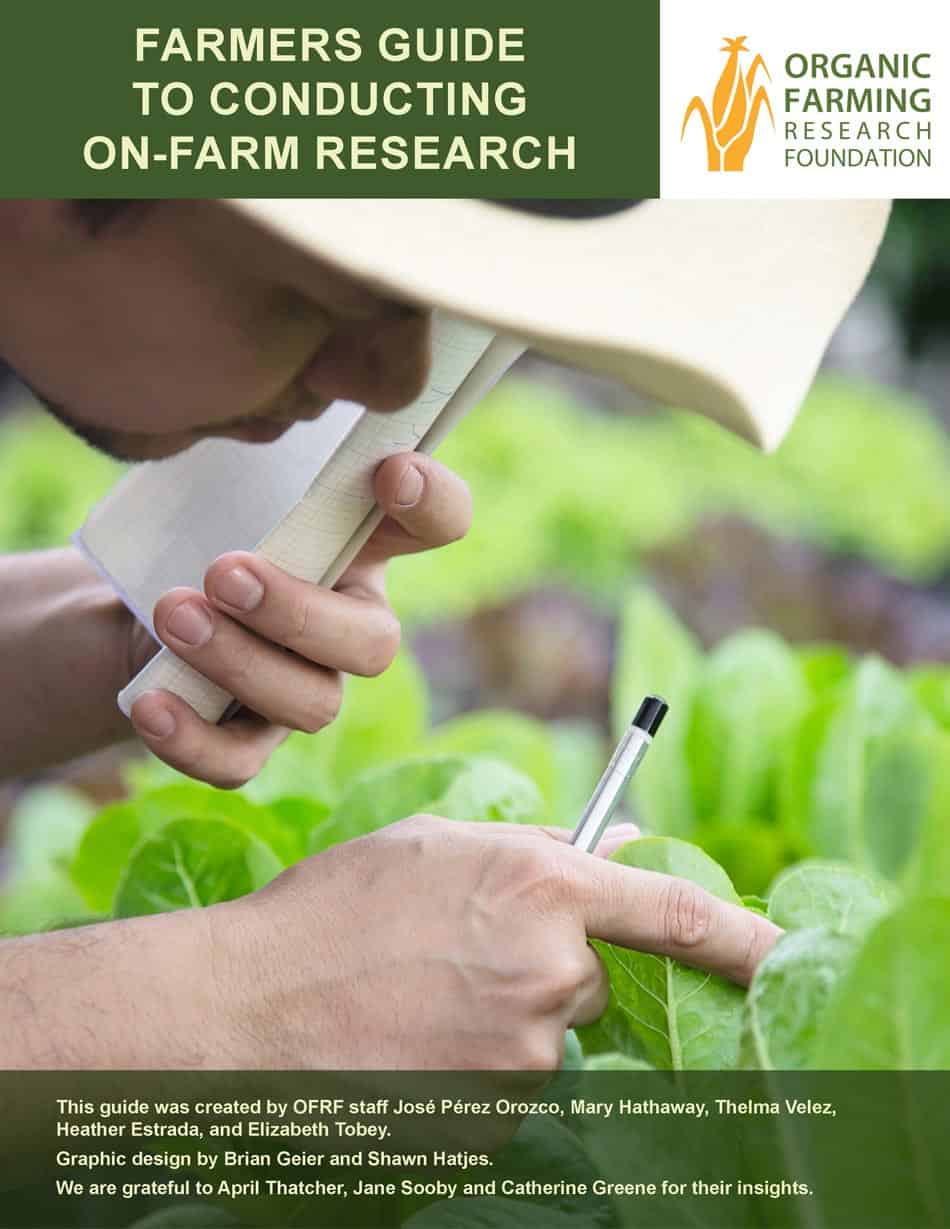
Farmers Guide to Conducting On-Farm Research

Organic farmers and ranchers like you are always testing and experimenting with new ideas to improve their farming operations. You probably have some ideas every day that you would like to try. Incorporating a few scientific steps in your experiments will generate more reliable results that you can trust.

This guide was specifically created for you, the organic farmer or rancher who is curious about conducting some type of trial or experiment on your farm in a more structured way. Whether you are looking at reducing the use of off-farm inputs, minimizing disease pressure, trying out new crop varieties or animal feed, or testing new cover crop techniques or irrigation sensors, this practical guide was created to assist you along the way.

By |2025-12-17T17:25:43-05:00November 7th, 2023|On-Farm Research, Reports, Soil Health and Organic Farming Reports|

Farmers are Researchers: Conducting your own on-farm research

Farmers and ranchers conduct experiments all the time. They constantly test and modify new or improved ways to farm. In this webinar, farmers will learn about adding a few scientific steps to their farm tests that can produce more reliable results that they can trust. OFRF is excited to present this workshop as part of the new OFRF Farmer-led Trials Program (FLT) and the accompanying publication Farmers Guide to On Farm Research.

This webinar recording covers the official launch of OFRF’s Farmer-Led Trials Program, which promotes farmer-led innovations in organic farming. Learn how this program can support farmers and ranchers like you in conducting practical, on-farm research.

By |2025-12-17T17:45:01-05:00December 17th, 2022|Certification & Compliance, On-Farm Research, Resource|

2022 National Organic Research Agenda and 2022 State of Organic Seed Reports Released

FOR IMMEDIATE RELEASE

As the Organic Industry Booms, Grower Challenges and Seed Needs Loom Large
Two new assessments underscore the need for targeted investments in organic research

(SANTA CRUZ, Calif., March 15, 2022) — Organic Farming Research Foundation (OFRF) and Organic Seed Alliance (OSA) are proud to announce the release of the National Organic Research Agenda (NORA) and State of Organic Seed (SOS). The two reports are published every five years to examine organic farming challenges across the U.S., identify research needs, and better understand the organic seed needs of producers.

The organic food market experienced incredible growth in 2020, with sales surpassing $56 billion, a 12 percent increase from 2019. The organic seed market has also grown in recent years due to this demand for organic food as well as a dramatic rise in gardening during the COVID-19 pandemic.

The reports released today provide comprehensive assessments and recommendations for ensuring the ongoing growth and success of organic farming in the U.S. Specifically, NORA details organic research needs with the goal of informing future investments that support the success of organic farmers and ranchers and those transitioning to organic production. SOS details trends in organic seed sourcing, challenges faced by organic seed producers, public investments in organic plant breeding, and more.

In 2019, OFRF and OSA were jointly awarded funding from the U.S. Department of Agriculture’s (USDA) National Institute of Food and Agriculture’s (NIFA) Organic Research and Extension Initiative (OREI) for the NORA and SOS projects. The following year, OFRF and OSA launched a national survey of organic farmers and ranchers, in addition to a survey targeting transitioning-to-organic operations, to better understand these producers’ challenges, needs, and perspectives. More than 1,100 producers responded to the survey and an additional 100 producers attended 16 listening sessions across the country. Overall, farmer participation reflected the same demographics of those in the U.S. farming sector as documented in the USDA’s National Agricultural Statistics Services 2019 Organic Survey.

Highlights from the National Organic Research Agenda

“Organic farming has been historically under-invested in, in terms of research, education and extension,” says OFRF Executive Director Brise Tencer. “The 2022 National Organic Research Agenda presents incredible feedback directly from organic farmers and provides a compelling roadmap for how to best support the growth of this important sector of agriculture.”

Survey respondents provided input and perspectives on their current organic production systems, including the use of regenerative soil health management practices, water conservation, organic inputs, and organic seed. Findings confirm that organic producers lead the nation in adoption of soil health management and climate-friendly practices. The 2022 NORA also examines current farmer concerns in organic agriculture, farmers’ preferred sources and modes for information-sharing, and summarizes the impacts of COVID on organic producers.

Respondents also shared their production and non-production challenges, which OFRF then analyzed by region, farming experience, and race/ethnicity. This particular NORA compares the experiences of both Black, Indigenous, and People of Color (BIPOC) and White farmers, and reveals BIPOC producers are experiencing many organic production challenges and at a higher rate than their White counterparts.

In addition to identifying gaps in current organic and transitioning-to-organic production challenges, NORA highlights farmer-identified solutions and strategies shared during its focus group discussions. NORA also provides comprehensive recommendations to guide OFRF’s research and policy initiatives. Proposed investments and focus areas include, but are not limited to, technical assistance, organic research, and racial equity programming.

Highlights from State of Organic Seed

The State of Organic Seed report is part of an ongoing project to monitor organic seed systems in the U.S. More than ever, organic seed is viewed as the foundation of organic integrity and an essential component to furthering the principles underpinning the organic movement. Every five years, SOS serves as a progress report and action plan for increasing the organic seed supply while fostering seed grower networks and policies that aim to decentralize power and ownership in seed systems.

The update released today includes substantially more data than the 2016 report, including a deeper examination of organic seed producer/company challenges and their networks. This and other data can be explored through an interactive website where users can sort five data sets by region, crop type, and other identifiers (see: https://organicseed.shinyapps.io/SOSData/).

Organic farmers produce food differently, and that means they need different seed for the crops they grow – seed developed to thrive without synthetic chemical fertilizers and pesticides, and adapted to their local climate and soil conditions. Organic seed is also a regulatory requirement. The USDA’s National Organic Program requires the use of organic seed when commercially available.

Unfortunately, OSA’s recent findings show no meaningful improvement in organic producers using more organic seed compared to five years ago. This lack of progress puts at risk the viability of the organic seed industry and the integrity of the organic label. In particular, the largest organic operations still use relatively little organic seed, and data suggests that organic certifiers’ enforcement of the organic seed requirement could be strengthened.

However, OSA’s data points to progress in other areas, including public investments going toward organic plant breeding and other organic seed research initiatives. More than $39 billion have been invested in these types of projects in the last five years alone. This represents the largest public investment in organic seed systems that OSA has ever recorded. More organic plant breeders are having success releasing new varieties as well.

“The findings are clear, and they underscore the urgent need to modernize organic seed policy, support the success of existing and new seed producers, and confront the dire risks climate change poses to our seed supply,” says OSA’s Kiki Hubbard, lead author of the report.

Each report is available online at www.ofrf.org/research/nora/ and www.stateoforganicseed.org/.

###

Download this Press Release (214 KB, PDF)

Media Contacts
Organic Farming Research Foundation, communications@ofrf.org
Kiki Hubbard, Organic Seed Alliance, kiki@seedalliance.org, (406) 544-8946

About Organic Farming Research Foundation
Organic Farming Research Foundation (OFRF) works to foster the improvement and widespread adoption of organic farming systems. OFRF cultivates organic research, education, and federal policies that bring more farmers and acreage into organic production.

https://www.ofrf.org/

About Organic Seed Alliance

Organic Seed Alliance (OSA) works nationally to advance ethical seed solutions to meet food and farming needs in a changing world. Through research, education, and advocacy, OSA fosters organic seed systems that are democratic and just, support human and environmental health, and deliver genetically diverse and regionally adapted seed to farmers.

https://seedalliance.org/
By |2025-12-10T15:10:56-05:00March 15th, 2022|Advocacy, News, On-Farm Research, Press Release|

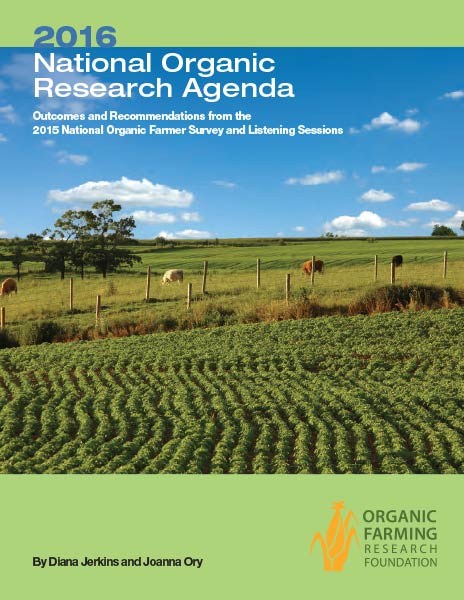
2016 National Organic Research Agenda (NORA)

This 2016 National Organic Research Agenda (NORA) report provides comprehensive recommendations for future investment in organic agricultural research. These recommendations are based on the Organic Farming Research Foundation’s 2015 survey of organic farmers, nationwide listening sessions with organic farmers, and a review of key documents and recommendations from other organizations, including the National Organic Standards Board (NOSB). The 2015 Organic Farmer Survey was conducted online and completed by over 1,000 organic farmers. Their responses directly inform our top recommendations for organic research.

Photo of cover of the National Organic Research Agenda 2016 report
By |2025-12-10T15:26:57-05:00September 23rd, 2019|Advocacy, On-Farm Research, Uncategorized|
Go to Top