
Carrots, Tomatoes, and Field Days

Carrots, Tomatoes, and Field Days

By |2024-06-18T18:00:13-04:00February 12th, 2024|News|

Bringing farmers & researchers together

At OFRF, celebrating and strengthening the relationship between the researcher and the farmer is one of our greatest joys. We see these roles coming together and overlapping at Field Days – educational events often held on a working farm or ranch or at an agricultural research site. These events usually include demonstrations of specific management practices and equipment or highlight research methods and results. They are an excellent way for farmers to learn about new research findings, researchers to gain insight into the most pressing issues for producers, and networks to grow between them to continue these exchanges. 

With our team spread across the country, we are eager to know more about field day events happening in various regions and to highlight more stories of these cross-pollination events. Do you host Field Days? What kind of events do you plan? Who attends them? And best of all – what are you researching? We want to see what you are up to!

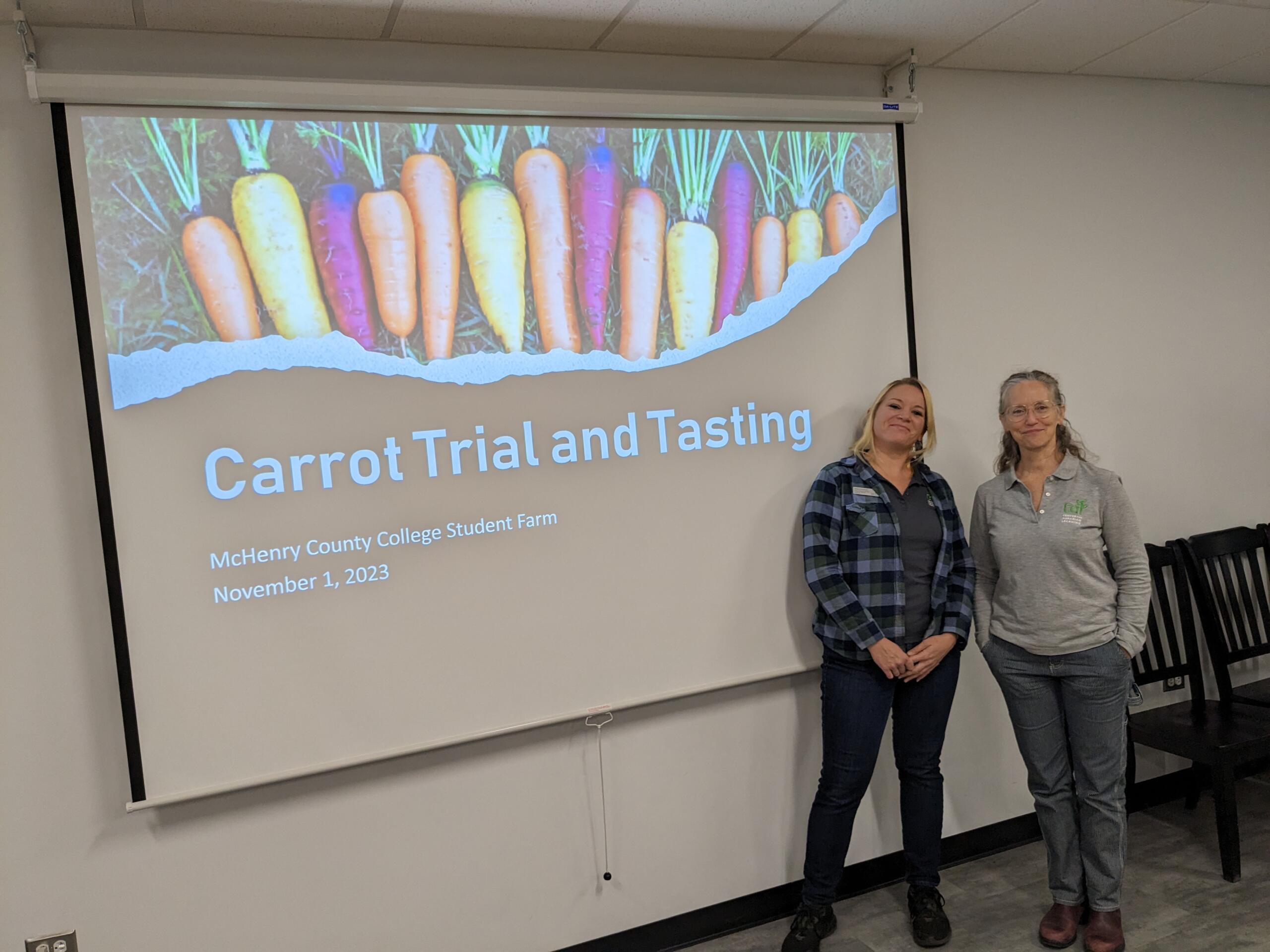
Back in November, our Development Director, Leah Lawson, had the opportunity to attend a carrot trial field day at McHenry County College’s Center for Agrarian Learning in Crystal Lake, Illinois, the ancestral homelands of the Peoria, Bodwéwadmi (Potawatomi), Myaamia,  Očhéthi Šakówiŋ,  Hoocąk (Ho-Chunk), and Kiikaapoi (Kickapoo). Here’s what she had to say about the experience:
Carrot Trial Field Day

By Leah Lawson, Partnerships and Development Director OFRF

It was one of those beautiful fall days when the air was crisp and cool. As I drove out to the campus, the sky faded into a beautiful prairie sunset of purples, reds, and oranges – much like the colors of what was to be my favorite carrot of the night.

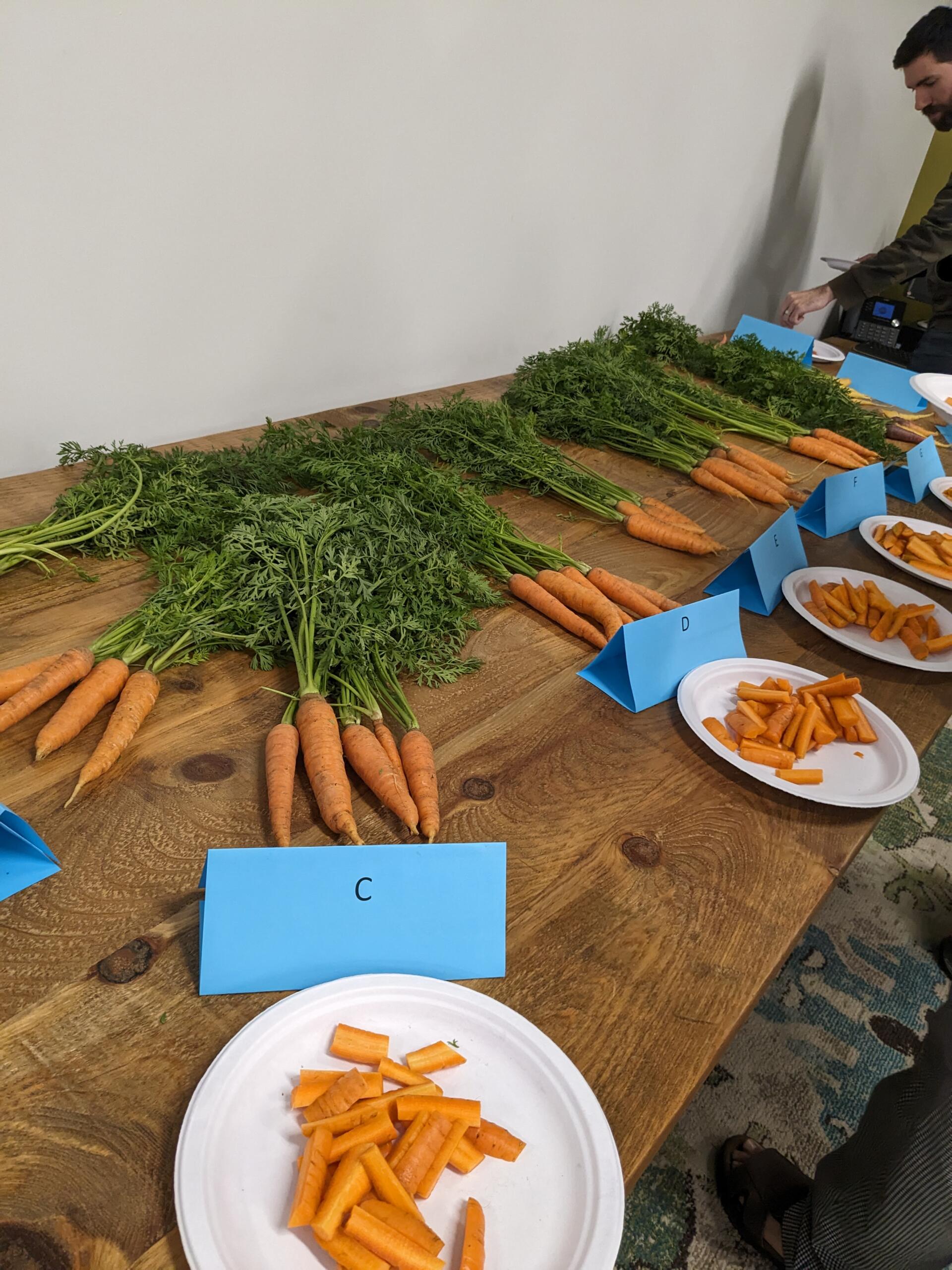
Our three hosts for the evening, Sheri Doyel, Micaela Colley, and Kim Sowinski, took us through the process and purpose of the project titled “Carrot Improvement for Organic Agriculture” (CIOA). We learned about domestication pathways and how culinary and cultural history blend together to create varieties throughout the world. We also learned about the process of carrot breeding. They only flower after the second year of growth, so harvesting the seeds is a long process. Each carrot variety has to be grown in a separate tent to keep them separate and prevent insects with unwanted pollen from getting into the mix.

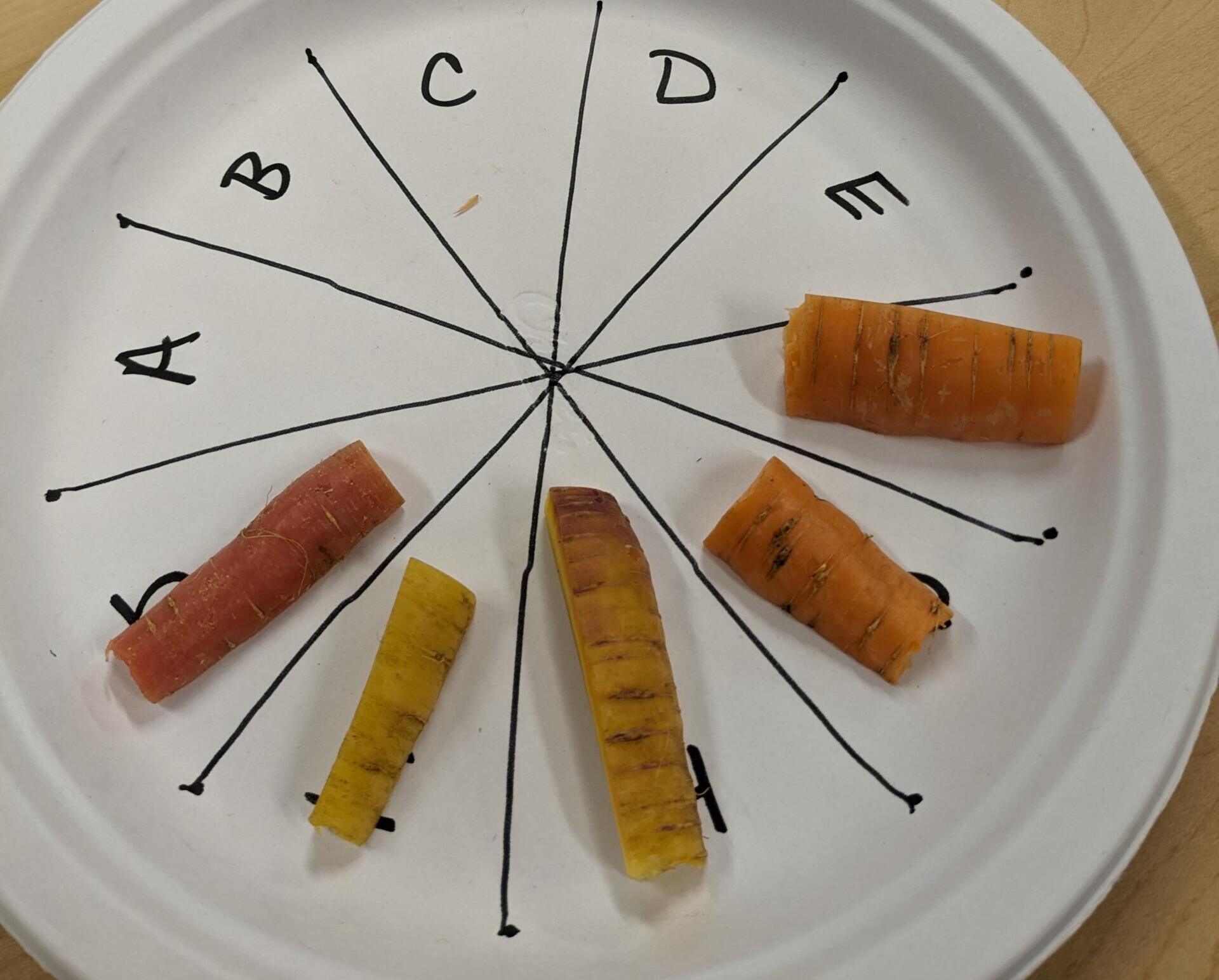
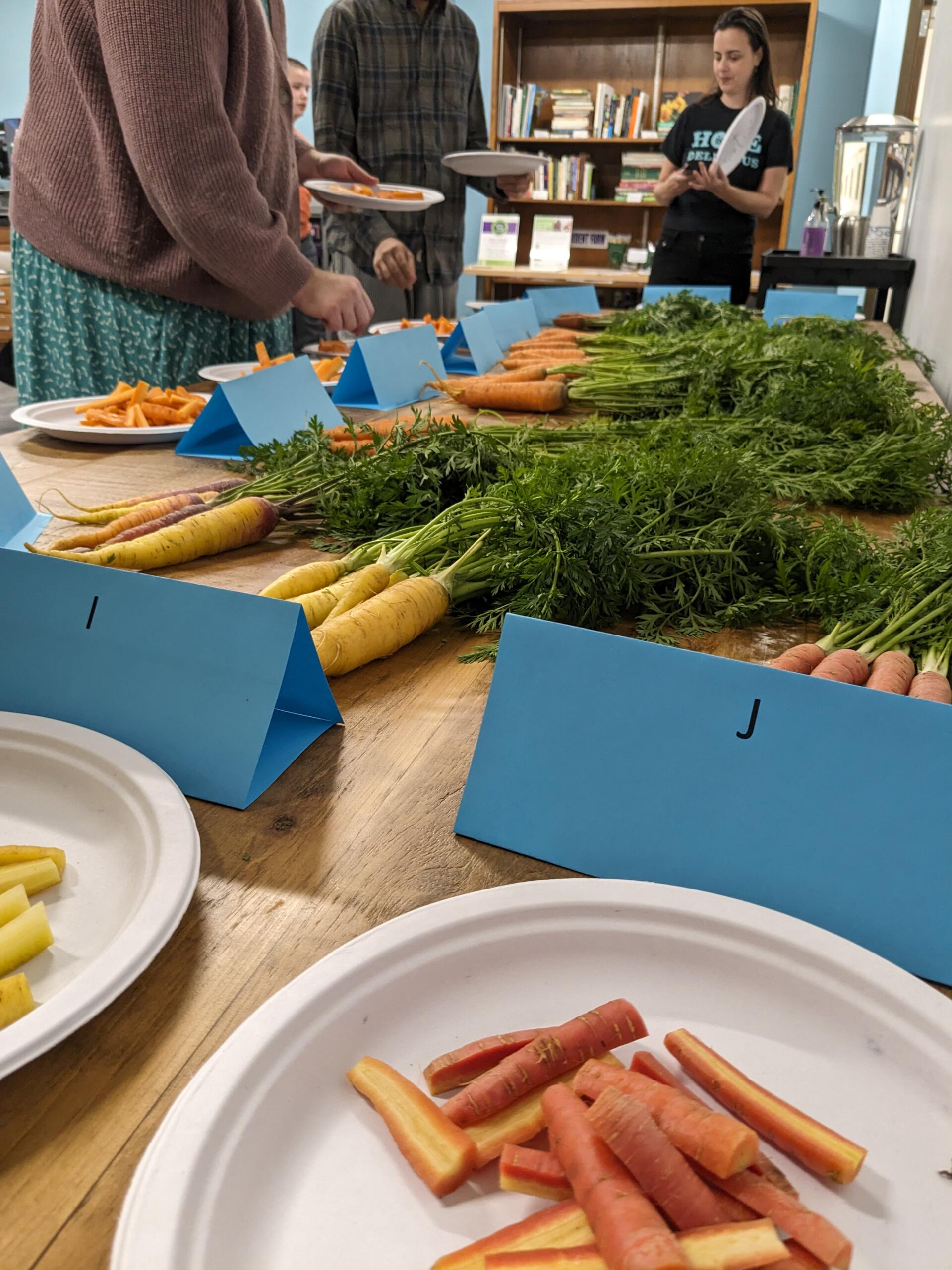
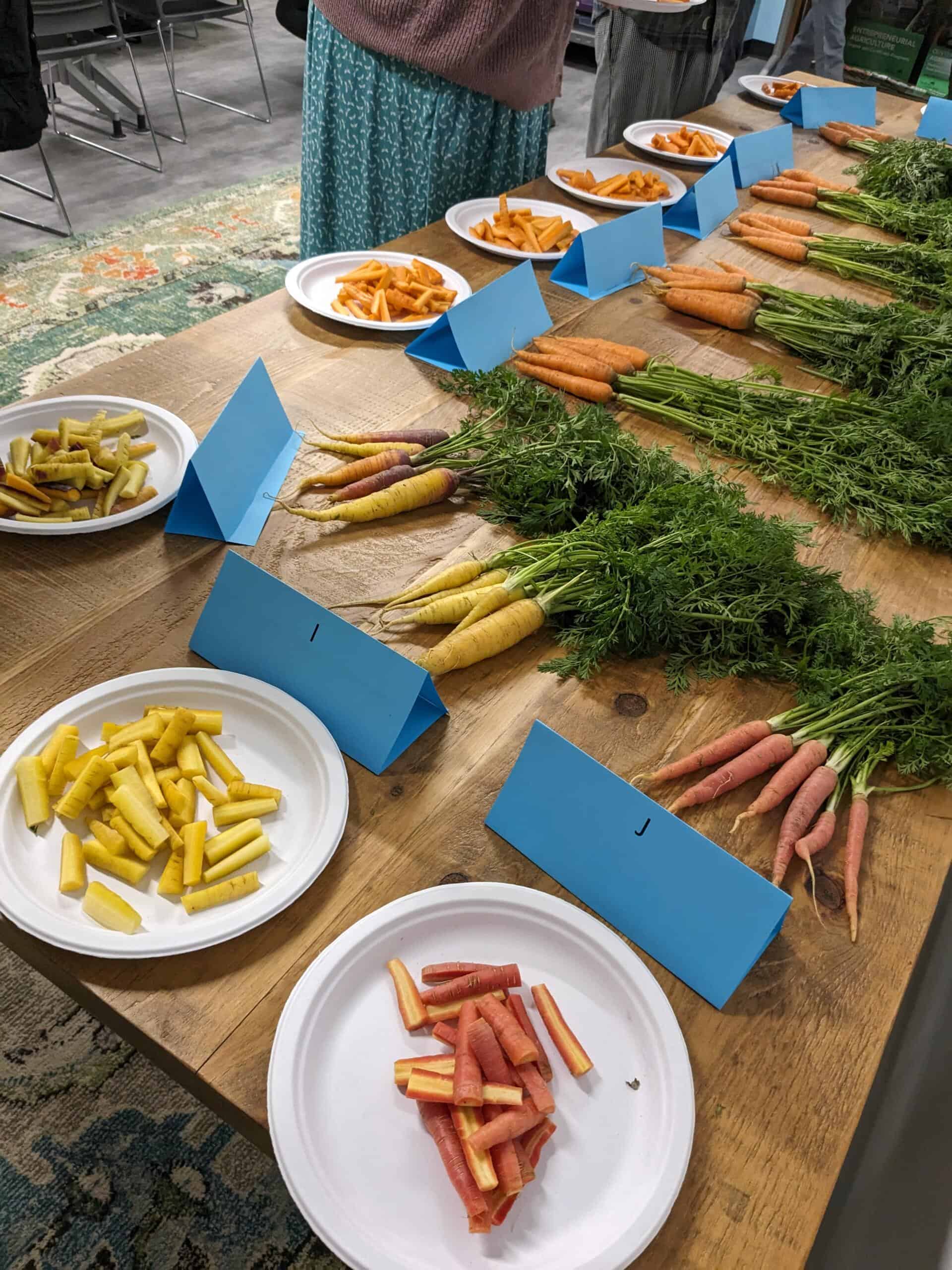
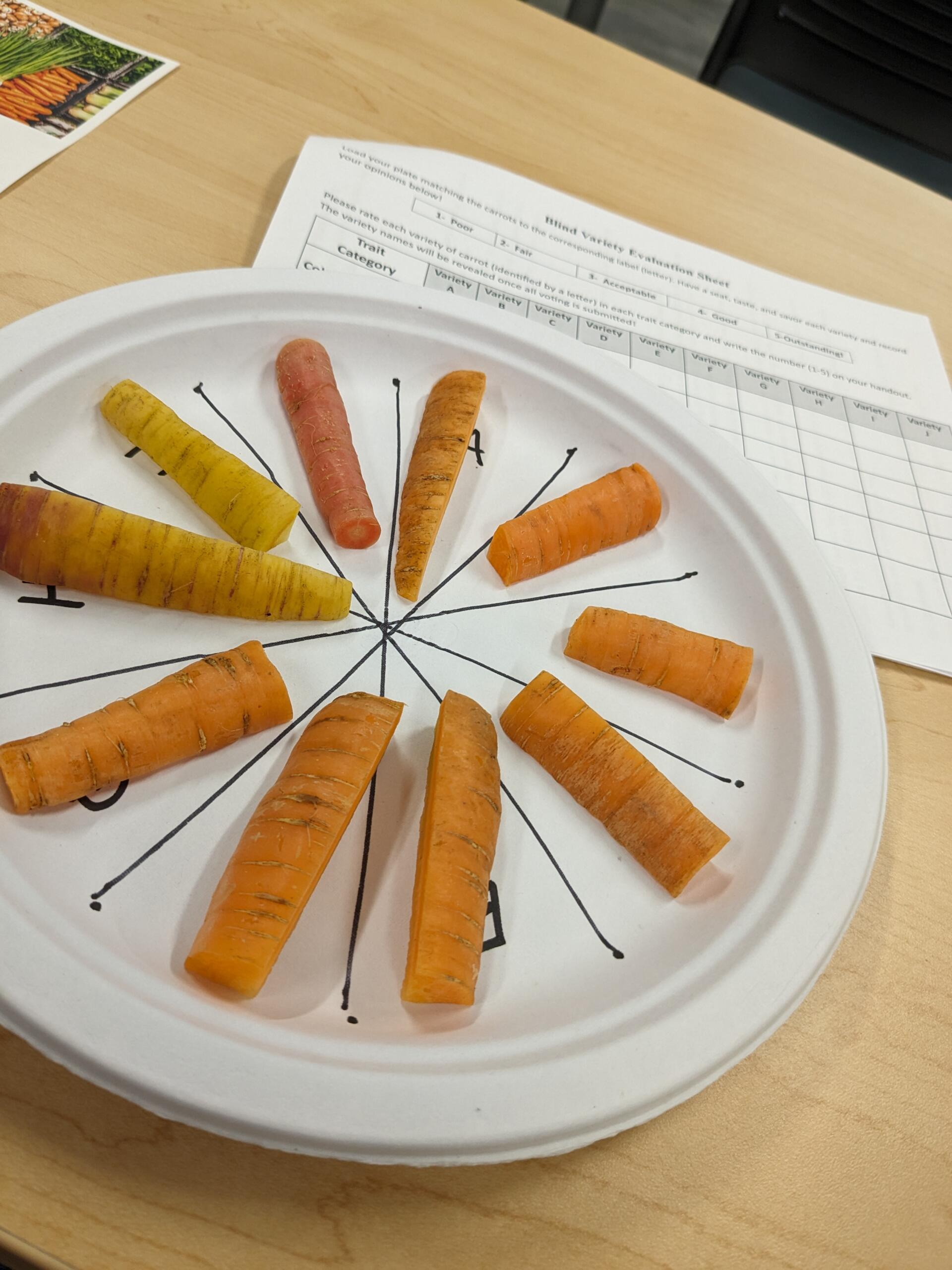
Of course, the best part of the evening was tasting the carrots. We tried ten varieties grown on the MCC Student Farm, rating them each for taste, sweetness, texture, and color. Sheri and Kim collected all of this data to aggregate with the results from all the other farms participating in the study. Each variety will also receive ratings from the growers on soil health, disease resistance, and production rate. You can sign up on the Seed Linked website if you want to join a similar trial.

Unfortunately, my two favorite carrots were not great producers, so I don’t think I will find them at my local farmers’ market soon. However, I did get to take some of the leftover carrots. After returning home, I conducted another quick tasting with my kids, and we all marveled at their differences.
OFRF is working on building a database of Field Day opportunities around the country, so if you know of events like this, please get in touch! Let us know how you communicate or find out about research in your area. You can reach us at fieldday@ofrf.org 

If you’re interested in learning how to host a Field Day, check out this Farmer Field Day Toolkit from SARE.

New disease-resistant carrot and tomato varieties being developed in partnership with organic farmers

OFRF just released two new research summaries highlighting this carrot trial and a similar tomato study. These two important, long-term organic crop breeding projects both focus on the interaction between soil microbes, genetics, and disease management, and both involve participatory plant breeding efforts between organic farmers and researchers.
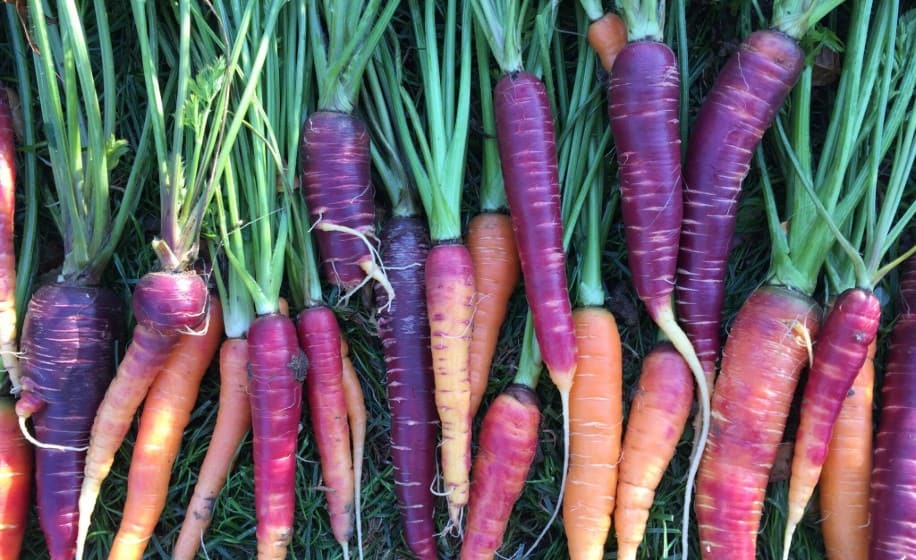
Carrot Improvement for Organic Agriculture (CIOA): Leveraging On-Farm and Below-Ground Networks

Carrots are an economically important crop for organic specialty crop farmers, with 12% of US carrot acreage under organic management bringing more than $120 million in farmgate sales. Since 2011, researchers leading the CIOA project have been looking to improve carrot varieties for organic production. A central idea behind this work is that carrot varieties associate effectively with soil microbes for enhanced resilience to biotic and abiotic stresses, which can reduce the need for off-farm inputs. By conducting on-farm research and participatory carrot breeding projects, scientists and farmers work together to better understand below-ground networks and develop new varieties.
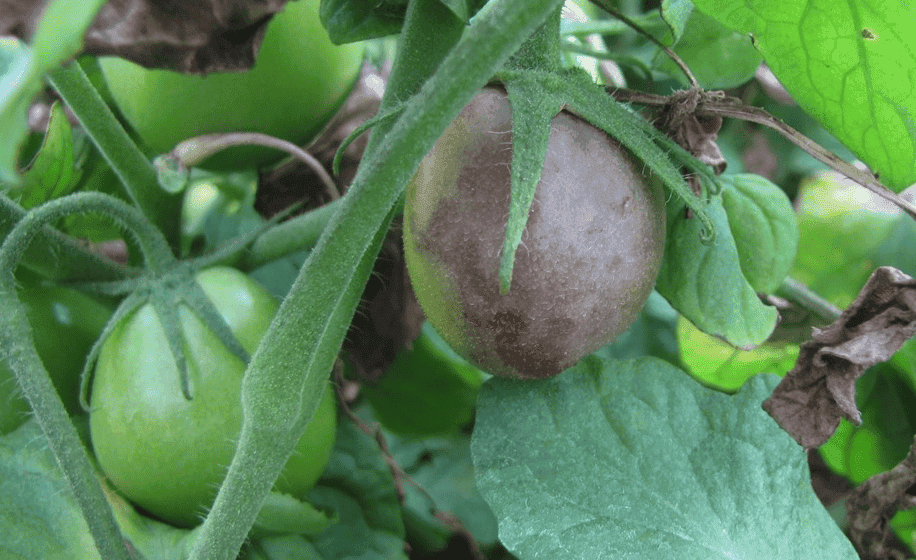
Tomato Organic Management and Improvement Project (TOMI): Part II

A diverse and virulent complex of fungal, watermold, and bacterial pathogens threaten organic tomato production. The Tomato Organic Management and Improvement Project (TOMI): Part II, led by Dr. Lori Hoagland of Purdue University, builds on previous research (TOMI: Part I), which found that soil and root microbiomes play a substantial role in mediating crop disease resistance. In this second phase of TOMI, researchers want to better understand the role of tomato genetics in promoting specific rhizosphere microbes that mitigate disease issues. The three-pronged approach investigates, 1) The potential for microbial biocontrol agents to promote disease suppression, 2) How plant genetics and microbes interact, and 3) The development of varieties with stable disease resistance using a farmer-participatory approach.

Organic Advocacy in Action: Reflections on NSAC Lobby Day

By |2025-02-28T14:59:17-05:00February 12th, 2024|Gordon's Policy Corner, News|

Gordon’s Policy Corner has a guest author this month – Annika LaFave, OFRF Policy and Communications Intern

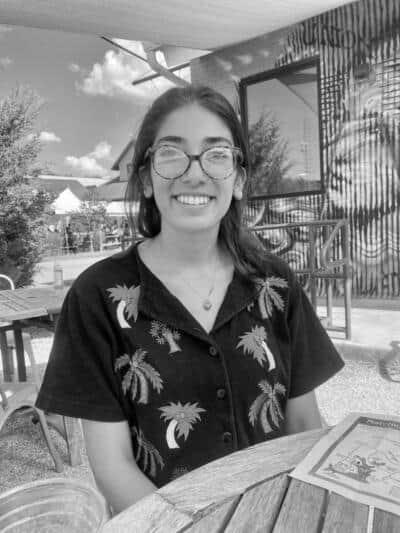
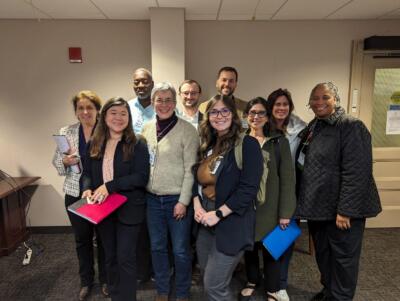
OFRF Policy & Communications Intern, Annika LaFave in front of the capitol after 8 official meetings during NSAC’s annual lobby day, and a “meet and greet” coffee chat.

Earlier this month, I had the exciting opportunity to participate in the National Sustainable Agriculture Coalition (NSAC) Lobby Day with Gordon (OFRF’s Policy & Programs Manager). As the Policy and Communications intern for the Organic Farming Research Foundation and a recent newcomer to national agriculture advocacy, I have gained a deeper understanding of the Farm Bill and Appropriations processes and still have more to learn.

Our lobby day goals were to discuss the significance of the organic industry and how legislation like the Strengthening Organic Agriculture Research Act (SOAR Act), Organic Research and Science Investment Act (OSRI Act), Continuous Improvement & Accountability in Organic Standards (CIAO), and Opportunities in Organic Act can address common challenges organic producers face. As anticipated, the lobby day underscored the vital role advocates play in conveying farmers’ needs to lawmakers.

Appreciating the intricacies of sustainable agriculture and the barriers farmers face requires a personal connection or lived experience. I was reassured to learn that many congressional agriculture committee staffers seem to “get it” and even have ties to farming in their backgrounds. It is reassuring to know that even with the appearance of continued inaction, there are internal agriculture champions working to help bridge the gap where lawmakers lack such a connection. One thing that stood out to me was the level of transparency staffers had when speaking about the status of the upcoming (delayed) Farm Bill and Appropriations negotiations.

Unifying Nature of Agriculture and Food

In a tumultuous global landscape grappling with climate change, social inequities, and political unrest, we all share a collective need for safe and reliable healthy food access. In this lies a belief widely held by many farmers and consumers regardless of party affiliation: a resilient food system is one that values conservation, ecologically-sound practices, human and animal welfare, and equitable access to basic needs. In most of our eight meetings with congressional staffers from both political parties, there was consensus that the needs of our vulnerable farms and food systems must be addressed. For me, these earnest interactions confirmed that sustainable agriculture, encompassing organic and regenerative practices, seems to have recognition as a nonpartisan bright spot in a difficult Congress.

Prioritizing Farmer-Driven Research Through Legislation

During the lobby day, OFRF staff and members of NSAC met with Leslie Deavers, Chief of Staff to the Associate Chief and Rebekah Lauster, Chief of Staff for the Office of the Regional Conservationists to discuss NRCS’ strategies on field staff recruitment and retention. OFRF is proud to be able to work with these partners to ensure high quality services for farmers.

A recurring topic of conversation in our meetings was how organic agriculture research overlaps with the needs of nonorganic producers. If we relate food systems policy initiatives to formative research principles and human-centered design, it’s clear that research objectives and dissemination methods should explicitly fit the needs and capacity of the “end user”. While trending tech-research exploring artificial intelligence and precision agriculture has the potential to transform our foodscape, it is essential that we recognize the immediate limitations of small and mid-sized producers’ ability to access such technologies. I appreciate the University of South Dakota’s researchers’ policy advice to approach agriculture research with a social justice framework, ensuring that we do not leave behind the farming communities most in need. Amid the complex challenges we face in today’s food system, we must prioritize farmer-centered approaches to address wicked problems.

The research sector represents an ever-important industry whose work directly impacts the economic and working lives of farmers and rural communities. It is essential that investments in agriculture research reflect both the economic and production needs of the farmers it aims to support. One particularly salient issue is the dwindling number of new small and midsize farmers—how can advocates and researchers best meet the needs of smallholder and beginning farmers, and ensure that they have a viable path forward? 

81% of BIPOC farmers and 63% of beginning farmers surveyed in OFRF’s 2022 National Organic Research Agenda specified that “managing production costs” is a significant production challenge. Among non-production challenges, “accessing labor” and “finding and developing markets for organic products” were among the top concerns for all surveyed farming demographics. A study from the USDA Economic Research Service (ERS) on the Profit Potential of Certified Organic Field Crop Production and University of Vermont’s study on labor management decisions for small and mid-sized farms are just two examples of how federally-funded research can address these key challenges.

Closing Thoughts

Advocating for farmers requires more than rhetoric; it requires tangible action and systemic change. Following the lobby day meetings, I feel inspired to dig deeper into USDA National Agricultural Statistics Service (NASS) local food systems and organic production data as a means of informing my own advocacy work. You can get involved too, simply by calling your Representative and Senators to ask their offices to check in on the status of Organic Research in the upcoming Farm Bill and Appropriations negotiations. You can find their contact info here! Small actions by many people are what make this work possible. And if you’re interested in getting more involved, reach out to Gordon at gordon@ofrf.org!

Organic Management of Honey Bees

By |2026-03-02T12:27:24-05:00February 12th, 2024|Insects & Diseases, On-Farm Research, Resource|

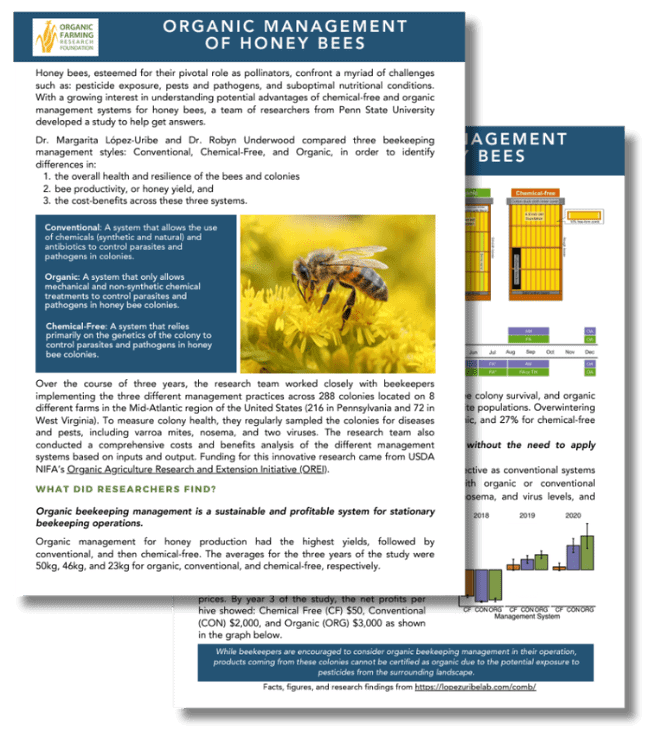
This resource provides a comprehensive factsheet based on Penn State research comparing conventional, chemical-free, and organic honey bee management systems across 288 colonies. It highlights critical findings on colony health, overwintering survival, and the surprising economic superiority of organic methods, which yielded the highest honey production and net profit.

Download the factsheet to discover how organic miticides and mechanical interventions can effectively manage pests like Varroa mites to support resilient, high-yielding apiaries without the use of synthetic chemicals.

image of two-page pdf factsheet on the organic management of honey bees

Cultivating Connections

By |2024-06-18T18:02:02-04:00February 9th, 2024|News|

EcoFarm 2024 & OFRF’s Organic Agriculture Research Forum

This January, almost half of the OFRF team traveled to Monterey, CA  to meet in-person for the OFRF Organic Agriculture Research Forum (OARF) which was held in conjunction with EcoFarm. Considering we are a fully remote team spread across the country, this was a big opportunity for us to connect and showcase our work. OFRF research forum consisted of eight workshops embedded within the 2024 EcoFarm conference. The forum focused on sharing the latest research relevant to organic producers, with a loaded agenda that touched on production issues, soil health, weed management, and of course, organic integrity. The team was immersed in two days of strengthening relationships, fostering new connections, and listening to farmers’ and researchers’ current work and perspectives on the industry. Here are the conference highlights from #TeamOFRF:

Thelma Velez, Research & Education Director

I can’t deny that the best part of hosting OARF at EcoFarm was getting to hang out with so many OFRF staff and board members (past and current), and connecting with partners from across the region. I know that as the Director of Research & Education I should say I was most excited for the great sessions we organized or the workshops that shed light on challenges facing organic growers. But there is something magical about connecting with like-minded folks driven to make the farming world a better space for everyone. It was enlightening to see the tracks dedicated to Indigenous and Tribal knowledge, justice in the food system, and accessible content in Spanish. I am really proud of our team for pulling together great content for OARF. Jose’s presentation on our new Spanish-language course, Los Fundamentos de la Salud del Suelo, was a big hit, and the printed resources we had in Spanish and English flew off the tables. I presented in a session focused on the synergies between organic and regenerative practices and principles. This is both a popular and contentious topic, and I was glad to know that my message resonated with so many growers in the audience.

Mary Hathaway, Research & Education Program Coordinator

I have been hearing about EcoFarm since I was a volunteer with World Wide Opportunities on Organic Farms (WWOOF) almost two decades ago, and I was excited to finally get a chance to attend. The grounds of Asilomar are a beautiful backdrop for learning, and leaning into the awe of nature through our organic experience.  Meandering through the beach boardwalks as a casual conversation unfolded with colleagues, or walking out of an inspiring session to the smell of sage and salt were the calm backdrop to a busy few days. Sessions on minimal tillage and supporting BIPOC farmers to transition to organic were especially of interest to me. I also had the pleasure of moderating “Cultivating Farmer-Researcher Collaboration in Organic Agriculture Research”. It was wonderful to hear farmers’ experiences with on-farm research, as well as researcher curiosity on how to better engage; it was a lively conversation that has stuck with me. And of course, you can’t mention the highlights of a multi-day conference without mentioning the meals! Sharing meals of locally sourced ingredients with new friends is a definite highlight of my conference experience. 

Jose Perez, Research & Education Engagement Coordinator

It was my first year attending EcoFarm and it didn’t disappoint! I was excited to meet and hear from farmers and service providers who were passionately engaged in the organic farming movement. I particularly enjoyed the session on calculating nitrogen supply for organic vegetables presented by UC Cooperative Extension and Full Belly Farm. I also enjoyed presenting on the new OFRF’s online Soil Health course in Spanish, Los Fundamentos de la Salud del Suelo, and connecting with the Latinx community, including many Agriculture and Land-Based Training Association (ALBA) staff and students.

Leah Lawson, Partnerships & Development Director

All of my agricultural work has been overseas or in the Midwest, so attending EcoFarm was interesting on many levels. I enjoyed learning about the farms and programs in California – seeing what was the same and what was different from other regions I’m more familiar with. I learned a lot about grafting, scions, and fruit trees. The seed swap was fascinating as I chatted with people growing things that are not common in the Midwest. It was a warm and welcoming experience and I look forward to returning in the future.

Kelsey Grimsley, Office & Administrative Manager

This was my third time at EcoFarm, and it was my favorite! It was exciting and motivating to be in-person with so many coworkers who live all over the US, and to feel like there was a team effort to make the most this conference. We would talk between sessions and exchange ideas and experiences in the social hall, then head out to the next event with a clear vision and mission. I’ve always been most inspired when I’m around people with overlapping passions. It was clear that so many conference attendees were looking for where they could plug in to foster a sustainable future. I was elated when we ran out of ALL our research materials the first day of the conference and I had to drive back to Santa Cruz to restock. From our series of soil health guides, to our informational booklet on the certification cost share program, to the executive summary of our new guide to on-farm research, our free resources were being picked up by folks as they passed our table. I spoke with an inspiring variety of people, including a beginning farmer from Thailand, a person using tech to help farming efficiency, and many young people hoping to get involved in whatever way they could. Ultimately we passed out over 835 hard copy research resources. I’m already looking forward to going back next year and bringing even more informational materials!

Gordon Merrick, Policy & Programs Manager

This was my second time attending EcoFarm, but my first time was during COVID so it was a digital conference. The in-person version is definitely a lot more exciting! It was great being able to take part in the constant work of building community in the sustainable and organic agriculture spaces. I was able to attend the session related to the (hopefully) upcoming Farm Bill and the importance of the federal legislative process to farmers, ranchers, and eaters.  Hearing the perspectives of people engaged in all levels of the food system has always been a priority of mine, and EcoFarm certainly offers a venue to do exactly that!

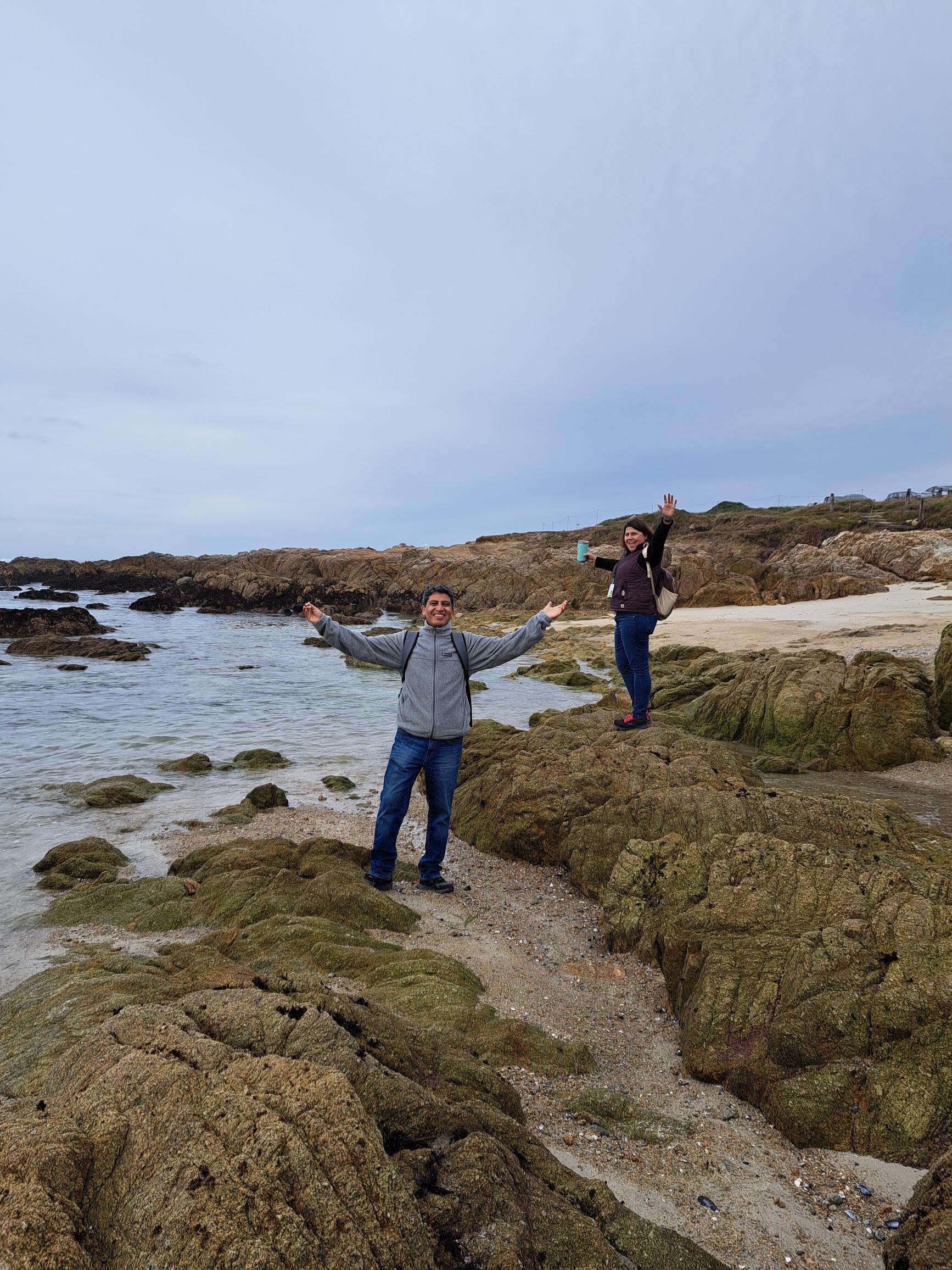
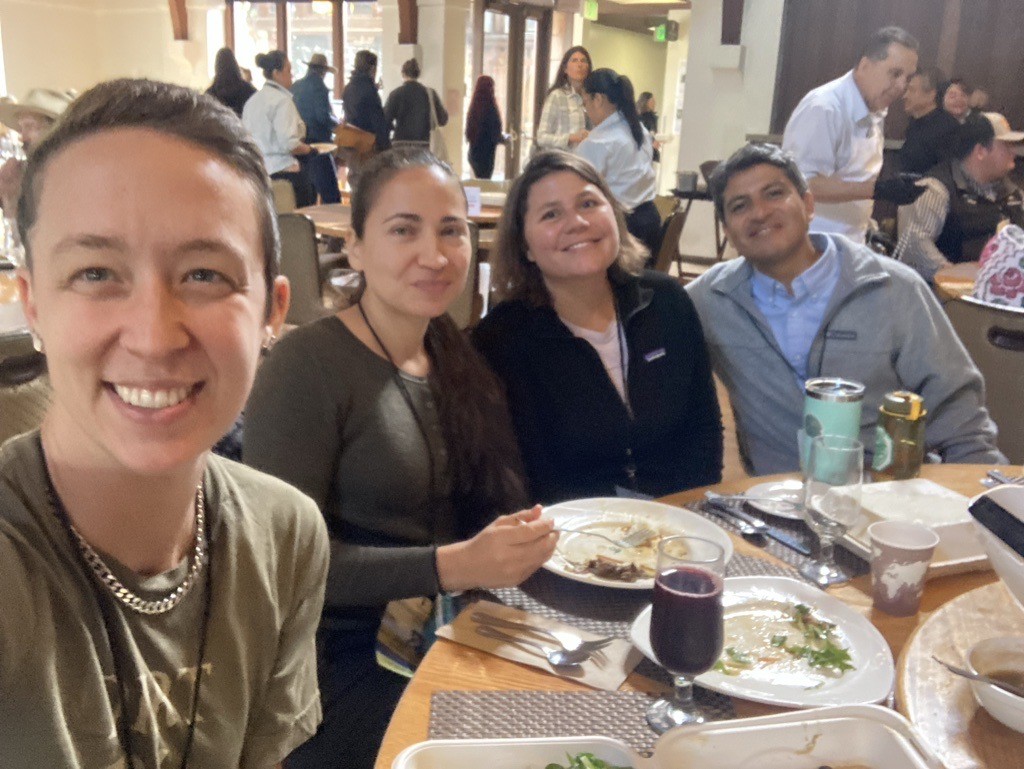
Proof we have fun together. Left: Jose & Mary explore the California Coast. Above: Kelsey, Thelma, Mary, & Jose share a meal. Right: Kelsey & Thelma enjoy a quiet moment between conference sessions.

Organic Transition Initiative (OTI)

By |2026-01-15T10:15:37-05:00January 31st, 2024|Certification & Compliance, Federal Assistance, News, Spanish Resources|

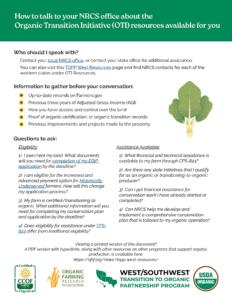
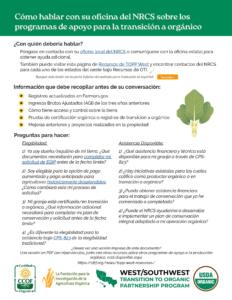
OFRF has developed a PDF to help farmers communicate with NRCS about accessing the Organic Transition Initiative.

It is available in both English and Spanish. >>>

“How to talk to your NRCS office about the
Organic Transition Initiative (OTI) resources available for you”

“Cómo hablar con su oficina del NRCS sobre los
programas de apoyo para la transición a orgánico”

Organic farmers must manage their land without prohibited inputs for 3 years for their products to be certified. This transitioning period can be incredibly challenging as farmers and their land adjust to new production practices. OTI is intended to help producers implement conservation activities required for certification, receive expert technical support, and recover foregone income due to reduced yields during the transition period through EQIP.

Step 1. Research your options.

Step 2. Connect with USDA. Create or update your account at Farmers.gov, and contact your local NRCS office to get started. Your conservation specialist will confirm your eligibility and help you identify which projects & practices best suit your operation. Directing the agent to NRCS-sponsored webinars and training modules the Organic Farming Research Foundation and Oregon Tilth have developed for NRCS field agents may be helpful.

Contact your state office for additional assistance:

Guiding Questions: Check out our “How to talk to NRCS about the OTI” PDF for additional topics, available above!

  • I __own/rent__ my land. What documents will you need for completion of my EQIP application by the deadline?
  • I am eligible for the increased and advanced payment option for Historically Underserved farmers. How will this change my application process?
  • My farm is __certified/transitioning_ to organic. What additional information will you need for completing my conservation plan and application by the deadline?
  • Can I get financial assistance for conservation work I have already started or completed?
  • Can NRCS help me develop and implement a comprehensive conservation plan that is tailored to my organic operation?
  • When is the deadline for the next EQIP ranking period?

Step 3. Schedule your conservation plan development. Your NRCS conservation specialist will work with you to develop a conservation plan for your operation and complete the AD 1026 form.

Step 4. Gather your application documents.

  • Official tax ID (Social Security Number or Employer Identification Number)
  • Adjusted gross income certification (Form CCC-941), which requires your Taxpayer ID Number and AGI from the previous 3 tax years.
  • Deed, or property lease agreement and written authorization from the landowner to install structural or vegetative practices.
  • Farm tract number (obtained from Farmers.gov or FSA membership).
  • Documentation of organic certification (if applicable).
  • Documentation of your land’s irrigation history (if applicable to project).
  • Documentation of previous improvements made to the property.

Step 5. Complete your application & submit! Your NRCS conservationist will assist you in finalizing your application. 

Step 6. Implement your plan. If you’re selected, you can choose whether to sign the contract for the work to be done. You’ll be provided with guidelines and a timeframe for implementing your plan. You will be reimbursed after your work is inspected and approved. Advanced payments not expended within 90 days of receipt must be returned to NRCS.

As essential stewards of the land, organic farmers deserve support. Don’t let funding be a barrier to realizing your farm’s potential. Take the first step towards growth and sustainability by applying for assistance through the Organic Transition Initiative before your state’s deadline.

Note: all of this information is available below in Spanish. Obtain additional translated materials, or schedule interpretation services for phone calls or in-person visits, https://www.farmers.gov/translations, or request personalized Spanish language support for any USDA resource, https://www.farmers.gov/translations#spanish-request.

Demystifying the National Organic Standards Board (NOSB) for Farmers

By |2026-03-02T11:52:33-05:00January 30th, 2024|Certification & Compliance, Resource|

Organic producers and processors must follow strict standards to become certified—but who decides what is and isn’t allowed on organic farms? Not your certifier! The USDA National Organic Program (NOP), in consultation with the National Organic Standards Board (NOSB), sets these rules.

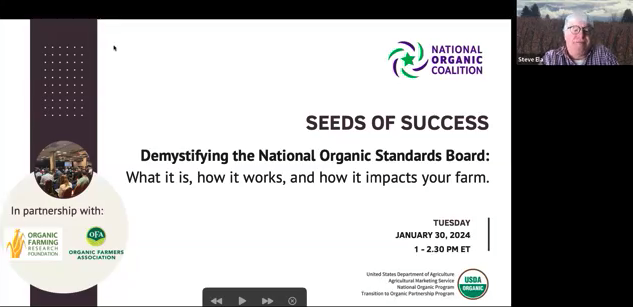
In 2024, the National Organic Coalition (NOC) hosted a Seeds of Success virtual session for organic and transitioning farmers, where a panel of farmers and advocates demystified the NOSB. Panelists explained the Board’s role in shaping organic standards, how decisions are made, and how written and oral comments can influence outcomes.

Panelists included Steve Ela (Former NOSB Chair, NOC NOSB Specialist, Ela Family Farms, CO), Harriet Behar (Former NOSB Chair, NOC Advisor, OFA Farmer Services Consultant, Sweet Springs Farm, WI), and Amy Bruch (Current NOSB Vice Chair, Cyclone Farms, NE).

screenshot of mp4 recording of Demystifying the NOSB webninar

From Regulations to Legislation: Advocating for Organic Agriculture in 2024

By |2025-02-28T15:04:09-05:00January 12th, 2024|Gordon's Policy Corner, News|

Gordon’s Policy Corner, January 2024

The dawn of a new year always brings new opportunities. This year, we are continuing our work to advocate for expanded public investments in organic agriculture research. To be honest, 2024’s political landscape is admittedly daunting:

  • FY24 appropriations still need to be passed by the end of the month.
  • The Farm Bill is running up against a new March deadline.
  • The FY25 appropriations process is about to begin.
  • There’s a Presidential election on the horizon.

That being said, at OFRF, we see these events as opportunities to ensure organic agriculture gets the recognition it deserves.

As we highlighted last month, 2023 was a momentous year for organic policy development in the regulatory space. In 2024, we hope to bring that momentum to the legislative body and work with our coalition partners to amplify our voices and call for increased public investments in organic agriculture research.

To do this, we have two primary initiatives. First, we will continue to build broad support for the Organic Science and Research Investment (OSRI) Act in the Senate and the Strengthening Organic Agriculture Research (SOAR) Act in the House. If you still need to get familiar with these significant marker bills, check out those links for an overview and some information on how you can help spread awareness about them. Second, we are committed to ensuring that appropriators comprehend the urgent need for increased funding in agricultural research and the far-reaching impact these investments have on the nation- economically, ecologically, and socially.

Including the SOAR and OSRI Acts in the 2024 Farm Bill is more than just a step forward in achieving parity between organic agriculture’s share of USDA research funding (currently <2%) and its market share (>6%). More importantly, these investments will touch the lives of communities nationwide.

Agricultural research programs extend beyond answering producers’ queries or supporting early-career scientists—although they excel at both. These programs significantly benefit the rural communities actively participating in and hosting vital research projects. Notably, every dollar invested in public agricultural research generates an impressive $20 of benefits. Despite this documented impact, public funding for agricultural research has seen a 20% decline since the turn of the century, in stark contrast to increased funding in other research areas during the same period.

Recognizing the urgency of the situation, we are intensifying our efforts in appropriations advocacy, ensuring that the offices of appropriators understand the critical importance and impact of the programs under their control.

However, for us to maximize our effectiveness, we need your help! If you have a story involving a research finding, participation in a research project, or a persistent research question that needs answering, please use our story form to contribute and help us raise awareness!

As always, please reach out if you want to get involved or are curious about our work! gordon@ofrf.org

Eat well,

Gordon

Annika La Fave (she/her/hers)

By |2025-09-02T16:58:43-04:00January 9th, 2024|Uncategorized|

Policy & Communications Intern

Annika La Fave (she/her/hers) joins the OFRF team as the Fall 2023 policy & communications intern. Annika is a graduate student at Johns Hopkins Bloomberg School of Public Health, focusing on public health communications & food systems policy.

Annika began farming in 2010 while completing her B.A. in Education at Hampshire College in Amherst, MA. She has since had a varied career in sustainable agriculture raising livestock, vegetables, and cut-flowers, teaching organic farming and small business management at Clackamas Community College, founding her own small vegetable farm business promoting food equity in partnership with Oregon Health & Science University, and, most recently, managing Baltimore County’s Agricultural Center.

Annika is passionate about land stewardship and the pursuit of occupational tenability for small and beginning farmers. She aspires to help create a more equitable food system for producers and consumers. She spends most of her spare time walking and running with her two energetic greyhounds.

Marina Vergara (she/her/hers)

By |2025-09-02T16:59:19-04:00January 9th, 2024|Uncategorized|

Research & Education Intern

Marina Vergara (she/her/hers) joins the OFRF team as the Fall 2023 Research and Education intern. Marina is a graduate student at the University of California, Davis studying International Agricultural Development. Her interests lie in exploring participatory agricultural extension and ways to better support marginalized farmers. Her research examines a participatory silvopastoral extension program in Panama, and the ways in which this model facilitates an informal knowledge exchange amongst model farmers and farmers newly entering the program.

Marina discovered her passion for food and agriculture in college after being drawn to the interdisciplinary nature of food systems. After graduating from Cornell University in 2018 with a BS in Environmental and Sustainability Sciences, Marina moved to Panama to serve with the U.S. Peace Corps as an Agriculture Extension Agent, working with small-scale, organic cacao farmers in product development, marketing, and sales. Marina then served with AmeriCorps VISTA in South Texas, where she focused on coalition building for increasing food security and youth curriculum development for food justice and sovereignty in the Rio Grande Valley.

Marina is passionate about supporting marginalized farmers, through collaboration in projects and increasing equity in access to extension support and materials. In her free time, you can find Marina outside hiking, biking, or lounging with her dog Claudia, at the local coffee shop with a good book, or trying something new and tasty to eat.

Rebecca Champagne (she/her/hers)

By |2025-03-18T17:33:37-04:00January 1st, 2024|Staff|

Conservation Scientist

email: rebecca[at]ofrf.org

Rebecca Champagne (she/her/hers) is the Conservation Scientist at OFRF and joined the team in September 2024. She is an agronomist by training with a research background in organic agriculture, having worked with a diverse array of crops and on practices such as cover cropping, reduced tillage, and managing weeds. She also brings experience in interdisciplinary science communications and policy work to the team. Rebecca previously worked for soil health non profit Land Core, and as an analyst for the ag-tech company Gro Intelligence. She is passionate about transforming our farm and food systems to be more sustainable and equitable for all people.

Rebecca has a PhD in Environmental Science from the University of Maine, an MS in Agronomy from The Pennsylvania State University, and a BS in Sustainable Agriculture from The University of Maine. In her free time you can find her at the gym, exploring Maine, reading, cooking, and finding more house plants to add to her collection.

Go to Top