Organic 101 for Extension Agents in the South

Organic 101 for Extension Agents in the South

By |2026-04-09T16:42:26-04:00April 9th, 2026|Certification & Compliance, Resource|

This webinar is for extension agents, technical service providers, or anyone who wants to understand organic certification and help growers make the transition to organic farming in the south!

Brought to you by OFRF, Florida Organic Growers, and Southern SARE, the first half of this informative session covers the basic principles of organic certification and organic standards. During the second half, participants bring questions to a panel of experts, including organic farmers and specialists in Extension and organic certification:

Eva Worden (Worden Farm),

Danielle Treadwell (University of Florida), and

Juan Carlos Rodriguez (Florida Organic Growers).

Basics of Organic Certification & Standards for Extension Agents in the South

By |2026-04-09T16:18:03-04:00April 9th, 2026|Certification & Compliance, Resource|

A foundational guide for Extension Agents and Technical Service Providers (TSPs).

This factsheet provides a concise overview of the USDA National Organic Program (NOP) regulations, designed to help you effectively support farmers in the south as they navigate organic certification and the 36-month transition period.

What’s Covered:

  • The Certification Roadmap: A step-by-step breakdown from developing an Organic Systems Plan (OSP) to the final on-site inspection.
  • Recordkeeping Essentials: A checklist of mandatory logs, including field history, seed sources, and soil amendments.
  • Crop & Land Standards: Rules on buffer zones, crop rotations, and OMRI-approved materials.
  • Livestock & Pasture: Requirements for organic management timelines, grazing (DMI), and animal welfare.

Additionally, three organic experts based in the south, Eva Worden (Worden Farm, Punta Gorda, FL), Juan Carlos Rodriguez (Florida Organic Growers), and Danielle Treadwell (University of Florida) share advice for extension agents and technical service providers when working with organic producers.

Prefer to listen? Watch our Organic 101 for Extension Agents in the South webinar.

In the first half of this informative session, you will learn the basic principles of organic certification and become familiar with organic standards. During the second half, three organic specialists share their experiences with collaborative work involving organic farmers and extension agents.

Certified Crop Advisors can earn 1.0 Professional Development Continuing Education Unit (CEU) following completion of the webinar.

OFRF Announces 2026 Farmer-Led Research Trials Cohort

By |2026-04-09T09:54:46-04:00April 9th, 2026|News|

FOR IMMEDIATE RELEASE

Eight organic farms across the country selected to receive technical support for next round of innovative on-farm research trials

SANTA CRUZ, Calif., April 9, 2026 — The Organic Farming Research Foundation (OFRF) is excited to announce the next cohort of organic farmers that will be leading on-farm research trials with OFRF technical assistance in 2026.

Organic farmers are resilient, investing time, money, and continuous experimentation to navigate challenges like pests, diseases, soil health, and climate change. To tackle the specific challenges faced by certified organic and transitioning growers, farmers must play a leading role in identifying issues and testing solutions. In this effort, OFRF provides technical assistance to a small cohort of organic growers each year through our Farmer-Led Trials (FLT) program.

Now entering its third year, the FLT program supports farmers in experimenting with new practices, inputs, varieties, or animal breeds that can improve profitability and environmental sustainability.

“As preparations begin for the third year of OFRF’s Farmer-Led Trials program, I find myself humbled by the research questions and the outcomes,” shared Mary Hathaway, OFRF’s Research & Education Program Manager. “The generous and authentic work each farmer is doing to care for their land and feed their regions, while not harming the environment, is admirable. And the common interest among agriculturalists to better understand how things work—on a macro- and micro-system scale—is inspiring.”

The following is the full list of farmers selected for the 2026 FLT cohort:

This years’ projects explore a wide variety of questions from organic livestock parasite management to climate smart planting dates and dry farming strategies. To learn more about OFRF’s Farmer-Led Trials program, please visit our program page for updates and to read testimonials from the 2025 cohort. Additionally, we encourage curious farmers to check out OFRF’s free guidebook, Farmers Guide to Conducting On-Farm Research, for guidance on structuring your farm experiments so the results are useful, reliable, and repeatable.

###

About Organic Farming Research Foundation
The Organic Farming Research Foundation (OFRF), headquartered in Santa Cruz, California, with a remote team based across the U.S., works to foster the improvement and widespread adoption of organic farming systems. OFRF cultivates organic research, education, and federal policies that bring more farmers and acreage into organic production. For more information about OFRF, please visit our website: www.ofrf.org.

Media Contact:
Ashley Dulaney, Communications Director, OFRF

ashley@ofrf.org


Organic 101 for Extension Agents in the South

By |2026-04-09T16:18:14-04:00April 8th, 2026|Certification & Compliance|

Here, OFRF is joined by Florida Organic Growers and Southern SARE for a 1.5-hour webinar, Organic 101 for Extension Agents: Understanding Certification, Standards, and Producer Journeys. The session was designed for extension agents and technical service providers. It covers the basic principles of organic certification and features a Q&A with a panel of experts:

Farmer-Led Trials Program Spotlight: Mesta Meadows

By |2026-04-01T16:17:28-04:00April 4th, 2026|Farmer Stories, News|

The Impact of Grazing Lespedeza Pastures on Reducing Parasitic Worm Load

Written by Mary Hathaway, OFRF’s Research & Education Program Manager, and Ed Crowley, FLT Program participant

A sheep and a lamb. Source: Mesta Meadows

Lambing for Mesta Meadows FLT trial began in January 2026.

Tucked into the hills of the Ozarks, Mesta Meadows sprawls over 235 acres. The ranch, owned and operated by Ed Crowley, specializes in raising a variety of pasture-based livestock, including lamb, beef, pork, and poultry, along with sheep dairy production and fine wool harvesting. Ed prioritizes responsible land and animal stewardship, using practices like rotation grazing, establishment of native grasses, and providing low stress environments for all of his animals. The farm is currently in transition to organic certification.

Ed wears many hats–his off farm job is teaching entrepreneurship at Southeast Missouri State University, and his ranch hosts many micro-businesses, including an on-farm retail store, the Atelait Creamery (a premium ice cream brand manufacturing facility), and a nationally-renowned Fiber Festival on the farm. He is also Chairman of the Mayfield Entrepreneurial Center.

Using Forage Species as a Natural Deworming Agent

The ranch’s location in Glenallen, Missouri has very high humidity and usually sees more than 60 inches of rain annually. This results in lush pastures, but also increases the incidence of barber pole (Haemonchus contortus) worm load and a high lamb mortality rate after weaning. The treatment for barber pole worms is chemical drenches, however, Ed has seen increased resistance to almost all drenches for internal parasites.

Wanting to find a natural way to reduce the amount of chemical drenches he uses to protect his lambs, Ed has been investigating the potential of different forage species as an addition to his pasture grasses of fescue and clover. Anti-parasitic effects have been reported for a number of condensed tannin-containing forages, including lespedeza (Lespedeza cuneata), a warm season perennial legume which is well adapted to the warm climatic conditions of the southern states. In previous studies on goats in Oklahoma, lower fecal egg counts (FEC) were reported in goats grazing lespedeza compared with grass pasture. Ed is hopeful that working with lespedeza may help with internal parasite load in sheep and become a cost-effective, natural deworming agent.

On-Farm Trial Plan

A mix of fescue and lespedeza in a forage field. Source: Mesta Meadows

A mix of lespedeza and orchard grass was used for the trials.

With support from OFRF, the trial aims to quantify the effect of weaning lambs on lespedeza pastures compared to the ranch’s pastures that are planted in fescue and clover.

The trial will test the FEC on about 100 lambs. The lambs will be randomly assigned to one of eight groups: four lespedeza groups; four control groups; with 16 lambs in each group, respectively. All of the lambs will have fecal samples taken at four different time points: pre-weaning, to establish a baseline; at 3-4 weeks post-weaning; at 6-7 weeks post-weaning; and post-trial (2-3 weeks after groups are returned to the fescue/red clover mix). The final sampling will help to assess potential residual effects of the lespedeza pasture.

Trial Updates

The trial was initiated in June of 2025 to help establish the lespedeza in the pasture. Lambing began in January of 2026. The lambs will begin pre-weaning from the ewes in April or May, with sampling to begin prior to the lambs being placed out in the pasture.

Four lambs nestled in hay.Source: Mesta Meadows

Lambs born in the 2026 season that will take part in the FLT trial. 

“The FLT program was a great opportunity to partner with other researchers to find new, holistic methods to control barber pole worm, a major challenge for producers in my area.” 

– Ed Crowley, FLT Program Participant

forage mix with lespedezaSource: Mesta Meadows

Lespedeza was established in 2025 to be ready for pasture in 2026.

This is part of a series of blogs highlighting farmers who are participating in OFRF’s Farmer-Led Trials program. Farmers receive technical support to address their production challenges through structured on-farm trials. To learn more about OFRF’s Farmer-Led Trials Program, visit our website page at https://ofrf.org/research/farmer-led-research-trials/ 

To learn more about Ed Crowley and Mesta Meadows, visit their website at https://mestameadows.com/

Post House Agriculture Committee Markup: How OFRF is Viewing Organic Research Priorities in the Farm Bill

By |2026-03-26T11:56:02-04:00March 30th, 2026|Gordon's Policy Corner, News|

How OFRF is Viewing Organic Research Priorities in the Farm Bill

By Vinnie Trometter, OFRF Policy Manager

The Organic Farming Research Foundation is happy to report that first-time Congressional authorization for the Organic Transitions Program (ORG) was included in the House Agriculture Committee’s Farm Bill markup on March 4, 2026. This was through an amendment filed by Virginia Congressman Eugene Vindman (D-VA-07), a co-lead with Congressman Lawler (R-NY-17) on OFRF’s flagship bill, the Organic Science and Research Investment (OSRI) Act.

Authorization of ORG, and renaming it the Researching the Transition to Organic Program (RTOP), is a key component in the OSRI Act, which is the only legislative vehicle in Congress aimed at increasing funding for the two dedicated organic research programs under USDA: the Organic Agriculture Research Extension Initiative (OREI) and ORG/RTOP.

It is increasingly likely that this year the Farm Bill will be voted out of the House, with the Senate also marking up its version. House Speaker Mike Johnson lists the Farm Bill as a “must-pass” item for this year, and it has been reported that Senate Agriculture Committee Chairman Boozman (R-AR) plans to vote on a Farm Bill in his committee this spring.

Without getting into too much detail, the Senate can increase funding for programs through less draconian measures than the House. The wiggle room created here is an opportunity for Senate Agriculture Committee members to take a meaningful step in right-sizing federal funding for organic agriculture research. Dedicated funding for organic research currently stands at less than 2% of the USDA’s research budget. This is despite organic foods being a much larger proportion of the overall food landscape, and the industry almost doubling in size over the last ten years. Plain and simple, the organic industry deserves its fair share of dedicated organic research if it wishes to continue the explosive growth it is on.

Since the center of gravity for the Farm Bill is shifting toward the Senate, OFRF advocacy efforts will focus on promoting the Senate version of the OSRI Act, led by Senators Fetterman (D-PA) and Schiff (D-CA). In this chamber, the research community is grateful that so many Senators recognize the importance of supporting organic agriculture research. OFRF was also pleased to hear Ranking Member on the Senate Agriculture Committee, Amy Klobuchar (D-MN), mention the importance of supporting organic agriculture and agriculture research when she delivered her opening statements for the first Senate Agriculture Committee hearing post-House Farm Bill markup. We are hopeful these good tidings, forged through decades of collective outreach by researchers and the organic industry, will help ensure that organic research funding is increased in the Farm Bill.

Want to know if your Senator is a co-sponsor of the OSRI Act or ready to reach out to them about it? If so, please contact Vinnie Trometter, Policy Manager, at vinnie [at] ofrf [dot] org.

Yours in D.C.,

Vinnie

The Power of Shared Narrative: Lessons from the Institute for Agroecology

By |2026-03-25T12:34:17-04:00March 25th, 2026|News|

Have you ever seen a “Map of Joy” before? What would you add to it? Along with several other interactive projects, the Map of Joy in the Food System is one of the tools that the UVM Institute for Agroecology employs to help build collaboration and shared vision of a thriving local food system.

Learning from the UVM Institute for Agroecology

Shane Rogers, UVM, IFA

Earlier this year, OFRF staff met with Shane Rogers, of the University of Vermont’s Institute for Agroecology, to learn more about their work. In mid-2025, Food Solutions New England (FSNE) transitioned much of its programming from their longtime home at the University of New Hampshire to a new institutional partnership with the University of Vermont’s Institute for Agroecology (IFA). As they navigate this transition, IFA is continuing FSNE’s communications and narrative strategy work, as well as regional policy efforts like the New England Integrated Policy Program.

Shane is the Outreach and Narrative Lead for IFA. With a background in journalism, he worked at a number of community newspapers after college, and eventually found himself in Washington D.C.. His love for food eventually combined with a desire to work in advocacy and brought him to rural Vermont, where he became involved with statewide and regional food systems organizations. More recently, he has honed in on a focus on narrative strategy, answering the question of what it means to organize a network of communicators to do this work together.

So, What is Narrative Strategy?

Shane describes narrative as a “shared interpretation of how the world works.” In other words, it’s “the guiding ideas behind the communications or the work that you’re putting out there.” Developing a shared narrative takes time, trust, and relationship building within the group or community. But Shane also points out that many folks working in movement-building spaces probably already have a shared narrative, even if we haven’t taken the time to define it or write it down. It’s the messages that resonate with the people you work with. Developing a narrative framework within a collaborative group can take time. But Shane emphasized that moving slowly with collective energy behind you is stronger in the long run than “going it alone” and then trying to convince everyone else that your way is the right way.

Identifying the messaging that makes sense for your community is key to understanding shared narrative, for instance, the environmental benefits of organic farming practices, or the peace of mind that comes from feeding your family organic food.

Once you’ve identified that narrative, using it strategically is the practice of intentionally shaping public understanding. It’s using those stories to communicate and share values, and build culture. Narrative strategy is the way that movements build the overarching stories that influence what people see as normal, acceptable, or possible. First, you identify the core narrative. Then you frame it intentionally for specific audiences.

Shared Vision, Different Vocabulary

Having a shared narrative doesn’t mean that everyone will talk about it in the same way. Shane explained that when a group or organization creates a shared narrative, it’s often in lofty language, almost nonprofit jargon. But each participating organization or group can take that vision and translate it into the language that works for their community or audience. Narrative is also not limited to the words you use. If you think of it as a way to build and shape culture, you can widen the frame to see that narrative includes the space you meet in, the programming you offer, the ways that you engage, and how you show up. These are all ways that you create a story, shift an understanding of what is normal or acceptable, and begin to create culture that is aligned with the values of your shared narrative.

Shane also reiterated that individuals or even individual organizations aren’t the only carriers of the narrative. It’s essential to look at who else is telling a similar story, and to seek out opportunities to lift those voices up.

Along those lines, Shane also pointed out that, as narratives are created within communities, it is critical to ensure that all voices and perspectives are represented. One way to do this is to invite specific groups to be reviewers. Especially if there are essential perspectives you want to include, but who don’t want to be part of the work of crafting the narrative. This can be a way to offer people or groups a seat at the table, while giving them the opportunity to opt out of all the “legwork” involved in identifying the narrative.

How Does a Map of Joy Fit In?

Map of Joy, from IFA

Shane told us the story of working with a community of practice to identify their shared narrative. As part of the process, they realized that joy was something that was often forgotten in their work in the food system. It just “didn’t fit” into the work most of the time, and they wanted to change that. They decided to celebrate joy, and to allow people to define what joy meant to them individually. The result is the Mapping Joy in the Food System project, which Shane pointed out is brilliant in its simplicity. It utilizes a free ArcGIS mapping tool and collects input through a Google Form, which then populates the map. The process allows individuals to define their own joy, sharing a sentence or a short story, and sometimes a photo of a moment or experience of joy in the food system. The map currently includes things like a story of a farm giving someone who was “down on their luck” a job, and who then ended up staying on for 5 years! Other points on the map include the bite of a fresh berry, all the amazing insects, and sharing carrots with neighbors. The project has seen entries come in from all over the world, and IFA now releases a monthly moment of joy to highlight the experience and multiply that joy through sharing it—an example of narrative strategy in action.

“Because in trying to articulate what, perhaps, joy is, it has occurred to me that among other things—the trees and the mushrooms have shown me this—joy is the mostly invisible, the underground union between us, you and me, which is, among other things, the great fact of our life and the lives of everyone and thing we love going away. If we sink a spoon into that fact, into the duff between us, we will find it teeming. It will look like all the books ever written. It will look like all the nerves in a body. We might call it sorrow, but we might call it a union, one that, once we notice it, once we bring it into the light, might become flower and food. Might be joy.– Ross Gay, The Book of Delights

To learn more about IFA, their work, and get involved, visit https://www.uvm.edu/instituteforagroecology.

We also strongly recommend joining IFA’s Food System Communicators Community of Practice and reviewing Shane’s guide on helping organizers develop, align, and test shared narratives: Strategic Collective Communications: A Workbook for Building Solidarity and Reshaping Communications.

Growing Organic Grains and Pulses in the Northeast: What Does the Research Say?

By |2026-03-19T12:30:06-04:00March 17th, 2026|News|

By Brian Geier, OFRF Communications Manager. This article was originally published in the winter 2026 issue of The Natural Farmer

Organic grain farmers depend on complex relationships amongst several moving parts of niche organic systems: from our soils, climate, microbes, insects, and diseases to specialty seed sourcing, post-harvest processing, and unique market needs. 

In our quest for good info, we might wonder what research has been done on organic grains, and if any results might be helpful. But getting these answers can be overwhelming. Research findings can be difficult to decode, organic solutions might be few or far between, and specificity for our crop or region might be missing. 

Through work with the Organic Farming Research Foundation (OFRF), I’ve seen a few programs and resources that I think could help organic grain and pulse growers in the Northeast, and across the country. Here is a roundup:

Introducing the Organic Research Hub

The new Organic Research Hub (“The Hub”) is a curated, searchable collection of science-backed resources for organic production. It can be searched by keyword, topic, region, or production category. For example, here are a couple noteworthy highlights from a search for grain and field crops in the northeast:

The main challenges of grain production in the northeast are outlined in an eOrganic webinar featuring work led by Dr. David Benscher (Cornell University). They are:

  • finding crop rotations, 
  • sourcing seed,
  • identifying seeding rates, 
  • weed management, 
  • grain drying, 
  • insect and rodent control during storage, and 
  • qualities for niche markets. 

The webinar delves into each challenge and presents unique considerations for crops and regions. Buyers for niche markets prefer different grain qualities. Buyers of grain for bread prefer a higher protein content. Malters are more concerned about germination. Distillers may prefer a lower protein content. Knowing your niche market is key. As the “Ten Keys to successful malting barley production in New York” publication from Cornell states, “Have a marketing plan before you plant.”

There are unique challenges with fertilization of overwintering organic grains. Research by Dr. Ellen Mallory at the University of Maine (UMO), addresses ‘Topdressing Organic Hard Winter Wheat to Enhance Grain Protein.’ Meeting the fertility needs of overwintering grains with pre-planting applications risks winter leaching. Spring applications of manure can be tricky given the 90 days-to-harvest rule for organic. Research shows that later applications of nitrogen lead to higher protein levels in grains. This resource helps growers understand the when, what, and how much to topdress for best results.

Organic grain growers in the northeast are experiencing increases in weed pressure under organic management over time. This sobering reality is addressed in a video on Weed Control in Organic Spring Cereals, also from UMO, which highlights the unique and significant weed management challenges for organic grain producers. Aside from strategies before or during planting like crop rotations or high density plantings to help organic grains out-compete weeds, growers have few options other than mechanical cultivation after the crop germinates. Grain growers can look to tine-weeding to control very young weeds, but one wet spell at the wrong time in spring and growers may miss their window. This resource focuses on in-row weeding setups, one example being the Schmotzer EPP cultivator that is controlled by hydraulic-assisted manual steering. These types of setups can be more effective at disrupting weeds that have passed the early “thread” stage than tine-weeders, and cheaper than high density planting.

Farmer-Led Resources

Organic farmers’ #1 source of information is other farmers (source: National Organic Research Agenda). Farmer-friendly resources from OFRF that grain growers may find useful include a suite of resources and a webinar on crop-livestock integration (CLI), farmer-led trials, and organic researcher spotlights. Here are a few takeaways:

In the CLI webinar, farmer Raymond Hain discusses grazing pigs at the Grain Place Foundation in the last year of pasture in their 9-year crop rotation, before opening up fields for grain and soy. The pigs, moved in 10 acre paddocks, help prepare the ground for planting. And they are left for longer periods in some places to help eradicate bindweed. 

In other CLI resources, farmer Mike Bronkema reports that protein content of grains following crop-livestock integration at Shady Side Farm is double that of conventional grains. Reduced need for mechanical cultivation and increased nutrient densities are two of several benefits of CLI that all organic farmers on the CLI project spoke to OFRF about.

In other CLI resources, farmer Mike Bronkema reports that protein content of grains following crop-livestock integration at Shady Side Farm is double that of conventional grains. Reduced need for mechanical cultivation and increased nutrient densities are two of several benefits of CLI that all organic farmers on the CLI project spoke to OFRF about.In farmer-led trials, important work is being done with sourcing seed, variety trials, and evaluating grain qualities for niche markets. With assistance from OFRF, organic farmer Kristin Swoszowski-Tran at Ledoux Grange is testing a new crop (teff) using commercially available seed and seed-bank accessions, while Bob Quinn of the Quinn Institute tests wheat on their farm alongside a baker who evaluates for preferred qualities. 

It is also worth mentioning Dr. Dil Thavarajah (Clemson University), an organic researcher who OFRF recently highlighted. While not in the northeast, her work presents advancements in grain and pulse breeding for organic systems. Her work brings seed from all over the world to test on farms in her region. The international aspect is critical for organic systems, she says, because conventional lines of pulse crops in breeding programs in the US are highly inbred and not very diverse. Her project creates breeding pipelines to speed the development of new pulse crops that are:

  1. Suitable for organic crop rotations with existing cash crops,
  2. Have high protein content and quality,
  3. Are resilient to climate extremes in her area.

Organic farmers report decreased needs for mechanical cultivation following crop-livestock integration. Photo: Mike Bronkema.

Moving Forward and Making Connections

This article is far from comprehensive but I hope these resources and The Hub can be useful for growers to find the specific information most useful to you. At The Hub, there is also an Organic Farming Extension Directory to help connect growers and organic experts for future research needs. The Hub and the Directory are living resources open to additions. Feedback or suggestions for additions can be submitted via a form on OFRF’s website or by contacting OFRF staff. If farmers, ranchers, researchers, extension agents, or anyone has suggestions for additions to these resources, OFRF welcomes your input.

From Conventional to Certified: Transitioning to Organic in the Northwest

By |2026-03-12T16:06:32-04:00March 12th, 2026|Farmer Stories, News|

By Clare Boland, Communications and Outreach Fellow

For many farmers, transitioning to certified organic production presents a learning curve. During the three-year transition period, farmers face unique challenges in the field (restoring soil health, managing weeds without herbicides, acquiring new equipment and infrastructure) and off (maintaining financial viability, navigating National Organic Program (NOP) paperwork, and recordkeeping). At a recent Seeds of Success panel, three farmers with roots in conventional agriculture shared their experience of transitioning to organic in the Northwest, demystifying some of the challenges they faced and offering their advice on the process.

Their stories reveal not only the technical challenges of organic production, but also the mindset shifts, economic realities, and long-term resilience that come with farming in an organic system.

About the Farmers

Headshot of farmer Aaron FlansburgSource: Flansburg Farm


Aaron Flansburg, of Flansburg Farm in Palouse, Washington, is a fifth-generation farmer. After graduating from Washington State University in 2002, he returned to work with his parents on the family farm. Now in his 23rd crop year, Aaron farms roughly 2,000 acres of dryland wheat, barley, peas, lentils, chickpeas, canola, and alfalfa alongside his wife and three children.

Aaron says his family has always been “innovative and progressive in terms of trying to maintain soil, keep it in place, and, in general, doing farming practices the best that we can.” Because of this, transitioning to organic felt like a logical next step.

Aaron began transitioning to organic production in 2020 with 50 acres. Today, 160 acres are certified organic, with additional acreage currently in transition and more planned. Six years into farming without chemical inputs, Aaron’s main focus is self-sufficiency – controlling costs, limiting soil input, and building resilient domestic markets so he can rely less on foreign inputs and global trade.


Tracey Dion is a third-generation farmer at Yellowstone River Farms in Terry, Montana. Tracey and her husband transitioned their 500-acre family operation from conventional sugar beet production to a diversified, certified organic cattle and crop farm.

When she first acquired the farm from her parents, she continued to farm conventionally until it “dawned on me that I didn’t have any worms and I was working with land that was devoid of life.” That realization spurred her decision to transition to organic, starting by growing 10 acres of alfalfa on previously unfarmed land. Gradually, they transitioned the entire farm using practices like rotational livestock grazing and cover crops. They now produce alfalfa, specialty crops, certified organic cattle, and, as of 2024, the farm expanded into selling lamb to restaurants.

Tracey believes healthy soil is the foundation of agriculture’s future. She currently serves as chair of the Montana Organic Association and mentors transitioning farmers through the Great Northwest Healthy Soils Program.

Headshot of Farmer Lynn SchallSource: Life Springs Farm


Lynn Schaal of Life Springs Farm in Twin Falls, Idaho, was raised in a multi-generational farming and ranching family in eastern Colorado. Growing up on a sugar beet farm, he experienced severe reactions to agricultural chemicals. “I had told myself back then that if I ever had a chance to farm myself, I would never use chemicals.”

Today, Lynn and his wife farm more than 70 acres of certified organic land, producing wheat, barley, dry beans, silage corn, buckwheat, and alfalfa for organic dairy and beef operations, as well as organic lamb and poultry for restaurants.

After purchasing land that had been fallow for over two decades, they transitioned it to organic production and have been farming without chemical inputs for more than 15 years. Life Springs Farm is guided by their belief that soil is a living organism that must be nurtured, not merely a medium to hold plants. Now entering his 16th year at Life Springs Farm, Lynn also mentors other transitioning farmers in the Northwest.

Navigating the First Three Years of Transition

The NOP requires a three-year transition period for land previously farmed with prohibitive inputs, which can cause uncertainty around markets, land management, and financial risk for farmers.

For Lynn, the transition was eased by the fact that part of his land qualified for immediate certification. Located in dairy country, organic barley provided a ready market. During the transition, he farmed organic and conventional barley side by side and was struck by the price difference: “The conventional barley got one-third of what the organic barley got.” While income was limited until the entire farm was certified, the family was fully committed to becoming organic as quickly as possible.

He noted that input costs are drastically different from conventional systems, using strategies like cover cropping rather than using traditional soil inputs. “It seems like a lot of people want to concentrate on yield, you know, how many bushels to the acre are you gonna get? But to that question, I’d say, what are your input costs?” However, the comparison is not always cut-and-dry on the accounting books – while conventional farms spend more money on inputs, organic farming requires more labor and time.

Field of green Scots Bere Barley at Flansburg Farm.Source: Flansburg Farm

Scots Bere barley growing at Flansburg Farm.

Aaron’s transition began with growing hemp seed in 2020. Because hemp could not be treated with most conventional chemicals, organic production made economic sense. The next year, severe drought further reinforced his decision to move towards organic: conventional wheat with full chemical inputs yielded only modestly better than volunteer wheat grown with no inputs at all.  “I thought, huh, I actually really like growing half the crop for twice the price. That led me into thinking that [organic production] would work.”

Tracey’s transition was shaped by the physical layout of her farm, which is parceled out into separate fields. They transitioned these parcels in phases, starting with growing alfalfa to suppress weeds and rebuild nitrogen naturally. Over time, she noticed that weed species common under conventional sugar beet production began to disappear after going organic. While yields initially dropped, soil health eventually rebounded, and long-term resilience improved.

Soil Health in Organic Systems

Moving from conventional to organic, all three farmers emphasized the overall improvement in soil health after transitioning. Rather than depending on purchased soil inputs, they focus on systems that build fertility from within the farm.

Lynn uses a closed-loop approach that integrates livestock, compost, and crop rotation. Cattle play a central role in nutrient cycling, rotating alfalfa and straw help suppress weeds, and compost is applied annually, though dry conditions in the area slow on-farm compost production. He closely monitors soil health; “I go out at night and check my worms. That tells me how healthy my soil is.”

For Aaron, his perspective on tillage has evolved significantly over time. “I thought tillage was a four letter word at one point,” he shared. Now, he sees it as a practical tool, especially on a non-irrigated farm that depends solely on rainfall. Without the ability to manage weeds by controlling water, he has had to adapt, experimenting by incorporating older, mechanical tillage equipment, some of it dating back to the 1980s and 1990s. Crop rotation, planting timing, seeding direction, and cover crops all play a role in suppressing weeds as well. “My whole perspective has shifted,” Aaron shared. “I found that the soil is healing itself on the organic ground in a way I never would’ve expected. Bacteria, fungus, soil micro- and macro- organisms are working to get soil aggregation back without being suppressed by the use of chemical fertilizers, fungicides, and herbicides.”

Tracey emphasized a similar mindset shift: “You’re looking at things completely differently when you are trying to do nothing but create life.” Her farm uses manure, livestock grazing, tillage, and diverse cropping systems to build soil naturally. She views weeds as indicators of soil imbalance and uses them as diagnostic tools rather than enemies to be eradicated.

Livestock grazing helps build soil health at Yellowstone River Farms. 

Learning from Fellow Farmers


“The organic community is my best resource.”

-Tracey Dion, Yellowstone River Farms

When asked about key resources, all three farmers pointed to people as their most valuable source of knowledge.

Tracey relies heavily on conversations with other farmers, learning through trial and error and shared experience.  “The organic community is my best resource,” she said. Lynn echoed this, drawing inspiration from older generations who farmed without chemicals and relied on observation and experimentation. “[Older generations] didn’t have the latest and greatest, they didn’t have chemicals, they didn’t have herbicides and all of that stuff available at their fingertips, yet they produced some great crops.” He continues to try out older equipment and find inspiration in traditional agricultural knowledge.

Aaron was able to find support through mentorship within the Transition to Organic Partnership Program. Farming in an area without many organic growers, seeking out fellow organic farmers through the TOPP program and attending conferences has helped him build community. Aaron also supplements farmer-to-farmer learning with books, shouting out two of his favorites: “When Weeds Talk” by Jay L. McCaman and “Weeds Control Without Poisons” by Charles Walters Jr.

Recordkeeping

For transitioning farmers, the recording-keeping associated with organic certification can seem daunting at first. To counter this, Lynn committed to managing everything digitally from day one. He scanned and digitized all applications, receipts, and documentation, creating an organized, searchable system that made inspections seamless. Using an app called Genius Scan, he converts documents into PDFs and files them instantly, eliminating the need for bulky paper records and reducing the risk of lost paperwork. The process has led to smoother inspections and less stress. He encourages other organic farmers to adopt digital recordkeeping to simplify certification requirements.

Looking Ahead

Despite the challenges presented by the organic transition period, all three farmers agreed that the results were worth it for the overall health of their farms.

“Big picture, your land is more resilient,” Tracey shared. “Yes, there’s market volatility, but you can weather the storms if you have life in your soil.” For Tracey, organic farming has deepened her sense of responsibility to the farm and its future. Her focus now includes long-term viability, succession planning, and creating a farm her children might one day want to inherit.

In the coming years, Aaron plans to transition more acres. To help with the lower yields and weed pressure during the transition period, he plans to develop a consistent crop rotation and incorporate fallow years to rebuild soil fertility. He encourages other farmers not to be discouraged by those early challenges, emphasizing that organic farming is a learning process that requires patience and adaptability. As his operation grows, he has even added labor, reflecting his belief that organic agriculture creates opportunities to bring more people back into rural communities. “I think there’s a lot of positivity for the future of organic,” Aaron said. “And I hope some of you will join the movement and be inspired the way I have been.”

Lynn is looking forward to mentoring more producers through the TOPP program. “T here’s been some great successes. And there’s also been some failures. There’s been some learning curves. But it’s been a wonderful journey.”

All three farmers’ experiences highlight that organic farming is not simply a change in inputs, but a perspective shift. While the transition can be difficult, the result is a more resilient farm, both economically and ecologically.

A sheepdog roams the pastures at Yellowstone River Farms. 

Basics of Organic Certification & Standards for Extension Agents in the Northwest

By |2026-04-08T17:06:01-04:00February 18th, 2026|Certification & Compliance, Resource|

A foundational guide for Extension Agents and Technical Service Providers (TSPs).

This factsheet provides a concise overview of the USDA National Organic Program (NOP) regulations, designed to help you effectively support farmers in the Northwestern US as they navigate organic certification and the 36-month transition period.

What’s Covered:

  • The Certification Roadmap: A step-by-step breakdown from developing an Organic Systems Plan (OSP) to the final on-site inspection.
  • Recordkeeping Essentials: A checklist of mandatory logs, including field history, seed sources, and soil amendments.
  • Crop & Land Standards: Rules on buffer zones, crop rotations, and OMRI-approved materials.
  • Livestock & Pasture: Requirements for organic management timelines, grazing (DMI), and animal welfare.

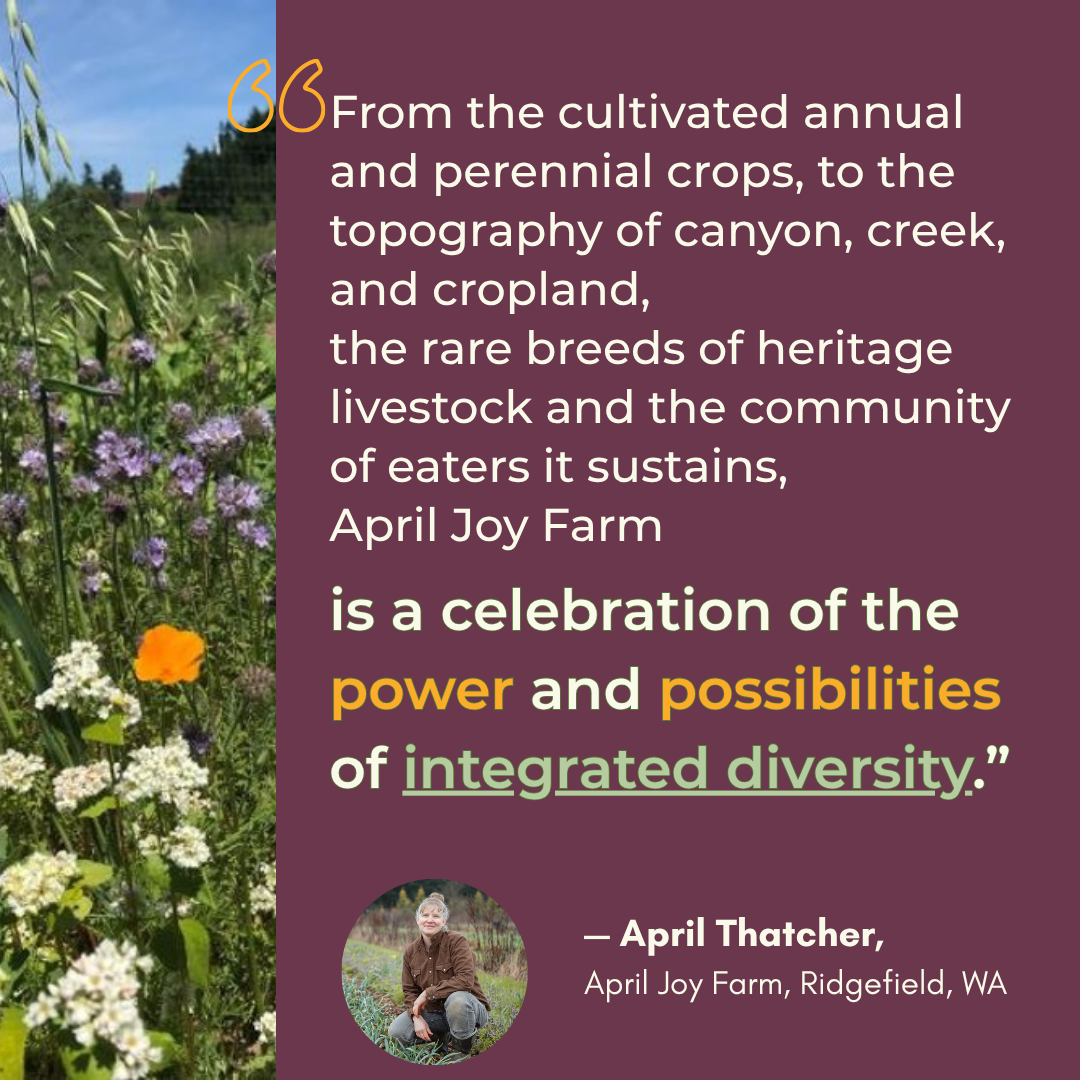
Additionally, three organic farmers based in the Northwest, Beth Hoiknaki of Goodfoot Farm in Philomath, Oregon, April Jones Thatcher of April Joy Farm in Ridgefield, Washington, and Diane Green of Greentree Naturals in Sand Point, Idaho, share advice for extension agents and technical service providers when working with organic producers.

Prefer to listen? Watch our Organic 101 for Extension Agents in the West webinar.

In the first half of this informative session, you will learn the basic principles of organic certification and become familiar with organic standards. During the second half, three farmer panelists share their experiences in becoming certified organic producers in the West.

Certified Crop Advisors can earn 1.0 Professional Development Continuing Education Unit (CEU) following completion of the webinar.

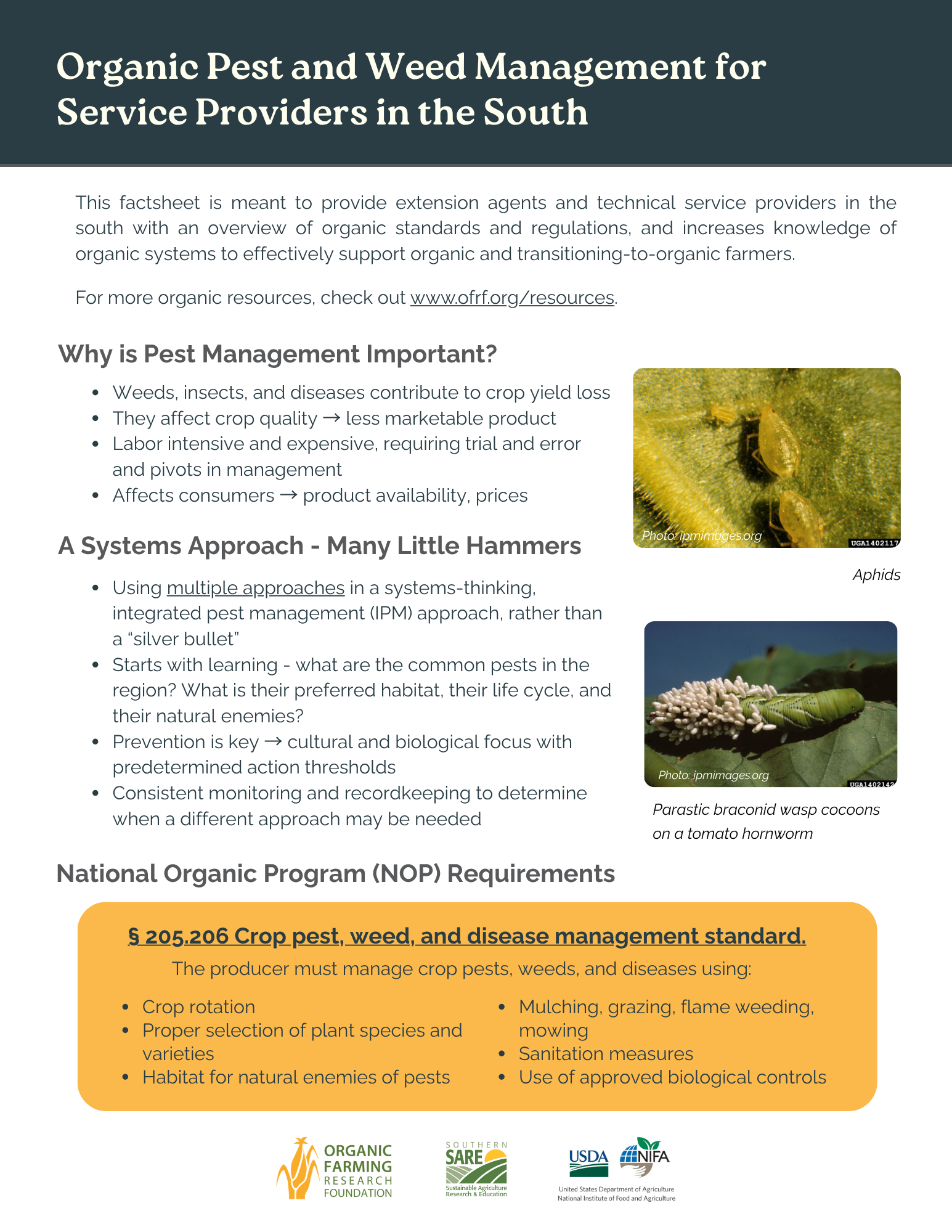
screenshot of the front page of a factsheet titled "Organic 101 for Extension Agents and TSPs - Basics of Organic Certification and Standards"
Go to Top