
How One Kona Farm Made Federal Funding Work for Organic Agriculture

How One Kona Farm Made Federal Funding Work for Organic Agriculture

By |2026-09-02T16:40:59-04:00July 17th, 2026|Farmer Stories, Insects & Diseases, News, On-Farm Research, TOPP West|

(Versión en español a continuación / Spanish version below)

Written by Mary Elizabeth Kidd, OFRF Communications Associate

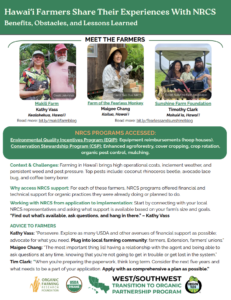
OFRF is currently working to increase farmer and community awareness of the federal funding opportunities available to organic and transitioning farms. As part of our work with the West region of the USDA’s Transition to Organic Partnership Program (TOPP), we’re spotlighting the experience of one farm—Makili Farm in Kealakekua, Hawaiʻi—that received funding and support through the Natural Resource Conservation Service’s Conservation Stewardship Program (CSP).

Their story offers a transparent look at what it’s really like to work with NRCS: the benefits, the obstacles, and the lessons they’ve learned. We hope other farmers can use their experience to navigate the process of applying for and implementing CSP contracts more easily.

Meet Kathy Vass of Makili Farm
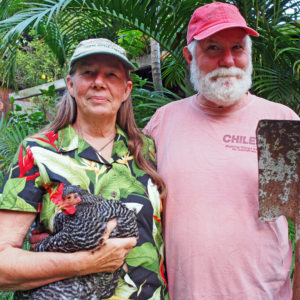
Location: Kealakekua, Hawaiʻi (west coast of Hawaiʻi Island)

Established: 2013

Acres: 5.8

Production: Coffee, macadamia nuts, cacao, citrus, vanilla, vegetables, tropical fruit, and pineapples

Certification: USDA Certified Organic since 2017

Staffing: Two part-time team members, plus seasonal staff (macadamia harvest)

Markets: Wholesale (grocery stores and local distributors)

Context & Challenges
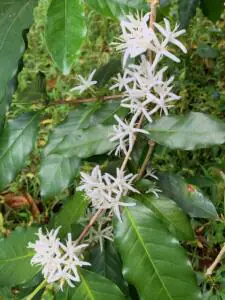
Coffee flowers.Source: Makili Farm

Coffee flowers in bloom.

OFRF team members recently spoke to Kathy Vass, owner and primary farmer at Makili Farm, sitting on almost 6 acres at an elevation of 1,500 feet on the west coast of Hawaiʻi Island.

She shared a realistic and dedicated vision of organic farming on Hawaiʻi Island, where approximately 85% of food is imported, operational costs are high, and pest and environmental pressures are tremendous. Seasonal cyclones and recent earthquakes bring even more obstacles.

Her commitment to provide organic, locally-produced food for her community is palpable and powerful: “We’re all struggling financially. I know very few farms that aren’t. We’re providing enough income to live on. But the ones I know who are succeeding are organic.”

Kathy has been working in the soil for over 55 years, from her previous career as a landscape contractor in Long Island, New York, to her 13 years of farming at Makili Farm.

Kathy notes that in the last 5-10 years, pests and invasive weeds have surged. The avocado lace bug and the coffee berry borer, in addition to nematodes, continue to wreak particular damage to her key crops; coffee leaf rust has also led to crop loss.

>> Read more: Kathy and five other farms participated in a 2021 OFRF research grant exploring Organic Farming Systems Options for Controlling Coffee Leaf Rust (CLR) in Kona Coffee.

The impact of these pests and diseases is the primary reason Kathy sought support from programs like the Natural Resource Conservation Service’s (NRCS) Conservation Stewardship Program (CSP). The knowledge and financial support they provide have been a lifeline for her business.

Why Organic?

Vanilla bean orchid. Source: Makili Farm

Vanilla bean orchid.

“I have always, for 55 years, done nothing but organic methods.”

Despite so many challenges, Kathy’s commitment to organic practices remains unshaken. She continues, “organic farming is, whether certified or not, so important for the health of our soil, our water, and our air. It’s just so important to me to have healthy food from healthy soil.”

The higher market value for organic products was also appealing; organic coffee cherries get $1 more per pound than conventional ones.

That said, each year Kathy questions her desire to remain certified. “It feels like a burden,” she shared, “Every year when it’s time for me to start doing the paperwork, I weigh whether I really want to keep doing the certification. I would always continue to be organic, regardless of whether I’m certified or not. I’m not sure that the price difference makes a big difference.”

Accessing Support through NRCS CSP
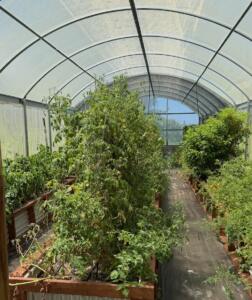
Plants growing in raised beds inside a hoop house. Source: Makili Farm

EQIP-supported hoop house.

Kathy’s daughter-in-law, also a local farmer, suggested Kathy contact Laura Nelson, who leads the Kealakekua Natural Resources Conservation Service (NRCS) office.

Kathy first worked with Laura to secure Environmental Quality Incentives Program (EQIP) reimbursement for approximately half the cost of a 20-foot-by-72-foot hoophouse, enabling her to increase production.

Laura then encouraged and supported Kathy through the CSP application process. While Kathy was initially apprehensive of another paperwork-laden application process, her existing documentation for organic certification was already comprehensive and helped expedite the CSP application.

Kathy then worked with Laura to develop goals and objectives for a 5-year contract, which reimburses her $5,000 per year to support her conservation efforts.

CSP Goals & Learnings

Together, Kathy and Laura honed in on two goals for the 5-year CSP contract:

  1. Enhance agroforestry with additional trees and shrubs (primarily fruit-bearing).
  2. Continue ongoing organic pest control practices on the farm.
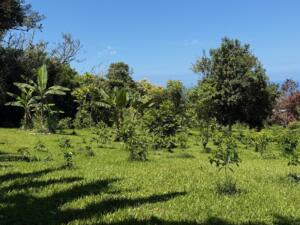
Various trees, including bananas, planted on a farm. Source: Makili Farm

Agroforestry in motion.

In her first year, she successfully planted cacao, bananas, breadfruit, and cherimoya, expanding her market offerings.

She’s now in the fourth year of her five-year contract and continuing the focus on pest management. A few recent tasks supported by her CSP contract: planting 600 new coffee trees, mulching them, and planting a nitrogen-fixing ground cover, perennial peanut.

While much of her work remains the same—tenacious, focused, and curious—the financial and community support help her stay the course and represent her primary CSP wins. “Having those connections with other farmers has been good…really, really good.”

After her current contract winds down, Kathy is considering another CSP offering focused on native plants. She heavily cites the expertise and accessibility of her NRCS agent, Laura Nelson, as a success-driving factor in her experience with CSP.

Advice to Farmers

“Persevere,” Kathy shared without hesitation. She urges farmers to explore as many USDA and other avenues of financial support as possible, never shying away from doggedly advocating for what they need with USDA agents and representatives. She also recommends plugging into the local farming community, including other farmers, your local Extension, and farmers’ unions.

“Find out what’s available, ask questions, and hang in there.”

Ready to Apply? Here Are a Few Helpful Resources

If you’re a farmer considering applying for CSP or other NRCS programs, here are some helpful tools to get started:

Additional Resources & Reading

Cómo una granja de Kona logró que los fondos federales funcionaran para la agricultura orgánica

Por Mary Elizabeth Kidd, asociada de comunicaciones

La OFRF trabaja actualmente para aumentar la conciencia de los agricultores y las comunidades sobre las oportunidades de financiamiento federal disponibles para las granjas orgánicas y en transición hacia lo orgánico. Como parte de nuestro trabajo con la región Oeste del Programa de Alianzas para la Transición a lo Orgánico (Transition to Organic Partnership Program, TOPP) del USDA, destacamos la experiencia de una granja —Makili Farm, en Kealakekua, Hawaiʻi— que recibió financiamiento y apoyo a través del Programa de Administración de la Conservación (Conservation Stewardship Program, CSP) del Servicio de Conservación de Recursos Naturales (NRCS).

Su historia ofrece una mirada transparente de lo que realmente implica trabajar con el NRCS: los beneficios, los obstáculos y las lecciones aprendidas. Esperamos que otros agricultores puedan aprovechar su experiencia para transitar más fácilmente el proceso de solicitar e implementar los contratos del CSP.

Conozca a Kathy Vass, de Makili Farm
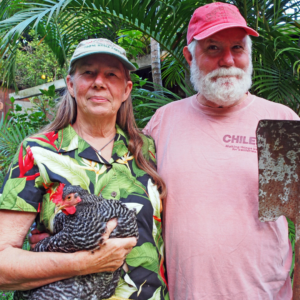
Source: Makili Farm, Credit: John Vass

Los agricultores Kathy y Rob Vass.

Ubicación: Kealakekua, Hawaiʻi (costa oeste de Hawaiʻi Island)

Fundada: 2013

Superficie: 5.8 acres 

Producción: Café, nueces de macadamia, cacao, cítricos, vainilla, hortalizas, fruta tropical y piñas

Certificación: Certificada como orgánica por el USDA desde 2017

Personal: Dos integrantes de tiempo parcial, más personal de temporada (cosecha de macadamia)

Mercados: Venta al por mayor (tiendas de comestibles y distribuidores locales)

Contexto y desafíos

Coffee flowers.Source: Makili Farm

Flores de café.

Integrantes del equipo de la OFRF hablaron recientemente con Kathy Vass, dueña y agricultora principal de Makili Farm, ubicada en casi 6 acres a una altitud de 1,500 pies en la costa oeste de Hawaiʻi Island. 

Ella compartió una visión realista y comprometida de la agricultura orgánica en la isla de Hawaiʻi, donde aproximadamente el 85 % de los alimentos son importados, los costos operativos son altos y las presiones de plagas y ambientales son enormes. Los ciclones estacionales y los terremotos recientes suman aún más obstáculos.

Su compromiso de brindar alimentos orgánicos y de producción local a su comunidad es palpable y poderoso: “Todos tenemos dificultades económicas. Conozco muy pocas granjas que no las tengan. Generamos ingresos suficientes para vivir. Pero las que conozco que están teniendo éxito son orgánicas.”

Kathy lleva más de 55 años trabajando la tierra, desde su carrera anterior como contratista de paisajismo en Long Island, New York, hasta sus 13 años de agricultura en Makili Farm.

Kathy señala que en los últimos 5 a 10 años han aumentado las plagas y las malezas invasoras. El chinche de encaje del aguacate (avocado lace bug) y la broca del café (coffee berry borer), además de los nematodos, siguen causando un daño particular a sus cultivos clave; la roya del café (coffee leaf rust) también ha provocado pérdidas de cosecha.

>> Lea más: Kathy y otras cinco granjas participaron en 2021 en una subvención de investigación de la OFRF que exploró Opciones de sistemas de agricultura orgánica para controlar la roya del café (Coffee Leaf Rust, CLR) en Kona Coffe. 

El impacto de estas plagas y enfermedades es la razón principal por la que Kathy buscó apoyo en programas como el Programa de Administración de la Conservación (Conservation Stewardship Program, CSP) del Servicio de Conservación de Recursos Naturales (NRCS). El conocimiento y el apoyo económico que brindan han sido un salvavidas para su negocio.

¿Por qué orgánico?

Orquídea de vainilla.Source: Makili Farm

Orquídea de vainilla.

“Siempre, durante 55 años, no he usado más que métodos orgánicos.” 

A pesar de tantos desafíos, el compromiso de Kathy con las prácticas orgánicas permanece firme. Ella continúa: “La agricultura orgánica, esté certificada o no, es muy importante para la salud de nuestro suelo, nuestra agua y nuestro aire. Para mí es fundamental tener alimentos sanos que provengan de un suelo sano.”

El mayor valor de mercado de los productos orgánicos también resultaba atractivo; las cerezas de café orgánico se pagan $1 más por libra que las convencionales. 

Dicho esto, cada año Kathy se cuestiona su deseo de mantener la certificación. “Se siente como una carga”, compartió. “Cada año, cuando llega el momento de empezar con la documentación, me planteo si de verdad quiero seguir con la certificación. Siempre seguiría siendo orgánica, esté certificada o no. No estoy segura de que la diferencia de precio marque una gran diferencia.”

Cómo acceder al apoyo a través del CSP del NRCS

Invernadero tipo túnel financiado por el EQIP.Source: Makili Farm

Invernadero tipo túnel financiado por el EQIP.

La nuera de Kathy, también agricultora local, le sugirió que contactara a Laura Nelson, quien dirige la oficina del Servicio de Conservación de Recursos Naturales (NRCS) de Kealakekua.

Kathy trabajó primero con Laura para obtener el reembolso del Programa de Incentivos para la Calidad Ambiental (Environmental Quality Incentives Program, EQIP) por aproximadamente la mitad del costo de un invernadero de 20 por 72 pies, lo que le permitió aumentar la producción.

Luego, Laura animó y acompañó a Kathy durante el proceso de solicitud del CSP. Aunque al principio a Kathy le inquietaba otro proceso de solicitud lleno de trámites, la documentación que ya tenía para la certificación orgánica era muy completa y ayudó a agilizar la solicitud del CSP. 

Después, Kathy trabajó con Laura para desarrollar las metas y los objetivos de un contrato de 5 años, que le reembolsa $5,000 al año para apoyar sus esfuerzos de conservación.

Metas y aprendizajes del CSP

Juntas, Kathy y Laura se enfocaron en dos metas para el contrato del CSP de 5 años: 

  1. Fortalecer la agrosilvicultura con árboles y arbustos adicionales (principalmente frutales).
  2. Continuar las prácticas de control orgánico de plagas ya existentes en la granja.
Various trees, including bananas, planted on a farm. Source: Makili Farm

Agrosilvicultura en acción,

En su primer año, plantó con éxito cacao, plátanos, fruta del pan (ulu) y chirimoya, ampliando su oferta de mercado.

Ahora está en el cuarto año de su contrato de cinco años y sigue enfocada en el manejo de plagas. Algunas tareas recientes apoyadas por su contrato del CSP: plantar 600 cafetos nuevos, aplicarles acolchado (mulch) y sembrar una cobertura vegetal fijadora de nitrógeno, el maní perenne.

Aunque gran parte de su trabajo sigue igual —tenaz, enfocado y curioso—, el apoyo económico y comunitario le ayuda a mantener el rumbo y representa sus principales logros con el CSP. “Tener esas conexiones con otros agricultores ha sido bueno… muy, muy bueno.”

Cuando termine su contrato actual, Kathy está considerando otra oferta del CSP centrada en plantas nativas. Ella destaca en gran medida la experiencia y la disponibilidad de su agente del NRCS, Laura Nelson, como un factor clave del éxito de su experiencia con el CSP.

Consejos para los agricultores

“Perseveren”, compartió Kathy sin dudarlo. Ella insta a los agricultores a explorar tantas vías de apoyo económico del USDA y de otras fuentes como sea posible, sin dudar en defender con tenacidad lo que necesitan ante los agentes y representantes del USDA. También recomienda integrarse a la comunidad agrícola local, incluidos otros agricultores, el servicio de Extensión local y los sindicatos de agricultores.

“Averigüen qué hay disponible, hagan preguntas y no se rindan.”

¿Listo para solicitar? Aquí tiene algunos recursos útiles

Si es un agricultor que está considerando solicitar el CSP u otros programas del NRCS, aquí tiene algunas herramientas útiles para comenzar:

Recursos y lecturas adicionales
Think Like a Certifier, Lean on a Mentor: Support and Resources for the Organic Certification Journey

By |2026-07-06T14:51:17-04:00July 6th, 2026|Certification & Compliance, Farmer Stories, News|

Written by Mary Elizabeth Kidd, OFRF Communications Associate

As the Organic Farming Research Foundation (OFRF) team continues its work facilitating the USDA’s Transition to Organic Partnership Program (TOPP) to strengthen organic farming communities and encourage farmers to transition their farming systems for organic certification, we’re hosting Seeds of Success virtual networking sessions across the country. 

The goal of these sessions is to give regional farmers a platform to share knowledge and ask questions on the organic certification process.

OFRF recently hosted an Organic 101 Seeds of Success for the Northwest region. The first half of the webinar was geared toward extension agents and technical service providers (TSPs), and the second half featured a farmer-led panel discussion. The call began with OFRF team members sharing what those without organic expertise need to know: the basics of organic, the National Organic Program (NOP) standards, and compliance basics.

The three farmer-panelists for this call were April Thatcher of April Joy Farm in Washington, Diane Green of Greentree Naturals in Idaho (a Northwest TOPP mentor), and Beth Hoinacki of Goodfoot Farm in Oregon, whose current role as an organic farmer and past role as an organic certifier brought well-rounded expertise on navigating the certification process. 

These farmers hold over 80 years of collective experience and expertise in organic farming and certification, and the message they shared was unanimous: you simply cannot do it alone.

When it comes to the rigorous process of organic certification, it’s essential to: 1) lean on other organic farmers, mentors, and TSPs, and 2) you must know your WHY for organic farming and become an expert on your farm’s organic systems and the certification process.

Read on as we share key takeaways from the panel discussion. To listen or watch the session, click here (the farmer panel begins around minute 39:15).

Meet the Farmers

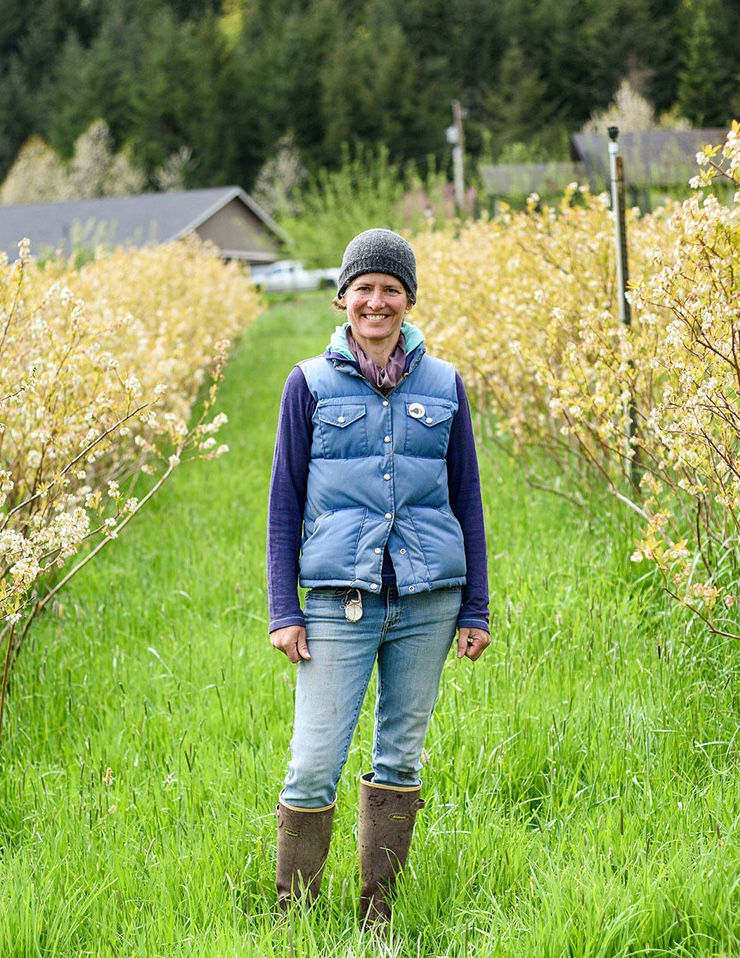
Beth Hoinacki of Goodfoot Farm standing in a path between blooming fieldsSource: Odeani Baker, Courtesy of Oregon Tilth

Beth Hoinacki of Goodfoot Farm

Where: Philomath, Oregon (Benton County)

Established: late 1990s

Certification: Demeter Certified Biodynamic® since 2012, previously Oregon Tilth Certified Organic

Acres: 5 

Markets: Farmers’ markets, CSA, restaurants

Social Media: Facebook, Instagram

Read more: Goodfoot Farm: Conservation Champion from Oregon Tilth 

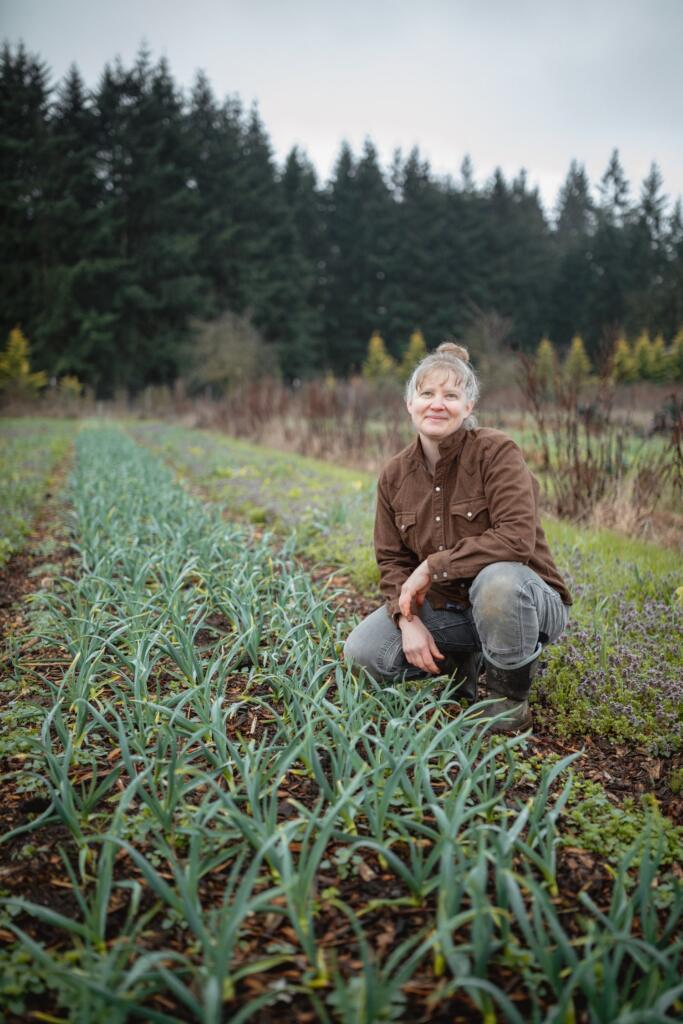
April Jones Thatcher of April Joy Farm kneeling in a field on her farmSource: April Joy Farm

April Jones Thatcher of April Joy Farm

Location: near Ridgefield, Washington (Clark County)

Established: 2006

Certification: Washington State Department of Agriculture Certified Organic since 2007

Acres: 24

Markets: Farmers’ markets, CSA, restaurants

Read more: Working with NRCS: April Joy Farm’s Story and Recommendations

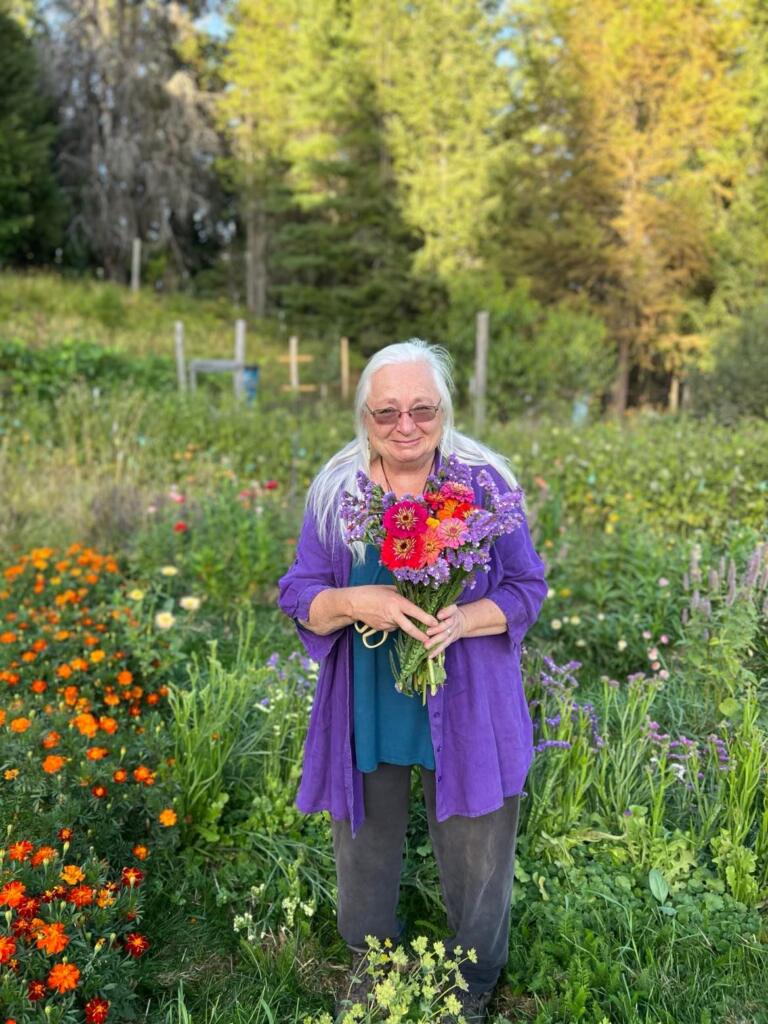
Diane Green of Greentree Naturals Farm standing in her main garden with a bouquet of flowersSource: Greentree Naturals

Diane Green of Greentree Naturals Farm

Location: Sandpoint, Idaho (Bonner County)

Established: 1990

Certification: USDA Certified Organic for over 30 years

Acres: 1

Markets: Weekly on-site farm stand

Social Media: Facebook

Read more: Farmer Stories: Diane and Greentree Naturals

Why Organic?

April Jones Thatcher (April Joy Farm): It made a lot of sense to think about the farm as a living and biological system. Then, if I put my business hat on, it really was market differentiation for us, since there were very few certified organic farms in my county. 

And personally, there was a lot of joy to farm in a way that didn’t require me to handle toxic pesticides, to really get my hands in the living soil.

Diane Green (Greentree Naturals Farm): Organic is the only way I’ve ever grown. I started growing an organic garden in 1970. So, for me, it’s making the commitment to support organic certification; it was just a natural thing as far as motivation, to hold true to the integrity of what organic certification stands for. 

We have new customers and longtime customers who have been with us for 25 years and are frequently saying, “Thank you for being certified organic.” That keeps us growing, and we’ll keep going with that.

Beth Hoinacki (Goodfoot Farm): We’ve been on our farm for 30 years. We were first certified organic in 2009 and then certified biodynamic in 2012. I’ve worked on organic farms for most of my life and actually worked in certification before I started my own farm, so that was super helpful in the certification process and has also just helped with our general farming approach.

Think Like a Certifier: Record-Keeping = Business Planning

Beth (Goodfoot Farm): [As a former organic and biodynamic certifier], I knew a lot about certification before I got into it so nothing surprised me.

One of the most challenging aspects of engaging in certification is that the National Organic Program (NOP) standard is essentially one-size-fits-all. So you need to understand how the standard works and what parts are more challenging for your size farm. Small or large, organic farms are subject to the same kind of regulatory and recordkeeping requirements.

Diane (Greentree Naturals Farm): The paperwork is extensive and when I’m mentoring farmers who are transitioning to become organic, I’m helping them understand the expected documentation and how partnering that with your business plan can help you manage your business in a much more holistic way—looking at the big picture and fine-tuning it to meet all the documentation that’s required. 

It makes a big difference if you’ve got a mentor or a partner helping walk you through that process.

April (April Joy Farm): Understanding the language, documentation, and the steps of what an organic system plan entails can be daunting unless you have an adviser, a mentor, or somebody who’s been through it who can really help translate some of that jargon. 

As a small business owner, there’s a lot of information being asked of you, so you want to make sure you understand how it’s going to be used. You want to be honest and represent your operation realistically and you want to make sure you get a sense of how this information gets tracked.

>> Read more: Explore the first in our Seeds of Success series in From Conventional to Certified, where Lynn Schaal of Life Springs Farm in Twin Falls, Idaho, shared a record-keeping hack that kept his inspections less stressful. (Spoiler: Lynn digitally scans ALL applications, receipts, and documentation using an app like Genius Scan.)

Find Support: People & Resources

Beth (Goodfoot Farm): Other farmers are your number one source. Especially local grower networks. I can’t emphasize it enough. And I would also say our university extension agents, because they’re involved with local growers and networks, so they have really relevant information. 

And thirdly, I would say some of the other technical service providers (NRCS, for example), but I think you need to be careful. I had the experience early on of TSPs that were promoting hot new sustainable practices that didn’t really work for me. When you enter into these relationships, have the information that’s really relevant to your operation.

April (April Joy Farm): I would add that certifying agencies have been helpful too, in my experience–shout out to the Washington State Department of Ag–they have been a great resource and have a lot of expertise. They obviously can’t provide you with recommendations, but certifiers can help you understand the documents and recordkeeping that’s required.

It really is about that network.

Diane (Greentree Naturals Farm): I’m forever grateful to have established relationships and partnerships with the University of Idaho extension in the very beginning, around 1997, when we worked together to develop the first sustainable, small-acreage farming organization in the Inland Northwest. That was the farmers working side-by-side with extension to come up with what that would look like. It was always the farmers working with extension to look at what we need and what’s there. 

Personally, I think empowering the next generation of sustainable and certified organic growers is the best thing we have to offer, and I’ll keep doing it for as long as I’m able. 

We farmers want to learn from farmers, and we need to do what we can to promote partnerships with extension to be allies that serve our communities very well.

Next Steps & Resources

Interested in transitioning your farm for organic certification in the Northwest or beyond? 

Explore these key resources and connect with mentors, certifiers, and Technical Support Providers (TSP) near you.

Locating Support Providers and Mentors:

Organic Farming Research Foundation resources:

USDA resources:

Connect with OFRF:

Farmer-Led Trials Program Spotlight: Sanders Funny Farm

By |2026-06-26T10:31:36-04:00June 29th, 2026|Farmer Stories, News|

Microgreen Mediums: Testing Jute Verses Soil

Written by Mary Hathaway, OFRF’s Research & Education Program Manager, and Tiffany Sanders, FLT Program participant

This on-farm trial at Sanders Funny farm will compare the effectiveness of jute fiber mats verses soil as the growing medium for a variety of microgreens. Results from this study will help organic farmers produce healthier microgreens and reduce crop losses.

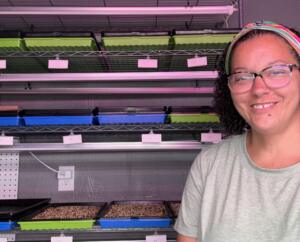
Farmer Tiffany Sanders stands in front of shelves of seeded microgreens.

Farmer Tiffany Sanders in her microgreen production greenhouse.

Mike and Tiffany Sanders, co-founders of Sanders Funny Farm in Indianapolis, Indiana, didn’t come to farming through a traditional path. With 11 kids, 2 grandkids, and “a revolving door of critters,” the name Funny Farm practically chose itself. At the heart of their operation is a thriving greenhouse microgreens enterprise, where Tiffany grows a diverse lineup of nutrient-dense crops–broccoli, radish, chia, arugula, wheatgrass, and more–sold through their online farm market and delivered directly to customers across Indiana.

Tiffany is committed to growing her operation to make local food easy, consistent, and affordable. Recently her farm and greenhouse became certified through California Certified Organic Farmers (CCOF). Looking ahead, Tiffany envisions expanding her microgreens line to include more specialty and difficult-to-grow varieties, making her farm a more resilient and diverse supplier. To do that, she knows she needs reliable, data-backed answers about which growing systems actually work, and which ones work best.

Growing Better Microgreens

Since launching her microgreens operation, Tiffany has relied primarily on jute fiber mats, a hydroponic-style growing medium standard in the industry, to grow her crops. Jute mats are convenient, clean, and widely-used, performing well for many varieties. But as Tiffany expanded her lineup and worked to grow more challenging crops, cracks began to show. Varieties like arugula and cilantro struggled with mold and moisture issues on jute. Each failed tray represented not just lost revenue, but a missed opportunity to serve her customers.

At the same time, Tiffany began wondering whether soil-grown microgreens might offer advantages she hadn’t fully explored, like better germination consistency, sturdier stems, more vibrant color, and improved shelf life. These qualities matter enormously in a market where perishability directly affects whether a product can be sold. A tray of microgreens that wilts quickly or arrives limp at market is as good as no tray at all.

The challenge was that Tiffany didn’t have rigorous, side-by-side data to compare the two mediums. Her observations were real, but anecdotal. She needed a structured trial that could tell her, with confidence, whether soil was worth integrating into her production system and, if so, determine which varieties and under what conditions. That question became the foundation of her application to OFRF’s Farmer-Led Trials program.

On-Farm Trial Plan

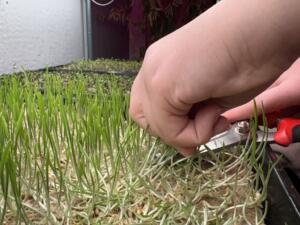
A person clipping a tray of microgreens

Harvesting microgreens grown on a jute mat.

With technical support from OFRF, Tiffany designed a controlled experiment to compare organic soil mix against jute fiber mats as growing mediums for microgreen production. The trial uses a randomized complete block design, with six replications per treatment, running one variety at a time to eliminate confounding variables like differing light requirements and shelf position. Each experimental unit consists of two 10 by 20 inch trays (one soil, one jute), alternated across the six shelves of a dedicated greenhouse rack. Broccoli is a consistent staple of her product line and will serve as the first variety tested, with radish and black chia to follow in sequential trials.

Key measurements include yield by weight at harvest, a cost analysis tracking seed, growing medium, and labor expenses per tray. She will also take observational data on disease incidence and post-harvest perishability, including color and limpness. Watering volume, light cycle, seed variety, and seed quantity are standardized across treatments to ensure a fair and meaningful comparison.

Trial Updates

The broccoli trial is currently underway. Trays were seeded on May 24, 2026, and harvested on June 6, 2026. Early observations during the germination phase noted that jute trays germinated more quickly and evenly, while soil trays started patchier but caught up noticeably by days 8–12, growing taller, greener, and with sturdier stems. By harvest, the yield data told a striking story: soil trays produced approximately 8–11 oz per tray, compared to roughly 3–5 oz per tray on jute–a more than double difference across six replications. Qualitative observations also favored the soil-grown crop for color vibrancy and fullness. Data collection for the radish and chia trials is planned to follow.

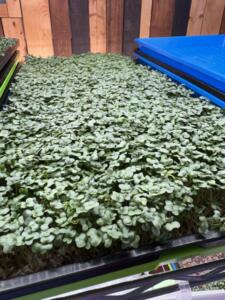
a tray of broccoli microgreens

Broccoli consistently does well at Sanders Funny Farm, so it was the first variety to be tested.

“As a grower you hear a lot of opinions about what works best, but I wanted real data from my own farm. This trial has already challenged some of my assumptions and shown me that soil may have some real advantages for certain crops. Having those answers will help me make better decisions, reduce losses, and provide a better product for the families and communities we serve.” 

– Tiffany Sanders, FLT Program Participant

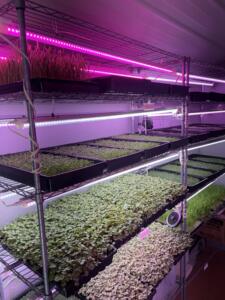
Trays of microgreens growing on shelves with indoor grow lights.

Jute and soil trays are alternated between shelves. 

This is part of a series of blogs highlighting farmers who are participating in OFRF’s Farmer-Led Trials program. Farmers receive technical support to address their production challenges through structured on-farm trials. To learn more about OFRF’s Farmer-Led Trials Program, visit our website page at https://ofrf.org/research/farmer-led-research-trials/ 

To learn more about Sanders Funny Farm, visit sandersfunnyfarm.com or follow along on their Facebook, Instagram, and YouTube channels.

2026 Research Summary on Conservation Benefits of Organic Management

By |2026-06-25T15:05:30-04:00June 25th, 2026|Climate Change, Resource|

This report provides a summary of the latest organic agriculture research (as of 2025) across a variety of topics, meant to provide NRCS staff, organic producers, and other interested parties with in-depth educational information on the conservation benefits of organic management.

This research summary was produced with support from the United States Department of Agriculture’s Natural Resources Conservation Service (USDA-NRCS) under Cooperative Agreement No. FBC24CPT0013867. The contents are solely the responsibility of the authors and do not necessarily reflect the views of USDA-NRCS.

Financial Options for Your Farm: Farm Service Agency (FSA) Loans

By |2026-08-03T10:47:33-04:00June 25th, 2026|Federal Assistance, News, Spanish Resources|

Versión en español a continuación.

Access to affordable financing is one of the biggest barriers organic and transitioning farmers face. Whether you’re looking to buy land, cover certification costs, or simply keep your operation running through a tough season, knowing where to turn for capital can make all the difference. 

The USDA’s Farm Service Agency (FSA) offers a range of low-interest loan programs designed for farmers like you and can help you secure better rates through a commercial lender. Unfortunately, many of these programs go underutilized simply because farmers don’t know they exist. Let’s fix that. If you’re just starting out or looking to grow your farm, there’s likely an FSA loan designed for your situation.

Which FSA loan is right for me? 

The FSA offers various loan types tailored to specific farming operations, circumstances, and experiences. Read through the list below to find an FSA loan that best suits your needs. You can also use FSA’s free Loan Assistance Tool. 

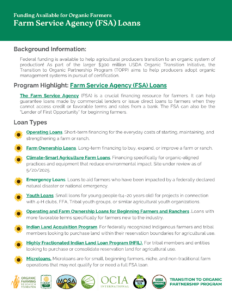
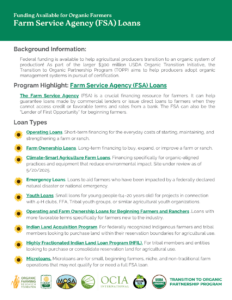
Operating Loans.

Short-term financing for the everyday costs of starting, maintaining, and strengthening a farm or ranch.

  • Uses: Purchasing essential items like livestock, poultry, farm equipment, feed, seed, fuel, farm chemicals, insurance, and other operating expenses; Covering costs related to minor improvements, family living expenses, and refinancing certain debts; Covering certification costs, approved organic inputs, and the cash flow gaps during the transition period for USDA-certified or transitioning organic producers. 
  • Can be issued directly from FSA, or FSA can guarantee a loan from a commercial lender for a larger line of credit.
    • Maximum loan amount: $400,000.

Farm Ownership Loans.

Long-term financing to buy, expand, or improve a farm or ranch.

  • Uses: Regular loans, joint financing, or down payment options for purchasing land, essential farm improvements, or soil and water conservation and protection.
  • Can be issued directly from FSA, or FSA can guarantee a loan from a commercial lender for a larger line of credit.
    • Maximum loan amount: $600,000 ($300,150 for Beginning Farmer Down Payment).

Climate-Smart Agriculture Farm Loans.

Financing specifically for organic-aligned practices and equipment that reduce environmental impact. Site under review as of 5/20/2025.

  • Uses: Investing in climate-smart practices and equipment, like the establishment of rotational grazing systems, precision agriculture equipment, or machinery for conversion to no-till residue management.
  • Can be issued directly from FSA, or FSA can guarantee a loan from a commercial lender for a larger line of credit. Loan amounts:
    • Direct Farm Ownership Loans: Up to $600,000.
    • Direct Operating Loans: Up to $400,000.
    • Guaranteed Loans: Up to $1,825,000.
    • Microloans: Up to $50,000. 

Emergency Loans.

Loans to aid farmers who have been impacted by a federally declared natural disaster or national emergency.

  • Uses: Restoring/replacing property, reorganizing a family farm; Refinancing non-real estate debts; Assisting with production costs or family living expenses.
  • Direct loans through FSA.
    • Maximum loan amount: $500,000, but the amount a loan applicant may receive is limited to the actual production or physical loss caused by the disaster.

Youth Loans.

Small loans for young people (14–20 years old) for projects in connection with 4-H clubs, FFA, Tribal youth groups, or similar agricultural youth organizations. 

  • Uses: Purchasing livestock, seed, equipment, supplies, or paying operating expenses for the project.
  • Maximum loan amount: $10,000

Operating and Farm Ownership Loans for Beginning Farmers and Ranchers.

Loans with more favorable terms specifically for farmers new to the industry. To see if you qualify as a beginner farmer or rancher, read the definition here. 

Direct Farm Ownership Down Payment Loan

  • Uses: Covering a down payment on a farm for beginning farmers who can’t finance the full purchase alone.
  • Can be issued directly from FSA, or FSA can guarantee a loan from a commercial lender for a larger line of credit.
    • Maximum Loan Amount for a “regular” Direct Farm Ownership loan: $600,000. 
    • Maximum Loan Amount for a Joint Financing or Participation Farm Ownership: $600,000.
    • Maximum Loan Amount for a Direct Farm Ownership Down Payment loan amount works differently. The maximum loan amount under this loan program will not exceed 45 percent of whichever is the lesser amount of:
      • the purchase price;
      • the appraised value of the farm being purchased; or
      • $667,000.

Indian Land Acquisition Program.

For federally recognized Indigenous farmers and tribal members looking to purchase land within their reservation boundaries for agricultural use. 

  • Maximum Loan Amount: No specified maximum loan amount; the amount is based on the tribe’s financial needs and repayment ability.

Highly Fractionated Indian Land Loan Program (HFIL).

For tribal members and entities looking to purchase or consolidate reservation land for agricultural use. 

  • Uses: Purchasing fractionated land with the intention to reduce fragmentation and promote more effective land management, agricultural productivity, and economic development within tribal areas.
  • Maximum Loan Amount: $500,000 per applicant.

Microloans.

Microloans are for small, beginning farmers, niche, and non-traditional farm operations that may not qualify for or need a full FSA loan. There are two types of microloans: 

    • Uses: Essential tools; Fencing and trellising; Hoop houses; Bees and bee equipment; Milking and pasteurization equipment; Maple sugar shack and processing equipment; Livestock, seed, fertilizer, utilities, land rents, family living expenses, and other materials essential to the operation; Irrigation; GAP (Good Agricultural Practices), GHP (Good Handling Practices), and Organic certification costs; Marketing and distribution costs, including those associated with selling through Farmers’ Markets and Community Supported Agriculture operations; Pay for qualifying OSHA compliance standards (Federal or State)
    • Maximum Loan Amount: Operating Microloans provide up to $50,000 per loan.
    • Uses: Making a down payment on a farm; Building, repairing, or improving farm buildings, service buildings, farm dwellings; soil and water conservation projects. May also be used as a Downpayment Farm Ownership Loan or in Joint Financing.
    • Maximum Loan Amount $50,000, which includes any possible outstanding FSA Direct Operating or Farm Ownership unpaid principal loan balances. A loan applicant may have a Guaranteed Operating loan, Farm Ownership loan or Emergency loan and still qualify for a Microloan.

All of this information is summarized in a printable, downloadable PDF below, available in English and Spanish.

How to Apply for an FSA Loan

Step 1. Find your local FSA office.

All FSA loans, whether direct or guaranteed, are processed through your local FSA county office. Find your local office here.

Step 2. Schedule a meeting.

Call or visit your local office to discuss which loan types fit your situation. Bring any records you have about your farm operation, finances, and land. 

Here are some questions to consider: 

  • I’m interested in [loan type]. What do I need to bring to get started on an application?
  • Am I eligible for any loans with more favorable terms as a beginning, socially disadvantaged, or veteran farmer?
  • Can I apply for more than one loan type at the same time?
  • What is the repayment timeline for this loan?
  • Is funding currently available, and is there a better time of year to apply?

Step 3. Create a business plan. 

If you’re applying for a direct FSA loan or a commercial loan guaranteed by FSA, you’ll need a business plan. This doesn’t have to be intimidating! A farm business plan is essentially a clear picture of your operation, goals, and finances. FSA wants to see that you’ve thought through how your farm works and how you’ll repay the loan. 

Your detailed business plan should cover:

  • Your mission, vision, and goals for your farm or ranch.
  • Your current assets (property or investments you own) and liabilities (debts, loans, or payments you owe).
  • What your operation will produce, and how and where you will market and sell your products.
    • This is sometimes referred to as a marketing plan.
  • Whether the amount of income your operation will generate will be enough to pay your business and family living expenses.
  • For organic and transitioning producers, it’s worth being specific about your certification status or timeline, your expected transition costs, and how your marketing strategy accounts for the organic price premium.

FSA provides a step-by-step business plan builder to help you get started.

Step 4. Gather your documents.

Your loan officer will tell you exactly what’s needed, but commonly required documents include:

  • Government-issued ID.
  • Tax returns (typically 3 years).
  • Farm financial statements or records.
  • Proof of land ownership or lease agreement.
  • Business plan.
  • Organic certification or transition plan, if applicable.

Step 5. Submit your application.

Applications can be submitted directly through FSA or, for guaranteed loans, through a commercial lender. Your loan officer will guide you through this.

Step 6. Follow up.

Processing times vary by loan type. Stay in contact with your loan officer and respond quickly to any requests for additional information.

All of this information is summarized in a printable, downloadable PDF below, available in English and Spanish.

All of this information is summarized in a printable, downloadable PDF in English and Spanish below.

El acceso a financiamiento asequible es una de las mayores barreras a las que se enfrentan los agricultores orgánicos y en transición. Ya sea que busque comprar terrenos, cubrir los costos de certificación o simplemente mantener su operación en funcionamiento durante una temporada difícil, saber a dónde acudir para obtener capital puede marcar la diferencia. 

La Agencia de Servicios Agrícolas (FSA) del USDA  ofrece una variedad de programas de préstamos a bajo interés diseñados para agricultores como usted y puede ayudarle a conseguir mejores condiciones de financiamiento a través de un prestamista comercial.  Desafortunadamente, muchos de estos programas se usan poco simplemente porque los agricultores no saben que existen. Vamos a ayudar a cambiar eso. Si acaba de empezar o quiere hacer crecer su granja, probablemente haya un préstamo FSA diseñado para su situación.

¿Qué préstamo FSA es el adecuado para mí? 

La FSA ofrece diversos tipos de préstamos adaptados a operaciones agrícolas específicas, circunstancias y experiencias. Lea la lista a continuación para encontrar el préstamo FSA que mejor se adapte a sus necesidades. También puedes utilizar gratuitamente la herramienta de asistencia para préstamos de FSA. 

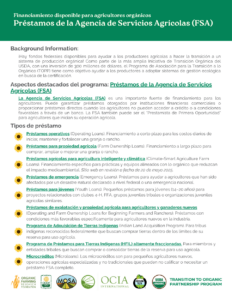
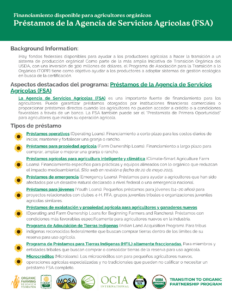
Préstamos operativos. (Operating Loans)

Financiamiento a corto plazo para los costos diarios de iniciar, mantener y fortalecer una granja o rancho.

  • Usos: Compra de artículos esenciales como ganado, aves, maquinaria agrícola, alimentos para animales, semillas, combustible, productos químicos agrícolas, seguros y otros gastos operativos; Cubrir costes relacionados con mejoras menores, gastos familiares y refinanciamiento de ciertas deudas; Cubrir los costos de certificación, insumos orgánicos aprobados y las carencias de flujo de caja durante el periodo de transición para productores orgánicos certificados o en transición por el USDA. 
  • Puede emitirse directamente desde FSA, o FSA puede garantizar un préstamo de un prestamista comercial para una línea de crédito mayor.
    • Monto máximo del préstamo: 400.000 dólares.

Préstamos para propiedad agrícola. (Farm Ownership Loans)

Financiamiento a largo plazo para comprar, ampliar o mejorar una granja o rancho.

  • Usos: Préstamos regulares, financiamiento conjunto u opciones de pago inicial (down payment) para la compra de tierras, mejoras agrícolas esenciales o conservación y protección del suelo y el agua.
  • Puede emitirse directamente desde FSA, o FSA puede garantizar un préstamo de un prestamista comercial para una línea de crédito mayor.
    • Importe máximo del préstamo: 600.000 $ (300.150 $ para el pago inicial de agricultores que están iniciando).

Préstamos agrícolas para agricultura inteligente y climática. (Climate-Smart Agriculture Farm Loans)

Financiamiento específico para prácticas y equipos alineados con lo orgánico que reduzcan el impacto medioambiental. La información sobre este programa estaba en revisión al 20 de mayo de 2025.

  • Usos: Invertir en prácticas inteligentes para el clima y equipos, como el establecimiento de sistemas de pastoreo rotativo, equipos de agricultura de precisión o maquinaria para sistemas de cultivo con labranza reducida o sin labranza (no-till).
  • Puede emitirse directamente desde FSA, o FSA puede garantizar un préstamo de un prestamista comercial para una línea de crédito mayor. 

Montos de los préstamos: 

  • Préstamos directos de propiedad agrícola: hasta 600.000 dólares.
  • Préstamos directos operativos: hasta 400.000 dólares.
  • Préstamos garantizados: hasta $1,825,000.
  • Microcréditos: hasta 50.000 dólares. 

Préstamos de emergencia. (Emergency loans)

Préstamos para ayudar a agricultores que han sido afectados por un desastre natural declarado a nivel federal o una emergencia nacional.

  • Usos: Restauración/reemplazo de propiedades, reorganización de una granja familiar; Refinanciamiento de deudas no inmobiliarias; Ayudar con los costos de producción o los gastos familiares.
  • Préstamos directos a través de FSA.
    • Importe máximo del préstamo: 500.000 $, aunque la cantidad que puede recibir un solicitante está limitada a las pérdidas reales de producción o daños físicos causados por el desastre.

Préstamos para jóvenes. (youth loans)

Pequeños préstamos para jóvenes (14–20 años) para proyectos relacionados con clubes 4-H, FFA, grupos juveniles tribales u organizaciones juveniles agrícolas similares. 

  • Usos: Compra de ganado, semillas, equipos, suministros o el pago de los gastos operativos del proyecto.
  • Cantidad máxima del préstamo: $10.000

Préstamo de Pago Inicial por Propiedad Directa de Operaciones Agrícolas

  • Usos: Cubrir un pago inicial en una granja para agricultores nuevos que no pueden financiar la compra completa por sí solos.
  • Puede emitirse directamente desde FSA, o FSA puede garantizar un préstamo de un prestamista comercial para una línea de crédito mayor.
    • Monto máximo del préstamo para un préstamo “regular” de propiedad directa agrícola: 600.000 dólares. 
    • Cantidad máxima del préstamo para una propiedad agrícola de financiamiento conjunto o participación: 600.000 dólares.
    • Monto máximo del préstamo para un préstamo de propiedad directa de una granja con pago inicial funciona de forma diferente. La cantidad máxima del préstamo bajo este programa no superará el 45 por ciento de la cantidad menor de:
      • el precio de compra;
      • el valor tasado de la granja que se estaba adquiriendo; o
      • $667.000.

Programa de Adquisición de Tierras Indígenas. (Indian Land Acquisition Program)

Para agricultores indígenas reconocidos a nivel federal y miembros tribales que buscan comprar tierras dentro de los límites de su reserva para uso agrícola. 

  • Cantidad máxima del préstamo: No se especifica una cantidad máxima del préstamo; La cantidad se basa en las necesidades financieras y la capacidad de pago de la tribu.

Programa de Préstamos para Tierras Indias (HFIL) altamente fraccionadas.

Para miembros y entidades tribales que buscan comprar o consolidar tierras de la reserva para uso agrícola. 

  • Usos: Compra de tierras fraccionadas con la intención de reducir la fragmentación y promover una gestión más eficaz de la tierra, productividad agrícola y desarrollo económico dentro de las áreas tribales.
  • Monto máximo del préstamo: $500.000 por solicitante.

Microcréditos. (Microloans)

Los microcréditos son para pequeños agricultores nuevos, operaciones agrícolas especializadas y no tradicionales que pueden no calificar o necesitar un préstamo FSA completo. Existen dos tipos de microcréditos: 

    • Usos: Compra de herramientas esenciales; instalación de cercas y sistemas de espaldera; construcción o adquisición de invernaderos tipo túnel (hoop houses); compra de abejas y equipo apícola; adquisición de equipos de ordeño y pasteurización; construcción, equipamiento y procesamiento relacionados con la producción de jarabe de arce; compra de ganado, semillas, fertilizantes y otros materiales esenciales para la operación agrícola; pago de servicios públicos, arrendamiento de tierras y gastos básicos de manutención familiar; instalación o mejora de sistemas de riego; pago de los costos de certificación GAP (Buenas Prácticas Agrícolas), GHP (Buenas Prácticas de Manejo) y certificación orgánica; costos de mercadeo y distribución, incluidos los relacionados con la venta en mercados de agricultores (Farmers’ Markets) y programas de Agricultura Apoyada por la Comunidad (CSA); y cubrir los costos necesarios para cumplir con las normas de seguridad y salud ocupacional (OSHA) (federales o estatales)
    • Monto máximo del préstamo: Los microcréditos operativos proporcionan hasta $50.000 por préstamo.
    • Usos: Hacer un pago inicial en una granja; Construir, reparar o mejorar edificios agrícolas, edificios de servicio, viviendas agrícolas; proyectos de conservación de suelo y agua. También puede utilizarse como Préstamo de Propiedad Agrícola con pago inicial o en Financiamiento Conjunto.
    • Monto máximo del préstamo: $50.000, que incluye cualquier posible saldo pendiente pendiente de préstamos principales de operación directa o propiedad agrícola de la FSA. Un solicitante de préstamo puede tener un préstamo operativo garantizado, un préstamo de propiedad agrícola o un préstamo de emergencia y aún así calificar para un micropréstamo. 

Cómo solicitar un préstamo FSA

Paso 1. Busque su oficina local de FSA.

Todos los préstamos de la FSA, ya sean directos o garantizados, se procesan a través de la oficina local de la FSA correspondiente a su condado. Encuentre su oficina local aquí.

Paso 2. Programe una reunión.

Llame o visite su oficina local para hablar sobre qué tipos de préstamos se adaptan a su situación. Lleve cualquier registro que tenga sobre su operación agrícola, finanzas y tierras. 

Aquí tiene algunas preguntas a considerar: 

  • Me interesa [tipo de préstamo]. ¿Qué necesito llevar para empezar con una solicitud?
  • ¿Soy elegible para algún préstamo con condiciones más favorables como agricultor nuevo, socialmente desfavorecido o veterano?
  • ¿Puedo solicitar más de un tipo de préstamo al mismo tiempo?
  • ¿Cuál es el plazo de devolución de este préstamo?
  • ¿Hay financiamiento disponible actualmente y hay una mejor época del año para solicitar?

Paso 3. Cree un plan de negocio. 

Si solicita un préstamo directo de FSA o un préstamo comercial garantizado por FSA, necesitará un plan de negocio. ¡Esto no tiene por qué ser intimidante! Un plan de negocio agrícola es esencialmente una imagen clara de su operación, objetivos y finanzas. FSA quiere asegurarse de que ha pensado bien cómo funciona su granja y cómo vas a devolver el préstamo. 

Su plan de negocio detallado debe cubrir:

  • Su misión, visión y objetivos para su granja o rancho.
  • Sus activos actuales (propiedades o inversiones que posee) y sus pasivos (deudas, préstamos o pagos que debe).
  • Qué producirá su granja, y cómo y dónde comercializará y venderá sus productos.
    • Esto a veces se denomina plan de marketing.
  • Si la cantidad de ingresos que generará su operación será suficiente para cubrir los gastos de su negocio y familia.
  • Para productores orgánicos y en transición, conviene ser específico sobre el estado o el calendario de la certificación, los costos de transición previstos y cómo su estrategia de marketing tiene en cuenta la prima del precio orgánico.

FSA ofrece un generador de planes de negocio paso a paso para ayudarle a empezar.

Paso 4. Reúna los documentos necesarios.

Su oficial de préstamos le dirá exactamente lo que se necesita, pero que es habitualmente los documentos incluyen:

  • Identificación emitida por el gobierno.
  • Declaraciones de impuestos (generalmente de los últimos 3 años)
  • Estados financieros o registros agrícolas
  • Comprobante de propiedad de la tierra o contrato de arrendamiento.
  • Plan de negocio.
  • Certificación orgánica o plan de transición, si corresponde.

Paso 5. Envíe su solicitud.

Las solicitudes pueden presentarse directamente a través de la FSA o, para préstamos garantizados, a través de una institución financiera comercial. Su oficial de préstamos le orientará durante todo el proceso.

Paso 6. De Seguimiento a su solicitud.

Los tiempos de procesamiento varían según el tipo de préstamo. 

Manténgase en comunicación con su oficial de préstamos y responda rapidamente a cualquier solicitud de información adicional.

Toda esta información se resume en un PDF imprimible y descargable a continuación, disponible en inglés y español.

Toda esta información se resume en un PDF imprimible y descargable a continuación, disponible en inglés y español.

Manejo Orgánico de Plagas y Malezas para Proveedores de Servicios en el Sur

By |2026-10-27T14:21:36-04:00June 23rd, 2026|Insects & Diseases, Resource, Spanish Resources|

Guía de manejo orgánico de plagas y malezas para agentes de extensión y proveedores de servicios técnicos

Esta ficha informativa tiene como objetivo proporcionar a los agentes de extensión y a los proveedores de servicios técnicos del sur una visión general del manejo orgánico de plagas y malezas, y aumentar el conocimiento de los sistemas orgánicos para apoyar eficazmente a los agricultores orgánicos y a aquellos en transición hacia la agricultura orgánica.

¿Prefieres escuchar? Mira nuestro seminario web sobre Manejo Orgánico de Plagas y Malezas para Agentes de Extensión en el Sur.

El control de plagas y malezas es uno de los desafíos más importantes para los productores orgánicos, ya que afecta el rendimiento de los cultivos, la calidad del producto y la sostenibilidad económica de las explotaciones. En las condiciones cálidas y húmedas de la región sur, estas presiones son especialmente intensas, por lo que contar con estrategias de manejo eficaces y conformes con las normas NOP es fundamental para cualquier asesor agrícola.

Esta sesión de 75 minutos está diseñada específicamente para extensionistas, proveedores de servicios técnicos (PST) y otras personas que apoyan a los agricultores orgánicos y en transición en el Sur. Los ponentes analizan los insectos, enfermedades y malezas más comunes en la región SSARE, desde el gusano cogollero y el nematodo de las agallas hasta el amaranto y la juncia, y relacionan este contexto regional con los requisitos de manejo de plagas descritos en el Programa Nacional Orgánico. Basándose en investigaciones realizadas en el Sur, la sesión se centra en estrategias prácticas y con respaldo científico que los extensionistas y los PST pueden brindar directamente a los agricultores a quienes sirven, abarcando enfoques para el manejo de malezas, el control de insectos y enfermedades, y el marco de Manejo Integrado de Plagas (MIP) de “muchos pequeños martillos” que sustenta la producción orgánica.

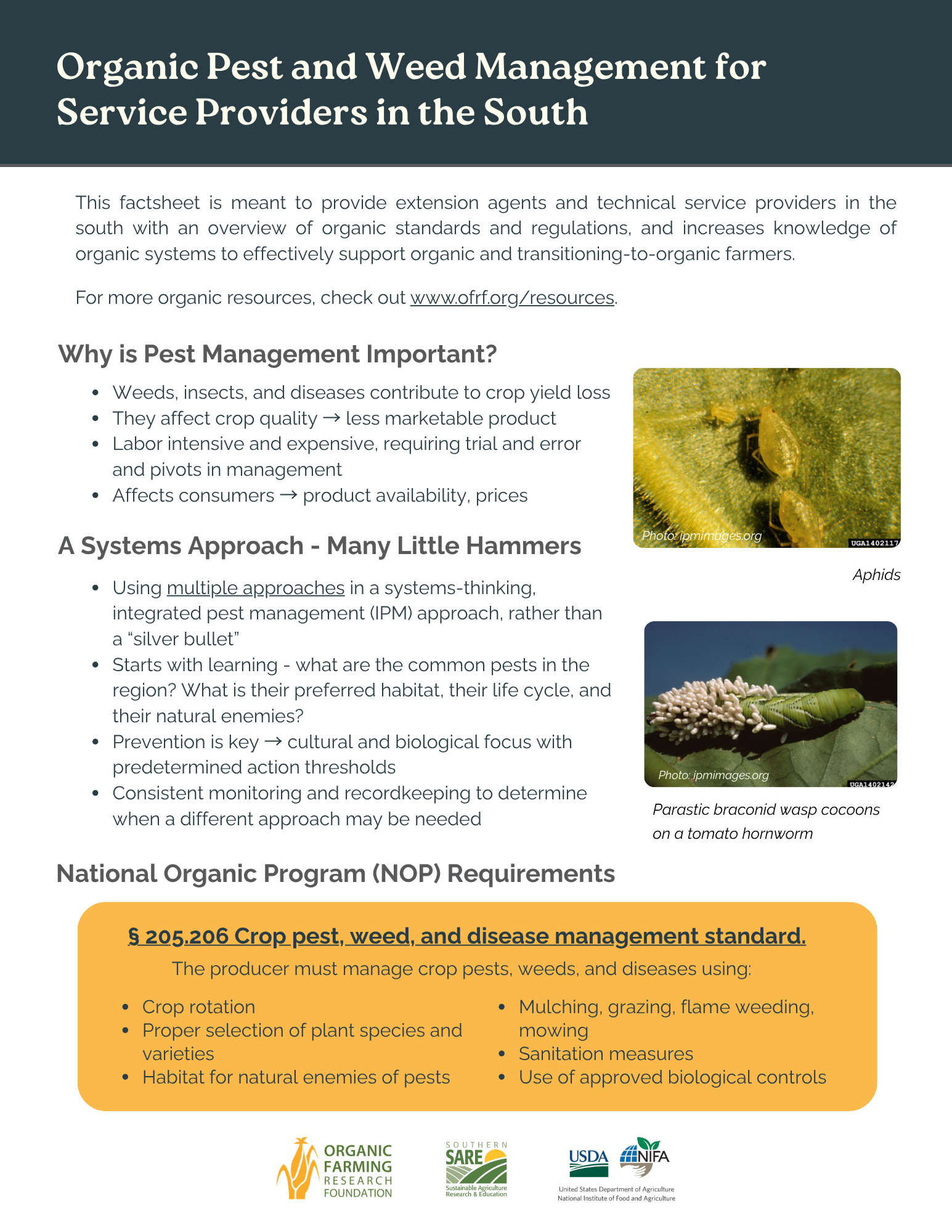
Image of the front page of a four-page factsheet on organic pest and weed management for extension agents in the west.

Organic Pest and Weed Management for Service Providers in the South

By |2026-10-27T17:04:28-04:00June 11th, 2026|Certification & Compliance, Insects & Diseases, Resource|

An Organic Pest and Weed Management Guide for Extension Agents and Technical Service Providers (TSPs).

This factsheet is meant to provide extension agents and technical service providers in the south with an overview of organic pest and weed management, and increase knowledge of organic systems to effectively support organic and transitioning-to-organic farmers.

Prefer to listen? Watch our Organic Pest and Weed Management for Extension Agents in the South webinar.

Pest and weed pressure is one of the most significant challenges facing organic producers — affecting crop yields, product quality, and the economic sustainability of farming operations. In the hot, humid conditions of the southern region, these pressures are especially intense, making effective, NOP-compliant management strategies essential knowledge for anyone advising farmers in the field.

This 75-min session is designed specifically for extension agents, technical service providers (TSPs), and others who support organic and transitioning farmers in the South. Presenters walk through the most common insects, diseases, and weeds found across the SSARE region — from armyworm and root-knot nematode to pigweed and nutsedge — and connect that regional context to the pest management requirements outlined in the National Organic Program. Drawing on research conducted in the South, the session focuses on practical, science-backed strategies that extension agents and TSPs can bring directly to the farmers they serve, covering approaches to weed management, insect and disease control, and the “many little hammers” IPM framework that underpins organic production.

Image of the front page of a four-page factsheet on organic pest and weed management for extension agents in the west.

Brands, Farm Groups, and Research Organizations Call for Organic Research Support in the Farm Bill

By |2026-06-09T09:49:27-04:00June 9th, 2026|News, Press Release|

FOR IMMEDIATE RELEASE

WASHINGTON, June 9, 2026 — The Organic Farming Research Foundation, International Fresh Produce Association, Organic Farmers Association, the Organic Trade Association, and the National Organic Coalition are proud to have led a letter sent to the Senate Agriculture Committee today about the importance of supporting organic research, specifically the Organic Agriculture Research Extension Initiative (OREI) and the Organic Transitions Program (ORG), in the Farm Bill.

These National Institute of Food and Agriculture (NIFA) programs are the only two dedicated organic research programs under the USDA. OREI is the flagship competitive grant program dedicated to organic agricultural research. It supports research, education, and extension programs that enhance the ability of established organic producers and processors to grow and market high-quality products. ORG awards competitive grants to improve the competitiveness of organic livestock and crop producers, as well as those who are adopting organic practices, through research, extension, and higher education. Both programs are critical to advancing innovation, productivity, and long-term competitiveness within the organic market, projected to grow from $76.6 billion in 2025 to over $100 billion by 2030. They also produce valuable resources for non-organic farmers interested in adopting organic practices.

The Senate Farm Bill will build off the progress the House Farm Bill made for organic research, most notably, reauthorizing OREI and providing first-time authorization for the Organic Transitions Program, which was renamed to the Researching the Transition to Organic Program (RTOP). The latter was a great accomplishment because the program was previously receiving funding as an unauthorized program. Since OREI is already a Farm Bill-derived program, this means that both dedicated organic research programs are now tied to the Farm Bill, and any changes to either program must effectively be done through the once-in-five-year legislative vehicle.

The letter was supported by major brands, such as Mondelez Global LLC, Driscoll’s, Organic Valley, Stoneyfield Organic, and United Natural Foods, Inc.. It was also supported by a wide array of farm groups and research organizations, such as the Texas International Produce Association, the “Tri-Societies”, Society of Nematologists, and Arizona State’s Swette Center for Sustainable Food Systems. Of course, there was also great support from organic groups across the country, like the Iowa Organic Association, Pennsylvania Certified Organic, California Certified Organic Farmers, the Northeast Organic Farming Association-Interstate Council, and others. All of this shows that there is broad acknowledgment across the food and agricultural space that more dedicated organic research is needed to ensure organic farmers have the best tools and practices to capitalize on the explosive growth in the organic market.

View the sign-on letter.

###

About Organic Farming Research Foundation
The Organic Farming Research Foundation (OFRF), headquartered in Santa Cruz, California, with a remote team based across the U.S., works to foster the improvement and widespread adoption of organic farming systems. OFRF cultivates organic research, education, and federal policies that bring more farmers and acreage into organic production. For more information about OFRF, please visit our website: www.ofrf.org.

Media Contact:
Ashley Dulaney, Communications Director, OFRF
ashley@ofrf.orf, ‪(518) 310-6771‬‬
P.O. Box 440, Santa Cruz, CA 95061

Farm Bill Victories, Coalition Building, and Fighting USDA Restructuring

By |2026-06-10T11:07:38-04:00June 8th, 2026|News, Policy Corner|

By Vinnie Trometter, OFRF Policy Manager

With the Senate Farm Bill now taking shape and USDA restructuring moving forward, there is a lot at stake for organic farmers and researchers right now.

OFRF remains on the frontlines of organic research policy in Washington, D.C. On April 30th, the House of Representatives passed its version of the Farm Bill. We published a blog post shortly after explaining the victories for organic research that we fought for, including reauthorization of the Organic Agriculture Research and Extension Initiative (OREI) and the first-time authorization of the Organic Transitions Program (ORG), which would be renamed the Researching the Transition to Organic Program (RTOP).

With eyes now on the Senate, we spearheaded a coalition letter, co-led by the Organic Farmers Association, Organic Trade Association, International Fresh Produce Association, and the National Organic Coalition, urging the Senate to increase funding for OREI and RTOP in its version of the Farm Bill. This was one of the strongest letters we have ever led, bringing together nontraditional organic allies from the specialty crop, livestock, and research communities to make the case that increased funding for both programs is essential to meeting the research demands of a rapidly growing organic market.

Finally, we continue to monitor the proposed restructuring of USDA’s research, education, and economics agencies and the potential closure of the Beltsville Agriculture Research Station. We are deeply concerned about this plan and are working with the broader agricultural research community to prevent and mitigate its worst impacts.

There are two ways you can help right now—and both are free and take less than a minute. Tell Congress to stop the USDA restructuring plan, and tell your Senator to support organic research in the Farm Bill. Your voice matters.

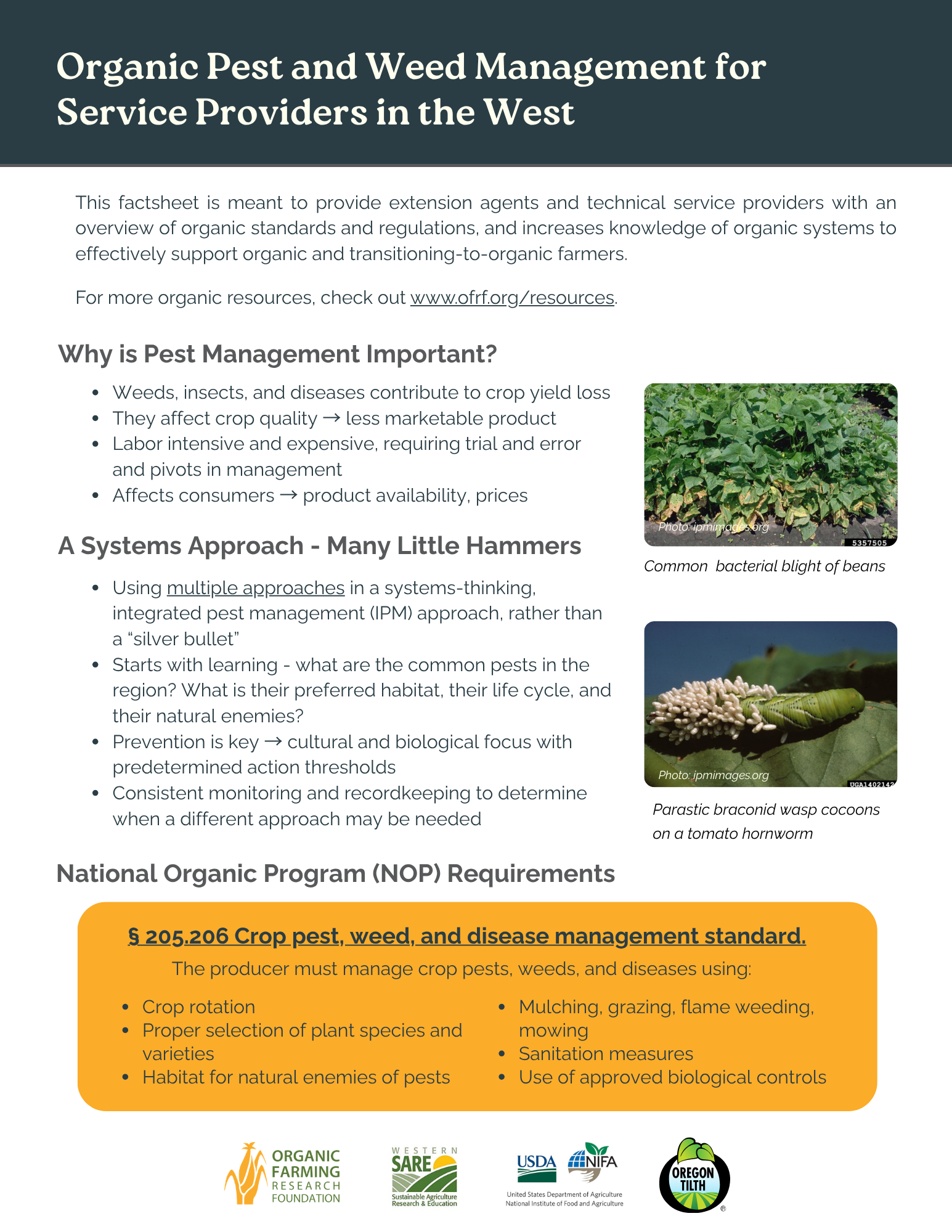
Organic Pest and Weed Management for Service Providers in the West

By |2026-10-27T13:25:22-04:00June 4th, 2026|Certification & Compliance, Resource|

An Organic Pest and Weed Management Guide for Extension Agents and Technical Service Providers (TSPs).

This factsheet is meant to provide extension agents and technical service providers in the west with an overview of organic pest and weed management, and increase knowledge of organic systems to effectively support organic and transitioning-to-organic farmers.

Prefer to listen? Watch our Organic Pest and Weed Management for Extension Agents in the West webinar.

In this 75-minute session, presenters will walk through the most common insects, diseases, and weeds found across the WSARE region — from apple maggot and wheat stem sawfly to kochia and field bindweed — and connect that regional context to the pest management requirements outlined in the National Organic Program. Drawing on research conducted in the West, the session will focus on practical, science-backed strategies that extension agents and TSPs can bring directly to the farmers they serve, covering approaches to weed management, insect and disease control, and the “many little hammers” IPM framework that underpins organic production.

Image of the front page of a four-page factsheet on organic pest and weed management for extension agents in the west.
Go to Top